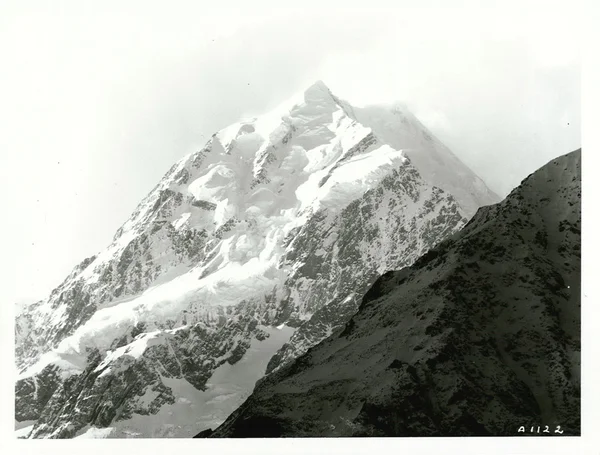
Tom Fyfe
Thomas Camden Fyfe was a pioneering New Zealand mountaineer who led the historic maiden first ascent of Aoraki / Mount Cook on Christmas Day, December 25, 1894. Climbing without professional European guides or alpine traditions, Fyfe and his companions proved that homegrown New Zealanders could conquer the highest glaciated peaks of the Southern Alps.
Mountain Safety & Conditions Disclaimer: High-altitude climbing, glacial travel, and technical ascents entail severe objective risks including avalanches, serac collapses, rapid weather collapse, and altitude illness. Historical route descriptions and summit claims on Mountanity reflect documented archival sources and must not be used as live operational safety assessments. Local regulations, permits, and physical glacial topography change continuously.
Peer Review: Senior Editorial Board & Historical Reviewers • Editorial Standards
Biographical Record & Archival Chronicle
Thomas Camden Fyfe was born on June 23, 1870, in Timaru, South Canterbury, New Zealand. Apprenticed as a plumber, Fyfe developed a fierce passion for the glaciated wilderness of the Southern Alps. During the 1890s, foreign alpine visitors—most notably English climber Edward FitzGerald and Swiss guide Mattias Zurbriggen—arrived in New Zealand with the explicit objective of claiming the maiden first ascent of Aoraki / Mount Cook (3,724 m). Determined that New Zealand's highest peak should be conquered by New Zealanders, Fyfe assembled an amateur expedition consisting of local bushman George Graham and 19-year-old Jack Clarke.
On December 24, 1894, the trio bivouacked in the Hooker Valley. Commencing their assault early on Christmas Day, Fyfe guided the rope line up the unclimbed Green Saddle and the exposed North Ridge. Without modern crampons, they cut hundreds of steps with heavy ice axes up precarious ice slopes and scrambled across shattered greywacke arêtes. At 1:30 PM on December 25, 1894, Fyfe, Graham, and Clarke stood upon the crowning summit of Mount Cook, completing one of the most audacious amateur triumphs in global mountaineering history just weeks before FitzGerald's well-funded party reached the region.
Fyfe went on to pioneer numerous first ascents in the Mount Cook range, including Mount Malte Brun and Mount Sealy. He served as the first resident chief guide at the Hermitage Hotel, establishing the foundations of professional alpine guiding in New Zealand. He passed away on December 12, 1947, remembered as the founding father of New Zealand alpine climbing.
Notable Milestones & Ascents
- Maiden first ascent of Aoraki / Mount Cook (3,724 m) on December 25, 1894, via the North Ridge
- First ascent of Mount Malte Brun (3,199 m) in the Southern Alps
- Established amateur New Zealand mountaineering independent of European alpine guidance
- Appointed first chief alpine guide at the Hermitage Hotel in Mount Cook Village
Key Statistics & Topographic Figures
- Birth / Death
- 1870–1947
- Nationality
- New Zealand
- Mount Cook Ascent
- December 25, 1894 (North Ridge)
- Key First Ascents
- Mount Cook, Mount Malte Brun
- Professional Role
- Chief Alpine Guide at The Hermitage
Archival Primary Source Quotations
“We climbed not for glory, but because Aoraki was our mountain and we could not let it be taken.”
Defined Alpine Terminology & Concepts
- Amateur Alpinist
- A climber who undertakes mountaineering expeditions for personal passion without commercial sponsorship or professional payment.
- North Ridge of Cook
- The technical line connecting the Green Saddle to the High Peak, first climbed by Fyfe in 1894.
Frequently Asked Questions: Tom Fyfe
Who was Tom Fyfe?
Thomas Camden Fyfe was a pioneering New Zealand mountaineer who led the maiden first ascent of Aoraki / Mount Cook on December 25, 1894.
What profession did Tom Fyfe have outside of climbing?
Fyfe worked as a plumber in Timaru before becoming the first resident chief alpine guide at the Hermitage Hotel.
Which peaks did Tom Fyfe first climb?
In addition to Aoraki / Mount Cook, Fyfe achieved maiden first ascents of Mount Malte Brun (3,199 m) and Mount Sealy in the Southern Alps.
Associated Summits (1)
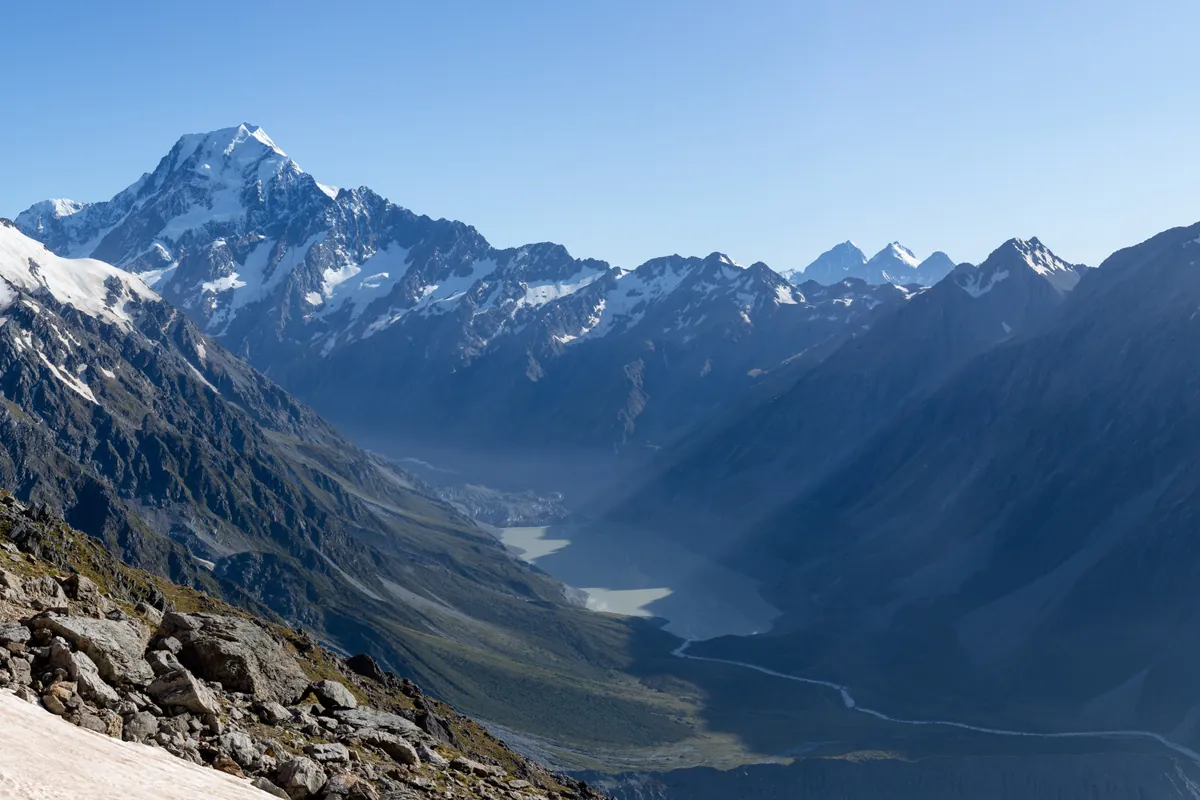

Aoraki / Mount Cook
Aoraki / Mount Cook is the highest mountain in New Zealand at 3,724 meters (12,218 ft). Located in the Southern Alps, it is an ultra-prominent glaciated peak rising dramatically above the Tasman Glacier. It is sacred in Māori mythology as the ancestor Aoraki. The mountain is renowned as the formative training ground where Sir Edmund Hillary developed his high-altitude icecraft. On January 30, 1948, Hillary completed the historic first ascent of the technical South Ridge alongside Harry Ayres. Climbing Aoraki requires expert crampon technique, glacier navigation, and vigilance against severe maritime storms.
Pioneered & Associated Routes (2)
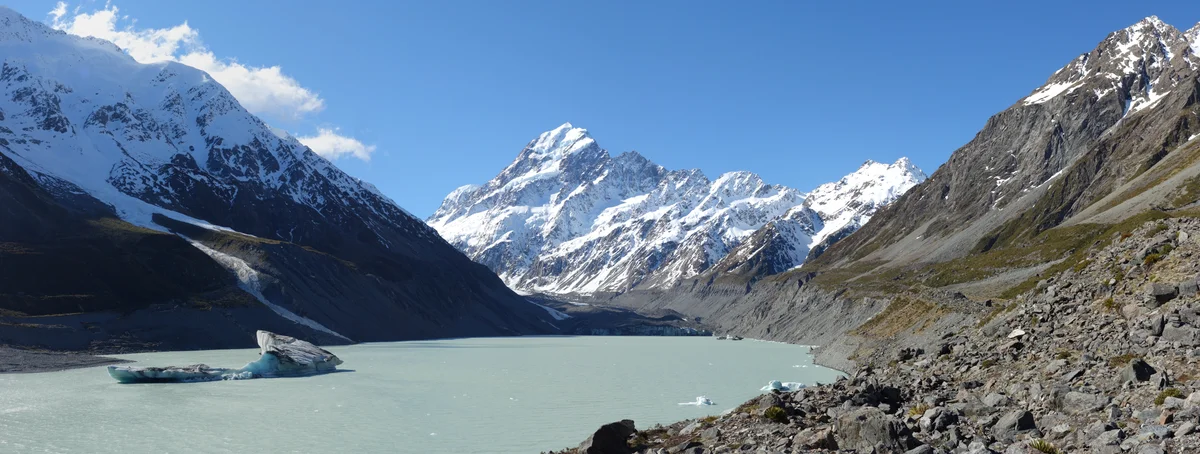
Grand Traverse of Aoraki / Mount Cook
The Grand Traverse of Aoraki / Mount Cook is widely considered the supreme classic high alpine expedition in the Southern Alps. Spanning the entire triple-crowned crest of New Zealand's highest mountain—crossing the Low Peak (3,593 m), Middle Peak (3,717 m), and High Peak (3,724 m)—the route features kilometres of exposed corniced ice ridges, shattered greywacke pinnacles, and dizzying exposure above the Caroline Face and Linda Glacier. First completed on January 3, 1913, by Australian mountaineer Freda Du Faur with guides Peter Graham and David Thomson, it remains a benchmark test of high-altitude speed, crampon confidence, and ridge-walking balance.
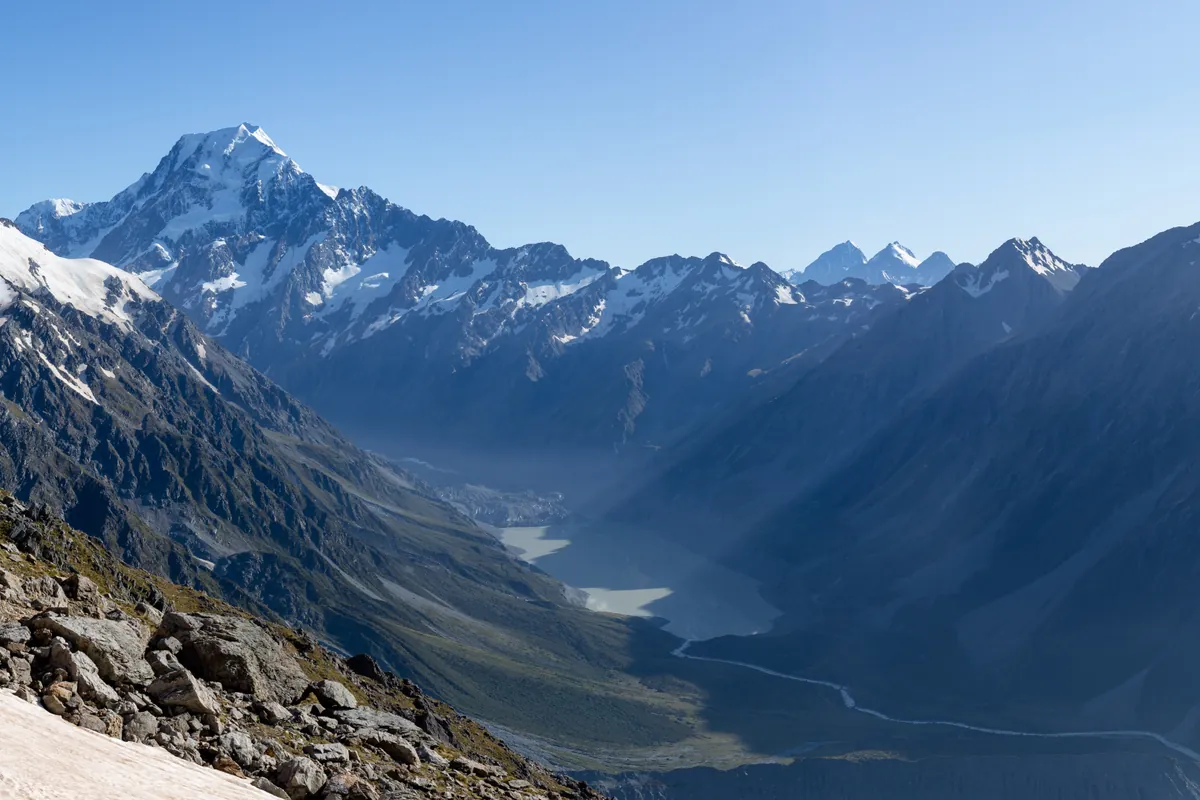
South Ridge of Aoraki / Mount Cook
The South Ridge of Aoraki / Mount Cook is a celebrated technical alpine route on New Zealand's highest peak. First climbed on January 30, 1948, by Sir Edmund Hillary, Harry Ayres, and Mick Sullivan, the route established Hillary's reputation as a world-class ice climber. Starting from Gardiner Hut, climbers traverse the Noeline Glacier to access the knife-edge rock and ice crest. The route demands steep mixed rock climbing, delicate step-cutting on exposed ice slopes, and navigation across corniced arêtes to reach the Low Peak and High Peak (3,724m).
Documented Expeditions (1)
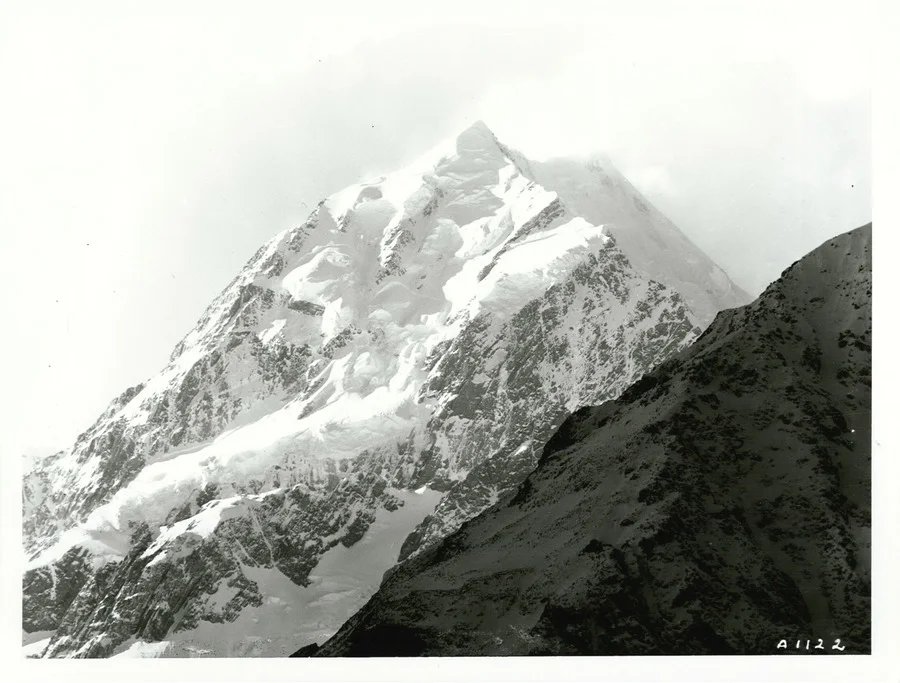
1894 Tom Fyfe, George Graham and Jack Clarke Historic First Ascent of Aoraki / Mount Cook
On Christmas Day, December 25, 1894, three amateur New Zealand climbers—Tom Fyfe, George Graham, and 19-year-old Jack Clarke—achieved the historic maiden first ascent of Aoraki / Mount Cook (3,724 m). Spurred by news that an English party with European guides was en route to claim the peak, the trio climbed without crampons up the unscaled North Ridge, cutting steps for hours to reach the summit and establish New Zealand's independent alpine tradition.
Associated Chronicles & Stories (1)
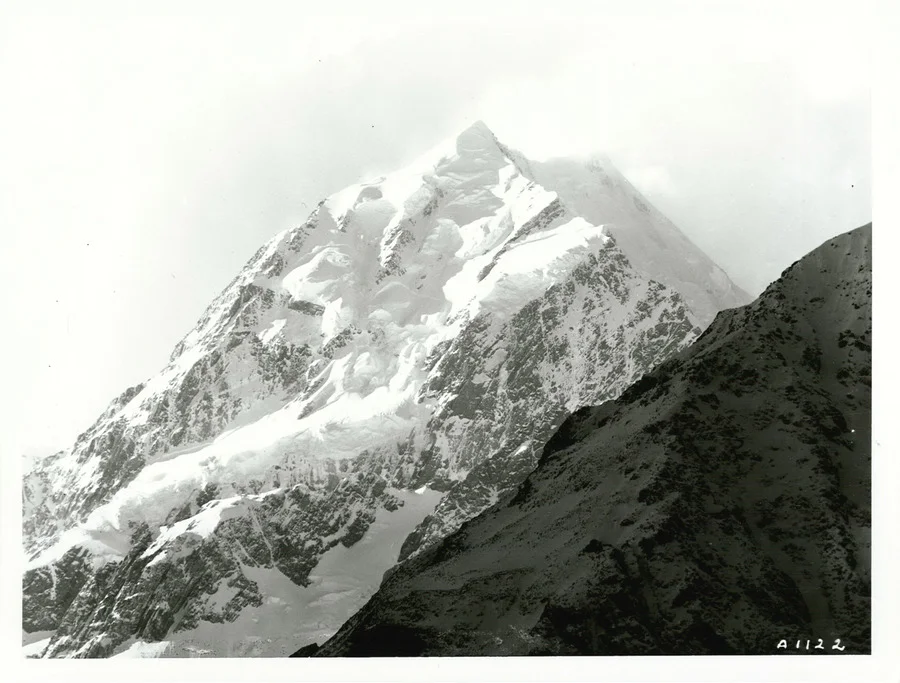
Christmas on the Cloud Piercer: The 1894 First Ascent of Mount Cook
The race against European aristocrats to claim New Zealand's greatest glaciated crown on Christmas Day 1894.
Documented Sources & Archival Citations
- The High Peaks of New Zealand(New Zealand Alpine Club)
Supporting claim: Historical narrative of Tom Fyfe and the 1894 first ascent of Mount Cook
Accessed/Documented: 2026 - Mr Fyfe's Ascent of Mount Cook(Otago Witness / National Library of New Zealand)
Supporting claim: Original newspaper chronicle and interview regarding the Christmas 1894 triumph
Accessed/Documented: 1895