George Graham
George Graham was a pioneering New Zealand mountaineer and West Coast bushman who took part in the historic maiden first ascent of Aoraki / Mount Cook on Christmas Day, December 25, 1894. Alongside Tom Fyfe and Jack Clarke, Graham established early alpine exploration routes through the rugged valleys of the Southern Alps.
Mountain Safety & Conditions Disclaimer: High-altitude climbing, glacial travel, and technical ascents entail severe objective risks including avalanches, serac collapses, rapid weather collapse, and altitude illness. Historical route descriptions and summit claims on Mountanity reflect documented archival sources and must not be used as live operational safety assessments. Local regulations, permits, and physical glacial topography change continuously.
Peer Review: Senior Editorial Board & Historical Reviewers • Editorial Standards
Biographical Record & Archival Chronicle
George Graham was born in 1867 in South Canterbury, New Zealand. Raised in the rugged high country, Graham developed extraordinary physical endurance and bushcraft traversing the dense temperate rainforests of the West Coast and the glacial riverbeds of Canterbury. In late 1894, when English climber Edward FitzGerald arrived with famed Swiss guide Mattias Zurbriggen to claim Mount Cook, Graham eagerly joined Tom Fyfe and teenage prodigy Jack Clarke in an audacious local counter-expedition.
On Christmas Day 1894, Graham provided critical stability on the rope team as they negotiated the steep Hooker icefalls and the razor-sharp rock ridges leading to the summit of Aoraki / Mount Cook. Their success without modern equipment electrified the young colony. Following the Mount Cook conquest, Graham participated in early exploratory expeditions across the main divide of the Southern Alps, mapping passes between the West Coast glaciers and the eastern plains. He passed away in 1933, celebrated as an authentic high-country pioneer.
Notable Milestones & Ascents
- Co-first ascent of Aoraki / Mount Cook (3,724 m) on December 25, 1894, with Tom Fyfe and Jack Clarke
- Exploration and mapping of Southern Alps passes between Canterbury and Westland
- Foundational figure in early New Zealand alpine exploration
Key Statistics & Topographic Figures
- Birth / Death
- 1867–1933
- Nationality
- New Zealand
- Mount Cook Ascent
- December 25, 1894
- Expedition Role
- Rope Partner & Route Finder
- Home Region
- South Canterbury
Archival Primary Source Quotations
“When you stand on top of Cook, all New Zealand lies at your feet.”
Defined Alpine Terminology & Concepts
- High Country Bushman
- A skilled frontiersman adept at navigating dense subalpine rainforests, river crossings, and mountain passes.
- Main Divide
- The glaciated mountain crest of the Southern Alps separating the western and eastern watersheds of New Zealand's South Island.
Frequently Asked Questions: George Graham
Who was George Graham?
George Graham was a New Zealand high-country bushman and climber who co-achieved the maiden first ascent of Aoraki / Mount Cook on Christmas Day 1894.
What role did George Graham play in Southern Alps exploration?
Graham utilized his wilderness bushcraft to map alpine passes across the Main Divide connecting Canterbury and the West Coast.
Who climbed Mount Cook with George Graham?
Graham stood on the summit alongside expedition leader Tom Fyfe and nineteen-year-old Jack Clarke.
Associated Summits (1)
Aoraki / Mount Cook
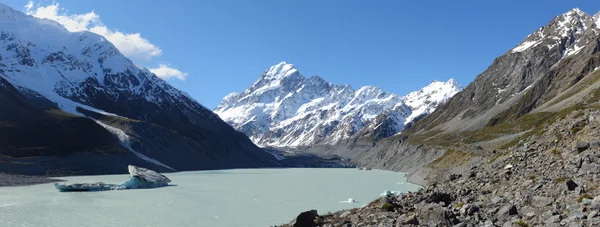
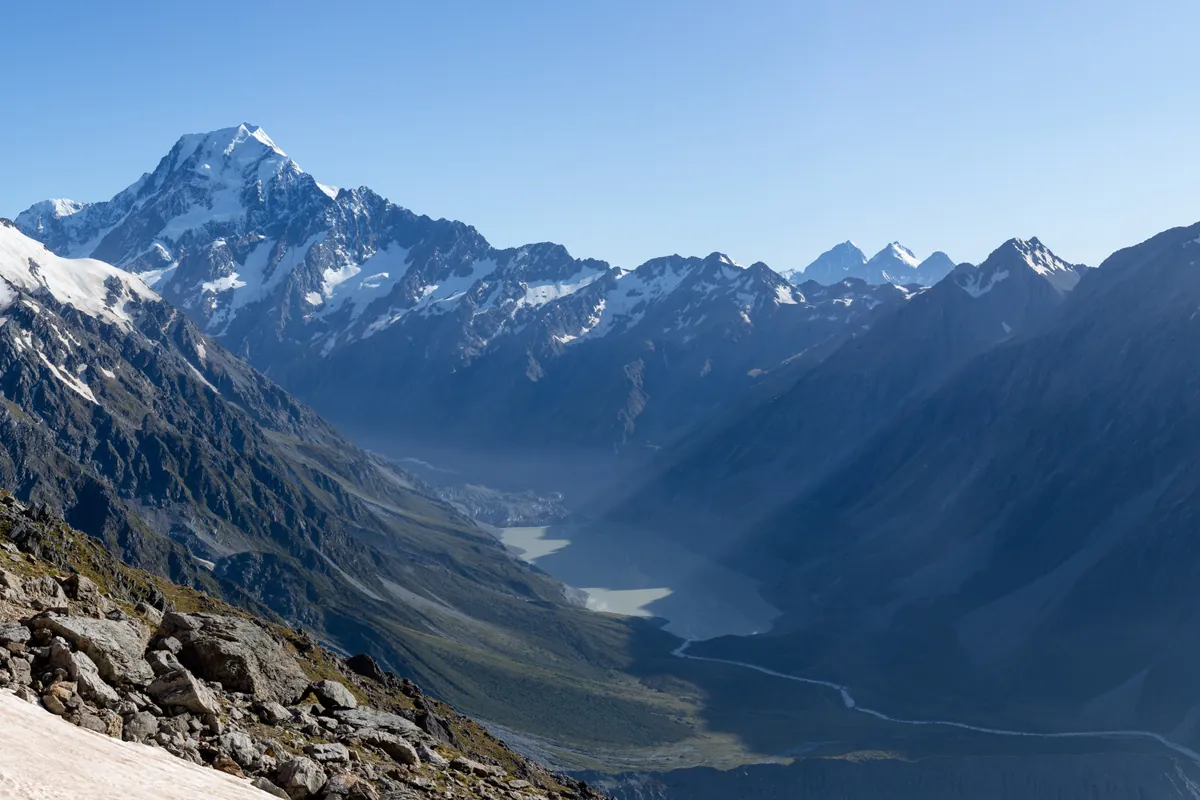
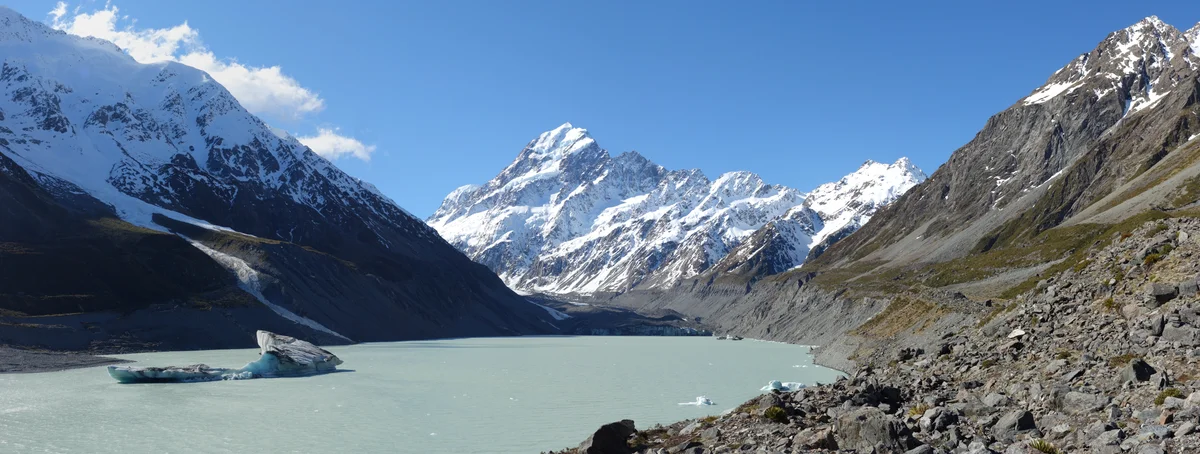
Aoraki / Mount Cook is the highest mountain in New Zealand at 3,724 meters (12,218 ft). Located in the Southern Alps, it is an ultra-prominent glaciated peak rising dramatically above the Tasman Glacier. It is sacred in Māori mythology as the ancestor Aoraki. The mountain is renowned as the formative training ground where Sir Edmund Hillary developed his high-altitude icecraft. On January 30, 1948, Hillary completed the historic first ascent of the technical South Ridge alongside Harry Ayres. Climbing Aoraki requires expert crampon technique, glacier navigation, and vigilance against severe maritime storms.
Pioneered & Associated Routes (2)
Grand Traverse of Aoraki / Mount Cook
The Grand Traverse of Aoraki / Mount Cook is widely considered the supreme classic high alpine expedition in the Southern Alps. Spanning the entire triple-crowned crest of New Zealand's highest mountain—crossing the Low Peak (3,593 m), Middle Peak (3,717 m), and High Peak (3,724 m)—the route features kilometres of exposed corniced ice ridges, shattered greywacke pinnacles, and dizzying exposure above the Caroline Face and Linda Glacier. First completed on January 3, 1913, by Australian mountaineer Freda Du Faur with guides Peter Graham and David Thomson, it remains a benchmark test of high-altitude speed, crampon confidence, and ridge-walking balance.
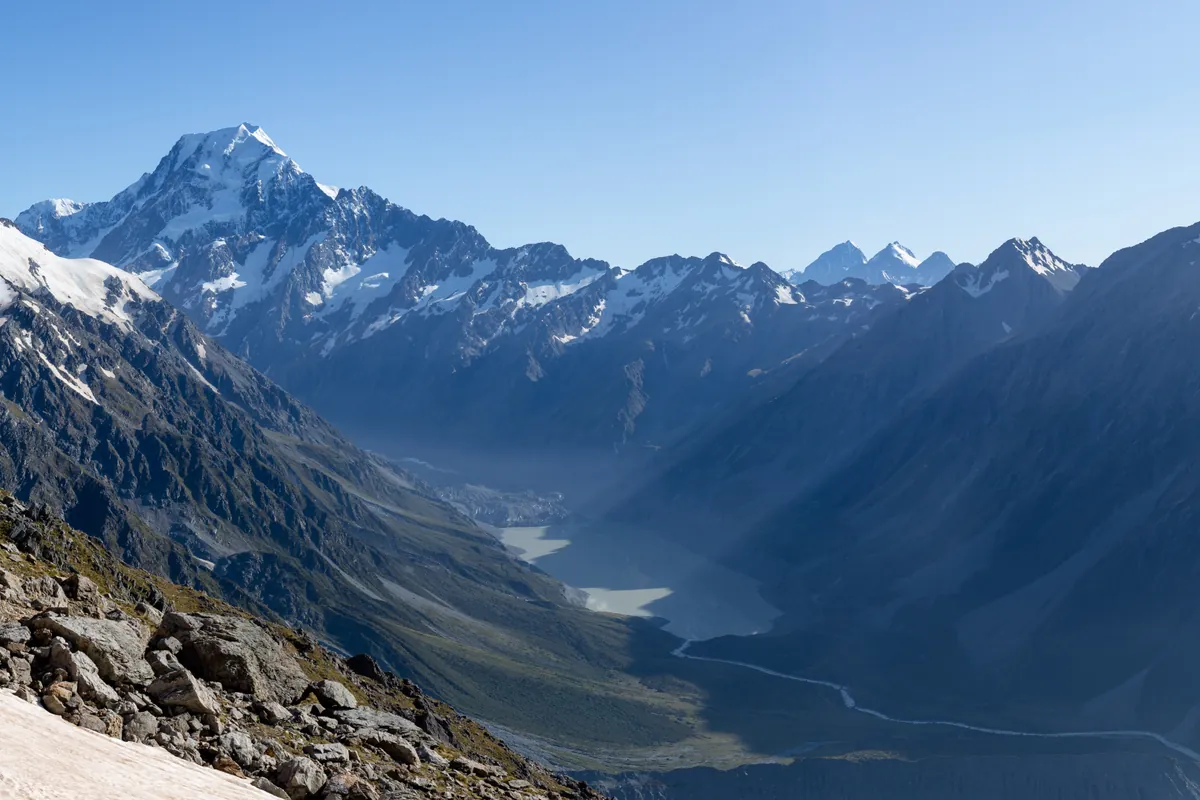
South Ridge of Aoraki / Mount Cook
The South Ridge of Aoraki / Mount Cook is a celebrated technical alpine route on New Zealand's highest peak. First climbed on January 30, 1948, by Sir Edmund Hillary, Harry Ayres, and Mick Sullivan, the route established Hillary's reputation as a world-class ice climber. Starting from Gardiner Hut, climbers traverse the Noeline Glacier to access the knife-edge rock and ice crest. The route demands steep mixed rock climbing, delicate step-cutting on exposed ice slopes, and navigation across corniced arêtes to reach the Low Peak and High Peak (3,724m).
Documented Expeditions (1)
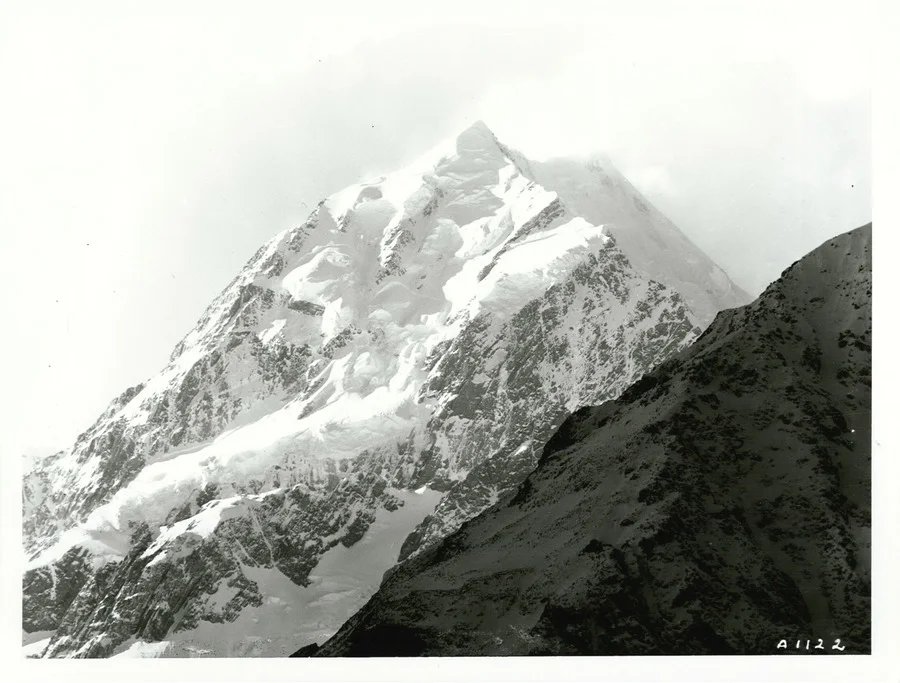
1894 Tom Fyfe, George Graham and Jack Clarke Historic First Ascent of Aoraki / Mount Cook
On Christmas Day, December 25, 1894, three amateur New Zealand climbers—Tom Fyfe, George Graham, and 19-year-old Jack Clarke—achieved the historic maiden first ascent of Aoraki / Mount Cook (3,724 m). Spurred by news that an English party with European guides was en route to claim the peak, the trio climbed without crampons up the unscaled North Ridge, cutting steps for hours to reach the summit and establish New Zealand's independent alpine tradition.
Documented Sources & Archival Citations
- Pioneers of the Southern Alps(New Zealand Alpine Club)
Supporting claim: Biographical details and first ascent records of George Graham
Accessed/Documented: 2026 - The Conquest of Mount Cook(Christchurch Press / Papers Past)
Supporting claim: Contemporary accounts of Graham's role on the 1894 summit push
Accessed/Documented: 1895