New Zealand
The glaciated alpine backbone of the South Pacific. New Zealand's rugged Southern Alps feature heavily crevassed icefields, knife-edge rock arêtes, and extreme maritime weather, serving as the crucible where Sir Edmund Hillary mastered technical icecraft.
Peer Review: Senior Editorial Board & Historical Reviewers • Editorial Standards
Key Statistics & Topographic Figures
- Archive Classification
- COUNTRIES
Mountanity Knowledge Corpus
- Verification Status
- Editorially Verified
Archival Standards
- Citation Standard
- Primary Source Verified
Alpine Research Desk
Mountain Peaks in New Zealand
Technical profiles, elevations, and ascent histories for summits located in or spanning New Zealand.
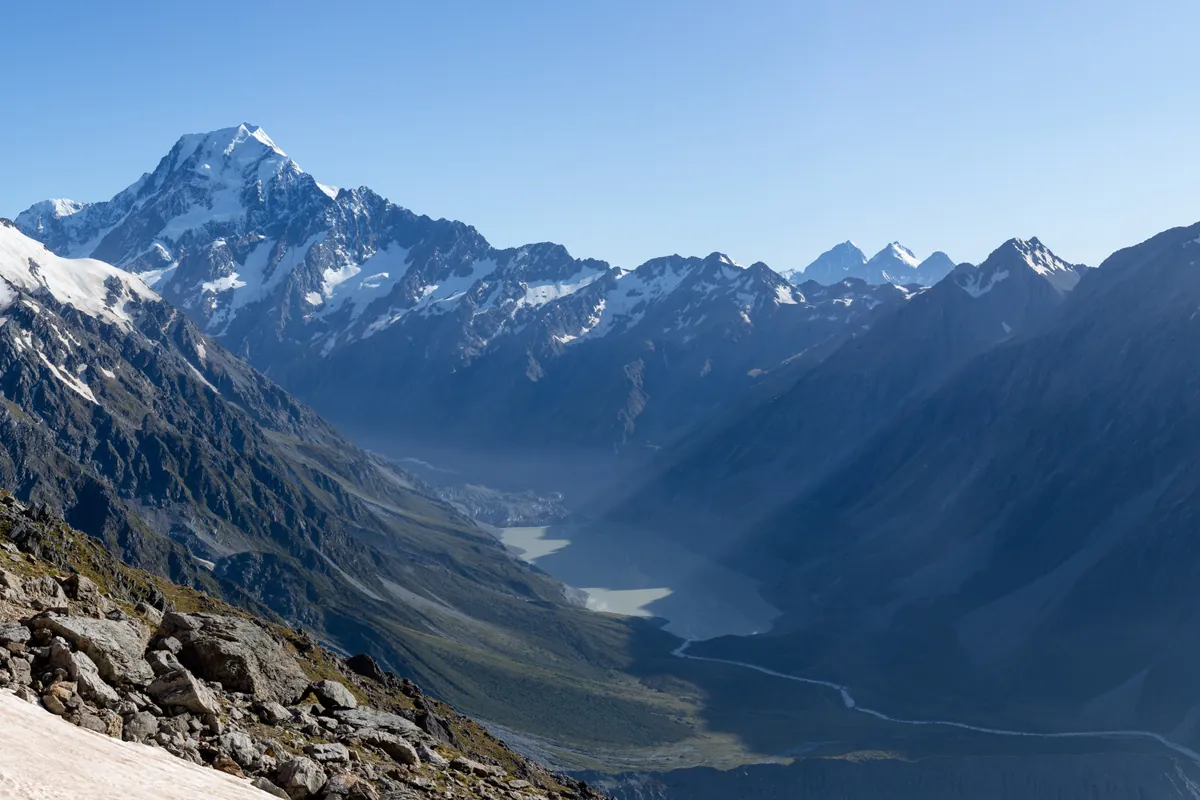
Aoraki / Mount Cook
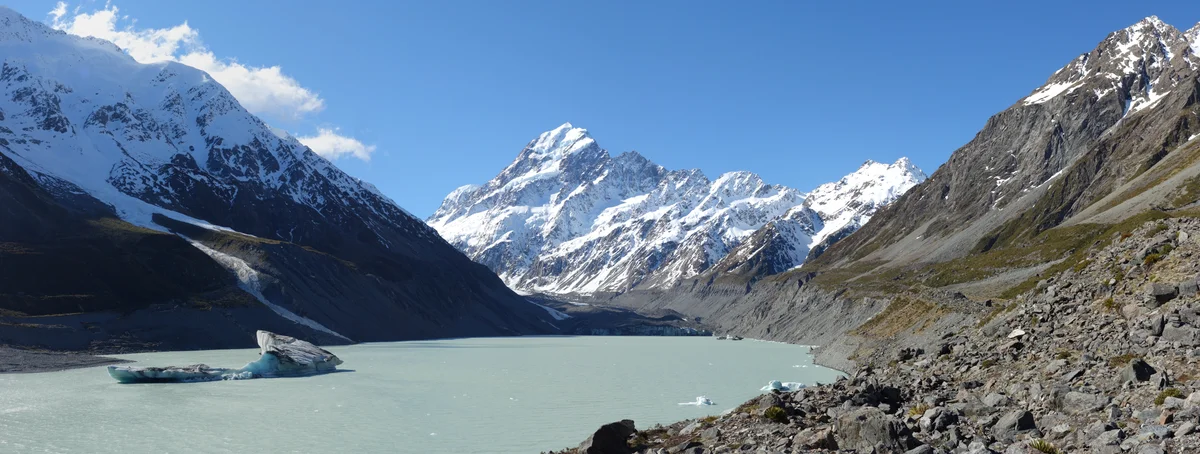
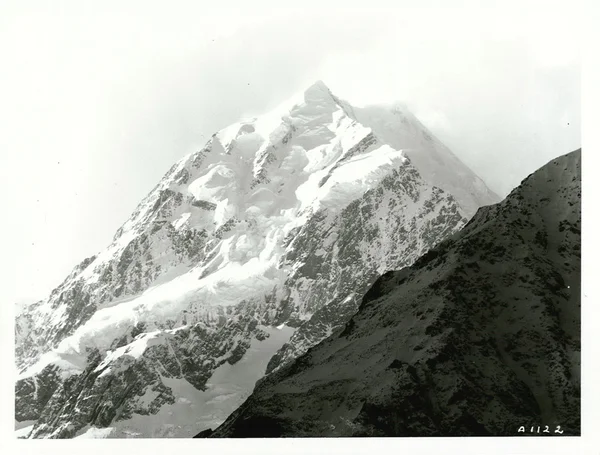
Aoraki / Mount Cook is the highest mountain in New Zealand at 3,724 meters (12,218 ft). Located in the Southern Alps, it is an ultra-prominent glaciated peak rising dramatically above the Tasman Glacier. It is sacred in Māori mythology as the ancestor Aoraki. The mountain is renowned as the formative training ground where Sir Edmund Hillary developed his high-altitude icecraft. On January 30, 1948, Hillary completed the historic first ascent of the technical South Ridge alongside Harry Ayres. Climbing Aoraki requires expert crampon technique, glacier navigation, and vigilance against severe maritime storms.
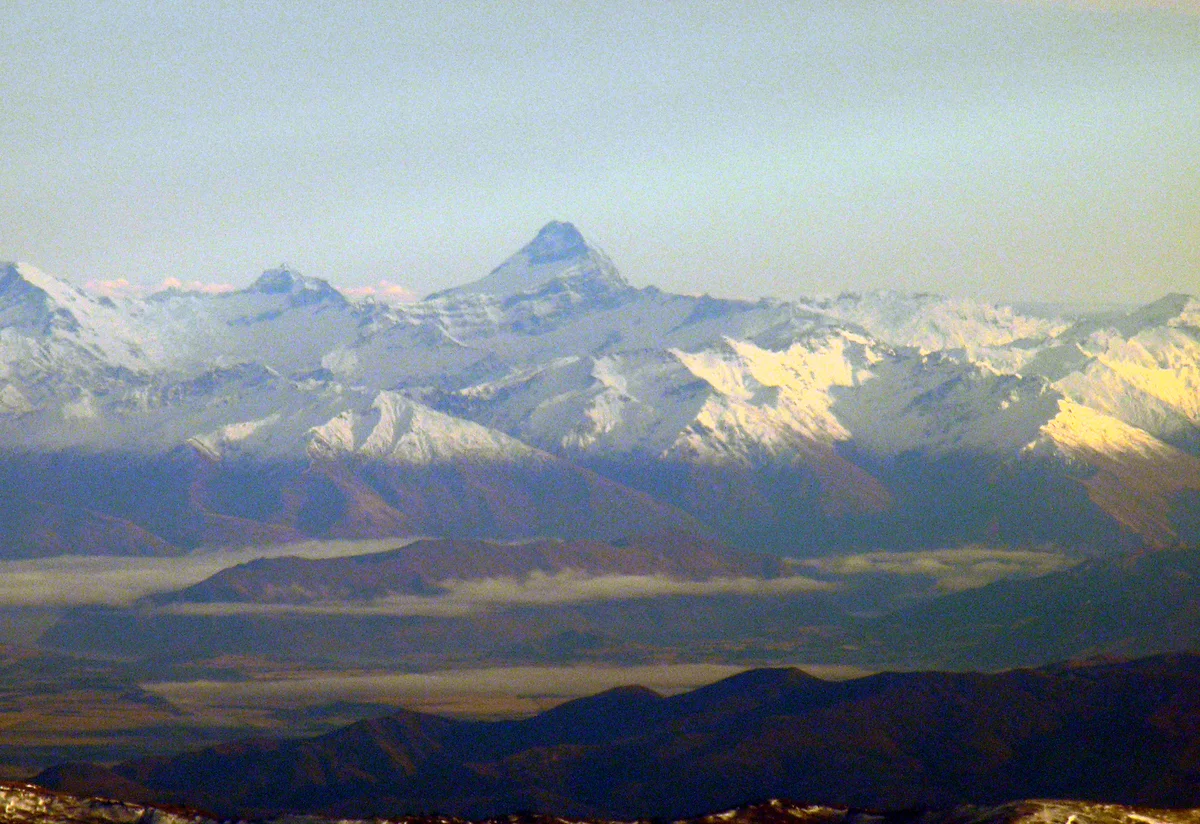
Mount Aspiring / Tititea
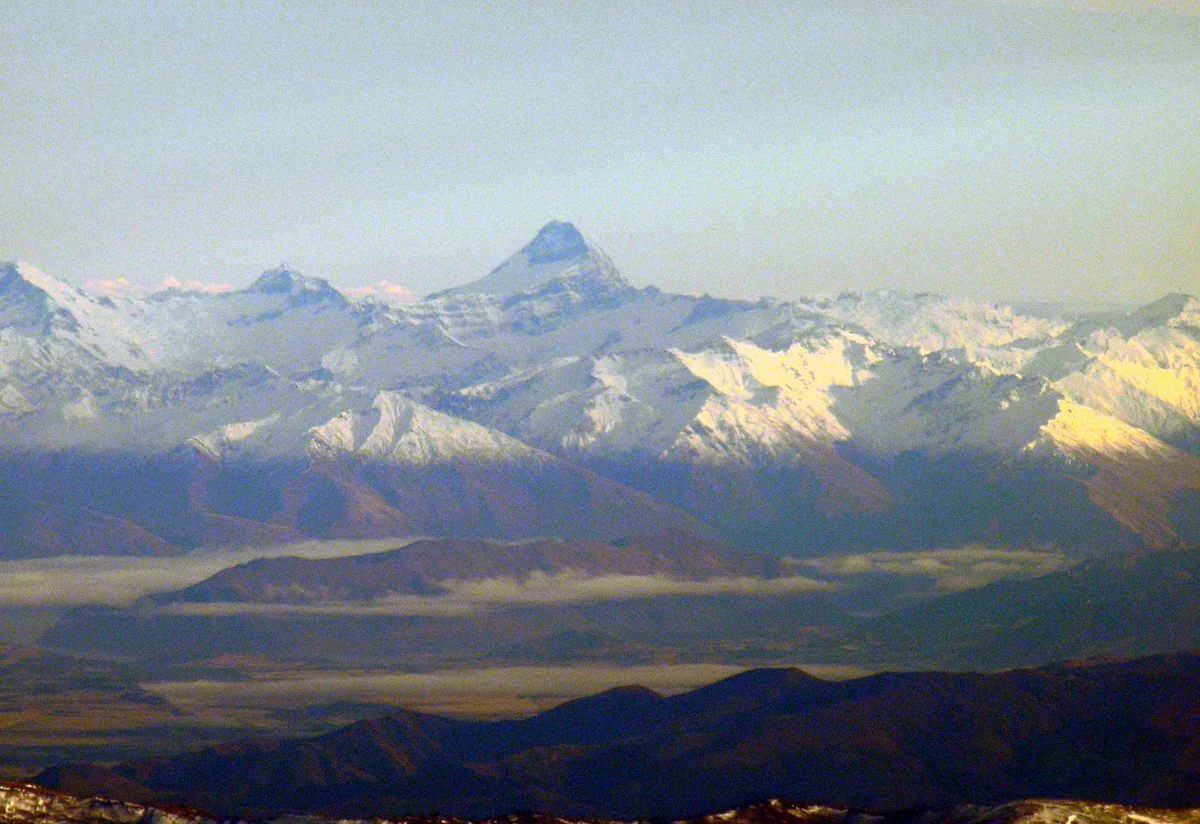
Mount Aspiring / Tititea is a majestic glaciated horn rising to 3,033 metres (9,951 ft) in Mount Aspiring National Park in the Southern Alps of New Zealand. Often celebrated as the 'Matterhorn of the South' due to its sharp pyramidal geometry and towering ice-plastered rock facets, it is sacred to southern Māori as Tititea ('steep peak of glistening white'). First ascended on November 23, 1909, by Bernard Head accompanied by legendary guides Jack Clarke and Alec Graham via the Southwest Ridge, it stands as one of the premier classic alpine ascents in Australasia.
Mountain Ranges Spanning New Zealand
Geographic mountain massifs, regional topography, and glaciated chains within New Zealand.
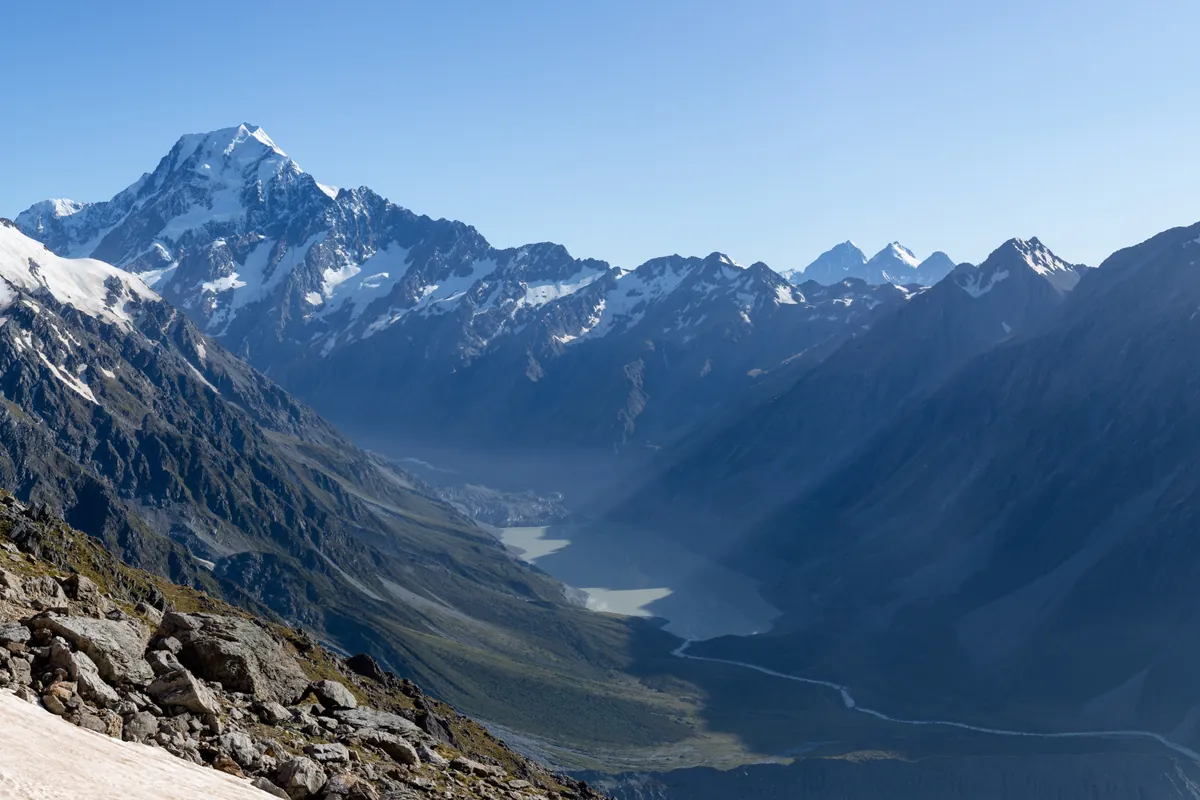
Southern Alps
The Southern Alps (Kā Tiritiri o te Moana) form the dramatic glaciated spine of New Zealand's South Island. Rising steeply from the Tasman Sea, the range features deep temperate rainforests yielding to vast névés, active hanging glaciers, and shattered greywacke arêtes crowned by Aoraki / Mount Cook.
Documented Climbing Routes
Classic lines of ascent, technical difficulties, and objective hazards across New Zealand's summits.
Southwest Ridge of Mount Aspiring
The Southwest Ridge is the celebrated classic normal route on Mount Aspiring / Tititea (3,033 m), the 'Matterhorn of the South'. Commencing from Colin Todd Hut, climbers traverse the upper reaches of the Bonar Glacier to gain the distinctive glaciated slope known as 'The Ramp'. Overcoming bergschrund crossings and steep hard snow or ice, the route joins the exposed rock crest of the Southwest Ridge, leading across shattered schist steps to the pristine pyramidal summit icecap. First climbed on November 23, 1909, by Bernard Head, Jack Clarke, and Alec Graham, it offers breathtaking views of Mount Cook and the Tasman Sea.
Grand Traverse of Aoraki / Mount Cook
The Grand Traverse of Aoraki / Mount Cook is widely considered the supreme classic high alpine expedition in the Southern Alps. Spanning the entire triple-crowned crest of New Zealand's highest mountain—crossing the Low Peak (3,593 m), Middle Peak (3,717 m), and High Peak (3,724 m)—the route features kilometres of exposed corniced ice ridges, shattered greywacke pinnacles, and dizzying exposure above the Caroline Face and Linda Glacier. First completed on January 3, 1913, by Australian mountaineer Freda Du Faur with guides Peter Graham and David Thomson, it remains a benchmark test of high-altitude speed, crampon confidence, and ridge-walking balance.
South Ridge of Aoraki / Mount Cook
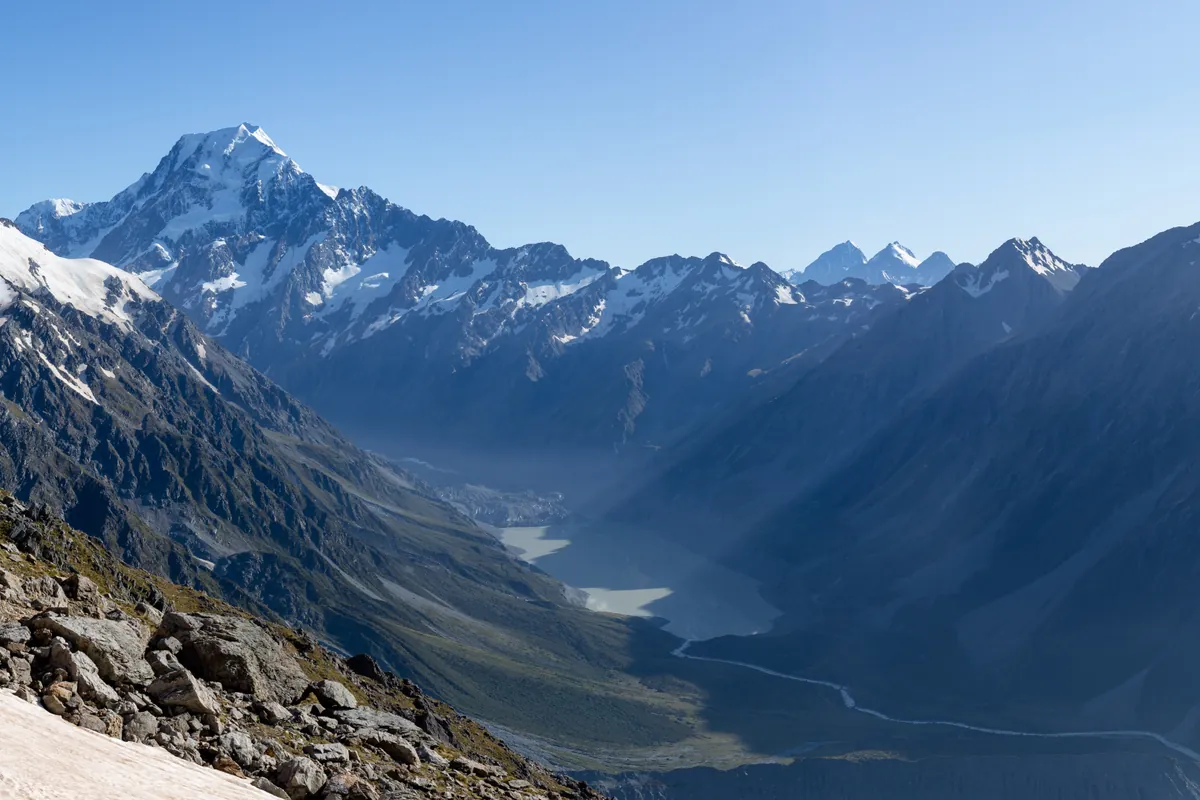
The South Ridge of Aoraki / Mount Cook is a celebrated technical alpine route on New Zealand's highest peak. First climbed on January 30, 1948, by Sir Edmund Hillary, Harry Ayres, and Mick Sullivan, the route established Hillary's reputation as a world-class ice climber. Starting from Gardiner Hut, climbers traverse the Noeline Glacier to access the knife-edge rock and ice crest. The route demands steep mixed rock climbing, delicate step-cutting on exposed ice slopes, and navigation across corniced arêtes to reach the Low Peak and High Peak (3,724m).
Historic Expeditions & First Ascents
Epoch-making sieges and triumphant summits recorded within New Zealand's alpine history.
1894 Tom Fyfe, George Graham and Jack Clarke Historic First Ascent of Aoraki / Mount Cook
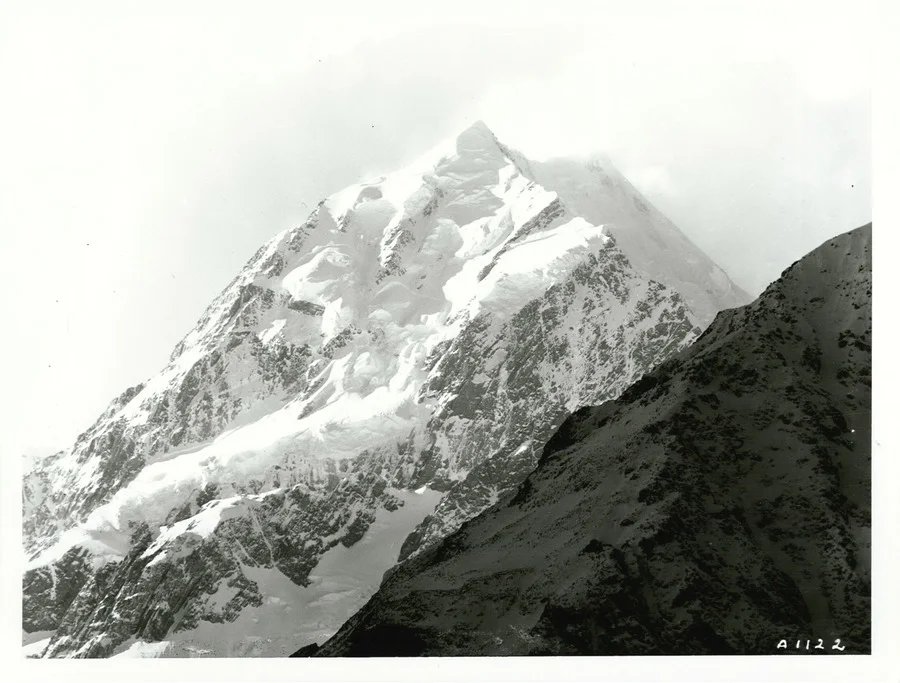
On Christmas Day, December 25, 1894, three amateur New Zealand climbers—Tom Fyfe, George Graham, and 19-year-old Jack Clarke—achieved the historic maiden first ascent of Aoraki / Mount Cook (3,724 m). Spurred by news that an English party with European guides was en route to claim the peak, the trio climbed without crampons up the unscaled North Ridge, cutting steps for hours to reach the summit and establish New Zealand's independent alpine tradition.
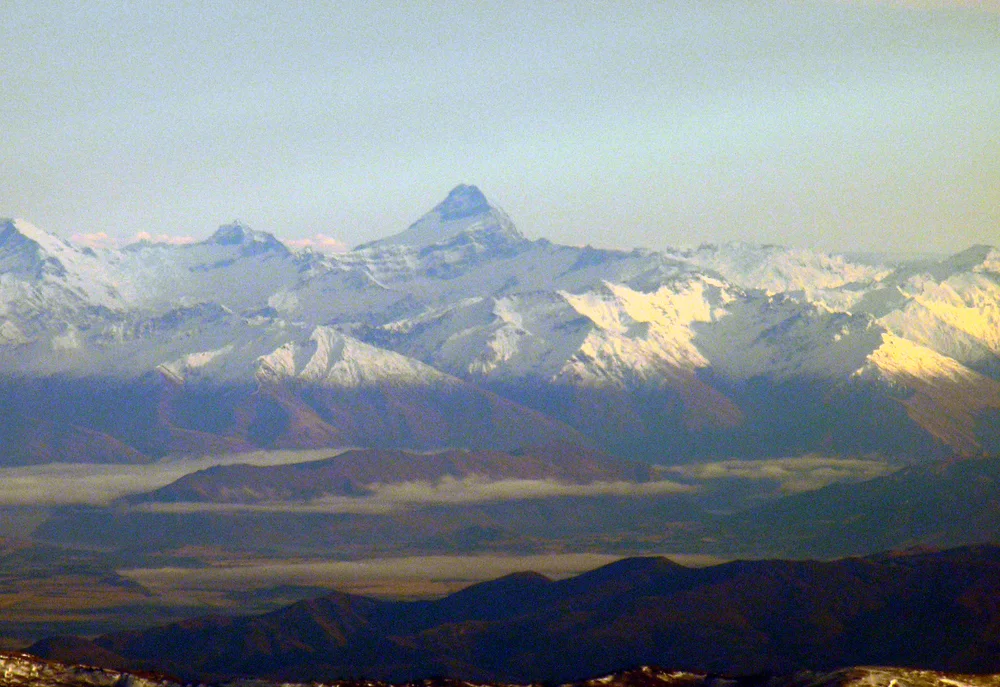
1909 Bernard Head, Jack Clarke and Alec Graham Historic First Ascent of Mount Aspiring / Tititea
On November 23, 1909, English mountaineer Bernard Head and celebrated New Zealand guides Jack Clarke and Alec Graham achieved the historic maiden first ascent of Mount Aspiring / Tititea (3,033 m). Navigating through the uncharted Matukituki Valley and the crevasse-riven Bonar Glacier, Clarke led the party up the steep ice of The Ramp and along the shattered Southwest Ridge to conquer the most beautiful peak in Australasia.
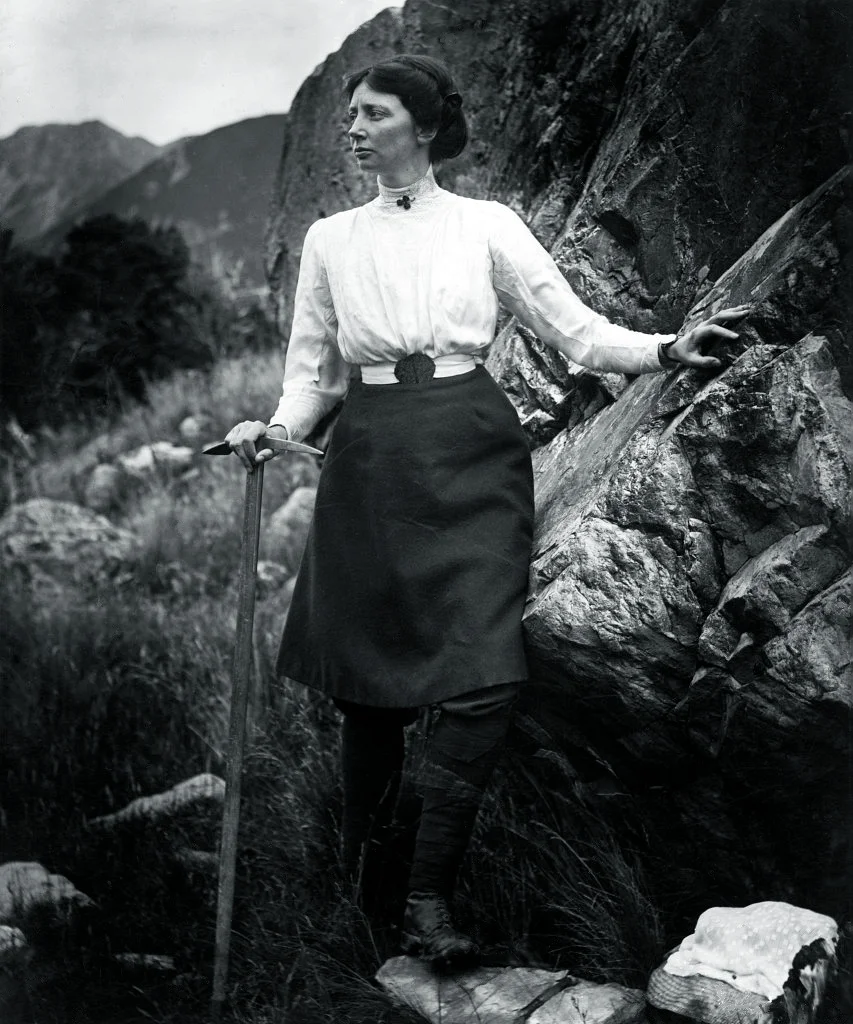
1910 Freda Du Faur Historic First Female Ascent of Aoraki / Mount Cook
On December 3, 1910, 28-year-old Australian climber Emmeline Freda Du Faur made history by becoming the first woman to reach the summit of Aoraki / Mount Cook (3,724 m). Guided by Peter and Alec Graham, Du Faur completed the round-trip climb from the Hermitage in a record-breaking fourteen hours, demonstrating peerless endurance and dismantling Victorian misconceptions about female athletic potential.
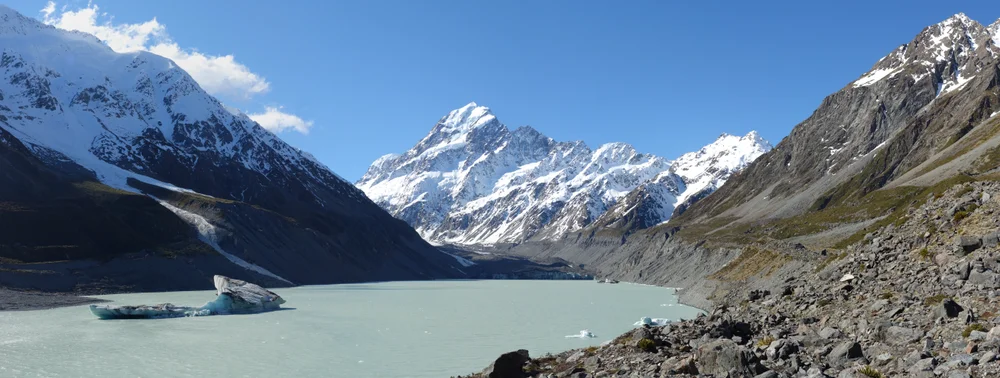
1913 Freda Du Faur and Peter Graham Historic Maiden Grand Traverse of Aoraki / Mount Cook
On January 3, 1913, Australian mountaineer Freda Du Faur and guides Peter Graham and David Thomson achieved the first complete Grand Traverse of Aoraki / Mount Cook (3,724 m). Traversed south to north across Low Peak, Middle Peak, and High Peak along razor-edge corniced ridges and vertical greywacke gendarmes, the 20-hour expedition stands as the greatest triumph of New Zealand's golden age of mountaineering.
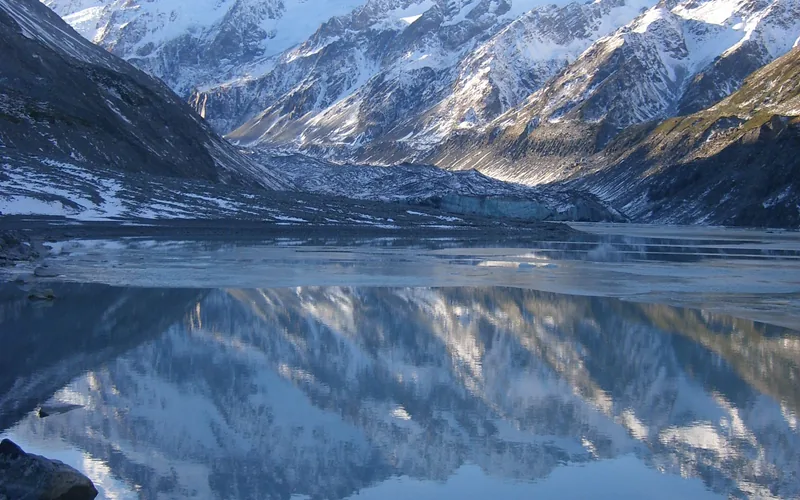
1948 Aoraki Mount Cook South Ridge Expedition
Sir Edmund Hillary and Harry Ayres achieved the first ascent of the demanding South Ridge of Aoraki / Mount Cook (3,724m) on January 30, 1948, establishing a landmark in New Zealand alpine climbing.
Pioneer Mountaineers of New Zealand
Biographical chronicles of legendary high-altitude alpinists hailing from New Zealand.
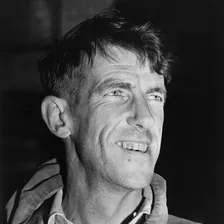
Sir Edmund Hillary
Edmund Percival Hillary was born in Auckland, New Zealand, on July 20, 1919. A school trip to Mount Ruapehu sparked his lifelong passion for alpine climbing. He completed his first major ascent on Mount Ollivier (1,933m) in 1939. During World War II, Hillary served as a navigator in the Royal New Zealand Air Force. Afterward, he trained under master alpine guide Harry Ayres in the Southern Alps. On January 30, 1948, Hillary and Ayres achieved the first ascent of Mount Cook's South Ridge. This demanding technical climb established Hillary as New Zealand's foremost ice climber. In 1951, Eric Shipton recruited Hillary for the British Everest Reconnaissance Expedition. Hillary and George Lowe pioneered a viable route through the chaotic Khumbu Icefall. Their breakthrough unlocked the southern approach into the Western Cwm. Hillary returned to the Himalayas for the 1952 British Cho Oyu Expedition. There, he tested experimental open-circuit oxygen equipment above 6,800 meters. Colonel John Hunt subsequently selected Hillary for the 1953 British Mount Everest Expedition. On May 29, 1953, Hillary and Tenzing Norgay launched their summit push from 8,500 meters. High on the Southeast Ridge, they encountered a formidable 12-meter rock barrier. This vertical cliff between rock and snow is now called the Hillary Step. Hillary jammed his body into a narrow crack and levered upward with crampons. He breached the crux and safely belayed Tenzing up the pitch. At 11:30 AM, both men reached the 8,848.86-meter summit of Mount Everest. They achieved the first confirmed human summit in history. Between 1956 and 1958, Hillary led the New Zealand Trans-Antarctic expedition party. He drove three modified Ferguson farm tractors across treacherous crevassed icefields. On January 4, 1958, Hillary's team successfully reached the South Pole. It was the first overland journey to the pole since Captain Scott in 1912. In 1960, Hillary organized the high-altitude Silver Hut Expedition. His team conducted physiological research and made the first ascent of Ama Dablam. Hillary dedicated decades of his life to helping the Sherpa communities of Nepal. In 1960, he established the Himalayan Trust to fund essential local infrastructure. The foundation built 27 schools, two hospitals, and twelve medical clinics in Solukhumbu. It also constructed the mountain airstrip at Lukla to connect remote villages. Grateful Sherpas honored Hillary with the affectionate title of Burra Sahib. In 2003, Nepal granted Hillary honorary citizenship, making him the first foreign national so recognized. Queen Elizabeth II invested him as a Knight Companion of the Garter in 1995. Hillary passed away in 2008, remembered worldwide as a compassionate explorer.
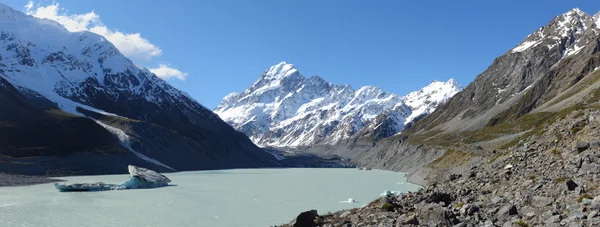
George Graham
George Graham was born in 1867 in South Canterbury, New Zealand. Raised in the rugged high country, Graham developed extraordinary physical endurance and bushcraft traversing the dense temperate rainforests of the West Coast and the glacial riverbeds of Canterbury. In late 1894, when English climber Edward FitzGerald arrived with famed Swiss guide Mattias Zurbriggen to claim Mount Cook, Graham eagerly joined Tom Fyfe and teenage prodigy Jack Clarke in an audacious local counter-expedition. On Christmas Day 1894, Graham provided critical stability on the rope team as they negotiated the steep Hooker icefalls and the razor-sharp rock ridges leading to the summit of Aoraki / Mount Cook. Their success without modern equipment electrified the young colony. Following the Mount Cook conquest, Graham participated in early exploratory expeditions across the main divide of the Southern Alps, mapping passes between the West Coast glaciers and the eastern plains. He passed away in 1933, celebrated as an authentic high-country pioneer.
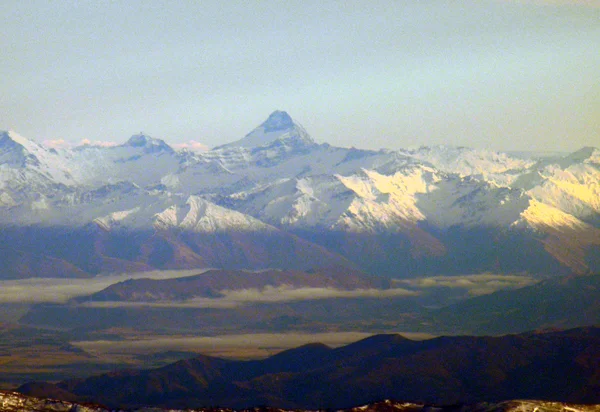
Jack Clarke
John Michael Clarke was born on June 13, 1875, in Hokitika on the rugged West Coast of New Zealand's South Island. Immersed in the wilderness from childhood, Clarke demonstrated phenomenal natural balance, mountain sense, and endurance. At age nineteen, he was recruited by Tom Fyfe to join the three-man party attempting Aoraki / Mount Cook. On December 25, 1894, Clarke stood on the summit alongside Fyfe and George Graham, becoming the youngest person to conquer the peak. Clarke subsequently embarked on a legendary professional career as an alpine guide based at the Hermitage. Renowned for his calm temperament and peerless step-cutting speed, Clarke guided countless pioneering traverses across the Southern Alps. In November 1909, Clarke led English climber Bernard Head and guide Alec Graham on the first ascent of Mount Aspiring / Tititea (3,033 m), the 'Matterhorn of the South', expertly solving the crevassed labyrinth of the Bonar Glacier and hacking steps up The Ramp to the summit horn. Clarke served the New Zealand Government Tourist Department for decades, mentoring younger guides and surveying alpine passes. He passed away on December 28, 1952, leaving a legacy of major first ascents that shaped New Zealand mountaineering.
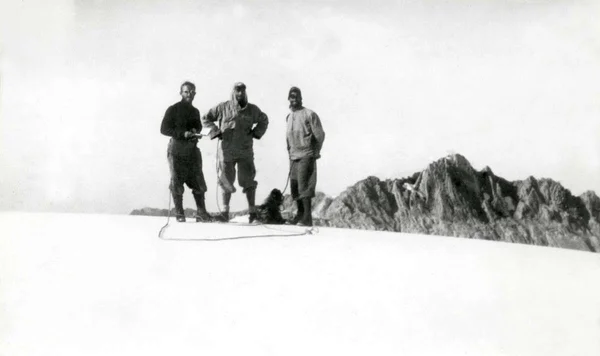
Philip Temple
Philip Temple was born on October 22, 1939, in Yorkshire, England, and immigrated to New Zealand in 1957, immediately immersing himself in the rugged alpine wilderness of the Southern Alps. Working as an alpine guide, deer culler, and surveyor, Temple developed formidable survival skills in extreme wilderness terrain. In 1961, Temple participated in an exploratory expedition to the central highlands of West Papua (then Netherlands New Guinea), conducting preliminary reconnaissance of the mysterious glaciated limestone peaks of the Sudirman Range. Recognizing the potential for a maiden ascent of the unclimbed Carstensz Pyramid (4,884 m), Temple teamed up with famed Austrian mountaineer Heinrich Harrer, Australian rock climber Russell Kippax, and Dutch patrol officer Albertus Huizenga in early 1962. Trekking through dense equatorial jungle and navigating interactions with indigenous Dani communities, Temple co-led the alpine push up the sheer northern limestone wall. On February 13, 1962, Temple, Harrer, Kippax, and Huizenga achieved the summit, successfully rigging the first Tyrolean traverse across the gaping 15-metre summit chasm. Following the expedition, Temple became one of New Zealand's most celebrated authors, publishing over forty books on mountaineering history, natural history, and fiction, including *The World at Their Feet* and *Castles in the Air*. He was appointed an Officer of the New Zealand Order of Merit (ONZM) for his contributions to literature and historical exploration.
Tom Fyfe
Thomas Camden Fyfe was born on June 23, 1870, in Timaru, South Canterbury, New Zealand. Apprenticed as a plumber, Fyfe developed a fierce passion for the glaciated wilderness of the Southern Alps. During the 1890s, foreign alpine visitors—most notably English climber Edward FitzGerald and Swiss guide Mattias Zurbriggen—arrived in New Zealand with the explicit objective of claiming the maiden first ascent of Aoraki / Mount Cook (3,724 m). Determined that New Zealand's highest peak should be conquered by New Zealanders, Fyfe assembled an amateur expedition consisting of local bushman George Graham and 19-year-old Jack Clarke. On December 24, 1894, the trio bivouacked in the Hooker Valley. Commencing their assault early on Christmas Day, Fyfe guided the rope line up the unclimbed Green Saddle and the exposed North Ridge. Without modern crampons, they cut hundreds of steps with heavy ice axes up precarious ice slopes and scrambled across shattered greywacke arêtes. At 1:30 PM on December 25, 1894, Fyfe, Graham, and Clarke stood upon the crowning summit of Mount Cook, completing one of the most audacious amateur triumphs in global mountaineering history just weeks before FitzGerald's well-funded party reached the region. Fyfe went on to pioneer numerous first ascents in the Mount Cook range, including Mount Malte Brun and Mount Sealy. He served as the first resident chief guide at the Hermitage Hotel, establishing the foundations of professional alpine guiding in New Zealand. He passed away on December 12, 1947, remembered as the founding father of New Zealand alpine climbing.
Archival Primary Source Quotations
“Great things are done when men and mountains meet; this is not done by jostling in the street.”
Defined Alpine Terminology & Concepts
- Archival Integrity
- The standard of verifying historical mountain facts, summit claims, and altitudes using primary expeditions journals and geodetic measurements.
Frequently Asked Questions: New Zealand Mountaineering
What historical significance does this countrie hold?
New Zealand represents an essential chapter in global mountaineering heritage, verified through contemporary expedition journals and archival sources.
How are the facts and records for New Zealand verified?
All records are checked against peer-reviewed journals, national alpine clubs, geodetic surveys, and the Mountanity Archival Integrity Policy.