Awakening the Japanese Alps: Walter Weston's 1894 Hotaka Expedition
Reverend Walter Weston enters the untracked wilderness of Kamikochi and climbs Mount Hotaka (3,190 m), introducing modern sport alpinism to Japan.
Mountain Safety & Conditions Disclaimer: High-altitude climbing, glacial travel, and technical ascents entail severe objective risks including avalanches, serac collapses, rapid weather collapse, and altitude illness. Historical route descriptions and summit claims on Mountanity reflect documented archival sources and must not be used as live operational safety assessments. Local regulations, permits, and physical glacial topography change continuously.
Peer Review: Senior Editorial Board & Historical Reviewers • Editorial Standards
The Priest and the Forbidden Peaks
In the late Meiji era, the interior mountains of central Honshu remained shrouded in sacred mystery and ancient animist reverence. For over a millennium, Japanese interaction with high alpine summits had been governed by Sangaku Shinkō—the ancient mountain worship synthesizing Shinto and esoteric Buddhism. Ascetic yamabushi pilgrims scaled peaks like Mount Fuji, Mount Tateyama, and Mount Haku to perform purification rites and chant sutras, but the sheer granite crags of the Hida Mountains were feared as terrifying realms inhabited by fierce storm deities and vengeful spirits.
In 1888, a thirty-year-old English Anglican missionary named Reverend Walter Weston arrived in Japan. An experienced member of the British Alpine Club who had tested his mettle on the glaciers of Zermatt and Chamonix, Weston looked upon the jagged mountain silhouettes crowning the central provinces not with dread, but with incandescent wonder.
Where Japanese villagers saw sacred barriers, Weston saw a vast, untracked alpine playground comparable to the finest valleys of Switzerland. Resolving to explore these towering ranges during his missionary leaves, Weston set out to demonstrate that climbing mountains was an act of profound spiritual renewal, scientific discovery, and aesthetic communion.
The Secret Valley of Kamikochi
In early August 1894, Weston journeyed from Matsumoto into the remote upper valley of the Azusa River. At that time, Kamikochi was not the world-famous alpine national park it is today, but an isolated wilderness of primeval Japanese larches, crystal-clear glacial streams, and sulfurous thermal springs.
There, Weston met the man who would become his lifelong mountain brother: Kamijō Kamonji. Kamonji was a legendary local hunter who lived in a primitive timber shanty beside Myōjin Pond. Armed with a single-shot matchlock rifle, Kamonji roamed the vertical cliffs in pursuit of kamoshika (Japanese serow) and black bears. Though illiterate, Kamonji possessed an innate genius for reading snow bridges, detecting loose rock, and predicting approaching storms across the crags.
Weston and Kamonji formed an extraordinary partnership. Combining the Englishman’s technical rope craft, ice axe skills, and aneroid barometer with the hunter’s unrivaled wilderness instinct, the pair turned their eyes toward the supreme crown of the range: Okuhotakadake (3,190 m), the highest peak of the Hotaka Massif.
Storming Okuhotakadake
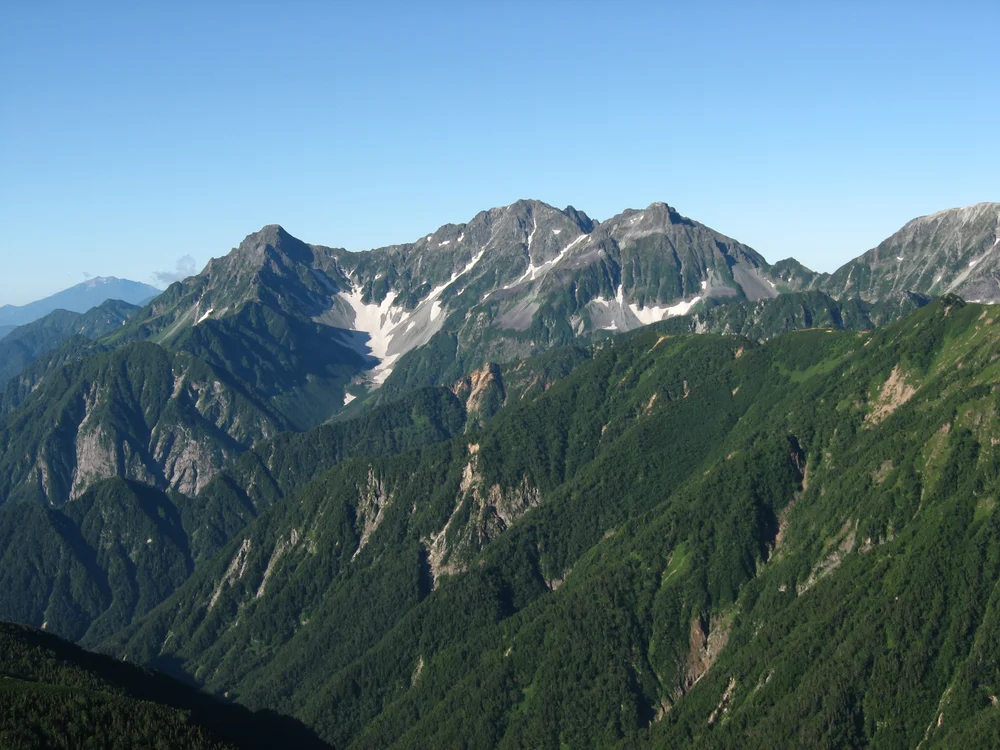
On August 8, 1894, Weston, Kamonji, and two local porters set out from their bivouac in the lower valley, ascending into the colossal amphitheater of the Karasawa Cirque. Towering walls of gray granite rose thousands of feet above them, still choked with winter avalanche snowfields despite the midsummer heat.
Leaving the porters at the snowline, Weston and Kamonji roped up to tackle the steep, shattered couloirs leading toward the main crest. Without the steel ladders and chains that aid modern hikers today, the climb was a demanding Grade III scramble across brittle granitic ledges and steep scree ramps. Kamonji moved with feline grace in straw waraji sandals, while Weston climbed in heavy nailed alpine boots.
Cresting the Shirade col, the pair confronted a knife-edge arête buffeted by fierce mountain gusts. Balancing along the narrow ridge, with sheer precipices dropping down to the Gifu forests on their left and the Nagano cirque on their right, Weston and Kamonji pulled themselves onto the rocky apex of Okuhotakadake at 3,190 metres.
Before them stretched an awe-inspiring vista: to the north rose the sharp spear of Mount Yari; to the east, across the sea of clouds filling the Kofu basin, floated the majestic symmetrical cone of Mount Fuji; and to the northwest loomed the menacing, tooth-like silhouette of Mount Tsurugi.
The Legacy of the Father of Modern Alpinism
Upon returning to England in 1895, Weston wrote his masterpiece, Mountaineering and Exploration in the Japanese Alps, published in London in 1896. The book electrified Western geography and introduced the world to Japan’s high-altitude treasures. More importantly, Weston popularised the term ‘Japanese Alps’—originally suggested by English mineralogist William Gowland—solidifying the identity of the Hida, Kiso, and Akaishi ranges.
Weston’s passionate writings ignited a national awakening within Japan itself. Educated Japanese youths and scholars began flocking to the mountains not as religious ascetics, but as modern mountaineers seeking physical vitality and the romantic sublime. When the Japanese Alpine Club was founded in 1905, Weston was enthusiastically named its first honorary member.
Today, a bronze relief of Reverend Walter Weston stands enshrined in the forests of Kamikochi, where hundreds of mountaineers gather each June for the Weston Festival to honor the English priest who unlocked the heart of Japan’s alpine soul.
Key Statistics & Topographic Figures
- Category
- Alpine Pioneers
Archival Subject
- Reading Time
- 16 min read
Narrative Length
- Key Mountain
- mount-hotaka
Objective
- Ascent Route
- mount-hotaka-shiradezawa-ridge
Topography
- Verification
- Editorially Verified
Archival Standard
Archival Primary Source Quotations
“In the mountains, truth is etched in ice and granite; every step requires unwavering respect for the heights.”
Defined Alpine Terminology & Concepts
- Summit Push
- The final continuous climbing effort from the highest established camp to the mountain apex and back.
- Death Zone Chronicle
- A verified, research-backed historical narrative documenting the human, technical, and environmental realities of an alpine expedition.
Frequently Asked Questions: Awakening the Japanese Alps: Walter Weston's 1894 Hotaka Expedition
What is the core chronicle and subject of "Awakening the Japanese Alps: Walter Weston's 1894 Hotaka Expedition"?
Reverend Walter Weston enters the untracked wilderness of Kamikochi and climbs Mount Hotaka (3,190 m), introducing modern sport alpinism to Japan.
Which mountain peaks and routes are featured in "Awakening the Japanese Alps: Walter Weston's 1894 Hotaka Expedition"?
This narrative documents climbs on mount-hotaka along the mount-hotaka-shiradezawa-ridge in Japan.
Which documented expedition is chronicled in this story?
This historical chronicle captures the events of the 1894-weston-hida-mountains-exploration, verified through contemporary journals and archival records.
Who authored and researched this archival chronicle?
Authored and researched by Reverend Walter Weston, drawing on primary eyewitness testimonies, alpine club registries, and verified summit logs.
What makes this high-altitude chronicle historically significant?
Categorized under "Alpine Pioneers", this chronicle preserves critical lessons in alpine leadership, survival, tactical speed, and human endurance in the death zone.
Related Mountains
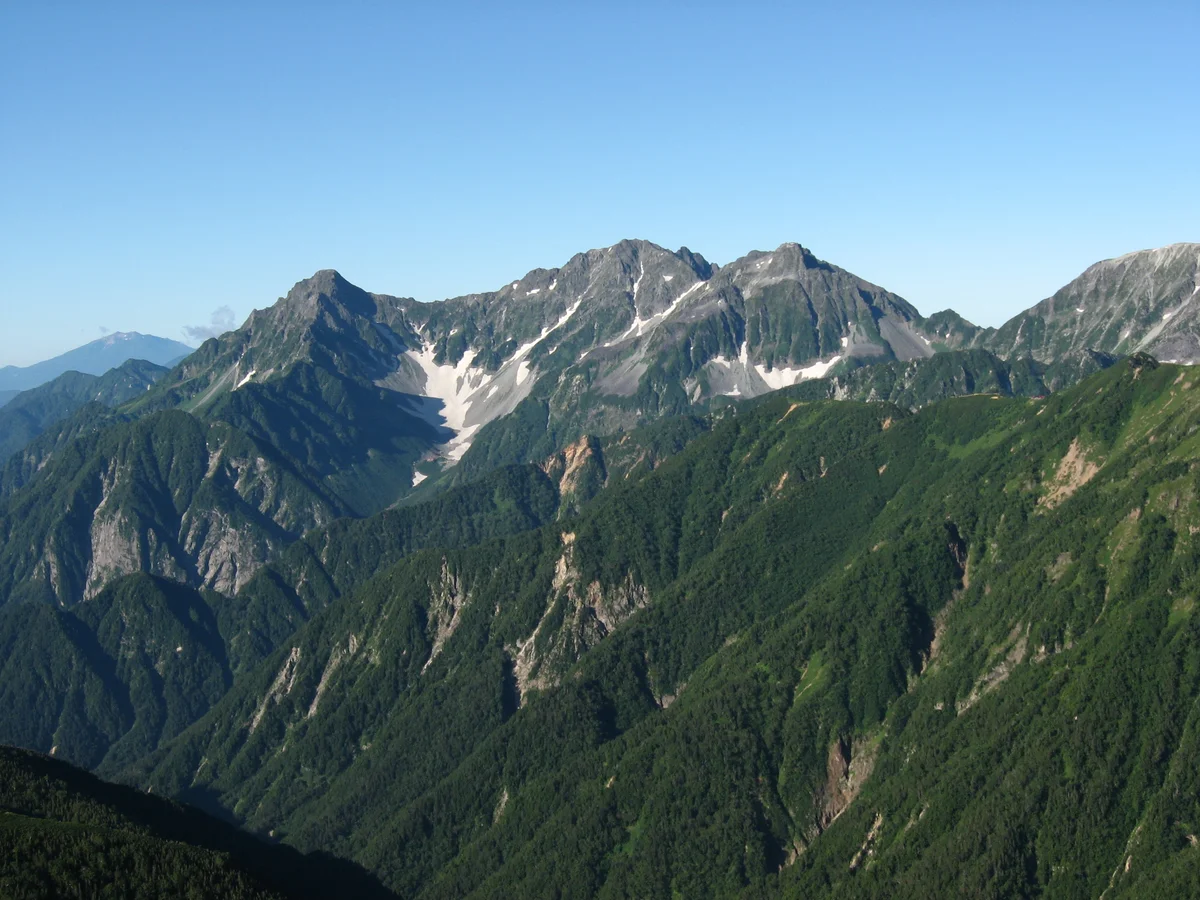

Mount Hotaka / Okuhotakadake
Mount Hotaka (Okuhotakadake) is the third-highest mountain in Japan at 3,190 metres (10,466 ft) and the supreme summit of the Hida Mountains in Chūbu-Sangaku National Park. Rising majestically above the idyllic alpine meadows of Kamikochi, the Hotaka Massif is famed for its rugged knife-edge arêtes, towering precipices, and the legendary Gendarme rock tower. Explored and introduced to the international alpine community by Reverend Walter Weston in the 1890s, Mount Hotaka is considered the spiritual cradle of Japanese technical rock climbing and alpine mountaineering.
Documented Sources & Archival Citations
- Mountaineering and Exploration in the Japanese Alps(John Murray, London / Walter Weston)
Supporting claim: Primary expedition narrative and exploration memoirs
Accessed/Documented: 1896