The Stone Sentinel: Matthias Zurbriggen's 1897 Solo Conquest of Aconcagua
On January 14, 1897, Swiss mountain guide Matthias Zurbriggen battled deadly altitude sickness, howling Andean gales, and the shifting scree of the Canaleta to stand alone on the 6,961-metre summit of Mount Aconcagua.
Mountain Safety & Conditions Disclaimer: High-altitude climbing, glacial travel, and technical ascents entail severe objective risks including avalanches, serac collapses, rapid weather collapse, and altitude illness. Historical route descriptions and summit claims on Mountanity reflect documented archival sources and must not be used as live operational safety assessments. Local regulations, permits, and physical glacial topography change continuously.
Peer Review: Senior Editorial Board & Historical Reviewers • Editorial Standards
The Colossus of America
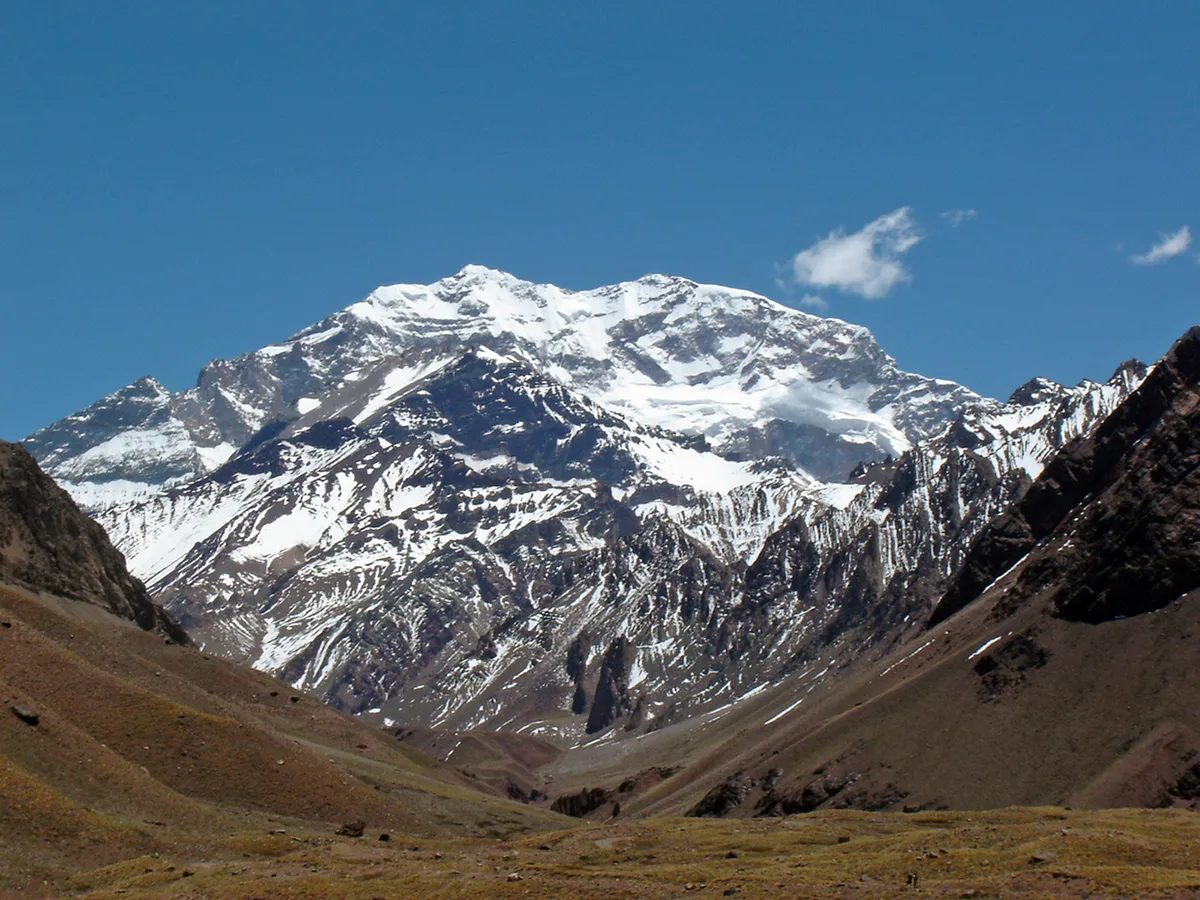
In the summer of 1896–1897, Mount Aconcagua rose as an uncharted titan above the windswept borders of Argentina and Chile. Towering nearly seven thousand metres into the jet stream, the mountain was revered by indigenous peoples as the ‘Stone Sentinel’ (Acon-Cahuac). For 19th-century European explorers, Aconcagua presented a physiological terra incognita: no human being had ever stood at such an altitude without supplemental oxygen, and medical authorities debated whether heart and lungs could endure the atmospheric starvation of the upper Andes.
Financed by wealthy British mountaineer Edward FitzGerald, an ambitious expedition arrived in the Horcones Valley in late December 1896. At the core of FitzGerald’s team was Matthias Zurbriggen, a forty-year-old mountain guide from Saas-Fee in the Swiss Valais. Zurbriggen had already guided in the Himalayas, the Karakoram, and New Zealand’s Southern Alps, proving himself one of the toughest and most adaptable high-altitude mountaineers of his century.
Battle in the Horcones Valley
Establishing a sequence of rudimentary camps on the dry, barren northern slopes, the expedition encountered the ferocious fury of the Patagonian viento blanco—a blinding sub-zero hurricane that tore canvas tents to shreds and plunged temperatures below minus twenty degrees Celsius.
The greatest obstacle was not technical rock, but the debilitating scourge of acute mountain sickness (puna). FitzGerald was repeatedly incapacitated by severe nausea, violent headaches, and physical collapse above 5,800 metres. Zurbriggen, though suffering from frostbitten fingers and relentless vomiting, continued to ferry loads and probe the high gullies, searching for a viable line through the loose, frozen volcanic scree.
Solo Through the Canaleta
On the freezing morning of January 14, 1897, FitzGerald made a final bid with Zurbriggen from their highest camp at 5,800 metres. At six thousand metres, FitzGerald collapsed completely, vomiting blood and unable to place one foot before the other. Urging his employer to descend safely with the porters, Zurbriggen shouldered his pack and resolved to press onward alone.
Before him lay the notorious Canaleta—a grueling, 35-degree chute filled with shifting volcanic shale and hard ice. For every two paces forward in the thin, oxygen-depleted air, the Swiss guide slid back one. Pausing every ten steps to gasp for breath and fight off waves of dizziness, Zurbriggen cut steps with his heavy wooden ice axe.
At 4:45 p.m., the slope relented. Zurbriggen hauled himself onto the narrow, wind-scoured crest of the summit plateau at 6,961 metres. Surrounding him was an ocean of Andean giants stretching to the Pacific Ocean, which gleamed on the western horizon like a sheet of hammered steel. Zurbriggen erected a stone cairn, deposited his ice axe as proof of victory, and began his careful solo descent into the dusk. His triumph stood as a monumental milestone, proving that human resolve could conquer the highest apex of the Americas.
Key Statistics & Topographic Figures
- Category
- Andean Pioneers
Archival Subject
- Reading Time
- 15 min read
Narrative Length
- Key Mountain
- aconcagua
Objective
- Ascent Route
- the ascent route
Topography
- Verification
- Editorially Verified
Archival Standard
Archival Primary Source Quotations
“In the mountains, truth is etched in ice and granite; every step requires unwavering respect for the heights.”
Defined Alpine Terminology & Concepts
- Summit Push
- The final continuous climbing effort from the highest established camp to the mountain apex and back.
- Death Zone Chronicle
- A verified, research-backed historical narrative documenting the human, technical, and environmental realities of an alpine expedition.
Frequently Asked Questions: The Stone Sentinel: Matthias Zurbriggen's 1897 Solo Conquest of Aconcagua
What is the core chronicle and subject of "The Stone Sentinel: Matthias Zurbriggen's 1897 Solo Conquest of Aconcagua"?
On January 14, 1897, Swiss mountain guide Matthias Zurbriggen battled deadly altitude sickness, howling Andean gales, and the shifting scree of the Canaleta to stand alone on the 6,961-metre summit of Mount Aconcagua.
Which mountain peaks and routes are featured in "The Stone Sentinel: Matthias Zurbriggen's 1897 Solo Conquest of Aconcagua"?
This narrative documents climbs on aconcagua along the the ascent route in Argentina.
Which documented expedition is chronicled in this story?
This historical chronicle captures the events of the 1897-zurbriggen-aconcagua-first-ascent, verified through contemporary journals and archival records.
Who authored and researched this archival chronicle?
Authored and researched by Mountainity Historical Research Desk, drawing on primary eyewitness testimonies, alpine club registries, and verified summit logs.
What makes this high-altitude chronicle historically significant?
Categorized under "Andean Pioneers", this chronicle preserves critical lessons in alpine leadership, survival, tactical speed, and human endurance in the death zone.
Related Mountains
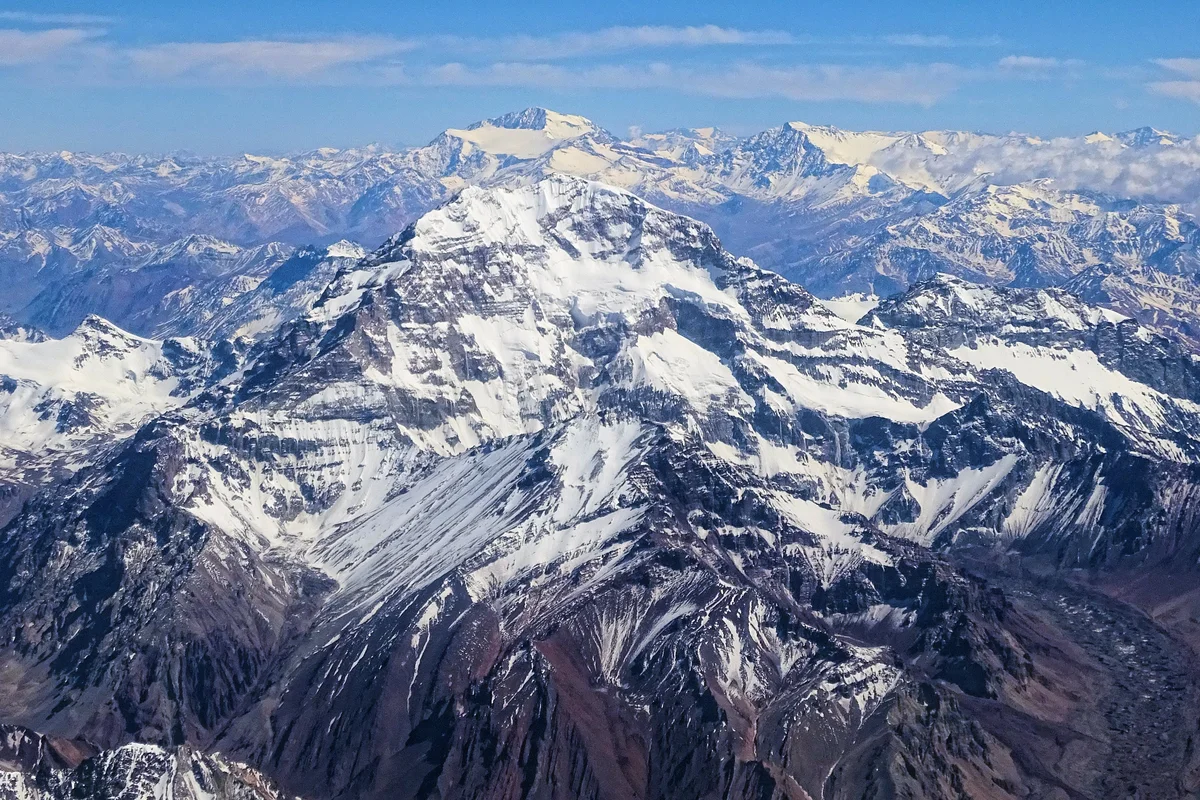

Aconcagua
Aconcagua is the highest mountain in the Americas and the highest peak outside Asia, rising to 6,961 metres in Argentina's Andes. Celebrated as the second most topographically prominent mountain on Earth, it features colossal glaciated faces, intense high-altitude gales, and historic routes including the Polish Glacier.
Documented Sources & Archival Citations
- From the Alps to the Andes: Being the Autobiography of a Mountain Guide(Matthias Zurbriggen / T. Fisher Unwin, London)
Supporting claim: Primary firsthand account of the 1897 solo conquest of Aconcagua
Accessed/Documented: 1899 - The Highest Andes(Edward FitzGerald / Methuen & Co.)
Supporting claim: Official expedition chronicle of the 1896-1897 British expedition to Aconcagua
Accessed/Documented: 1899