Conway upon Illimani: The 1898 Conquest of Bolivia's Monarch
On September 21, 1898, Victorian explorer Sir William Martin Conway and his Italian guides conquered Nevado Illimani (6,438 m), unlocking the roof of the Cordillera Real.
Mountain Safety & Conditions Disclaimer: High-altitude climbing, glacial travel, and technical ascents entail severe objective risks including avalanches, serac collapses, rapid weather collapse, and altitude illness. Historical route descriptions and summit claims on Mountanity reflect documented archival sources and must not be used as live operational safety assessments. Local regulations, permits, and physical glacial topography change continuously.
Peer Review: Senior Editorial Board & Historical Reviewers • Editorial Standards
Conway upon Illimani: The 1898 Conquest of Bolivia’s Monarch
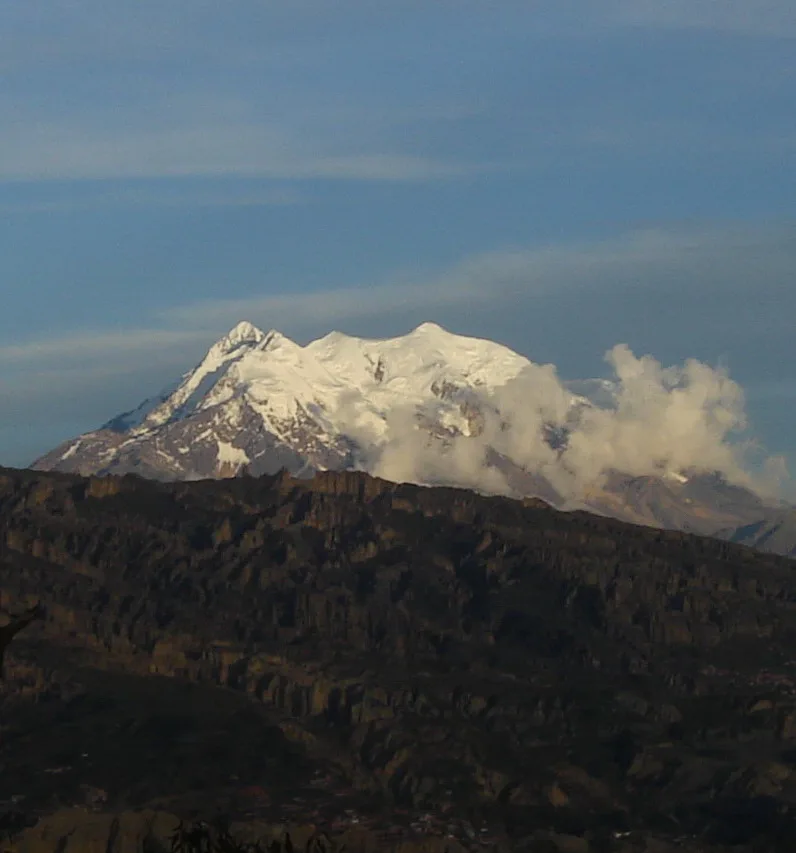
Rising like a throne of white porcelain above the ochre canyon of La Paz, Nevado Illimani (6,438 m / 21,122 ft) has inspired reverence and dread for millennia. To the Aymara people of the high Altiplano, Illimani was no ordinary mountain; it was a supreme Achachila—an ancestral mountain god wrapped in everlasting snows whose weather dictated the harvest of the Andean valleys.
In the late nineteenth century, European alpinists had begun looking beyond the Alps toward the giant chains of South America. Leading the vanguard was Sir William Martin Conway, an eminent British art historian, explorer, and veteran of the high Karakoram and Arctic Svalbard. In 1898, Conway arrived in Bolivia determined to make the first ascent of the mountain that cast its shadow across the seat of Bolivian government.
The Alpine Team from Val Tournanche
Conway understood that high Andean exploration required elite technical guidance. For his assault on Illimani, he enlisted two of the finest mountain guides in the Alps: Antoine Maquignaz and Jean-Antoine Pellissier from the Italian valley of Val Tournanche beneath the Matterhorn.
Reaching the indigenous village of Pinaya on the lower western slopes, Conway encountered immediate suspicion from native Aymara herders, who feared that climbing the mountain would anger the deities and bring drought upon their potato fields. Through patient diplomacy and fair payment, Conway recruited local porters to transport his heavy canvas equipment, theodolites, and food stores up the steep scrub moraines to a base camp at 4,500 metres known as Puente Roto.
Above Puente Roto lay a terrifying rocky spur perched between two calving icefalls at 5,550 metres. Conway christened the aerie Nido de Cóndores—the Condor’s Nest.
Through the Night on Nido de Cóndores
On September 20, 1898, Conway, Maquignaz, and Pellissier settled into their tiny flannel tent at Nido de Cóndores. The cold was staggering, with temperatures plunging far below zero as gale-force winds howled across the Altiplano. Looking westward, they could see the flickering oil lamps of La Paz twinkling like stars in the canyon below.
At 3:00 a.m. on September 21, 1898, the three men tied into their hemp climbing rope and stepped out onto the frozen glacier. The climbing was immediately strenuous in the thin, oxygen-deprived air. Maquignaz led the way with a long wooden ice axe, cutting wide steps across steep 50-degree firn slopes and carefully bridging bottomless crevasses.
As the sun crested the eastern horizon, bathing the Amazonian cloud forests below in gold and vermilion, the climbers confronted the upper bergschrund. With immense effort, Maquignaz chipped handholds into vertical blue ice, hauling Conway and Pellissier over the lip onto the summit ridge.
Victory on Pico Sur
The final arête was a razor-edge spine of wind-sculpted snow, with dizzying precipices plunging thousands of feet on either side. Step by painful step, pausing every few yards to gasp for breath, the three men pressed forward.
At 1:30 p.m. on September 21, 1898, Sir William Martin Conway, Antoine Maquignaz, and Jean-Antoine Pellissier stepped onto the highest point of Nevado Illimani—the 6,438-metre Pico Sur. They stood upon the roof of the Cordillera Real, the first human beings ever to conquer the great Bolivian giant.
Conway unpacked his scientific instruments, recording barometric pressure and taking photographs that would provide the first modern cartographic insights into the range. Their triumph opened the golden era of high-altitude exploration across the Bolivian Andes, cementing Conway’s place as one of the supreme global explorers of the Victorian age.
Key Statistics & Topographic Figures
- Category
- Andean Pioneers
Archival Subject
- Reading Time
- 15 min read
Narrative Length
- Key Mountain
- illimani
Objective
- Ascent Route
- illimani-south-ridge
Topography
- Verification
- Editorially Verified
Archival Standard
Archival Primary Source Quotations
“In the mountains, truth is etched in ice and granite; every step requires unwavering respect for the heights.”
Defined Alpine Terminology & Concepts
- Summit Push
- The final continuous climbing effort from the highest established camp to the mountain apex and back.
- Death Zone Chronicle
- A verified, research-backed historical narrative documenting the human, technical, and environmental realities of an alpine expedition.
Frequently Asked Questions: Conway upon Illimani: The 1898 Conquest of Bolivia's Monarch
What is the core chronicle and subject of "Conway upon Illimani: The 1898 Conquest of Bolivia's Monarch"?
On September 21, 1898, Victorian explorer Sir William Martin Conway and his Italian guides conquered Nevado Illimani (6,438 m), unlocking the roof of the Cordillera Real.
Which mountain peaks and routes are featured in "Conway upon Illimani: The 1898 Conquest of Bolivia's Monarch"?
This narrative documents climbs on illimani along the illimani-south-ridge in Bolivia.
Which documented expedition is chronicled in this story?
This historical chronicle captures the events of the 1898-conway-illimani-first-ascent, verified through contemporary journals and archival records.
Who authored and researched this archival chronicle?
Authored and researched by Mountainity Historical Research Desk, drawing on primary eyewitness testimonies, alpine club registries, and verified summit logs.
What makes this high-altitude chronicle historically significant?
Categorized under "Andean Pioneers", this chronicle preserves critical lessons in alpine leadership, survival, tactical speed, and human endurance in the death zone.
Related Mountains
Illimani
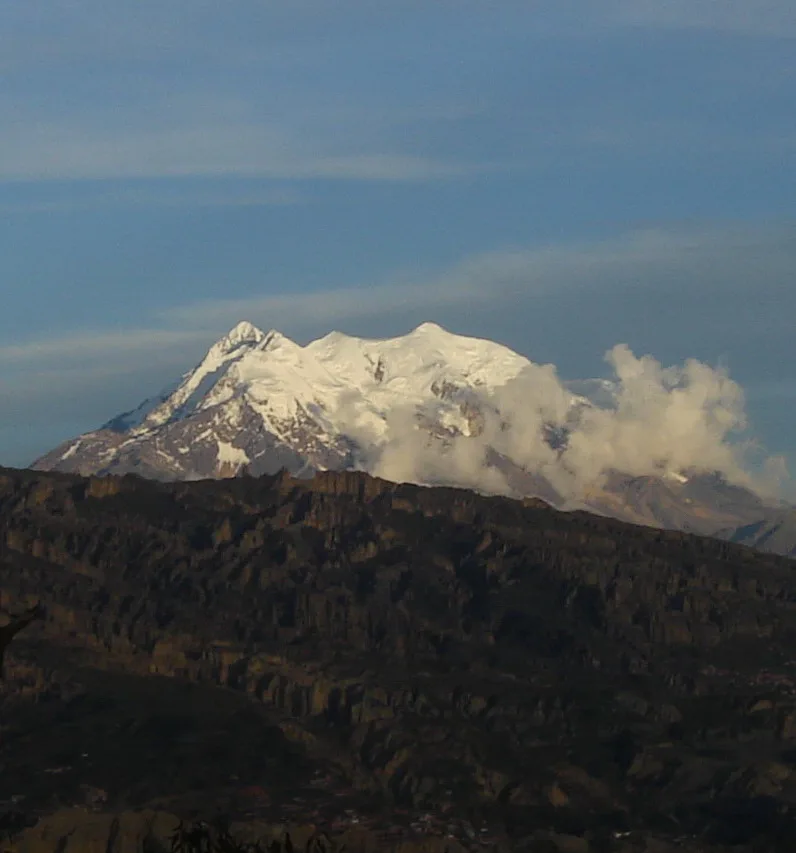
Nevado Illimani is the iconic 6,438-metre monarch of the Cordillera Real, towering dramatically over the city of La Paz and the Bolivian Altiplano. First climbed in September 1898 by British explorer Sir William Martin Conway alongside Swiss guides Antoine Maquignaz and Jean-Antoine Pellissier, the mountain features four distinct summits linked by knife-edge glaciated ridges. Its immense southern and eastern faces drop precipitously toward the Amazon basin.
Documented Sources & Archival Citations
- The Bolivian Andes: A Record of Climbing and Exploration in the Cordillera Real(Sir William Martin Conway / Harper & Brothers)
Supporting claim: Firsthand autobiographical narrative of the 1898 expedition and first ascent of Illimani
Accessed/Documented: 1901 - Geographical Journal: Explorations in the Bolivian Andes(Royal Geographical Society)
Supporting claim: Official scientific and topographic report of Conway's expeditions in the Cordillera Real
Accessed/Documented: 1899