Conquest of the Cathedral: The 1898 First Ascent of the Grand Teton
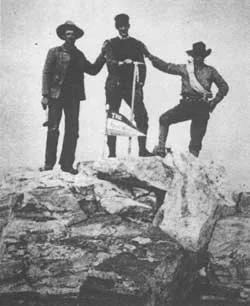
On August 11, 1898, Franklin Spencer Spalding, William Otis Owen, Frank Petersen, and John Shive completed the first documented climb of the Grand Teton. Overcoming the sheer, dizzying pitch of The Wall, the party planted the American flag on the summit of Wyoming's most iconic granite spire.
Mountain Safety & Conditions Disclaimer: High-altitude climbing, glacial travel, and technical ascents entail severe objective risks including avalanches, serac collapses, rapid weather collapse, and altitude illness. Historical route descriptions and summit claims on Mountanity reflect documented archival sources and must not be used as live operational safety assessments. Local regulations, permits, and physical glacial topography change continuously.
Peer Review: Senior Editorial Board & Historical Reviewers • Editorial Standards
The Phantom of Jackson Hole
In the late nineteenth century, the jagged granite teeth of the Teton Range rose as the most formidable natural barrier in the American West. Rising abruptly more than seven thousand feet above the sagebrush flats of Jackson Hole without foothills, the Grand Teton (4,199 m) captured the imagination of frontiersmen, fur trappers, and surveyors. For decades, local Shoshone and Bannock peoples revered the peaks as sacred landmarks, while French-Canadian fur trappers in the 1810s named them Les Trois Tetons.
In 1872, during the famous Hayden Geological Survey, Nathaniel P. Langford and James Stevenson claimed to have reached the summit of the Grand Teton. However, their published accounts described a smooth, easily walked summit dome covered in alpine flowers—a description that starkly contradicted the razor-sharp, shattered granite block known to modern climbers. To Wyoming land surveyor William Otis Owen, the Langford claim was a physical impossibility, and Owen dedicated his life to verifying the true summit of the monarch of Wyoming.
Owen made his first attempt in 1891, only to be stopped dead by the vertical cliffs of Garnet Canyon. Returning in 1893 and 1897, he pushed through the scree slopes to the Lower Saddle, but each time the towering northwest headwalls above the Upper Saddle turned him back with terrifying exposure.
The Team of Destiny
In the summer of 1898, Owen gathered a balanced four-man team uniquely equipped for the challenge:
- William Otis Owen: The visionary surveyor, route organizer, and logistical leader whose instruments and determination anchored the expedition.
- Franklin Spencer Spalding: An Episcopal missionary priest (later Bishop of Utah) blessed with astonishing natural rock-climbing agility and fearless balance.
- Frank Petersen: A hardy local rancher intimately familiar with western Wyoming backcountry travel.
- John Shive: A rugged homesteader and marksman from the Jackson Hole basin.
Departing the valley with pack horses on August 9, 1898, the party rode deep into Garnet Canyon, camping beneath the immense granite walls of Disappointment Peak and Middle Teton. On August 10, they carried packs, ropes, and iron-tipped staffs up the steep snowcouloir to establish high camp on the windswept Lower Saddle at 3,535 metres.
Overcoming The Wall
Before sunrise on August 11, 1898, under cloudless sapphire skies, the four men began scrambling up the steep Central Gully toward the Upper Saddle at nearly 4,000 metres. Arriving at the col between the Grand Teton and the Enclosure, they were greeted by the intimidating sight of the sheer northwest face.
Working their way along a narrow, sloping ledge on the west face with a vertiginous 3,000-foot drop into the Teton Basin of Idaho, they arrived at the Belly Roll. Here, a giant granite rib projected out over the void, forcing each climber to drop onto his stomach, slide forward over the protruding rock with hands gripping a microscopic lip, and kick his legs outward above thousands of feet of empty air.
Immediately beyond lay The Crawl, a tight eighteen-inch ledge overhung by a colossal ceiling of Precambrian gneiss. Squeezing along on hands and knees with their packs dragged behind them, the party reached the ultimate crux: The Wall, also known as the Double Chimney.
Here, a vertical sixty-foot rock cleft rose at an angle exceeding eighty degrees, glazed with black ice from morning frost. All previous expeditions had halted here, declaring the rock unclimbable. Franklin Spalding stepped forward without hesitation.
Removing his boots and relying on heavy woolen socks for tactile friction against the smooth granite crystals, Spalding jammed his fingers into hairline cracks and braced his shoulders against the chimney walls. Moving with deliberate, rhythmic power, Spalding surmounted an overhanging bulge, found an iron handhold on a ledge above, and hauled himself onto a spacious platform.
Summit at Last
Spalding lowered his rope to the breathless climbers below. One by one, Owen, Petersen, and Shive tied the hemp line around their waists and were hauled through the chimney. Above The Wall, the technical difficulties eased into steep scrambles up the Owen Chimney and Sargent’s Chimney.
At four o’clock in the afternoon on August 11, 1898, the four men scrambled onto the flat, narrow granite slabs of the true summit of the Grand Teton.
There was no flower-strewn meadow as Langford had claimed. Instead, they found a pristine, untouched granite aerie commanding 360-degree views across Wyoming, Idaho, and Montana. The climbers constructed a solid stone cairn five feet high, unfurled an American flag, and cold-chiseled their names into the summit stone: W. O. Owen, Rev. F. S. Spalding, Frank Petersen, John Shive, Aug 11, 1898.
Descending safely through The Wall on doubled ropes before nightfall, the party returned to the Lower Saddle as legends. Their triumph stood as the defining milestone of nineteenth-century American mountaineering, unlocking the vertical granite empire of the Teton Range for all generations to come.
Key Statistics & Topographic Figures
- Category
- Rocky Mountain Lore
Archival Subject
- Reading Time
- 15 min read
Narrative Length
- Key Mountain
- grand-teton
Objective
- Ascent Route
- grand-teton-owen-spalding
Topography
- Verification
- Editorially Verified
Archival Standard
Archival Primary Source Quotations
“In the mountains, truth is etched in ice and granite; every step requires unwavering respect for the heights.”
Defined Alpine Terminology & Concepts
- Summit Push
- The final continuous climbing effort from the highest established camp to the mountain apex and back.
- Death Zone Chronicle
- A verified, research-backed historical narrative documenting the human, technical, and environmental realities of an alpine expedition.
Frequently Asked Questions: Conquest of the Cathedral: The 1898 First Ascent of the Grand Teton
What is the core chronicle and subject of "Conquest of the Cathedral: The 1898 First Ascent of the Grand Teton"?
On August 11, 1898, Franklin Spencer Spalding, William Otis Owen, Frank Petersen, and John Shive completed the first documented climb of the Grand Teton. Overcoming the sheer, dizzying pitch of The Wall, the party planted the American flag on the summit of Wyoming's most iconic granite spire.
Which mountain peaks and routes are featured in "Conquest of the Cathedral: The 1898 First Ascent of the Grand Teton"?
This narrative documents climbs on grand-teton along the grand-teton-owen-spalding in United States.
Which documented expedition is chronicled in this story?
This historical chronicle captures the events of the 1898-owen-spalding-grand-teton, verified through contemporary journals and archival records.
Who authored and researched this archival chronicle?
Authored and researched by Mountainity Historical Research Desk, drawing on primary eyewitness testimonies, alpine club registries, and verified summit logs.
What makes this high-altitude chronicle historically significant?
Categorized under "Rocky Mountain Lore", this chronicle preserves critical lessons in alpine leadership, survival, tactical speed, and human endurance in the death zone.
Related Mountains

Grand Teton
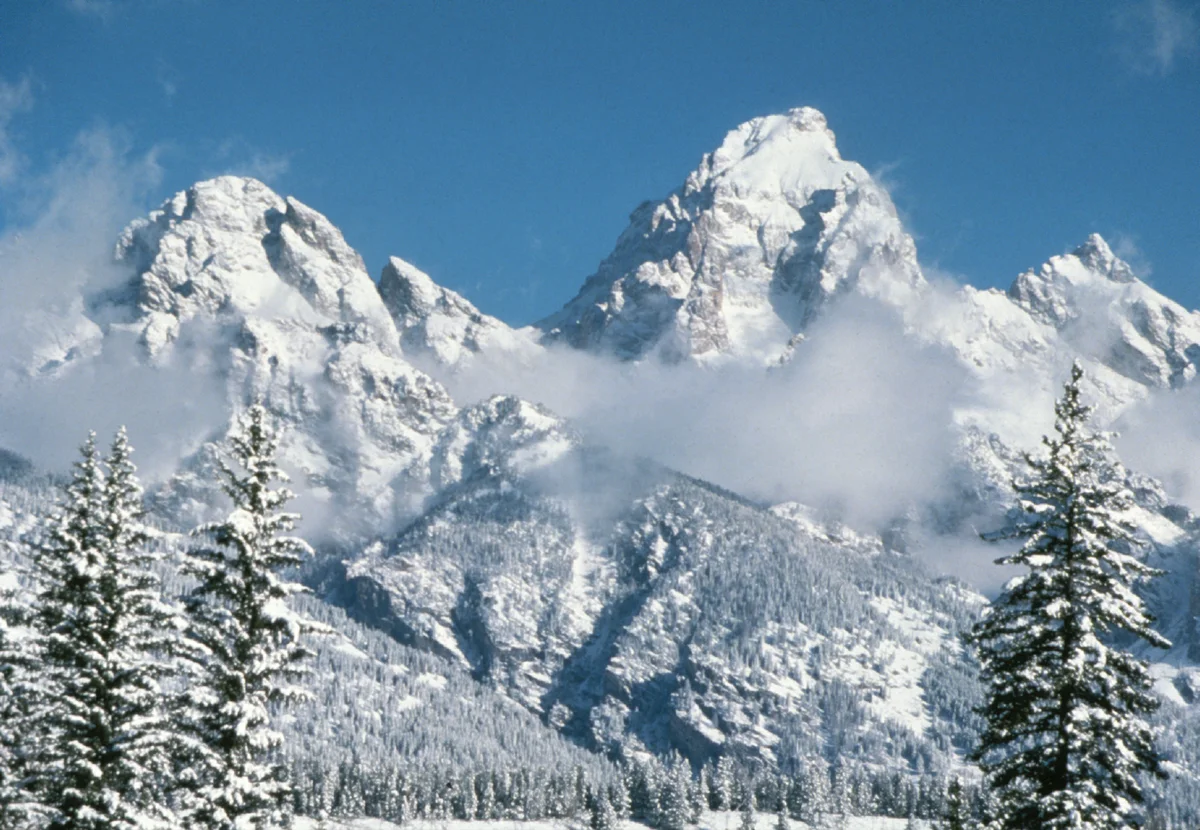
Grand Teton is a world-famous, razor-sharp granite and gneiss peak rising abruptly to an elevation of 4,199 metres in Grand Teton National Park in northwestern Wyoming. As the highest summit in the Teton Range and the second highest peak in Wyoming, it towers more than 7,000 vertical feet above the sagebrush flats of Jackson Hole without intervening foothills. It is celebrated across mountaineering history as the birthplace of modern American technical rock climbing and client-centered mountain guiding.
Documented Sources & Archival Citations
- Ascent of the Grand Teton (Outing Magazine, 1901)(William O. Owen)
Supporting claim: Primary first-hand report and photographic record of the 1898 Grand Teton climb
Accessed/Documented: 2026 - A Climber's Guide to the Teton Range(Leigh Ortenburger and Reynold G. Jackson / The Mountaineers Books)
Supporting claim: Comprehensive topographic and historical analysis of the Owen-Spalding first ascent
Accessed/Documented: 2026