Grand Teton
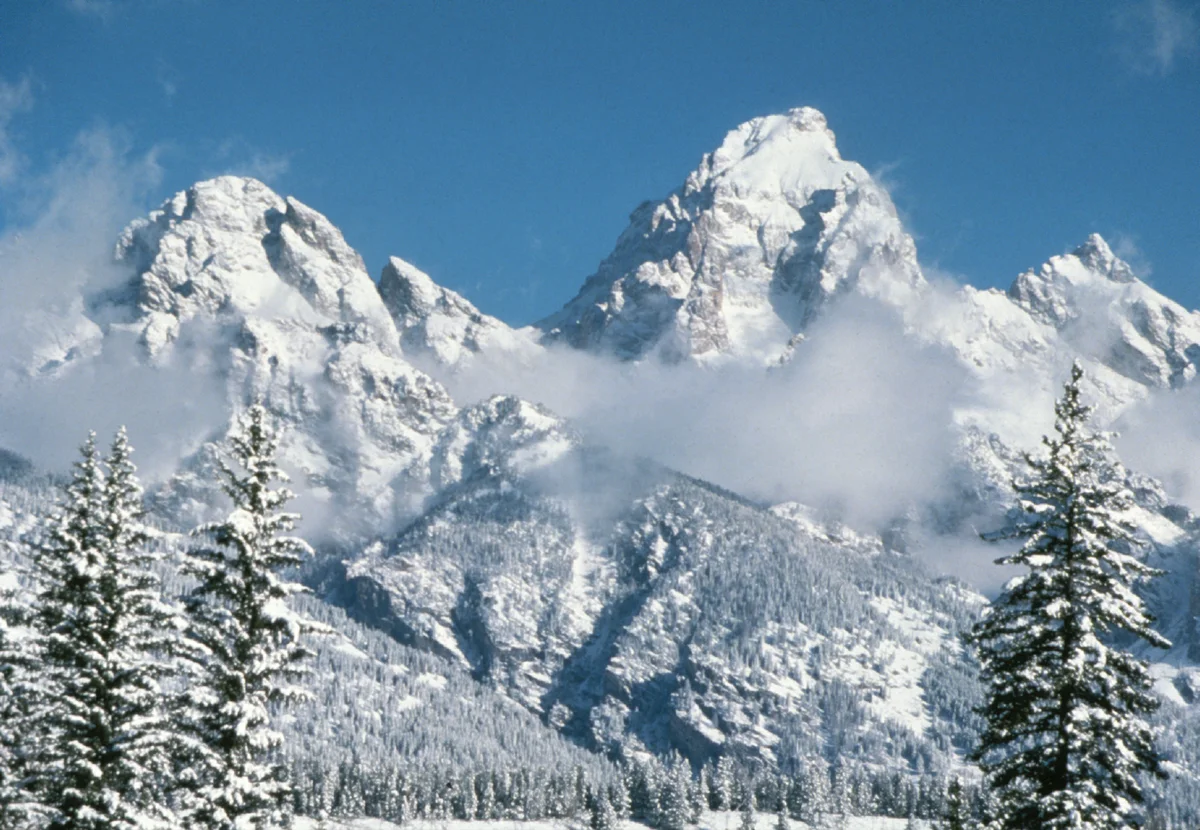
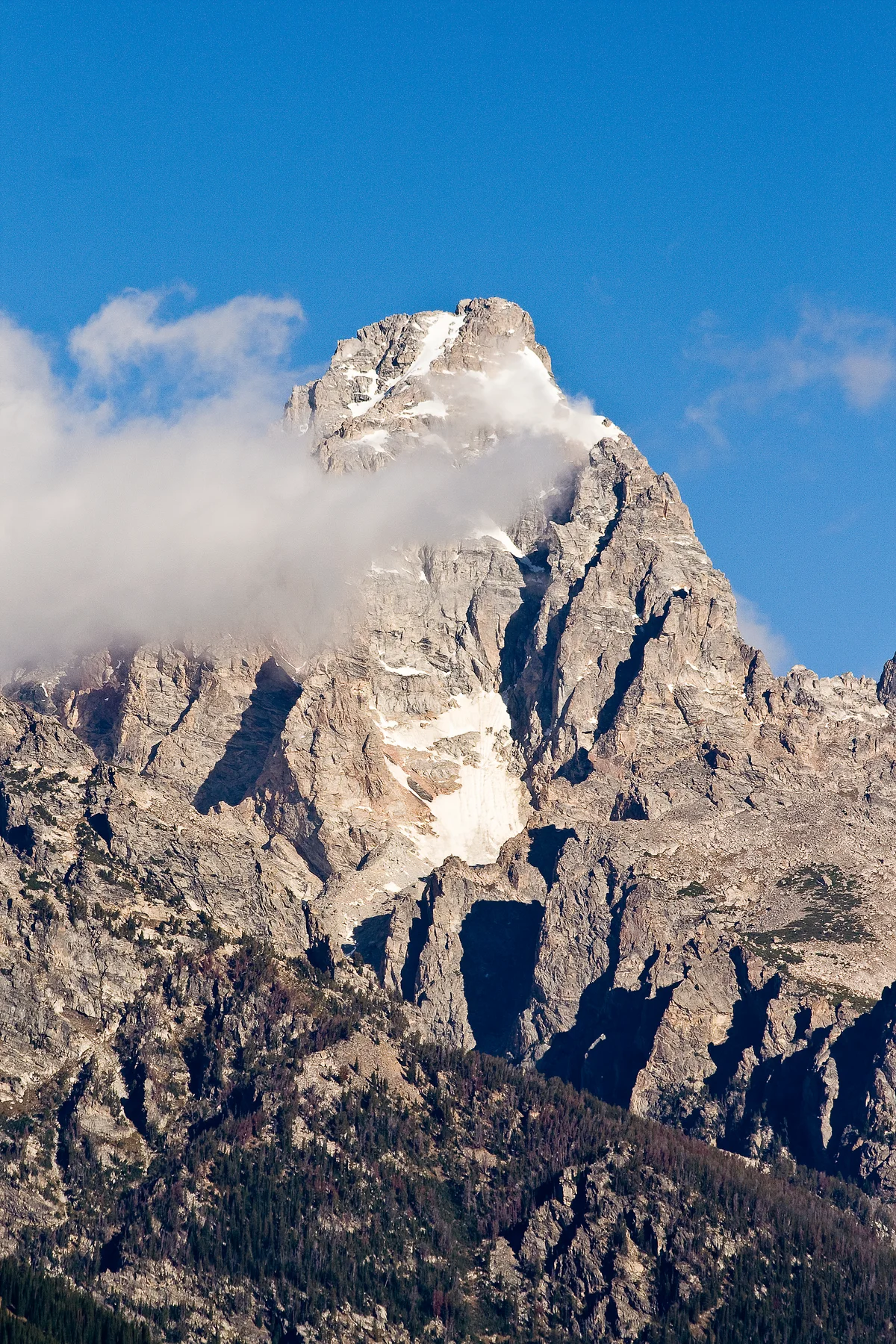
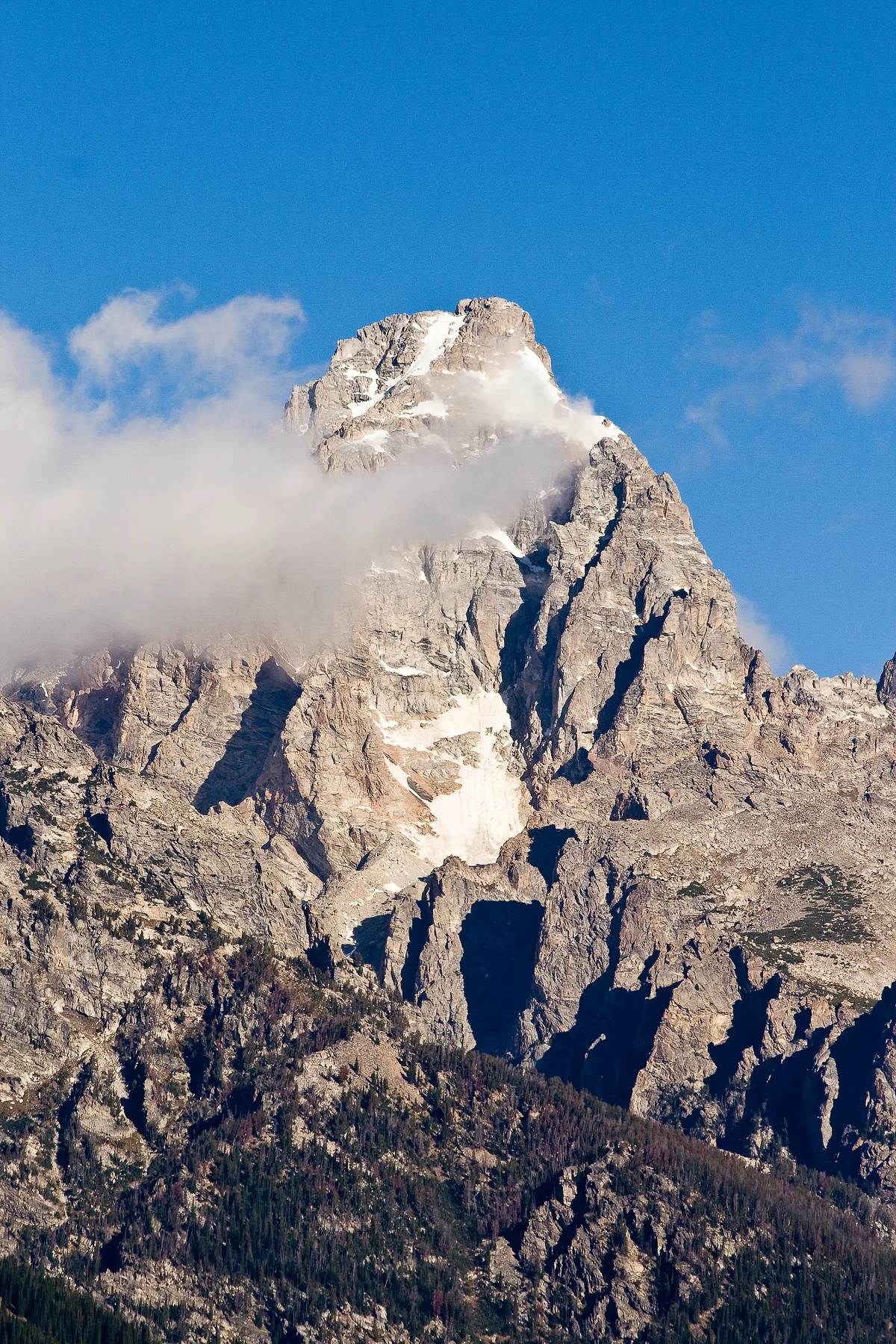
Grand Teton is a world-famous, razor-sharp granite and gneiss peak rising abruptly to an elevation of 4,199 metres in Grand Teton National Park in northwestern Wyoming. As the highest summit in the Teton Range and the second highest peak in Wyoming, it towers more than 7,000 vertical feet above the sagebrush flats of Jackson Hole without intervening foothills.
 United States
Mountain Safety & Conditions Disclaimer: High-altitude climbing, glacial travel, and technical ascents entail severe objective risks including avalanches, serac collapses, rapid weather collapse, and altitude illness. Historical route descriptions and summit claims on Mountanity reflect documented archival sources and must not be used as live operational safety assessments. Local regulations, permits, and physical glacial topography change continuously.
Peer Review: Senior Editorial Board & Historical Reviewers • Editorial Standards
Geographical Setting & Topography
Located in northwestern Wyoming ten miles south of Yellowstone National Park, Grand Teton anchors the dramatic Cathedral Group alongside Mount Owen, Teewinot Mountain, Middle Teton, and South Teton. Created by tectonic uplift along the Teton Fault over millions of years, its sheer eastern precipices plunge into Garnet Canyon and Cascade Canyon, while the hanging Teton Glacier nests in the shadowed cirque beneath its north face.
Historic First Ascent
Date: 1898-08-11
Ascent Team: Franklin Spencer Spalding, William O. Owen, Frank Petersen, John Shive
Key Statistics & Topographic Figures
- Summit Elevation
- 4,199 metres (13,775 feet)
- Topographic Prominence
- 1,995 metres (6,545 feet)
- First Documented Ascent
- August 11, 1898 (Owen-Spalding party)
- Vertical Relief
- Over 7,000 feet above Jackson Hole
- Classic Routes
- Owen-Spalding (5.4), Complete Exum Ridge (5.7)
Archival Primary Source Quotations
“The Grand Teton is the cathedral of American mountaineering; its granite spires demand absolute reverence and skill.”
Defined Alpine Terminology & Concepts
- Diabase Dike
- A vertical sheet of dark igneous basaltic rock that intruded into existing fractured granite and gneiss formations millions of years ago.
- Step-Across
- The dramatic move where a climber steps or leaps across an open void from the terminus of Wall Street ledge onto the Upper Exum Ridge of Grand Teton.
Grand Teton Mountain Weather Forecast
Meteorological Feed Unavailable
Unable to reach meteorological station endpoint. Please verify your connection or retry.
Loading condition...
Target Elevation: 4,199 mSafe summit ridge climbing requires gusts below 40 km/h.
Evaluating thermal loss...
Tracking glacial freezing boundary...
Assessing whiteout and cloud immersion hazards...
High-altitude snow glare requires Category 4 glacier glasses to prevent snow blindness.
Evaluating oxygen partial pressure...
Detailed 14-Day Summit Window & Weather Timeline
Explore day-by-day summit push safety windows, wind shear analysis, and extended multi-day forecasts for Grand Teton.
Explore Grand Teton (4,199 m) in Interactive 3D
Inspect steep glacial walls, hanging seracs, ridge approaches, and elevation relief with 360° rotation and terrain tilt in WebGL.
Documented Climbing Routes (2)
Complete Exum Ridge Route (Grand Teton)
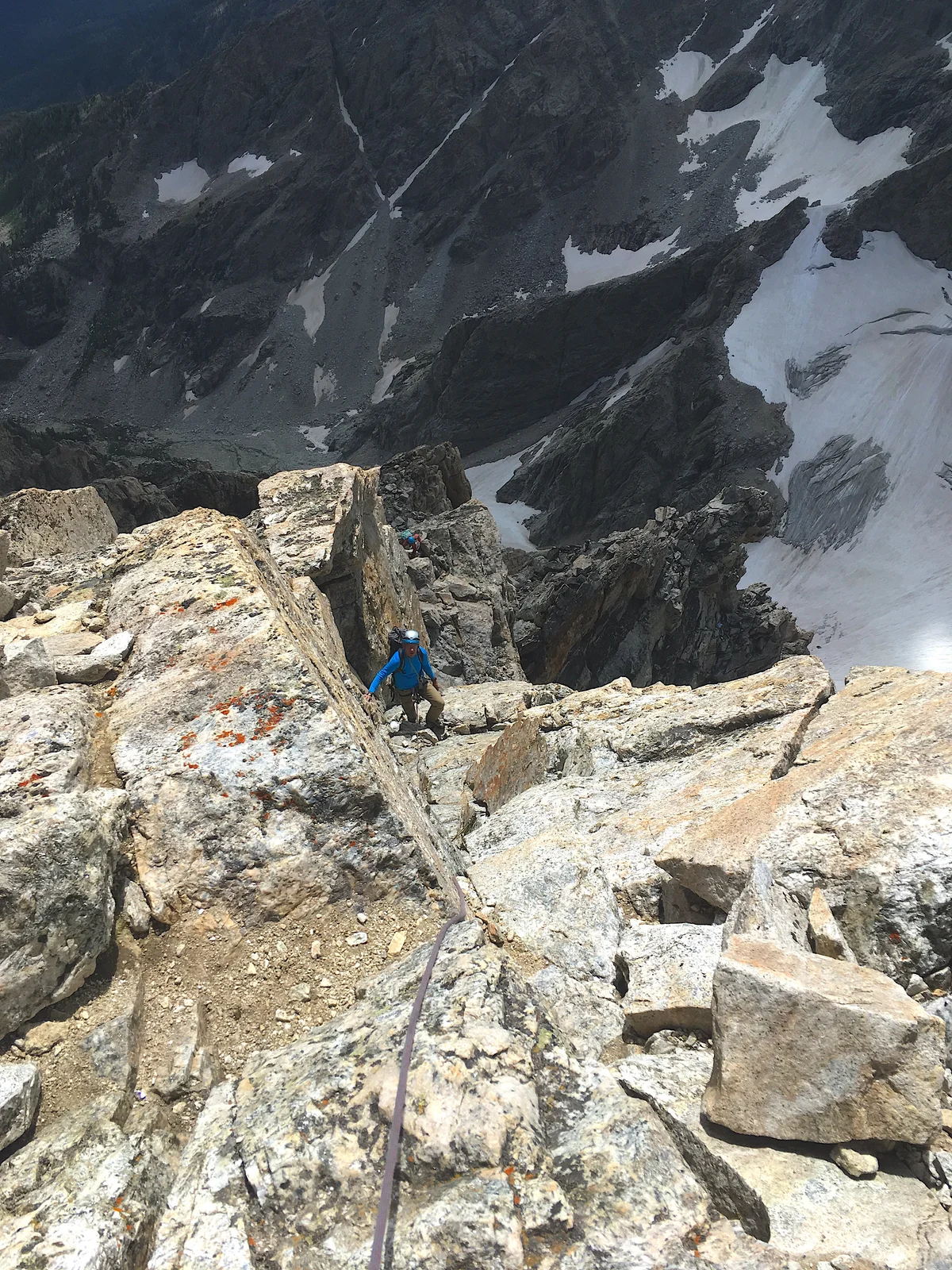
The Complete Exum Ridge is widely revered as the finest, most aesthetic alpine rock climb in North America, scaling 1,700 vertical feet of immaculate, exposed Precambrian gneiss along the south ridge of Grand Teton directly to the summit. Pioneered in its upper section by 20-year-old Glenn Exum in 1931 during a daring solo climb and completed from the Lower Saddle by Paul Petzoldt and Glenn Exum, the route is graded Grade III / YDS 5.7 (French 5a), featured prominently in Fifty Classic Climbs of North America.
Owen-Spalding Route (Grand Teton)
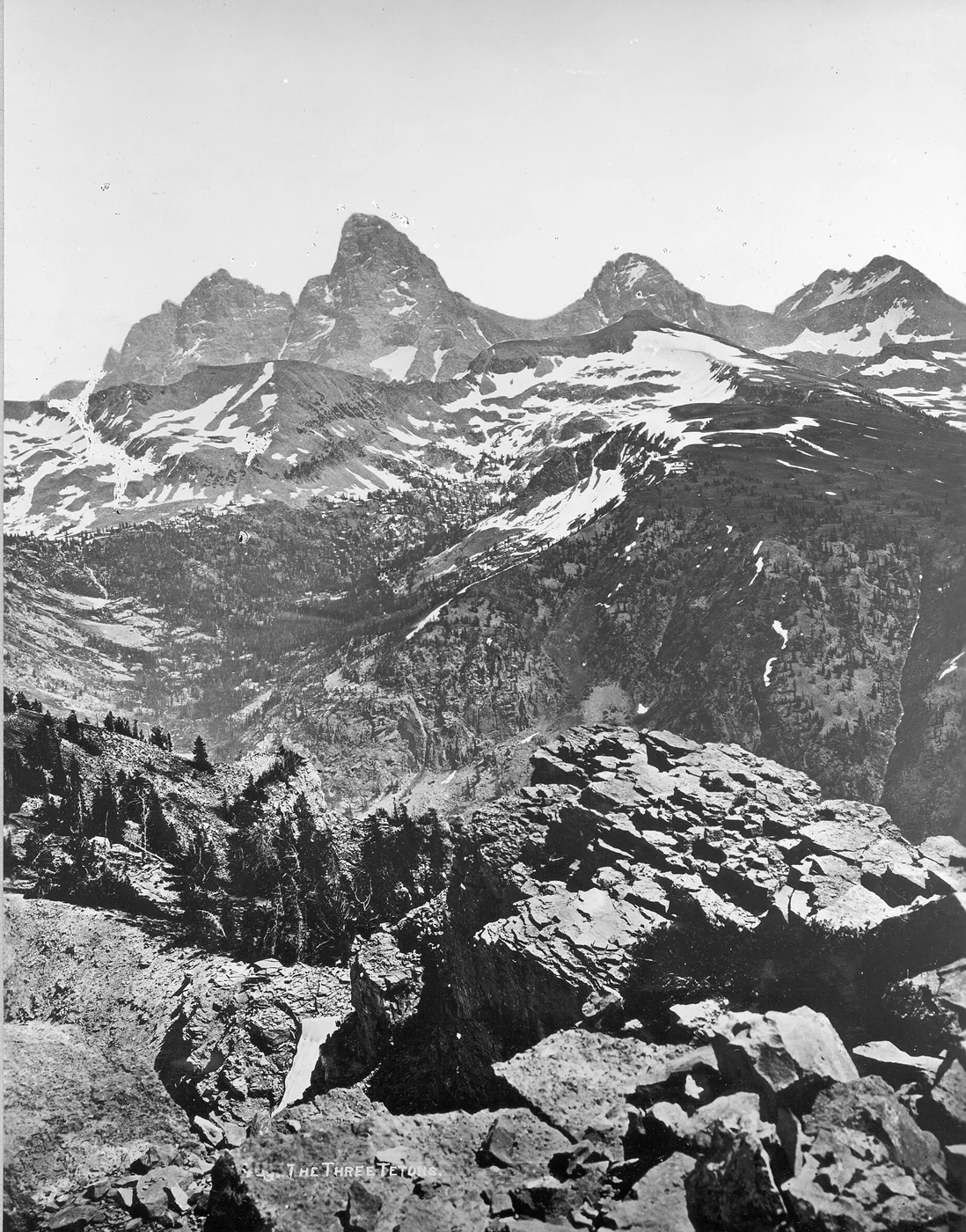
The Owen-Spalding route is the historic normal route to the summit of Grand Teton, pioneering the first documented ascent of the mountain on August 11, 1898. Ascending 2,130 metres of vertical elevation gain from Lupine Meadows via Garnet Canyon, the Lower Saddle, and the Upper Saddle, the route features dramatic, world-renowned exposure on passages like the Belly Roll, The Crawl, and the physical crux of The Wall (Double Chimney), graded YDS 5.4 or French III.
Historical Expeditions (4)
1898 Owen-Spalding Grand Teton First Documented Ascent
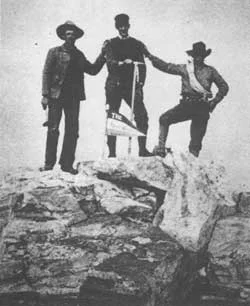
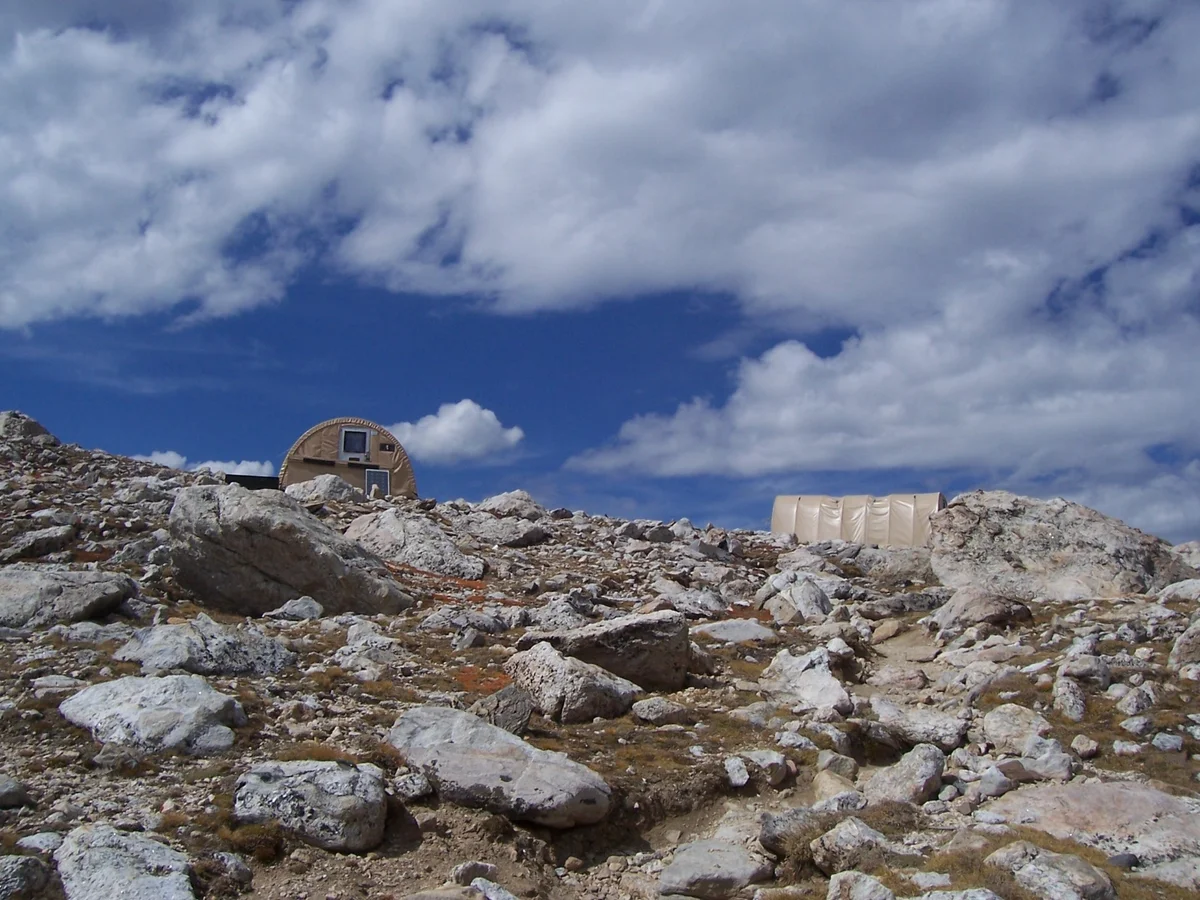
On August 11, 1898, Franklin Spencer Spalding, William Otis Owen, Frank Petersen, and John Shive completed the first documented climb of the Grand Teton, overcoming the sheer pitch of The Wall.
1931 Glenn Exum Upper Exum Ridge Solo Ascent
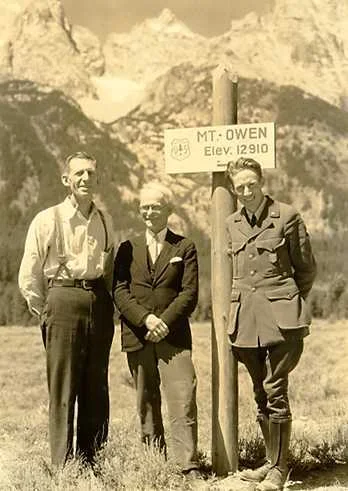
On July 15, 1931, twenty-year-old Glenn Exum made an audacious solo first ascent of the Upper Exum Ridge on Grand Teton, famously leaping the Wall Street gap in football cleats.
1932 Miriam Underhill Grand Teton Guideless Traverse
In August 1932, feminist alpine pioneer Miriam O'Brien Underhill and Robert Underhill completed a landmark guideless campaign across the Grand Teton and Teton Range.
1936 Jack Durrance Grand Teton North Ridge Direct
On August 29, 1936, Jack Durrance and Kenneth Henderson established the formidable North Ridge of the Grand Teton, introducing European piton craft to the American Rockies.
Summit Chronicles & Stories (4)
Conquest of the Cathedral: The 1898 First Ascent of the Grand Teton
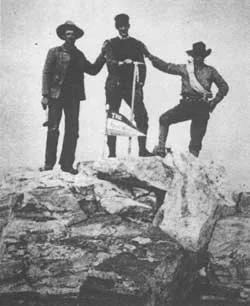
On August 11, 1898, Franklin Spencer Spalding, William Otis Owen, Frank Petersen, and John Shive completed the first documented climb of the Grand Teton. Overcoming the sheer, dizzying pitch of The Wall, the party planted the American flag on the summit of Wyoming's most iconic granite spire.
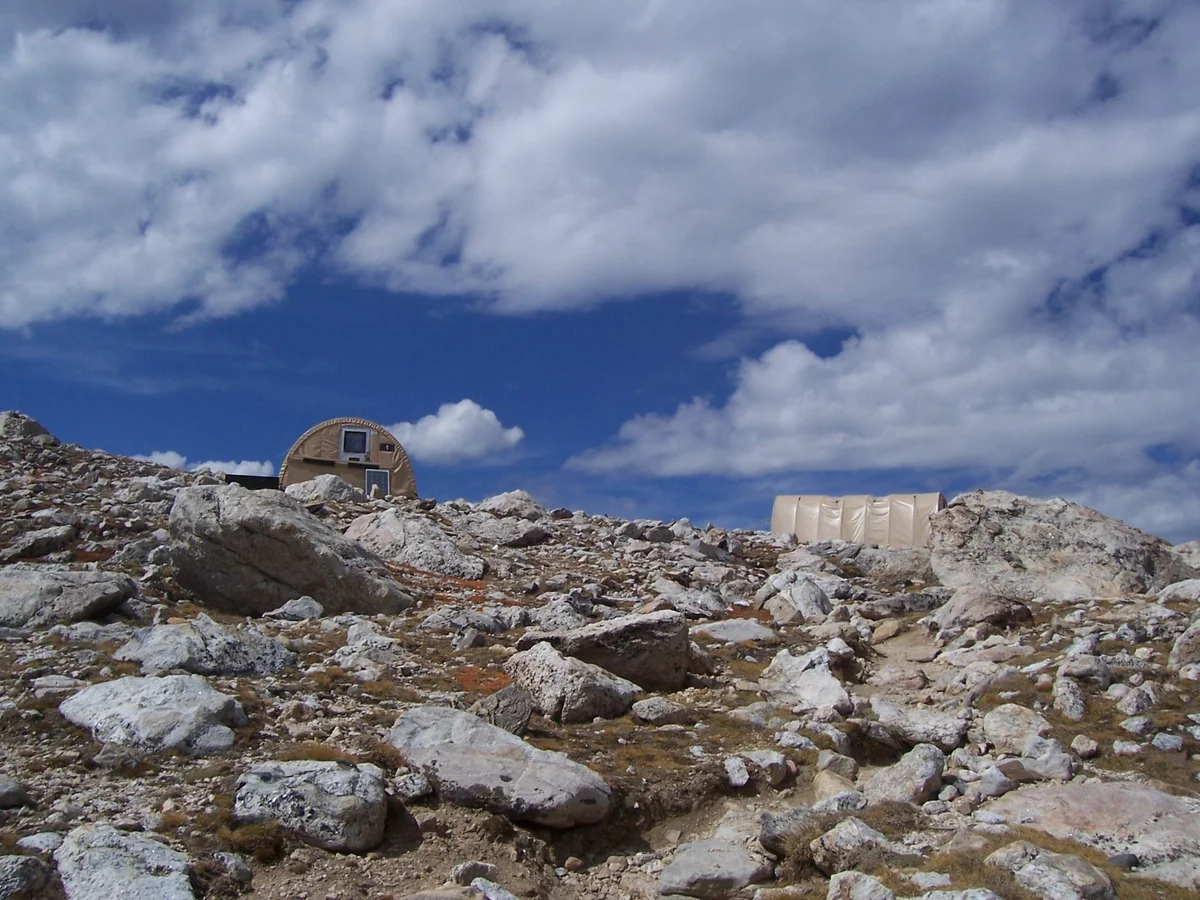
The Leap at Wall Street: Glenn Exum's 1931 Grand Teton Solo Breakthrough
On July 15, 1931, twenty-year-old Glenn Exum completed an audacious solo first ascent of the Upper Exum Ridge on the Grand Teton. Wearing leather-cleated football shoes, Exum paced seven times before leaping across the terrifying void at Wall Street to unlock America's finest alpine rock ridge.
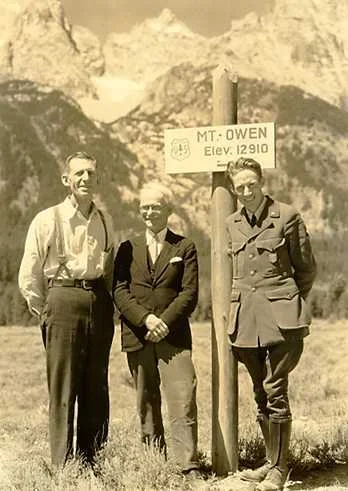
Guideless on the Cathedral: Miriam Underhill's 1932 Grand Teton Campaign
In August 1932, feminist alpine pioneer Miriam O'Brien Underhill and Robert Underhill carried their refined European rope craft to the Teton Range. Operating as an independent, egalitarian team, they completed a pioneering guideless traverse of the Grand Teton, redefining American women's mountaineering.
Shadows and Steel: Jack Durrance and the 1936 Grand Teton North Ridge
On August 29, 1936, twenty-four-year-old Jack Durrance and Kenneth Henderson conquered the intimidating North Ridge of the Grand Teton. Driving forged European pitons into hairline cracks above a three-thousand-foot abyss, they established the most difficult technical rock route in North America.
Frequently Asked Questions: Grand Teton
What is Grand Teton and where is it located in Wyoming?
Grand Teton is a glaciated granite and gneiss horn rising to 4,199 metres (13,775 feet) in Grand Teton National Park, northwestern Wyoming, ten miles south of Yellowstone.
What is the elevation and prominence of Grand Teton?
Grand Teton has an official elevation of 4,199 metres (13,775 feet) and a topographic prominence of 1,995 metres, standing as the highest peak in the Teton Range.
Who made the first documented ascent of Grand Teton?
Franklin Spencer Spalding, William Otis Owen, Frank Petersen, and John Shive completed the first verified ascent on August 11, 1898, conquering the crux pitch of The Wall.
What is the most famous climbing route on Grand Teton?
The Complete Exum Ridge (5.7, Grade III) is celebrated as North America's finest alpine rock ridge, while the Owen-Spalding (5.4, Grade II) is the classic normal route.
What is the famous Wall Street ledge on Grand Teton?
Wall Street is an exposed natural terrace on the southeast face of Grand Teton that narrows to 18 inches above an abyss, requiring the iconic Step-Across leap onto the Exum Ridge.
What rock type forms the Grand Teton?
The Grand Teton is composed of 2.7-billion-year-old Precambrian metamorphic gneiss injected with lighter crystalline granite and prominent black diabase dikes.
Why are there no foothills beneath Grand Teton in Jackson Hole?
The Teton Fault line runs directly along the eastern base of the range, causing vertical displacement where the mountains rose abruptly while the valley floor dropped.
What climbing gear is typically required on Grand Teton in summer?
Climbers require a light alpine rack of cams and nuts, a 60-metre dynamic rope, climbing helmets, rock-climbing shoes, and ice axes or crampons for early-season couloirs.
Documented Sources & Archival Citations
- A Climber's Guide to the Teton Range(Leigh Ortenburger and Reynold G. Jackson / The Mountaineers Books)
Supporting claim: Authoritative topographic and historical climbing guide to the routes of the Grand Teton
Accessed/Documented: 2026 - The Grand Tetons: The Story of the Men Who Climbed Them(Fritiof Fryxell / American Alpine Journal)
Supporting claim: Historical documentation of early exploratory climbs and surveys in the Teton Range
Accessed/Documented: 2026