1898 Owen-Spalding Grand Teton First Documented Ascent
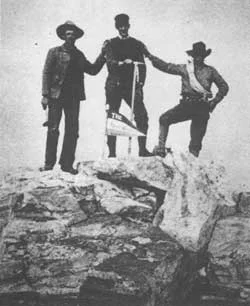
On August 11, 1898, Franklin Spencer Spalding, William Otis Owen, Frank Petersen, and John Shive completed the first documented climb of the Grand Teton, overcoming the sheer pitch of The Wall.
Mountain Safety & Conditions Disclaimer: High-altitude climbing, glacial travel, and technical ascents entail severe objective risks including avalanches, serac collapses, rapid weather collapse, and altitude illness. Historical route descriptions and summit claims on Mountanity reflect documented archival sources and must not be used as live operational safety assessments. Local regulations, permits, and physical glacial topography change continuously.
Peer Review: Senior Editorial Board & Historical Reviewers • Editorial Standards
Official Expedition Narrative & Archival Record
In August 1898, veteran Wyoming land surveyor William Otis Owen mounted his fourth and most determined campaign to conquer the unclimbed granite summit of the Grand Teton. Joining Owen were Episcopal missionary clergyman Franklin Spencer Spalding and local Jackson Hole pioneers Frank Petersen and John Shive. Packing supplies on horses into Garnet Canyon, the party established high camp at the Lower Saddle at 3,535 metres on August 10. Departing at dawn on August 11 under crystalline skies, the four climbers scrambled up the steep loose couloir to the Upper Saddle at nearly 4,000 metres, where all previous expeditions had turned back in despair before sheer, towering headwalls. Working along a dizzying narrow ledge with a direct drop of 3,000 feet into the Idaho plains, they reached the infamous Belly Roll, sliding on their stomachs across an overhanging rock rib. Beyond lay The Crawl, a tight eighteen-inch shelf squeezed beneath an overhanging roof. The true physical crux awaited at The Wall, a sheer sixty-foot chimney of polished Precambrian gneiss. Bishop Spalding, gifted with extraordinary strength and balance, stepped forward to lead the pitch unroped. Jamming his hands into thin vertical cracks and chimneying with his boots against smooth stone, Spalding climbed past the overhang to a secure platform. Lowering a rope, he hauled up the packs and safeguarded Owen, Petersen, and Shive. Above the crux, scrambling through the Owen Chimney brought the party to the 4,199-metre summit boulder at four in the afternoon. The climbers built a sturdy stone cairn, etched their names onto the summit rock with a cold chisel, and celebrated the undisputed first ascent in Teton history before descending safely to the Lower Saddle.
Documented Team Composition
- William Otis Owen (Leader, United States)
- Franklin Spencer Spalding (Climber, United States)
- Frank Petersen (Climber, United States)
- John Shive (Climber, United States)
Key Statistics & Topographic Figures
- Summit Date
- August 11, 1898 (4:00 PM)
- Mountain & Elevation
- Grand Teton (4,199 m / 13,775 ft)
- Summit Team
- William Owen, Franklin Spalding, Frank Petersen, John Shive
- Crux Pitch
- The Wall / Double Chimney (YDS 5.4)
- Legislative Recognition
- Wyoming State Legislature (February 9, 1929)
Archival Primary Source Quotations
“We reached the highest point of the Grand Teton and looked out upon the world, knowing our thirty-year quest was won.”
Defined Alpine Terminology & Concepts
- The Wall
- A sheer sixty-foot chimney of polished Precambrian gneiss on the west face of Grand Teton unlocked by Franklin Spalding in 1898.
- Summit Cairn
- A prominent stone monument constructed by pioneer mountaineers on a summit to establish undeniable proof of ascent.
Frequently Asked Questions: 1898 Owen-Spalding Grand Teton First Documented Ascent
What was the 1898 Owen-Spalding expedition on the Grand Teton?
The 1898 Owen-Spalding expedition achieved the first documented ascent of Grand Teton on August 11, 1898, overcoming the crux of The Wall to reach the 4,199-metre summit.
Who were the four climbers who stood on the summit of Grand Teton in 1898?
The four summit climbers were Episcopal clergyman Franklin Spencer Spalding, Wyoming surveyor William Otis Owen, rancher Frank Petersen, and homesteader John Shive.
How did the climbers conquer the crux pitch of The Wall in 1898?
Franklin Spalding removed his boots to climb in socks, chimneying unroped through a vertical 60-foot rock cleft with a 3,000-foot drop beneath him before lowering a rope to the others.
What physical evidence did the 1898 climbers leave on the summit?
The party erected a five-foot stone cairn and used a cold chisel to engrave their names and the date into the granite summit boulder.
Why did this climb settle the thirty-year Grand Teton controversy?
The climbers proved that Nathaniel Langford's 1872 claim of a smooth, floral summit was false, proving Langford had halted at the lower Enclosure.
What route did the 1898 expedition establish on the Grand Teton?
They pioneered the Owen-Spalding Route (5.4, Grade II), which remains the standard normal route up the mountain today.
What was the reaction of the State of Wyoming to the 1898 ascent?
In 1929, the Wyoming State Legislature officially recognized Owen and his companions as the genuine first climbers of the Grand Teton.
Where was the high camp located during the 1898 climb?
The party established high camp on the windswept Lower Saddle (3,535 m) between Middle Teton and Grand Teton on August 10, 1898.
Ascent Route & Topography
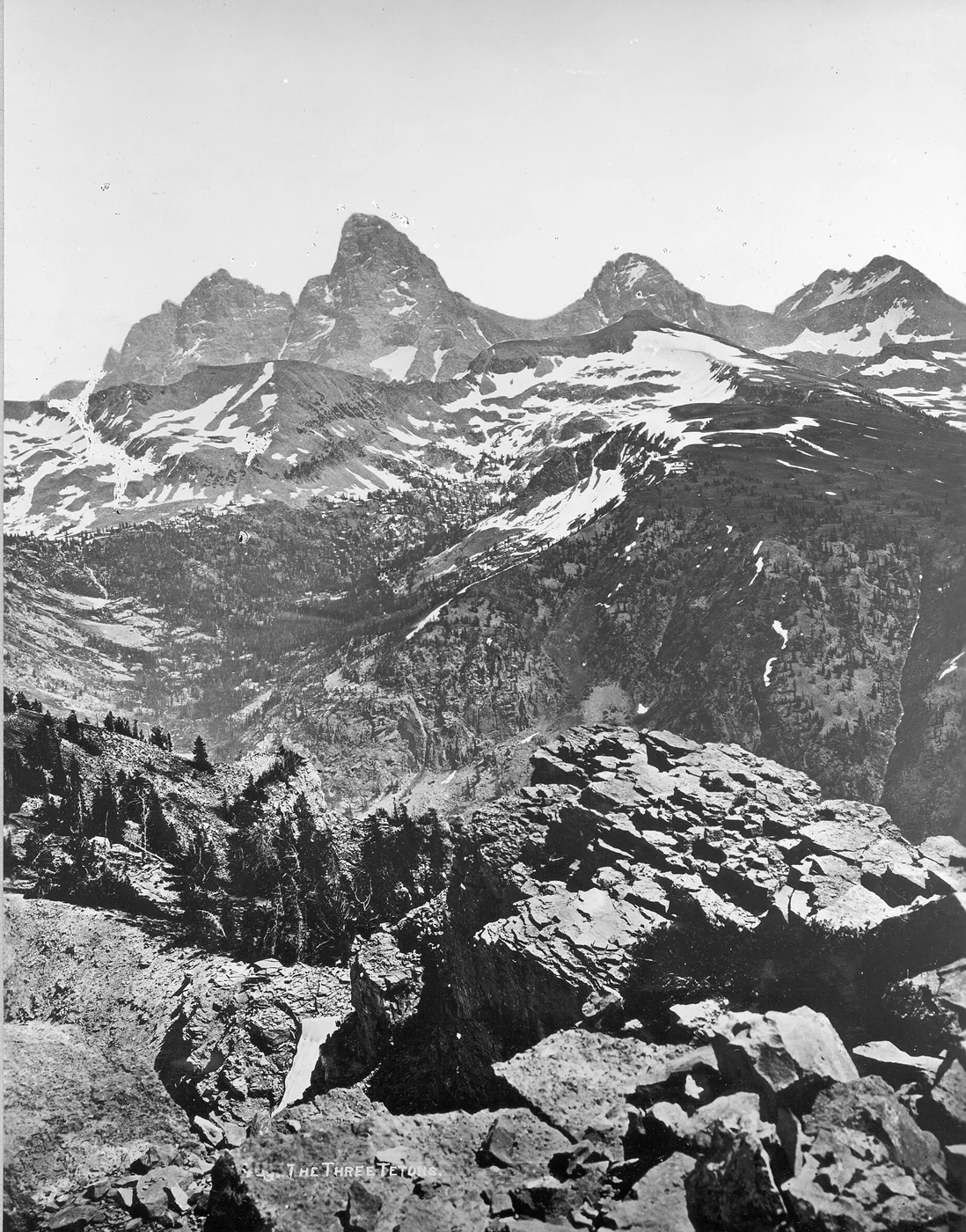
Owen-Spalding Route (Grand Teton)
The Owen-Spalding route is the historic normal route to the summit of Grand Teton, pioneering the first documented ascent of the mountain on August 11, 1898. Ascending 2,130 metres of vertical elevation gain from Lupine Meadows via Garnet Canyon, the Lower Saddle, and the Upper Saddle, the route features dramatic, world-renowned exposure on passages like the Belly Roll, The Crawl, and the physical crux of The Wall (Double Chimney), graded YDS 5.4 or French III.
Target Objective Peak
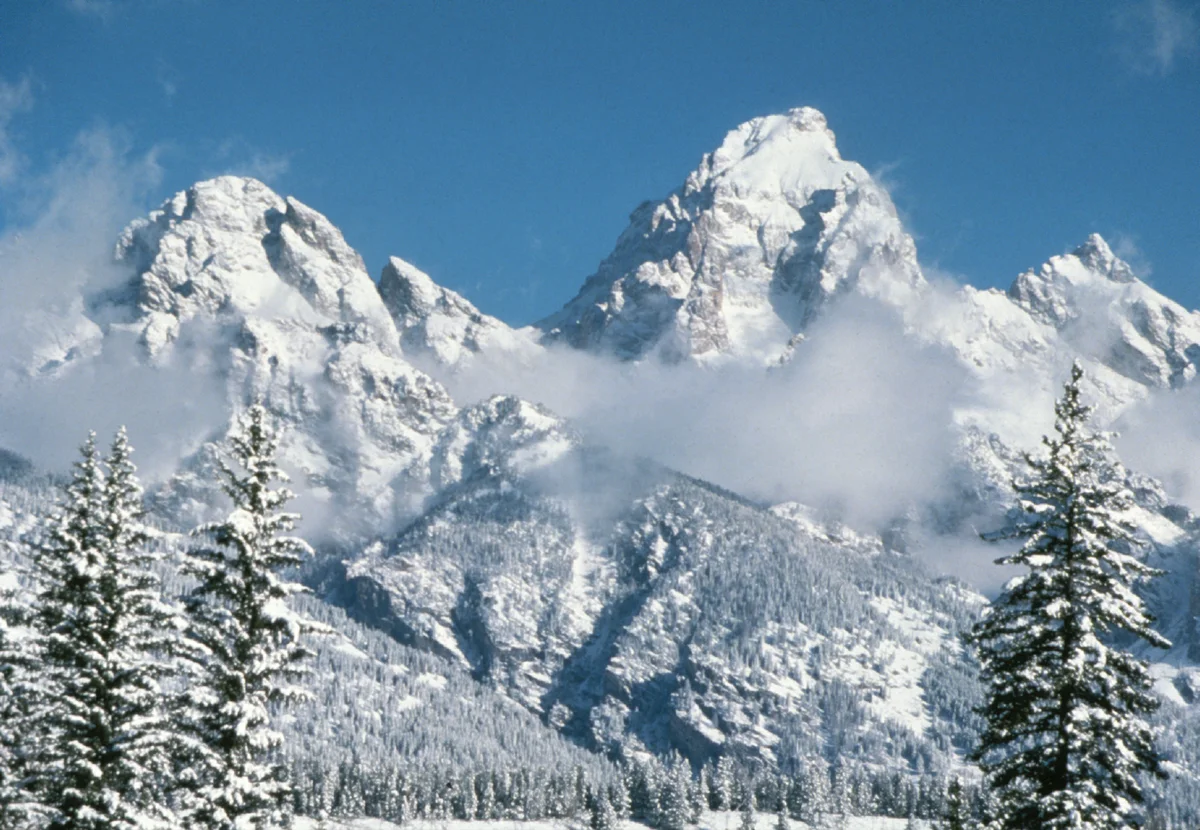

Grand Teton
Grand Teton is a world-famous, razor-sharp granite and gneiss peak rising abruptly to an elevation of 4,199 metres in Grand Teton National Park in northwestern Wyoming. As the highest summit in the Teton Range and the second highest peak in Wyoming, it towers more than 7,000 vertical feet above the sagebrush flats of Jackson Hole without intervening foothills. It is celebrated across mountaineering history as the birthplace of modern American technical rock climbing and client-centered mountain guiding.
Featured Expedition Climbers
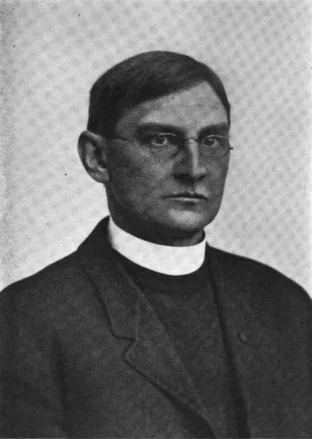
Franklin Spencer Spalding
Born on March 13, 1865, in Erie, Pennsylvania, Franklin Spencer Spalding was the son of John Franklin Spalding, who served as the Episcopal Bishop of Colorado. A natural athlete of formidable physical strength and moral conviction, Spalding graduated from Princeton University in 1887 and from the General Theological Seminary in New York City in 1890. Ordained to the priesthood, he served parishes in Colorado and Pennsylvania before traveling extensively across western frontier mining camps as an itinerant missionary. In the summer of 1898, while visiting Wyoming, Spalding was invited by surveyor William Otis Owen to join an expedition attempting the unclimbed summit of the Grand Teton. While previous attempts by Owen and earlier explorers had stalled at the sheer northwest headwall above the Upper Saddle at nearly 4,000 metres, Spalding demonstrated exceptional rock-climbing technique. Confronted with a terrifyingly sheer, sixty-foot vertical fissure dropping directly into western abysses, Spalding volunteered to lead unroped over the crux known as The Wall or the Double Chimney. Jamming his hands and boots into slick crystalline cracks, he pulled through the overhanging bulge, reached a stable belay ledge, and secured a rope to assist Owen, Frank Petersen, and John Shive to the top. The team reached the summit at four in the afternoon on August 11, 1898. Consecrated Episcopal Bishop of Utah in 1904, Spalding became a prominent advocate for labor rights, economic equality, and peace throughout the Intermountain West. He died tragically in Salt Lake City on September 25, 1914, after being struck by an automobile at the age of forty-nine.
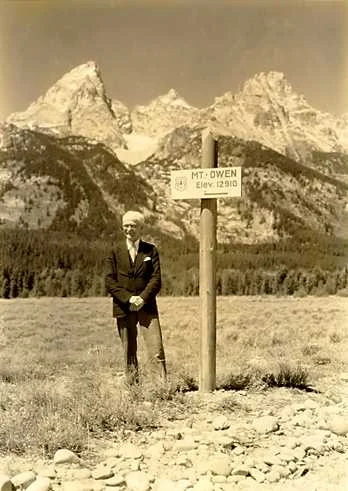
William O. Owen
Born on November 7, 1859, in Pleasant Grove, Iowa, William Otis Owen moved with his pioneer family to the frontier territory of Wyoming as a young child. Educated at the University of Wyoming, Owen became a master civil engineer and land surveyor, surveying vast tracts of wild territory across the Laramie Plains and western Wyoming. Enamored with the dramatic granite tooth of the Grand Teton rising without foothills above Jackson Hole, Owen made his first exploratory attempt on the mountain in 1891. Finding the vertical ramparts impassable with primitive footwear and equipment, he returned with renewed determination in 1893 and 1897, establishing route familiarity up the steep couloirs of Garnet Canyon to the Lower Saddle. In the summer of 1898, Owen organized a determined four-man climbing party comprising himself, Episcopal missionary bishop Franklin Spencer Spalding, rancher Frank Petersen, and John Shive. On August 11, 1898, guided by Spalding's remarkable rock-climbing agility on the vertical pitch above the Upper Saddle, the team reached the summit boulder of Grand Teton at 4,199 metres, building a rock cairn and carving their names into the summit stone. Owen subsequently led a vigorous, thirty-year public campaign to disprove the contested 1872 first ascent claim of Nathaniel Langford and James Stevenson, arguing that their physical description of the summit did not match the topography. On February 9, 1929, the Wyoming State Legislature officially recognized Owen and his companions as the genuine first conquerors of Grand Teton, and Mount Owen, the second-highest peak in the Teton Range at 3,940 metres, was named in his enduring memory. Owen passed away in California on March 3, 1947, at the age of eighty-seven.
Associated Historical Chronicles & Stories
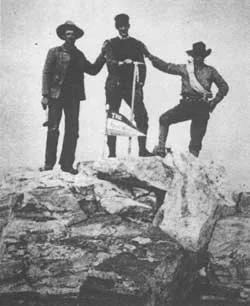
Conquest of the Cathedral: The 1898 First Ascent of the Grand Teton
On August 11, 1898, Franklin Spencer Spalding, William Otis Owen, Frank Petersen, and John Shive completed the first documented climb of the Grand Teton. Overcoming the sheer, dizzying pitch of The Wall, the party planted the American flag on the summit of Wyoming's most iconic granite spire.
Documented Sources & Archival Citations
- Ascent of the Grand Teton (Outing Magazine, 1901)(William O. Owen)
Supporting claim: Primary first-hand report and photographic record of the 1898 Grand Teton climb
Accessed/Documented: 2026 - A Climber's Guide to the Teton Range(Leigh Ortenburger and Reynold G. Jackson / The Mountaineers Books)
Supporting claim: Comprehensive topographic and historical analysis of the Owen-Spalding first ascent
Accessed/Documented: 2026