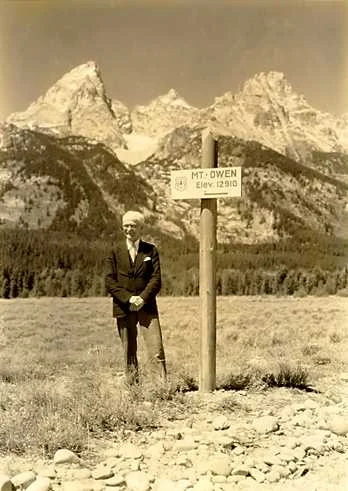
William O. Owen
William Otis Owen was an American surveyor and mountaineer who organized and led the historic first documented ascent of the Grand Teton on August 11, 1898. Along with Franklin Spencer Spalding, Frank Petersen, and John Shive, he reached the summit via the route now bearing his name. Mount Owen in Grand Teton National Park was later named in his honor.
Mountain Safety & Conditions Disclaimer: High-altitude climbing, glacial travel, and technical ascents entail severe objective risks including avalanches, serac collapses, rapid weather collapse, and altitude illness. Historical route descriptions and summit claims on Mountanity reflect documented archival sources and must not be used as live operational safety assessments. Local regulations, permits, and physical glacial topography change continuously.
Peer Review: Senior Editorial Board & Historical Reviewers • Editorial Standards
Biographical Record & Archival Chronicle
Born on November 7, 1859, in Pleasant Grove, Iowa, William Otis Owen moved with his pioneer family to the frontier territory of Wyoming as a young child. Educated at the University of Wyoming, Owen became a master civil engineer and land surveyor, surveying vast tracts of wild territory across the Laramie Plains and western Wyoming. Enamored with the dramatic granite tooth of the Grand Teton rising without foothills above Jackson Hole, Owen made his first exploratory attempt on the mountain in 1891. Finding the vertical ramparts impassable with primitive footwear and equipment, he returned with renewed determination in 1893 and 1897, establishing route familiarity up the steep couloirs of Garnet Canyon to the Lower Saddle. In the summer of 1898, Owen organized a determined four-man climbing party comprising himself, Episcopal missionary bishop Franklin Spencer Spalding, rancher Frank Petersen, and John Shive. On August 11, 1898, guided by Spalding's remarkable rock-climbing agility on the vertical pitch above the Upper Saddle, the team reached the summit boulder of Grand Teton at 4,199 metres, building a rock cairn and carving their names into the summit stone. Owen subsequently led a vigorous, thirty-year public campaign to disprove the contested 1872 first ascent claim of Nathaniel Langford and James Stevenson, arguing that their physical description of the summit did not match the topography. On February 9, 1929, the Wyoming State Legislature officially recognized Owen and his companions as the genuine first conquerors of Grand Teton, and Mount Owen, the second-highest peak in the Teton Range at 3,940 metres, was named in his enduring memory. Owen passed away in California on March 3, 1947, at the age of eighty-seven.
Notable Milestones & Ascents
- Organized and co-led the first documented ascent of Grand Teton (4,199 m) on August 11, 1898
- Pioneered the historic Owen-Spalding normal route from Garnet Canyon to the summit
- Conducted early topographical and boundary surveys across Wyoming Territory and the Teton Basin
- Secured official recognition from the Wyoming State Legislature for the 1898 Grand Teton first ascent in 1929
- Honored with the naming of Mount Owen (3,940 m), the second highest peak in the Teton Range
Key Statistics & Topographic Figures
- Historic Achievement
- First Documented Ascent of Grand Teton (1898)
- Birth and Death
- November 7, 1859 – March 3, 1947
- Namesake Mountain
- Mount Owen (3,940 m / 12,928 ft)
- Public Office
- State Auditor of Wyoming
- Official Recognition
- Wyoming State Legislature (1929)
Archival Primary Source Quotations
“We stood upon the very crest of the Grand Teton, and the controversy of thirty years was settled forever upon the granite rock.”
Defined Alpine Terminology & Concepts
- Enclosure
- A circular man-made rock structure near the Upper Saddle of Grand Teton, believed to be an ancient Native American vision quest site mistaken by Langford for the summit.
- Topographical Survey
- The precise measurement and recording of the elevation, relief, and geographic features of wild terrain using theodolites, chains, and alidades.
Frequently Asked Questions: William O. Owen
Who was William O. Owen in American mountaineering history?
William Otis Owen was an American civil engineer, Wyoming state surveyor, and mountaineer who organized and led the historic first documented ascent of Grand Teton on August 11, 1898.
What peak in Grand Teton National Park is named after William O. Owen?
Mount Owen (3,940 m / 12,928 ft), the second-highest peak in the Teton Range, was named in honor of William Otis Owen.
Why did William O. Owen dispute Nathaniel Langford's 1872 climb of Grand Teton?
Owen proved that Langford's published description of a flat, flower-filled summit did not match the sharp, broken granite pinnacle of Grand Teton, and that Langford had only reached the Enclosure.
How many times did William O. Owen attempt the Grand Teton before succeeding?
Owen mounted unsuccessful attempts in 1891, 1893, and 1897 before finally reaching the summit with Franklin Spalding, Frank Petersen, and John Shive in 1898.
When did the Wyoming Legislature officially recognize Owen's first ascent?
On February 9, 1929, the Wyoming State Legislature passed a resolution officially naming the Owen-Spalding party the genuine first conquerors of Grand Teton.
What public offices did William O. Owen hold in Wyoming?
Owen served as Albany County Surveyor and later as the elected State Auditor of Wyoming, conducting extensive boundary surveys across the state.
What artifact did Owen's party leave on the summit of Grand Teton in 1898?
The climbers built a five-foot stone cairn and chiseled their names and the date—August 11, 1898—directly into the granite summit boulder with a cold chisel.
Where can one read William O. Owen's original account of the ascent?
Owen published his detailed first-hand narrative with photographs in Outing Magazine in 1901 under the title Ascent of the Grand Teton.
Associated Summits (1)
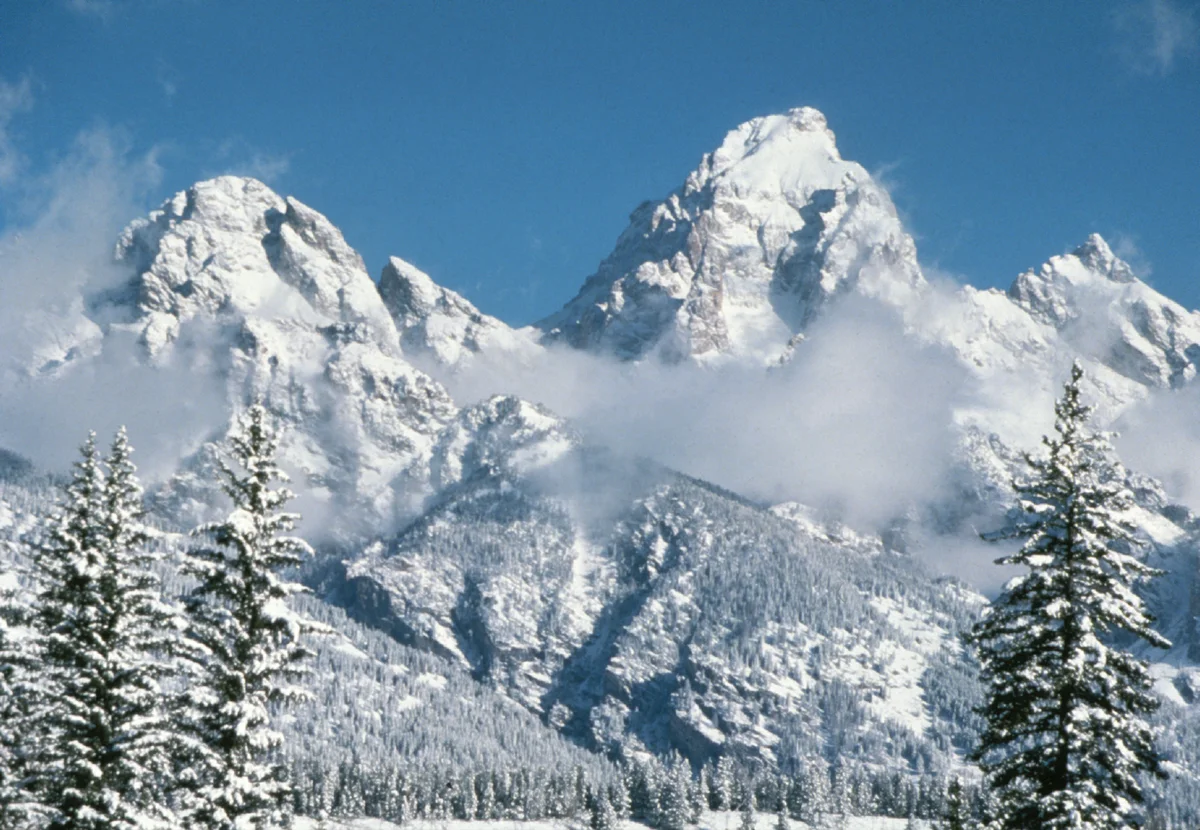

Grand Teton
Grand Teton is a world-famous, razor-sharp granite and gneiss peak rising abruptly to an elevation of 4,199 metres in Grand Teton National Park in northwestern Wyoming. As the highest summit in the Teton Range and the second highest peak in Wyoming, it towers more than 7,000 vertical feet above the sagebrush flats of Jackson Hole without intervening foothills. It is celebrated across mountaineering history as the birthplace of modern American technical rock climbing and client-centered mountain guiding.
Pioneered & Associated Routes (2)
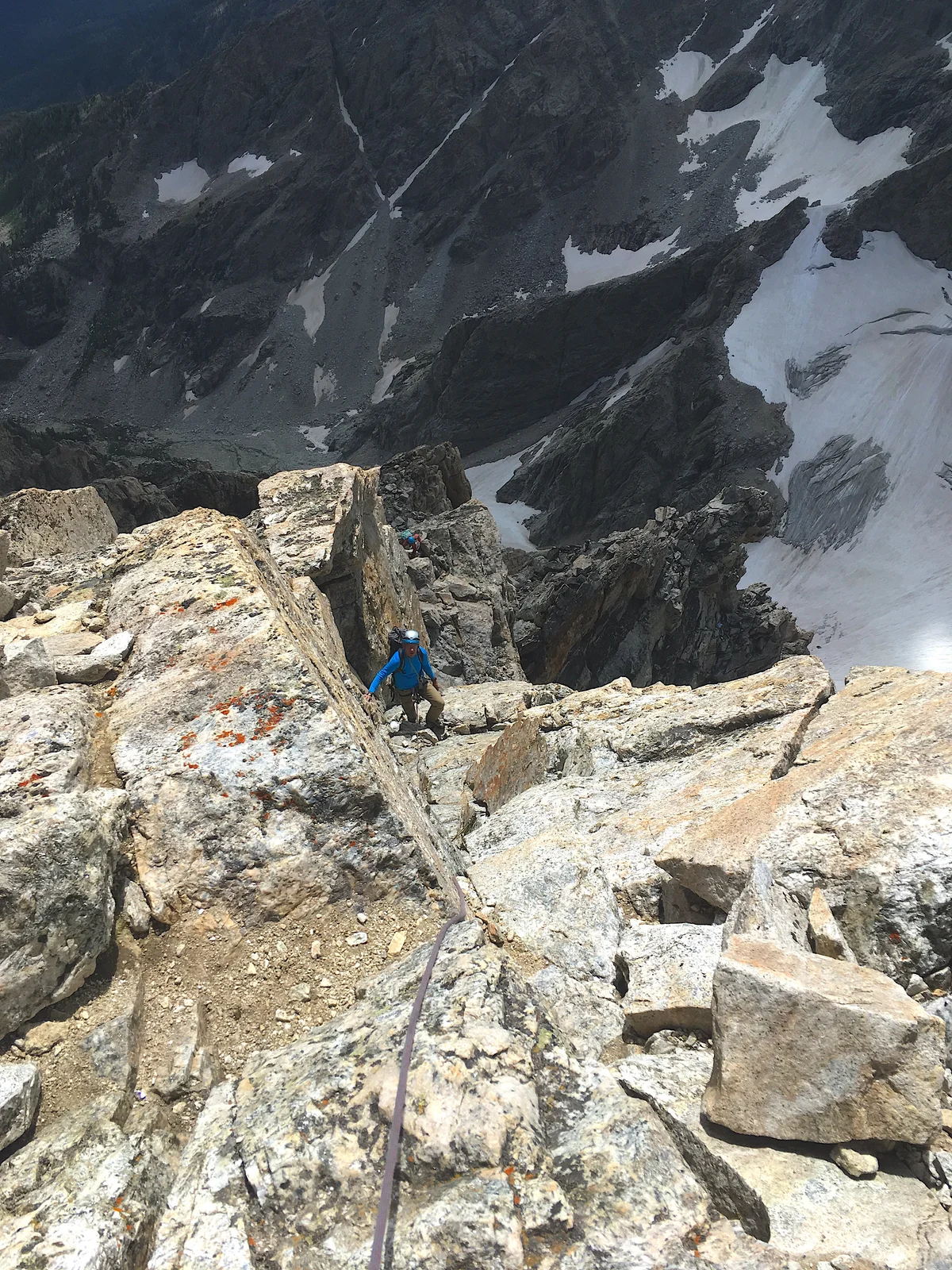
Complete Exum Ridge Route (Grand Teton)
The Complete Exum Ridge is widely revered as the finest, most aesthetic alpine rock climb in North America, scaling 1,700 vertical feet of immaculate, exposed Precambrian gneiss along the south ridge of Grand Teton directly to the summit. Pioneered in its upper section by 20-year-old Glenn Exum in 1931 during a daring solo climb and completed from the Lower Saddle by Paul Petzoldt and Glenn Exum, the route is graded Grade III / YDS 5.7 (French 5a), featured prominently in Fifty Classic Climbs of North America.
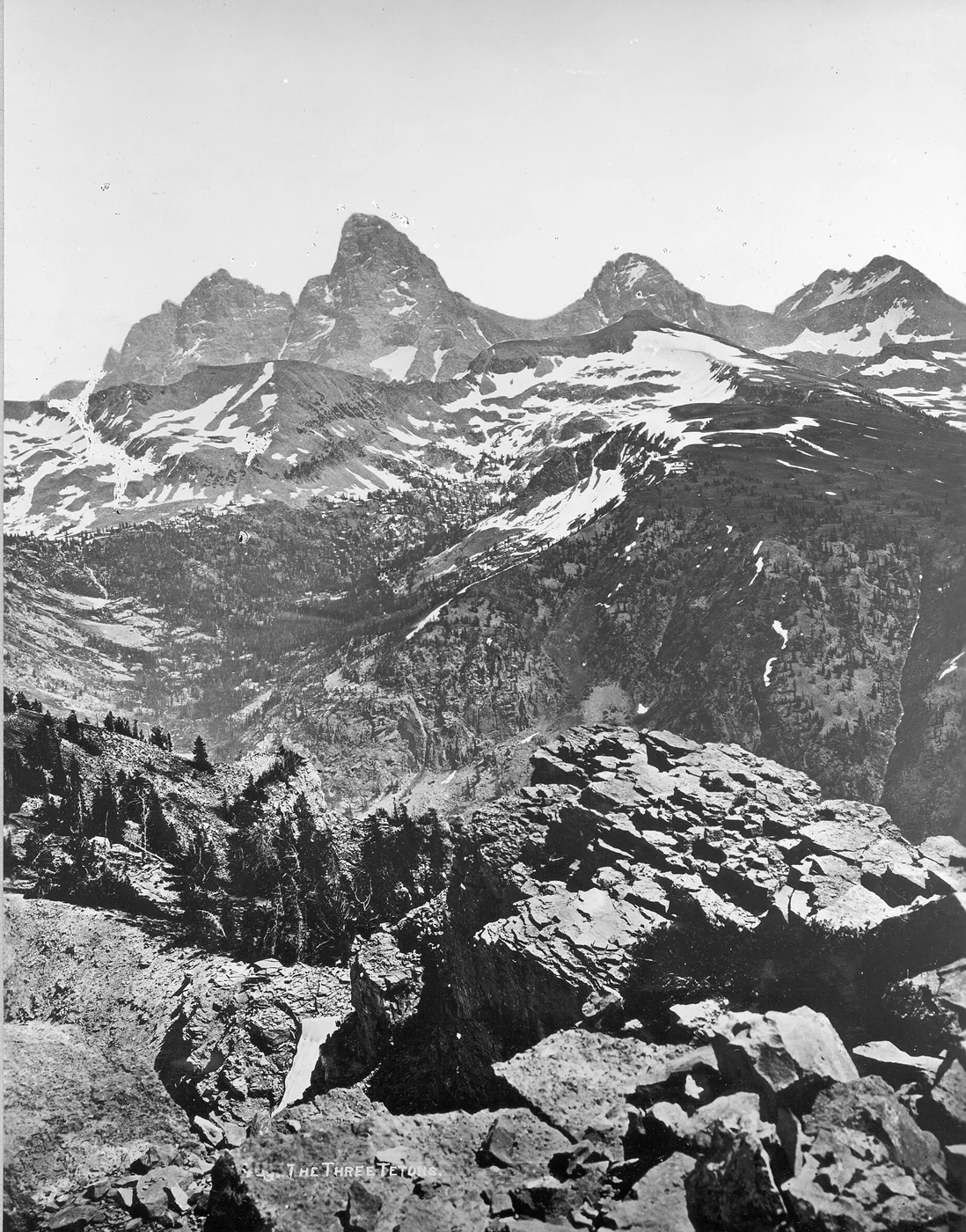
Owen-Spalding Route (Grand Teton)
The Owen-Spalding route is the historic normal route to the summit of Grand Teton, pioneering the first documented ascent of the mountain on August 11, 1898. Ascending 2,130 metres of vertical elevation gain from Lupine Meadows via Garnet Canyon, the Lower Saddle, and the Upper Saddle, the route features dramatic, world-renowned exposure on passages like the Belly Roll, The Crawl, and the physical crux of The Wall (Double Chimney), graded YDS 5.4 or French III.
Documented Expeditions (1)
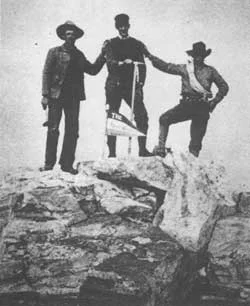
1898 Owen-Spalding Grand Teton First Documented Ascent
On August 11, 1898, Franklin Spencer Spalding, William Otis Owen, Frank Petersen, and John Shive completed the first documented climb of the Grand Teton, overcoming the sheer pitch of The Wall.
Associated Chronicles & Stories (1)
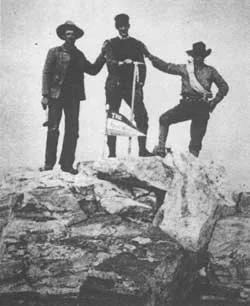
Conquest of the Cathedral: The 1898 First Ascent of the Grand Teton
On August 11, 1898, Franklin Spencer Spalding, William Otis Owen, Frank Petersen, and John Shive completed the first documented climb of the Grand Teton. Overcoming the sheer, dizzying pitch of The Wall, the party planted the American flag on the summit of Wyoming's most iconic granite spire.
Documented Sources & Archival Citations
- Ascent of the Grand Teton (Outing Magazine, 1901)(William O. Owen)
Supporting claim: Primary published memoir of the 1898 first documented ascent of the Grand Teton
Accessed/Documented: 2026 - The Grand Tetons: The Story of the Men Who Climbed Them(Fritiof Fryxell / American Alpine Journal)
Supporting claim: Historical investigation confirming the Owen-Spalding 1898 ascent and route geography
Accessed/Documented: 2026