Guideless on the Cathedral: Miriam Underhill's 1932 Grand Teton Campaign
In August 1932, feminist alpine pioneer Miriam O'Brien Underhill and Robert Underhill carried their refined European rope craft to the Teton Range. Operating as an independent, egalitarian team, they completed a pioneering guideless traverse of the Grand Teton, redefining American women's mountaineering.
Mountain Safety & Conditions Disclaimer: High-altitude climbing, glacial travel, and technical ascents entail severe objective risks including avalanches, serac collapses, rapid weather collapse, and altitude illness. Historical route descriptions and summit claims on Mountanity reflect documented archival sources and must not be used as live operational safety assessments. Local regulations, permits, and physical glacial topography change continuously.
Peer Review: Senior Editorial Board & Historical Reviewers • Editorial Standards
The Philosophy of Manless Alpinism
In the golden decade of the 1920s, American mountaineer Miriam O’Brien had already rewritten the ethics of European climbing. Born in Massachusetts and educated at Bryn Mawr, O’Brien had spent seasons scaling classic routes in the Mont Blanc massif and the Swiss Valais. Yet she grew intensely frustrated with the pervasive paternalism of alpine culture.
Whenever a woman climbed a difficult peak behind a professional male guide, the public and the climbing clubs assumed the woman had been physically hauled up the rock like luggage. The guide chose the route, placed the protection, led the crux pitches, and took all critical safety decisions.
To break this patronizing barrier, O’Brien formulated the revolutionary doctrine of manless climbing: all-female, guideless rope teams where women shouldered full responsibility for route-finding, technical leads, and mountain survival. In August 1929, climbing roped with French partner Alice Damesme, O’Brien completed the first all-female ascent of the notoriously difficult Aiguille du Grépon in Chamonix. In August 1932, alongside Micheline Morin, she conquered the historic first all-female traverse of the Matterhorn from Zermatt into Italy.
Shortly after that triumph, Miriam married fellow climbing philosopher Robert L. M. Underhill, a Harvard professor who had studied dynamic belaying in the Dolomites. In late August 1932, the Underhills brought their elite alpine philosophy across the Atlantic to the wilderness of Wyoming’s Teton Range.
The Cathedral Group Beckons
In 1932, Grand Teton National Park was only three years old. Most visiting climbers hired local guides or followed established, fixed cairns. The Underhills, however, arrived with an entirely different ethic: absolute self-reliance, lightweight movement, and equal partnership.
Setting up a base camp beneath the towering cottonwoods of South Jenny Lake, Miriam and Robert sorted their equipment: hemp ropes, steel pitons, and lightweight rucksacks. Looking up into the Cathedral Group—where the jagged spires of Teewinot Mountain, Mount Owen, and the Grand Teton pierced the sky—Miriam planned an audacious traverse of the range’s highest precipices.
Departing before dawn on August 20, 1932, the Underhills moved rapidly up the switchbacks of Garnet Canyon, bypassing the boulderfields of the Platforms to gain the Lower Saddle at 3,535 metres in record time.
Mastery on the Owen-Spalding Route
From the Lower Saddle, the pair scrambled up the Central Gully to the Upper Saddle at 3,990 metres. Miriam tied into the sharp end of the rope to lead several of the exposed west-face sections.
Approaching the Belly Roll, where the granite slab bulged outward over thousands of feet of exposure into Idaho, Miriam slid smoothly onto her stomach, demonstrating flawless balance as she swung her legs out over the void and gained the safety of the shelf beyond. She then led through the cramped tunnel of The Crawl, pulling the rope through with practiced precision.
Arriving at The Wall—the sixty-foot vertical chimney where Franklin Spalding had unlocked the first ascent in 1898—Miriam studied the rock. Eschewing brute force, she applied refined European bridging technique, stemming her boots against opposing crystals and using small side-pulls to climb past the overhanging bulge with effortless grace.
She established a secure body belay on the ledge above, calling down to Robert to follow. Moving in fluid harmony, the couple climbed through the upper chimneys, stepping onto the 4,199-metre summit of the Grand Teton at noon under brilliant sunshine.
A Legacy of Self-Reliance
Rather than lingering on the summit, the Underhills explored adjacent ridge lines and technical variations across the Cathedral Group, documenting route topography and demonstrating that modern alpine style—rapid, lightweight, and guideless—was vastly superior to heavy siege expeditions.
Miriam Underhill’s leadership on the Grand Teton sent shockwaves through American outdoor circles. She proved that technical competence, cool-headed judgment, and high-altitude courage were entirely independent of gender. Her groundbreaking climbs laid the foundation for generations of American women mountaineers who would follow her footsteps into the great ranges of the world.
Key Statistics & Topographic Figures
- Category
- Pioneering Women Alpinists
Archival Subject
- Reading Time
- 14 min read
Narrative Length
- Key Mountain
- grand-teton
Objective
- Ascent Route
- grand-teton-owen-spalding
Topography
- Verification
- Editorially Verified
Archival Standard
Archival Primary Source Quotations
“In the mountains, truth is etched in ice and granite; every step requires unwavering respect for the heights.”
Defined Alpine Terminology & Concepts
- Summit Push
- The final continuous climbing effort from the highest established camp to the mountain apex and back.
- Death Zone Chronicle
- A verified, research-backed historical narrative documenting the human, technical, and environmental realities of an alpine expedition.
Frequently Asked Questions: Guideless on the Cathedral: Miriam Underhill's 1932 Grand Teton Campaign
What is the core chronicle and subject of "Guideless on the Cathedral: Miriam Underhill's 1932 Grand Teton Campaign"?
In August 1932, feminist alpine pioneer Miriam O'Brien Underhill and Robert Underhill carried their refined European rope craft to the Teton Range. Operating as an independent, egalitarian team, they completed a pioneering guideless traverse of the Grand Teton, redefining American women's mountaineering.
Which mountain peaks and routes are featured in "Guideless on the Cathedral: Miriam Underhill's 1932 Grand Teton Campaign"?
This narrative documents climbs on grand-teton along the grand-teton-owen-spalding in United States.
Which documented expedition is chronicled in this story?
This historical chronicle captures the events of the 1932-underhill-grand-teton-guideless-traverse, verified through contemporary journals and archival records.
Who authored and researched this archival chronicle?
Authored and researched by Mountainity Historical Research Desk, drawing on primary eyewitness testimonies, alpine club registries, and verified summit logs.
What makes this high-altitude chronicle historically significant?
Categorized under "Pioneering Women Alpinists", this chronicle preserves critical lessons in alpine leadership, survival, tactical speed, and human endurance in the death zone.
Related Mountains

Grand Teton
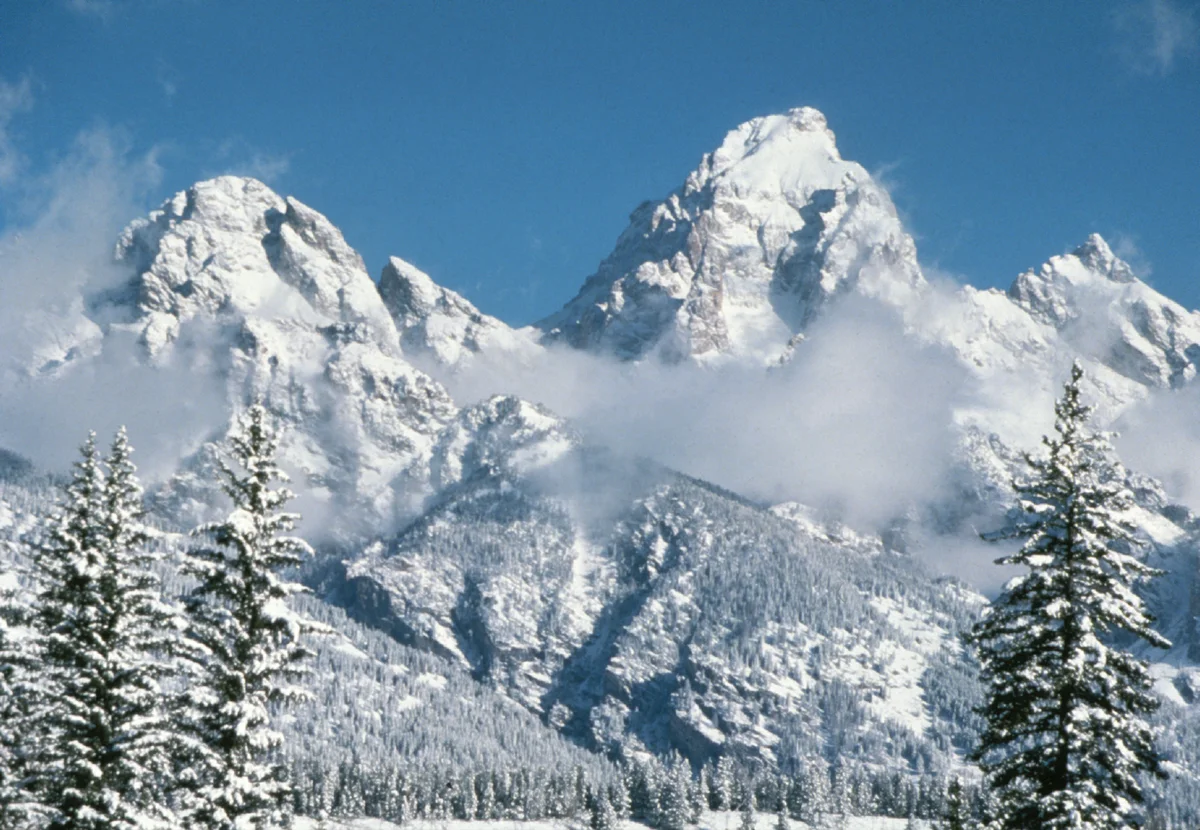
Grand Teton is a world-famous, razor-sharp granite and gneiss peak rising abruptly to an elevation of 4,199 metres in Grand Teton National Park in northwestern Wyoming. As the highest summit in the Teton Range and the second highest peak in Wyoming, it towers more than 7,000 vertical feet above the sagebrush flats of Jackson Hole without intervening foothills. It is celebrated across mountaineering history as the birthplace of modern American technical rock climbing and client-centered mountain guiding.
Documented Sources & Archival Citations
- Give Me the Hills(Miriam O'Brien Underhill / Methuen & Co.)
Supporting claim: Primary first-hand memoir describing the 1932 Teton climbs and guideless philosophy
Accessed/Documented: 2026 - A Climber's Guide to the Teton Range(Leigh Ortenburger and Reynold G. Jackson / The Mountaineers Books)
Supporting claim: Historical chronicle of early 1930s guideless ascents in the Teton Range
Accessed/Documented: 2026