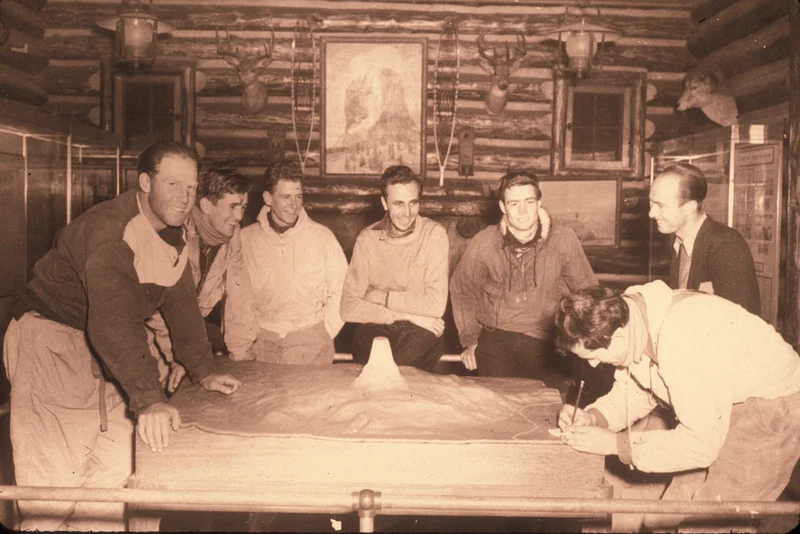
Jack Durrance
Jack Durrance was a pioneering American mountaineer and physician who modernized North American rock climbing in the 1930s by introducing European piton craft and rope techniques. He established classic routes across the Grand Teton, including the iconic Durrance Ridge and the direct North Ridge. In 1941, he led the dramatic parachute rescue of a stranded jumper from the summit of Devils Tower.
Mountain Safety & Conditions Disclaimer: High-altitude climbing, glacial travel, and technical ascents entail severe objective risks including avalanches, serac collapses, rapid weather collapse, and altitude illness. Historical route descriptions and summit claims on Mountanity reflect documented archival sources and must not be used as live operational safety assessments. Local regulations, permits, and physical glacial topography change continuously.
Peer Review: Senior Editorial Board & Historical Reviewers • Editorial Standards
Biographical Record & Archival Chronicle
Born on August 24, 1912, in Florida, Jack Durrance spent several of his formative childhood and teenage years living in Garmisch-Partenkirchen, Germany. Immersed in the Bavarian Alps, he trained with master Austrian and German alpinists, gaining mastery of steel pitons, carabiners, two-rope climbing systems, and body belays decades ahead of typical North American methods. Returning to the United States to attend Dartmouth College in 1935, Durrance brought these modern alpine techniques to the Teton Range, revolutionizing climbing standards between 1935 and 1940. During that golden era, Durrance established an astonishing array of first ascents on the Grand Teton, including the technical West Face in 1936, the North Ridge with Kenneth Henderson in August 1936, and the classic Durrance Ridge on the mountain's east flank. In 1938, he pioneered the historic Durrance Route on Devils Tower in northeastern Wyoming, creating the standard line up the fractured volcanic columns. Selected for the 1939 American Karakoram expedition to K2 under Fritz Wiessner, Durrance carried heavy loads to high camps on the Abruzzi Spur before acute altitude sickness forced his descent. In October 1941, when daredevil parachutist George Hopkins leaped onto the summit of Devils Tower on a bet and found himself hopelessly marooned without ropes as winter blizzards closed in, the National Park Service summoned Durrance. Arriving from Dartmouth, Durrance mobilized an elite climbing team, scaled his sheer namesake route on the monument through freezing sleet, and escorted Hopkins safely down. Durrance later served as an army physician and became a distinguished pulmonary medical researcher in Denver, Colorado. He passed away on November 13, 2003, at the age of ninety-one.
Notable Milestones & Ascents
- Pioneered the historic North Ridge and Durrance Ridge on the Grand Teton in 1936
- Established the famous Durrance Route (5.7) on Devils Tower in 1938, creating the standard climbing line on the national monument
- Introduced modern European piton craft, carabiner friction systems, and dynamic belaying to North American climbing
- Reached high camps on the Abruzzi Spur during the 1939 American Karakoram expedition to K2
- Organized and successfully led the high-profile national rescue of stranded parachutist George Hopkins from Devils Tower in 1941
- Founded the Dartmouth Mountaineering Club, training generations of American alpine leaders
Key Statistics & Topographic Figures
- Historic Teton Ascents
- North Ridge (1936), Durrance Ridge, West Face
- Birth and Death
- August 24, 1912 – November 13, 2003 (aged 91)
- Devils Tower Milestone
- Durrance Route (1938) & 1941 Hopkins Rescue
- Himalayan Expedition
- 1939 American K2 Expedition
- Club Founded
- Dartmouth Mountaineering Club
Archival Primary Source Quotations
“Durrance brought the ironmongery and precision of the Bavarian Alps to the American wilderness, elevating our standards overnight.”
Defined Alpine Terminology & Concepts
- Pitoncraft
- The art and technique of driving steel pitons into narrow rock seams with a hammer to establish secure protection anchors and belays.
- Dynamic Belay
- A rope belaying method that allows controlled rope slip through the belayer's hands or hitch to absorb energy and reduce impact force during a leader fall.
Frequently Asked Questions: Jack Durrance
Who was Jack Durrance and what did he contribute to American climbing?
Jack Durrance was an American mountaineer and physician who introduced modern European piton craft and dynamic rope techniques to the Tetons in the 1930s.
What classic routes on the Grand Teton did Jack Durrance establish?
Durrance established the technical North Ridge (1936) with Kenneth Henderson, the Durrance Ridge, and the West Face of Grand Teton.
What was the famous 1941 Devils Tower parachute rescue led by Jack Durrance?
Durrance led an elite climbing team up his namesake Durrance Route on Devils Tower to rescue daredevil parachutist George Hopkins, who was stranded on top for six days.
Where did Jack Durrance learn his advanced technical climbing skills?
Durrance spent his formative youth in Garmisch-Partenkirchen, Germany, training on Bavarian limestone with master Austrian and German alpinists.
Did Jack Durrance participate in any Himalayan expeditions?
Durrance was a lead member of the 1939 American Karakoram expedition to K2 under Fritz Wiessner, establishing high camps on the Abruzzi Spur.
What college mountaineering club did Jack Durrance establish?
Durrance founded the Dartmouth Mountaineering Club while a student at Dartmouth College in the mid-1930s, pioneering modern safety standards.
What medical specialty did Jack Durrance practice in his later life?
Durrance became a prominent physician in Denver, Colorado, specializing in pulmonary medicine, tuberculosis treatment, and high-altitude physiology.
What is the Durrance Route on Devils Tower?
Established in 1938, the Durrance Route (5.7) is the historic normal line ascending the volcanic columns of Devils Tower National Monument in Wyoming.
Associated Summits (1)
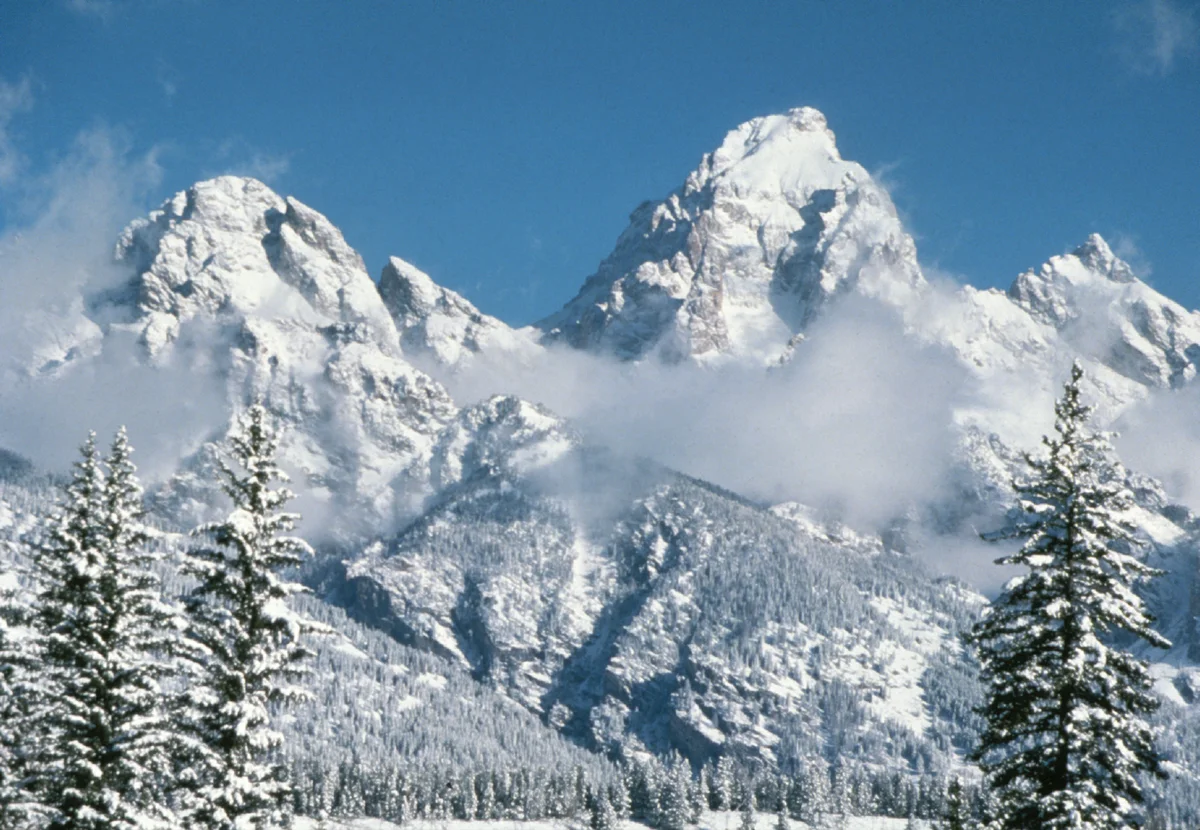

Grand Teton
Grand Teton is a world-famous, razor-sharp granite and gneiss peak rising abruptly to an elevation of 4,199 metres in Grand Teton National Park in northwestern Wyoming. As the highest summit in the Teton Range and the second highest peak in Wyoming, it towers more than 7,000 vertical feet above the sagebrush flats of Jackson Hole without intervening foothills. It is celebrated across mountaineering history as the birthplace of modern American technical rock climbing and client-centered mountain guiding.
Pioneered & Associated Routes (2)
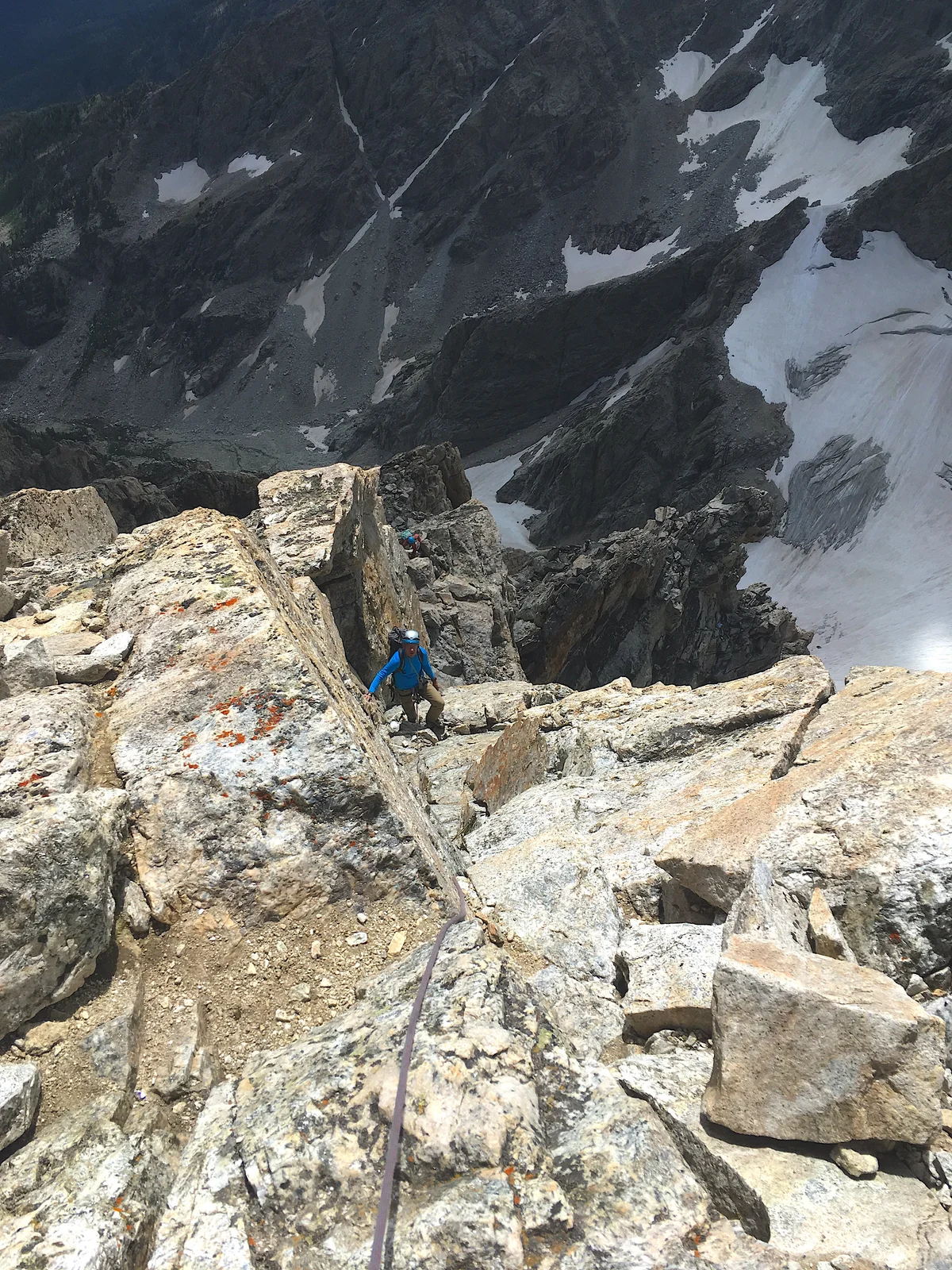
Complete Exum Ridge Route (Grand Teton)
The Complete Exum Ridge is widely revered as the finest, most aesthetic alpine rock climb in North America, scaling 1,700 vertical feet of immaculate, exposed Precambrian gneiss along the south ridge of Grand Teton directly to the summit. Pioneered in its upper section by 20-year-old Glenn Exum in 1931 during a daring solo climb and completed from the Lower Saddle by Paul Petzoldt and Glenn Exum, the route is graded Grade III / YDS 5.7 (French 5a), featured prominently in Fifty Classic Climbs of North America.
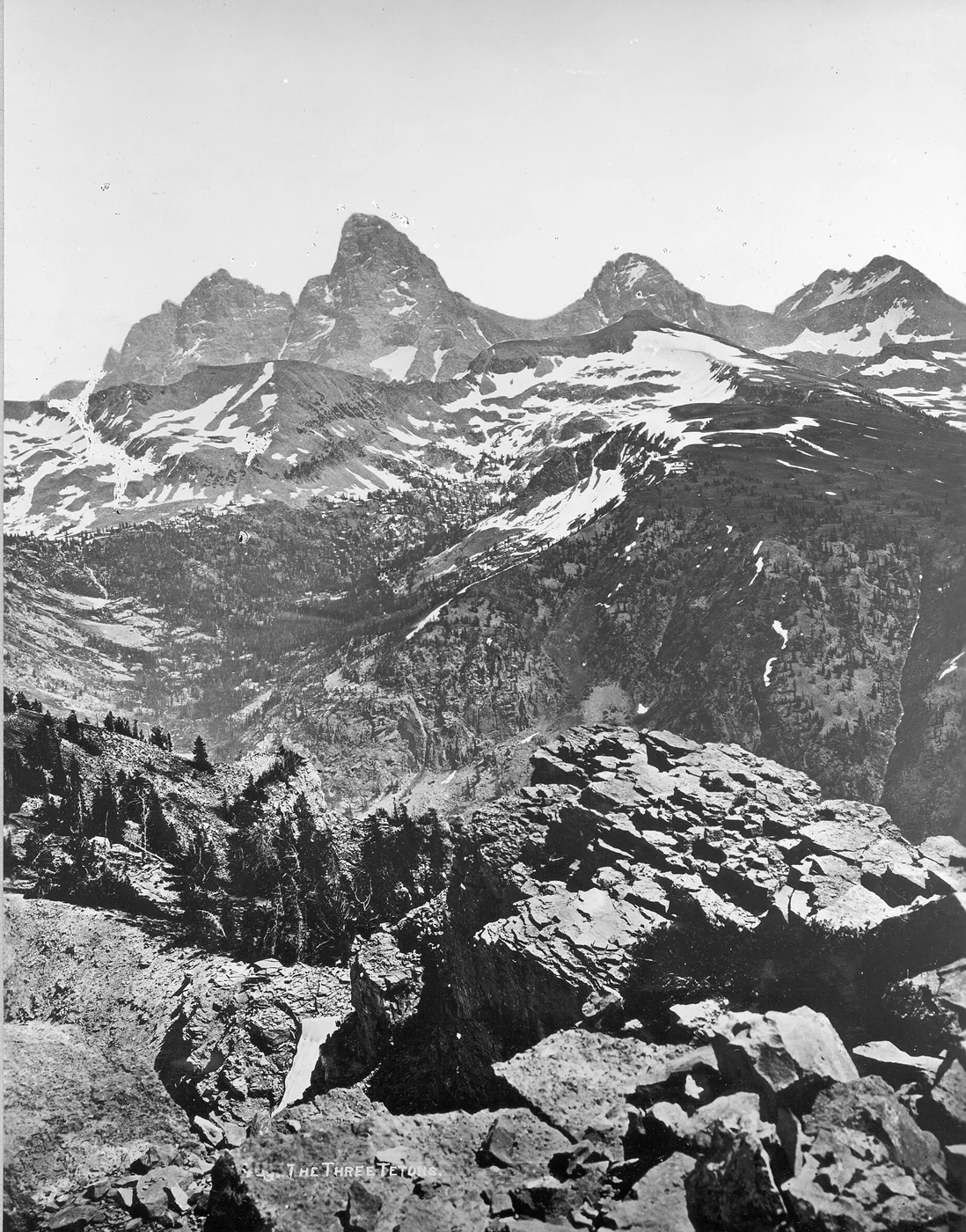
Owen-Spalding Route (Grand Teton)
The Owen-Spalding route is the historic normal route to the summit of Grand Teton, pioneering the first documented ascent of the mountain on August 11, 1898. Ascending 2,130 metres of vertical elevation gain from Lupine Meadows via Garnet Canyon, the Lower Saddle, and the Upper Saddle, the route features dramatic, world-renowned exposure on passages like the Belly Roll, The Crawl, and the physical crux of The Wall (Double Chimney), graded YDS 5.4 or French III.
Documented Expeditions (1)
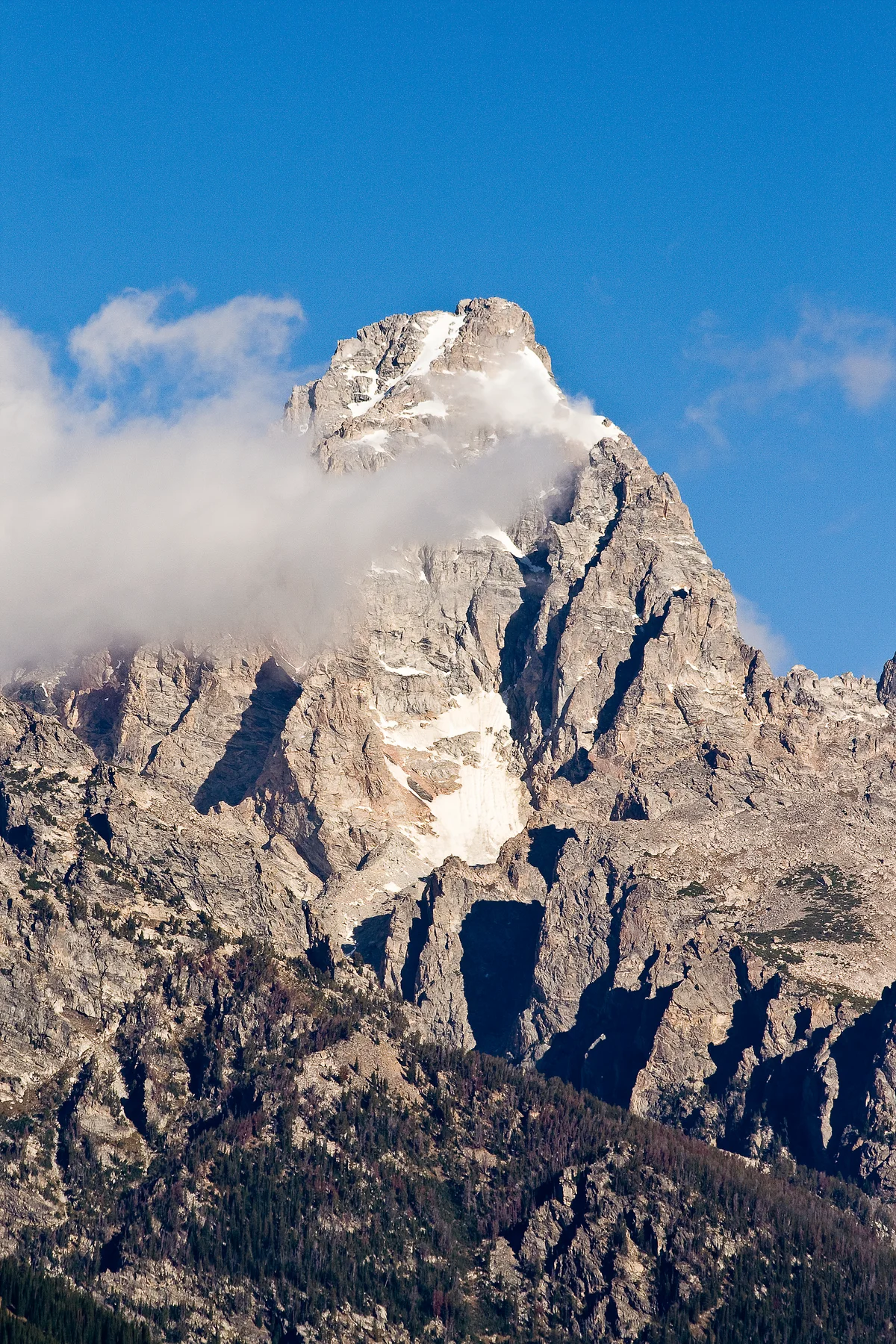
1936 Jack Durrance Grand Teton North Ridge Direct
On August 29, 1936, Jack Durrance and Kenneth Henderson established the formidable North Ridge of the Grand Teton, introducing European piton craft to the American Rockies.
Associated Chronicles & Stories (1)
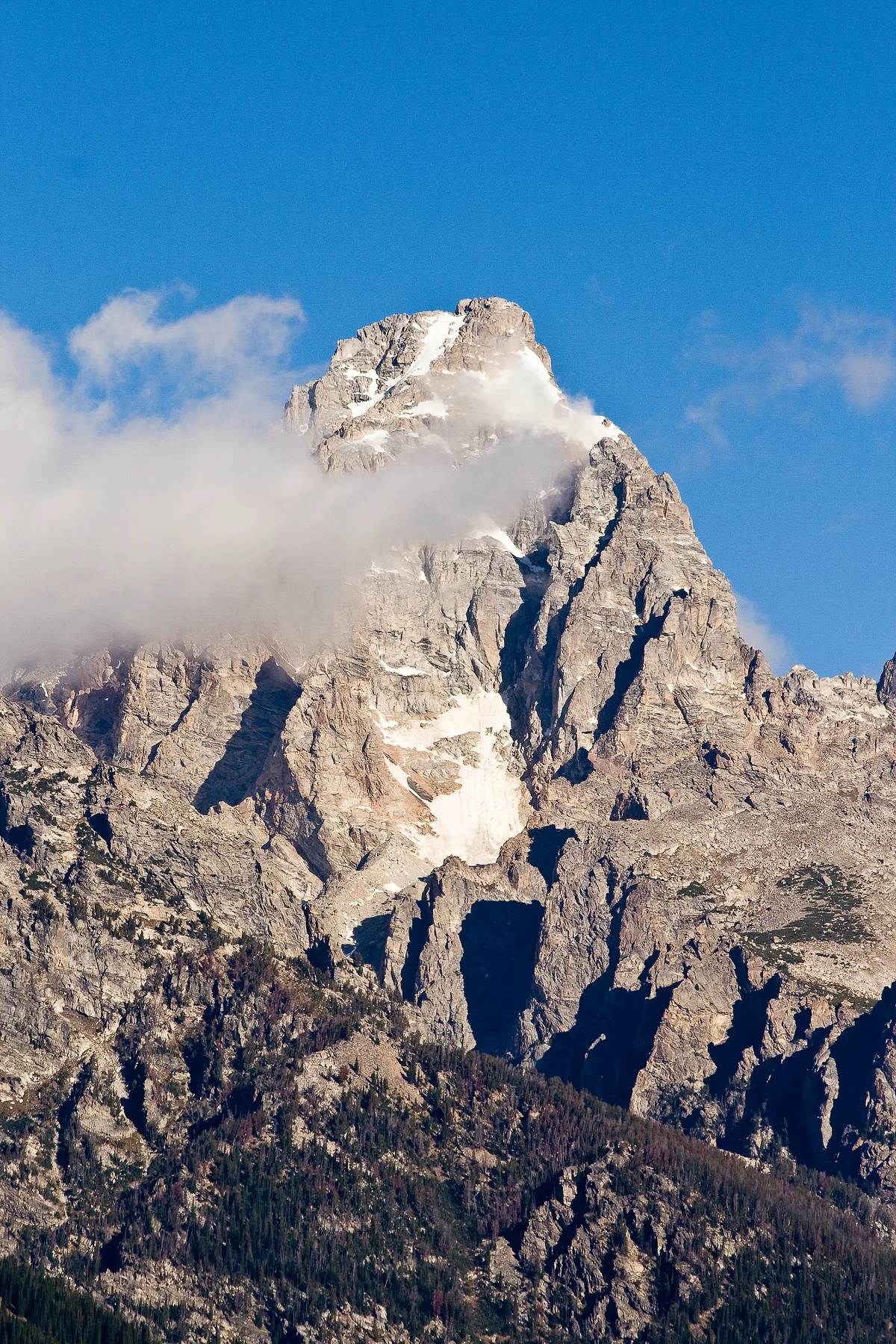
Shadows and Steel: Jack Durrance and the 1936 Grand Teton North Ridge
On August 29, 1936, twenty-four-year-old Jack Durrance and Kenneth Henderson conquered the intimidating North Ridge of the Grand Teton. Driving forged European pitons into hairline cracks above a three-thousand-foot abyss, they established the most difficult technical rock route in North America.
Documented Sources & Archival Citations
- Jack Durrance: A Life of Climbing and Medicine (American Alpine Journal, 2004)(Steve Roper / American Alpine Club)
Supporting claim: Comprehensive biographical memorial of Durrance's Teton ascents, K2 campaign, and Devils Tower rescue
Accessed/Documented: 2026 - A Climber's Guide to the Teton Range(Leigh Ortenburger and Reynold G. Jackson / The Mountaineers Books)
Supporting claim: Topographic analysis of Durrance's 1930s pioneering first ascents on the Grand Teton
Accessed/Documented: 2026