The Leap at Wall Street: Glenn Exum's 1931 Grand Teton Solo Breakthrough
On July 15, 1931, twenty-year-old Glenn Exum completed an audacious solo first ascent of the Upper Exum Ridge on the Grand Teton. Wearing leather-cleated football shoes, Exum paced seven times before leaping across the terrifying void at Wall Street to unlock America's finest alpine rock ridge.
Mountain Safety & Conditions Disclaimer: High-altitude climbing, glacial travel, and technical ascents entail severe objective risks including avalanches, serac collapses, rapid weather collapse, and altitude illness. Historical route descriptions and summit claims on Mountanity reflect documented archival sources and must not be used as live operational safety assessments. Local regulations, permits, and physical glacial topography change continuously.
Peer Review: Senior Editorial Board & Historical Reviewers • Editorial Standards
The Boy from North Carolina
In the high summer of 1931, the Teton Range was experiencing an explosion of pioneering exploration. Paul Petzoldt, the legendary local guide who had summitted the Grand Teton as a sixteen-year-old cowboy, had established a tent camp at South Jenny Lake. Working alongside him as a wrangler, camp cook, and guide apprentice was twenty-year-old Glenn Exum, a gifted musician and natural athlete from North Carolina who had fallen deeply in love with the high granite spires.
Petzoldt had long studied the majestic, golden-hued south ridge of the Grand Teton, which plunged dramatically from the 4,199-metre summit toward the Lower Saddle. It appeared to offer the most direct, elegant line on the entire mountain, but its vertical towers and smooth slab faces looked unclimbable from below.
On July 14, 1931, Petzoldt told Exum: “Glenn, take a walk up onto the south ridge and see if there is a way through. If it looks impossible, turn back.”
Exum owned no specialized European climbing boots or nailed tricounis. Instead, he wore a pair of high-top leather football shoes borrowed from a friend, having carefully shaved down the cleats with a pocketknife until only thin leather nubs remained for friction. Carrying no rope, pitons, or pack, Exum began hiking up Garnet Canyon in the morning sun.
The Shelf of Wall Street
Bivouacking under the stars on the Lower Saddle at 3,535 metres, Exum rose at dawn on July 15, 1931. Scrambling up the Central Gully toward the Upper Saddle, he veered right onto the soaring southeast face of the peak, searching for an entrance to the south ridge.
To his amazement, Exum discovered an ascending natural terrace etched into the massive face of Precambrian gneiss. At first broad enough to walk comfortably, the ledge curved around the mountain, suspended thousands of feet above Avalanche Canyon. Exum named it Wall Street, marveling at its sheer grandeur.
However, as Exum advanced along Wall Street, the ledge steadily narrowed from four feet to two feet, and finally to barely eighteen inches wide. The overarching rock above bulged outward, forcing him to lean his chest against the cold stone, his toes gripping the edge of the abyss.
Then, abruptly, Wall Street ended.
Directly ahead lay an open vertical cleft where the rock face broke away entirely, plunging two thousand feet straight down into the boulderfields of Garnet Canyon. On the far side of the void, perched slightly higher and out of reach, stood a flat, horn-shaped granite boulder marking the start of the main south ridgecrest.
The Seven Paces and the Leap
Exum stood frozen on the eighteen-inch shelf. To retrace his steps meant admitting defeat on the greatest exploratory climb of his life. To attempt the gap without a rope meant betting his life on a single physical move.
Years later, Exum recalled the psychological battle that unfolded on the ledge: “I stood there looking across that terrible drop. My heart was pounding like a hammer. I backed up several paces along the ledge, turned around, and walked to the edge. My nerve failed me. I backed up again. I paced back and forth across that ledge seven times, staring at that boulder on the other side.”
On the seventh approach, Exum banished all doubt from his mind. Gathering all his athletic power, he took two rapid steps along the ledge and launched himself outward into the empty air in a standing leap.
For an instant, his body hung suspended above two thousand feet of space. His leather-soled football shoes slammed down onto the boulder across the gap. He threw his arms forward, wrapping them around the rock rib, his fingernails digging into tiny crystalline edges as his momentum threatened to tip him backward.
He held on. He had bridged Wall Street. The legendary Step-Across had been born.
Scaling the Golden Stair to the Summit
Safely perched on the south ridgecrest, Exum found himself on immaculate, solid rock. Directly above rose the Golden Stair, a ninety-foot buttress of yellow-gold quartzite split by clean vertical cracks and generous jugs. Moving with fluid grace, Exum climbed through the golden rock, feeling the crisp morning breeze on his face.
Above lay the Friction Pitch, a fifty-foot slab inclined at forty-five degrees where the holds dissolved into coarse feldspar crystals. Trusting the worn leather soles of his football shoes, Exum smeared upward, relying purely on friction and balance. Next came the V-Pitch, an airy, open corner perched directly on the crest of the ridge, offering breathtaking views into Idaho and across the Cathedral Group.
Scrambling past the West Chimney, Exum pulled over the final granite ledge onto the summit of the Grand Teton at 4,199 metres. He was entirely alone on the rooftop of Wyoming, having soloed the entire 1,500 vertical feet of the Upper Exum Ridge in just under two hours.
When Exum returned to the Lower Saddle and described his leap across Wall Street, Petzoldt was awestruck. In 1936, the two men linked the lower ridge from the saddle, completing the Complete Exum Ridge (5.7, Grade III). Today, the route is recognized worldwide as the supreme crown jewel of North American alpine rock climbing—the immortal legacy of a twenty-year-old boy in football shoes.
Key Statistics & Topographic Figures
- Category
- Teton Ridge Classics
Archival Subject
- Reading Time
- 15 min read
Narrative Length
- Key Mountain
- grand-teton
Objective
- Ascent Route
- grand-teton-complete-exum-ridge
Topography
- Verification
- Editorially Verified
Archival Standard
Archival Primary Source Quotations
“In the mountains, truth is etched in ice and granite; every step requires unwavering respect for the heights.”
Defined Alpine Terminology & Concepts
- Summit Push
- The final continuous climbing effort from the highest established camp to the mountain apex and back.
- Death Zone Chronicle
- A verified, research-backed historical narrative documenting the human, technical, and environmental realities of an alpine expedition.
Frequently Asked Questions: The Leap at Wall Street: Glenn Exum's 1931 Grand Teton Solo Breakthrough
What is the core chronicle and subject of "The Leap at Wall Street: Glenn Exum's 1931 Grand Teton Solo Breakthrough"?
On July 15, 1931, twenty-year-old Glenn Exum completed an audacious solo first ascent of the Upper Exum Ridge on the Grand Teton. Wearing leather-cleated football shoes, Exum paced seven times before leaping across the terrifying void at Wall Street to unlock America's finest alpine rock ridge.
Which mountain peaks and routes are featured in "The Leap at Wall Street: Glenn Exum's 1931 Grand Teton Solo Breakthrough"?
This narrative documents climbs on grand-teton along the grand-teton-complete-exum-ridge in United States.
Which documented expedition is chronicled in this story?
This historical chronicle captures the events of the 1931-glenn-exum-upper-exum-ridge-grand-teton, verified through contemporary journals and archival records.
Who authored and researched this archival chronicle?
Authored and researched by Mountainity Historical Research Desk, drawing on primary eyewitness testimonies, alpine club registries, and verified summit logs.
What makes this high-altitude chronicle historically significant?
Categorized under "Teton Ridge Classics", this chronicle preserves critical lessons in alpine leadership, survival, tactical speed, and human endurance in the death zone.
Related Mountains

Grand Teton
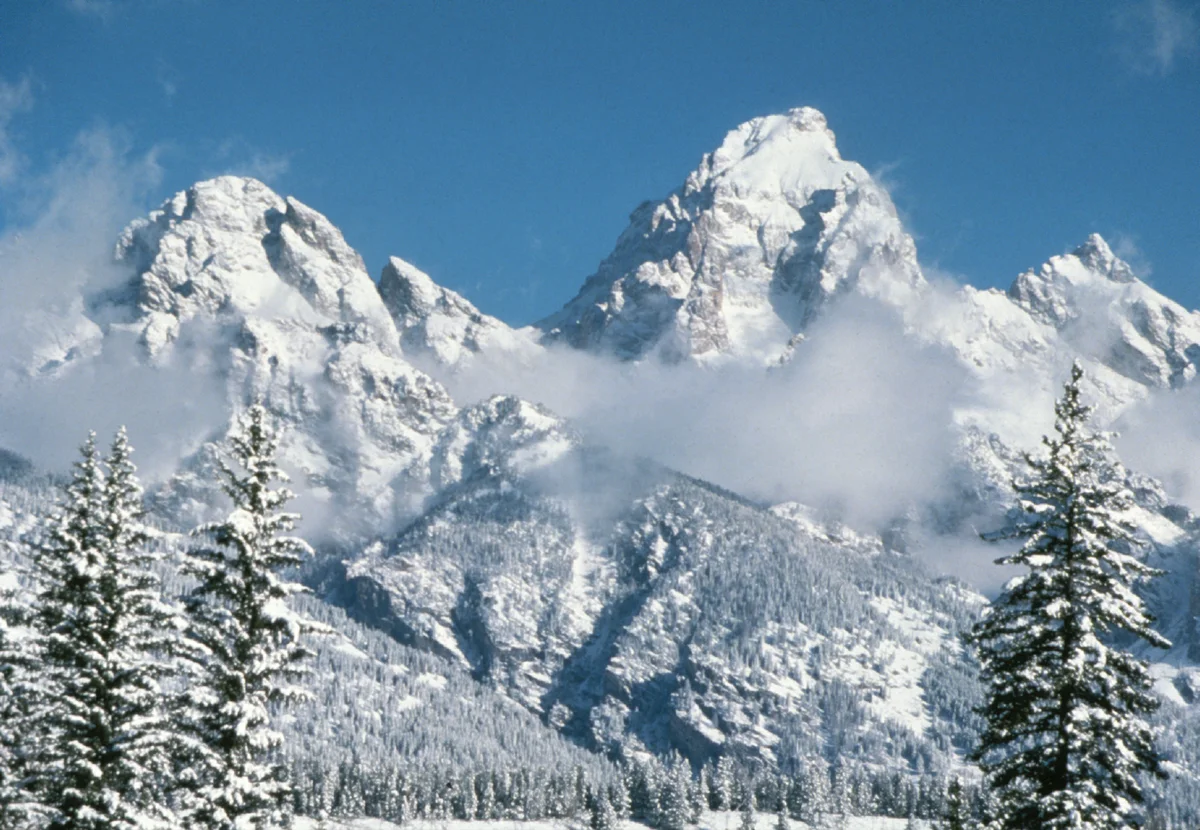
Grand Teton is a world-famous, razor-sharp granite and gneiss peak rising abruptly to an elevation of 4,199 metres in Grand Teton National Park in northwestern Wyoming. As the highest summit in the Teton Range and the second highest peak in Wyoming, it towers more than 7,000 vertical feet above the sagebrush flats of Jackson Hole without intervening foothills. It is celebrated across mountaineering history as the birthplace of modern American technical rock climbing and client-centered mountain guiding.
Documented Sources & Archival Citations
- Glenn Exum, 1911-2000 (American Alpine Journal, 2001)(Jim Klobuchar / American Alpine Club)
Supporting claim: Detailed historical tribute and eyewitness interviews chronicling the 1931 solo ascent
Accessed/Documented: 2026 - A Climber's Guide to the Teton Range(Leigh Ortenburger and Reynold G. Jackson / The Mountaineers Books)
Supporting claim: Technical route description and historical verification of the Upper Exum Ridge first ascent
Accessed/Documented: 2026