Starlight on the Keyhole: Enos Mills' 1903 Winter Night Ascent of Longs Peak
In February 1903, pioneer Colorado naturalist Enos Mills embarked on a solo midwinter night ascent of Longs Peak. Navigating through the frozen Keyhole, the icy Ledges, and the gale-swept Homestretch in total darkness, he greeted sunrise from the arctic summit.
Mountain Safety & Conditions Disclaimer: High-altitude climbing, glacial travel, and technical ascents entail severe objective risks including avalanches, serac collapses, rapid weather collapse, and altitude illness. Historical route descriptions and summit claims on Mountanity reflect documented archival sources and must not be used as live operational safety assessments. Local regulations, permits, and physical glacial topography change continuously.
Peer Review: Senior Editorial Board & Historical Reviewers • Editorial Standards
The Cabin in the Tahosa Valley
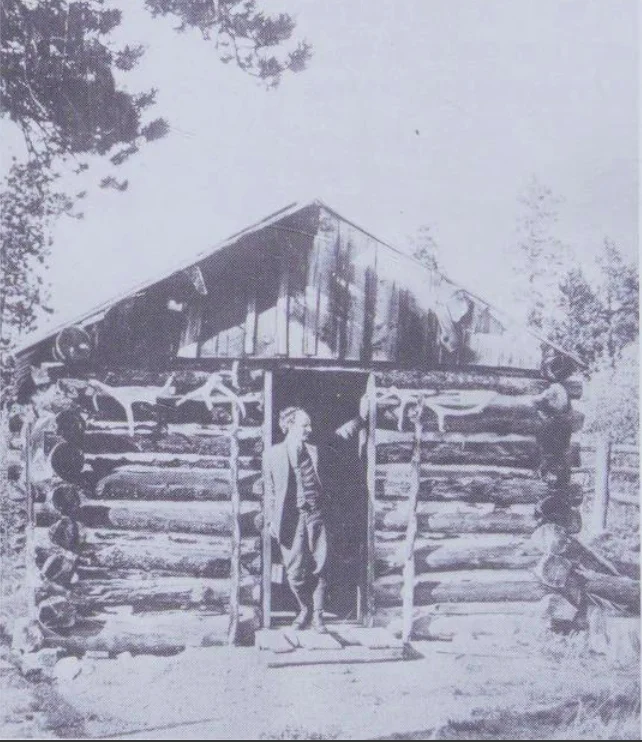
In the bitter midwinter of February 1903, northern Colorado lay buried beneath heavy drifts of powder snow. In the quiet Tahosa Valley, beneath the towering granite ramparts of Longs Peak (4,346 m), thirty-two-year-old Enos Mills stoked the stone fireplace of his hand-hewn cabin.
Having arrived in Colorado as a sickly fourteen-year-old boy in 1884, Mills had regained his health and found his life’s calling among the alpine peaks. Encouraged by a chance meeting with legendary naturalist John Muir in 1889, Mills had climbed Longs Peak in summer, spring, and autumn dozens of times. Yet one supreme challenge haunted his imagination: to climb the great fourteen-thousand-foot peak alone, at the dead of winter, in total nighttime darkness, to witness the rebirth of the sun over the Great Plains from the highest point of the Front Range.
At ten o’clock on a freezing night in mid-February, with the mercury plunging toward twenty degrees below zero Fahrenheit, Mills strapped on his ash-wood snowshoes, picked up his spiked staff, and stepped out into the silent, star-filled forest.
Across the Frozen Boulderfield
The ascent began through the dense subalpine forests of lodgepole pine, Douglas fir, and limber pine. The winter snow muffled every sound save the rhythmic crunch of snowshoes and the whispering of the wind in the treetops. Emerging at the timberline above 3,400 metres, Mills was greeted by the stark, wind-scoured amphitheater of the Boulderfield.
Here, winter gales stripped the rock bare of powder, leaving gigantic granite boulders coated in a treacherous veneer of black ice. Mills cached his snowshoes behind a rock cairn and proceeded on foot, using his iron staff to probe for hidden crevices and ice-glazed slabs. The sheer East Face of Longs Peak—the monolithic granite wall known today as The Diamond—rose into the starlight like a frozen gothic fortress.
By three in the morning, battling rising crosswinds that roared over the Continental Divide, Mills scrambled up the steep boulder slopes to the Keyhole at nearly 4,000 metres.
The Keyhole and the Western Abyss
The Keyhole is a natural, cathedral-shaped gap fractured through the narrow granite ridgecrest. Standing in the notch, Mills crossed from the sheltered eastern slopes into the full, savage fury of a Rocky Mountain winter tempest. Gale-force winds howling at over sixty miles per hour battered his body, threatening to rip him from the rock.
Stepping through the Keyhole onto the western side of the mountain, Mills entered a realm of terrifying verticality. The route traversed the Ledges, a series of narrow, sloping shelves etched into the cliffs above Glacier Gorge, which dropped thousands of feet into invisible blackness below. Navigating on hands and knees to maintain balance against the wind, Mills felt for handholds in the dark, testing every flake of rock before committing his weight.
Beyond the Ledges lay The Trough, a six-hundred-foot couloir filled with hard-packed wind slab and bulletproof blue ice. Chipping footsteps with his staff and climbing with steady, deliberate movements, Mills gained the notch at the top of the couloir. Creeping across the exposed shelf of The Narrows, where the rock path narrowed to barely two feet wide above vertical precipices, he reached the base of the final barrier: the Homestretch.
Sunrise from the Arctic Summit
The Homestretch presented a steep, smooth slab of granite inclined at forty degrees, polished by centuries of glacial scour and coated in rime ice. Without crampons or climbing ropes, Mills relied on friction, crawling on all fours and finding purchase in shallow rock seams.
Just before six o’clock in the morning, Mills hauled himself over the final granite ledge onto the vast, flat, four-acre tabletop summit of Longs Peak at 4,346 metres.
The cold was absolute, with the windchill approaching fifty below zero. Mills paced across the summit slabs to keep his circulation flowing. Then, as the eastern horizon began to glow with faint crimson and violet hues, the sun crested the rim of the Great Plains. A flood of golden light washed across hundreds of miles of frozen prairie, illuminating the snow-clad peaks of the Front Range, the Gore Range, and the distant Never Summer Mountains in blazing fire.
Mills later wrote that in that solitary hour upon the rooftop of Colorado, surrounded by infinite space and silent majesty, he understood the eternal spirit of the wilderness. Descending carefully through the Keyhole as full daylight illuminated the mountains, Mills returned to his cabin—an odyssey that cemented his reputation as the premier alpine guardian of the Rocky Mountains.
Key Statistics & Topographic Figures
- Category
- Colorado 14er Lore
Archival Subject
- Reading Time
- 14 min read
Narrative Length
- Key Mountain
- longs-peak
Objective
- Ascent Route
- the ascent route
Topography
- Verification
- Editorially Verified
Archival Standard
Archival Primary Source Quotations
“In the mountains, truth is etched in ice and granite; every step requires unwavering respect for the heights.”
Defined Alpine Terminology & Concepts
- Summit Push
- The final continuous climbing effort from the highest established camp to the mountain apex and back.
- Death Zone Chronicle
- A verified, research-backed historical narrative documenting the human, technical, and environmental realities of an alpine expedition.
Frequently Asked Questions: Starlight on the Keyhole: Enos Mills' 1903 Winter Night Ascent of Longs Peak
What is the core chronicle and subject of "Starlight on the Keyhole: Enos Mills' 1903 Winter Night Ascent of Longs Peak"?
In February 1903, pioneer Colorado naturalist Enos Mills embarked on a solo midwinter night ascent of Longs Peak. Navigating through the frozen Keyhole, the icy Ledges, and the gale-swept Homestretch in total darkness, he greeted sunrise from the arctic summit.
Which mountain peaks and routes are featured in "Starlight on the Keyhole: Enos Mills' 1903 Winter Night Ascent of Longs Peak"?
This narrative documents climbs on longs-peak along the the ascent route in United States.
Which documented expedition is chronicled in this story?
This historical chronicle captures the events of the 1903-enos-mills-longs-peak-winter-night-solo, verified through contemporary journals and archival records.
Who authored and researched this archival chronicle?
Authored and researched by Mountainity Historical Research Desk, drawing on primary eyewitness testimonies, alpine club registries, and verified summit logs.
What makes this high-altitude chronicle historically significant?
Categorized under "Colorado 14er Lore", this chronicle preserves critical lessons in alpine leadership, survival, tactical speed, and human endurance in the death zone.
Related Mountains

Longs Peak
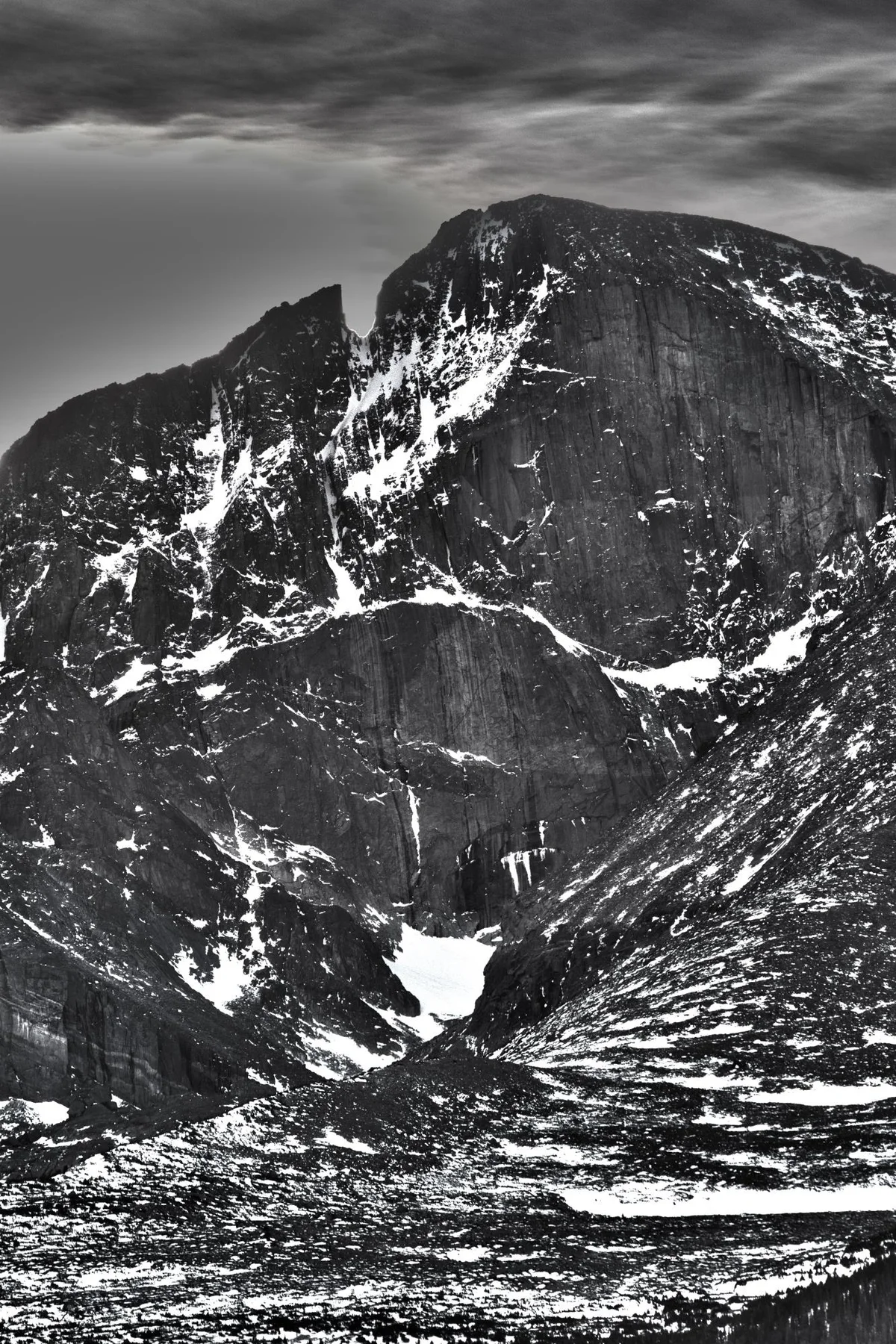
Longs Peak is the undisputed monarch of northern Colorado's Front Range, rising to an elevation of 4,346 metres as the only fourteen-thousand-foot mountain in Rocky Mountain National Park. Celebrated worldwide for its sheer 1,000-foot vertical granite East Face known as 'The Diamond', Longs Peak stands as an enduring monument to early Rocky Mountain exploration, alpine endurance, and the birth of American wilderness conservation.
Documented Sources & Archival Citations
- The Story of Longs Peak(Enos Mills / The Rocky Mountain Wonderland)
Supporting claim: Primary first-hand memoirs of early climbing campaigns and guiding on Longs Peak
Accessed/Documented: 2026 - Enos Mills of the Rockies(Hildegarde Hawthorne and Esther B. Mills / Houghton Mifflin)
Supporting claim: Detailed biographical record of Mills' mountaineering exploits and winter climbs
Accessed/Documented: 2026