Birth of the Japanese Alpine Club: Kojima Usui and the Soul of Mount Kita
Kojima Usui traverses Mount Kita in the Southern Alps and rallies Japan's intellectual mountaineers to establish the Japanese Alpine Club in 1905.
Mountain Safety & Conditions Disclaimer: High-altitude climbing, glacial travel, and technical ascents entail severe objective risks including avalanches, serac collapses, rapid weather collapse, and altitude illness. Historical route descriptions and summit claims on Mountanity reflect documented archival sources and must not be used as live operational safety assessments. Local regulations, permits, and physical glacial topography change continuously.
Peer Review: Senior Editorial Board & Historical Reviewers • Editorial Standards
The Intellectual Awakening of Meiji Alpinism
At the turn of the twentieth century, Meiji Japan was undergoing a monumental cultural transformation. As Western science, literature, and philosophy reshaped Tokyo’s universities, a new generation of Japanese thinkers began seeking a modern spiritual connection with their homeland’s natural landscapes. Among them stood Kojima Usui, a young executive at the Yokohama Specie Bank who was destined to become the intellectual architect of Japanese mountaineering.
Kojima was deeply influenced by European Romanticism, the poetry of William Wordsworth, and the mountain philosophy of John Ruskin. In an era when most Japanese still regarded mountaineering as an archaic superstition practiced by wandering hermits, Kojima believed that scaling high peaks was the supreme artistic and intellectual pursuit of the modern era—a synthesis of physical daring, geographic science, and poetic reflection.
Inspired by Reverend Walter Weston’s expeditions, Kojima resolved that Japan required its own national alpine institution, staffed not by foreign explorers, but by passionate Japanese climbers dedicated to surveying and celebrating their nation’s mountains.
The Conquest of Mount Kita
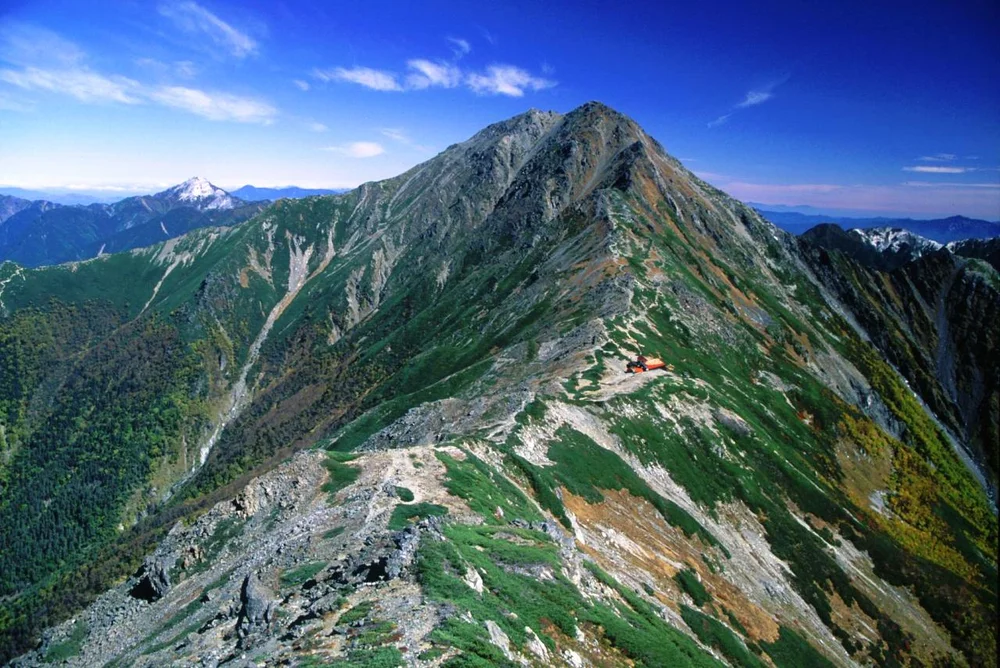
Before organizing a national club, Kojima sought to test his philosophy against the most formidable peak in the Southern Alps: Mount Kita (Kitadake, 3,193 m), the second-highest mountain in Japan.
In late July 1905, Kojima and a small party of mountaineering companions traveled to Yamanashi Prefecture. Entering the isolated Noro River gorge, they ascended through dense birch and hemlock forests to the base of the massive Kitadake Buttress—a towering 600-metre vertical rock wall of folded metamorphic rock that dominated the upper valley like a colossal gothic cathedral.
Climbing through the steep, boulder-strewn couloirs of the Shiraneo cirque, the party struggled against torrential summer downpours that transformed mountain gullies into roaring cataracts. Above the timberline, surrounded by rare white Kitadake-so alpine flowers, they reached the wind-swept knife-edge ridge of Shirane Sanzan.
On July 28, 1905, Kojima stepped onto the 3,193-metre summit of Mount Kita. As the storm clouds parted in the morning light, the entire island of Honshu seemed to spread out beneath his feet. Directly across the basin, rising majestically above a sea of white cumulus clouds, stood Mount Fuji. Standing on that lofty peak, Kojima penned the words that would define a movement: ‘The mountain does not belong to the ascetics of the past, nor to the cartographers of the state; it belongs to the free soul who climbs for love of the heights.’
The Historic Assembly at Seiyōken
Returning to Tokyo energized by his triumph, Kojima mobilized his fellow climbing intellectuals. On the evening of October 14, 1905, seven visionary men assembled in a private banquet room at the historic Seiyōken restaurant in Tokyo’s Ueno Park.
Among those gathered were Kojima Usui, literary scholar Jūji Tanabe, cartographer Takazo Uno, and alpine botanist Torataro Takeda. Together, they drafted the charter for the Sangaku-kai (The Alpine Society, later officially renamed the Japanese Alpine Club). Kojima was elected as the inaugural president. In a unanimous motion of international gratitude, the society elected Reverend Walter Weston as its first honorary member.
The newly formed club immediately launched Sangaku, a peerless alpine journal dedicated to publishing scientific surveys, expedition logs, botanical discoveries, and lyrical alpine essays. Under Kojima’s inspiring leadership, the Japanese Alpine Club expanded from a modest gathering of seven scholars into a prestigious national institution that would spearhead the exploration of every major peak in Japan and eventually launch historic first ascents across the Himalayas and the Canadian Rockies.
Through Kojima Usui’s visionary pen, mountaineering in Japan had become an enduring art form.
Key Statistics & Topographic Figures
- Category
- Alpine History
Archival Subject
- Reading Time
- 18 min read
Narrative Length
- Key Mountain
- mount-kita
Objective
- Ascent Route
- mount-kita-shirane-route
Topography
- Verification
- Editorially Verified
Archival Standard
Archival Primary Source Quotations
“In the mountains, truth is etched in ice and granite; every step requires unwavering respect for the heights.”
Defined Alpine Terminology & Concepts
- Summit Push
- The final continuous climbing effort from the highest established camp to the mountain apex and back.
- Death Zone Chronicle
- A verified, research-backed historical narrative documenting the human, technical, and environmental realities of an alpine expedition.
Frequently Asked Questions: Birth of the Japanese Alpine Club: Kojima Usui and the Soul of Mount Kita
What is the core chronicle and subject of "Birth of the Japanese Alpine Club: Kojima Usui and the Soul of Mount Kita"?
Kojima Usui traverses Mount Kita in the Southern Alps and rallies Japan's intellectual mountaineers to establish the Japanese Alpine Club in 1905.
Which mountain peaks and routes are featured in "Birth of the Japanese Alpine Club: Kojima Usui and the Soul of Mount Kita"?
This narrative documents climbs on mount-kita along the mount-kita-shirane-route in Japan.
Which documented expedition is chronicled in this story?
This historical chronicle captures the events of the 1905-kojima-usui-japanese-alpine-club-founding, verified through contemporary journals and archival records.
Who authored and researched this archival chronicle?
Authored and researched by Kojima Usui, drawing on primary eyewitness testimonies, alpine club registries, and verified summit logs.
What makes this high-altitude chronicle historically significant?
Categorized under "Alpine History", this chronicle preserves critical lessons in alpine leadership, survival, tactical speed, and human endurance in the death zone.
Related Mountains

Mount Kita / Kitadake
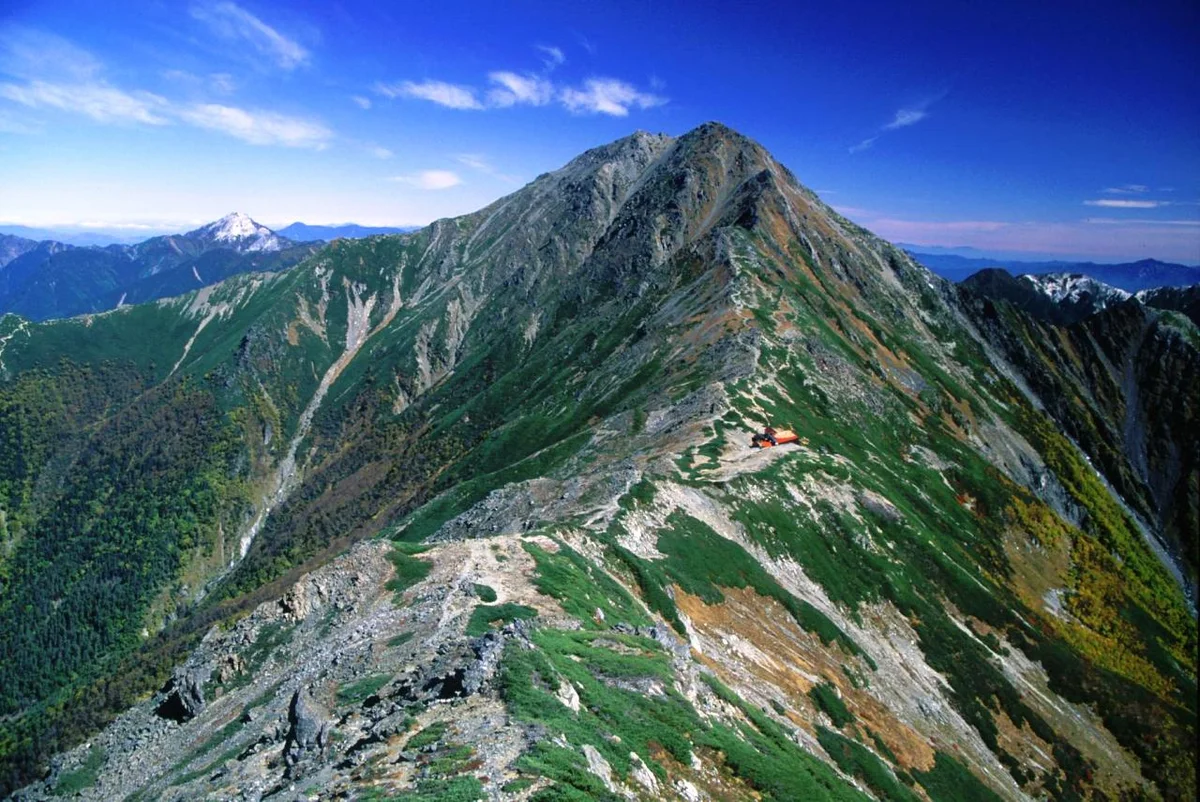
Mount Kita, or Kitadake, is the second-highest peak in Japan at 3,193 metres (10,476 ft), standing proudly as the crown jewel of the Akaishi Mountains in Minami Alps National Park. Renowned for its sheer 600-metre east rock face (Kitadake Buttress)—one of Japan's most celebrated technical climbing arenas—and its rich endemism of rare alpine flowers (Kitadake-so), the mountain was explored in depth during the Meiji era by Reverend Walter Weston in 1902 and early members of the Japanese Alpine Club. The classic ascent follows the Shiraneo Dankan ridge from Hirogawara, providing breathtaking panoramas of Mount Fuji across the Kofu Basin.
Documented Sources & Archival Citations
- Nihon Arupusu (The Japanese Alps)(Maekawa Bun’eido, Tokyo / Kojima Usui)
Supporting claim: Primary narrative of early Southern Alps exploration and JAC founding philosophy
Accessed/Documented: 1910