Mountains of the Moon: The Duke of the Abruzzi and the 1906 Ruwenzori Conquest
The Fabled Source of the Nile...
Mountain Safety & Conditions Disclaimer: High-altitude climbing, glacial travel, and technical ascents entail severe objective risks including avalanches, serac collapses, rapid weather collapse, and altitude illness. Historical route descriptions and summit claims on Mountanity reflect documented archival sources and must not be used as live operational safety assessments. Local regulations, permits, and physical glacial topography change continuously.
Peer Review: Senior Editorial Board & Historical Reviewers • Editorial Standards
Mountains of the Moon: The Duke of the Abruzzi and the 1906 Ruwenzori Conquest
The Fabled Source of the Nile
In antiquity, Ptolemy described a legendary mountain range deep in equatorial Africa whose snows fed the sources of the Nile: the Lunae Montes, or Mountains of the Moon. For nearly two millennia, geographers debated whether these glaciated mountains truly existed. Even when Henry Morton Stanley glimpsed their glittering peaks through parting storm clouds in 1888, the Rwenzori range remained an untamed labyrinth.
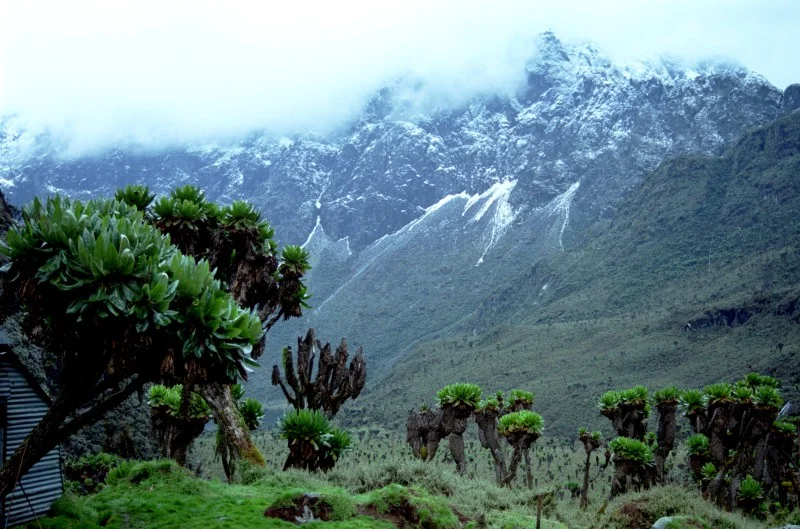
Unlike the volcanic cones of Kilimanjaro and Kenya, the Rwenzori is a non-volcanic fault-block horst of ancient metamorphic rock, permanently swathed in dense equatorial mist, torrential downpours, and impassable bogs.
In 1906, Prince Luigi Amedeo, Duke of the Abruzzi, fresh from his conquest of Mount Saint Elias and Arctic exploration, organized a royal Italian expedition to map and climb the entire Rwenzori range.
“We moved through a prehistoric world where giant tree groundsels reached twenty feet into the fog and moss hung like emerald draperies from every branch.” — Filippo De Filippi, Expedition Chronicler, 1906
Petigax and the Courmayeur Elite
The Duke did not leave success to chance. He assembled an elite team from Courmayeur: lead guide Giuseppe ‘Joseph’ Petigax, along with guides César Ollier and Josef Brocherel, expedition physician and chronicler Filippo De Filippi, and the master mountain photographer Vittorio Sella.
Ascending the Mobuku and Bujuku valleys from Uganda, the team spent weeks navigating knee-deep mud bogs and perpetual freezing drizzle. Carrying heavy wooden view cameras and glass plates, Vittorio Sella captured the first authentic photographs of the range’s surreal Afro-alpine flora and hanging glaciers.
The Conquest of Margherita Peak
On June 18, 1906, the Duke, Petigax, Ollier, and Brocherel departed from their high camp on the rock rib below the Elena Glacier. Roped together in dense fog, Petigax led the way across the heavily crevassed ice of the Stanley Plateau.
Reaching the base of the final glaciated dome of Mount Stanley, Petigax cut steps up a 45-degree slope of hard firn on the Margherita Glacier. Scaling a final knife-edge corniced ridge in howling wind, the Duke and Petigax pulled onto the virgin summit rocks at 5,109 metres.
The Duke unfurled the Italian tricolor and named the summit Margherita Peak, in honor of Italy’s Queen Margherita. They then traversed the ridge to conquer its sister peak, Alexandra Peak (5,091 m). Over the ensuing weeks, the expedition methodically summitted all sixteen major glaciated peaks in the Rwenzori, solving the ancient geographical riddle of the Nile’s sources and establishing one of the most flawless scientific expedition records in mountaineering history.
Key Statistics & Topographic Figures
- Category
- African Pioneers
Archival Subject
- Reading Time
- 15 min read
Narrative Length
- Key Mountain
- mount-stanley
Objective
- Ascent Route
- mount-stanley-margherita-glacier-route
Topography
- Verification
- Editorially Verified
Archival Standard
Archival Primary Source Quotations
“In the mountains, truth is etched in ice and granite; every step requires unwavering respect for the heights.”
Defined Alpine Terminology & Concepts
- Summit Push
- The final continuous climbing effort from the highest established camp to the mountain apex and back.
- Death Zone Chronicle
- A verified, research-backed historical narrative documenting the human, technical, and environmental realities of an alpine expedition.
Frequently Asked Questions: Mountains of the Moon: The Duke of the Abruzzi and the 1906 Ruwenzori Conquest
What is the core chronicle and subject of "Mountains of the Moon: The Duke of the Abruzzi and the 1906 Ruwenzori Conquest"?
The Fabled Source of the Nile...
Which mountain peaks and routes are featured in "Mountains of the Moon: The Duke of the Abruzzi and the 1906 Ruwenzori Conquest"?
This narrative documents climbs on mount-stanley along the mount-stanley-margherita-glacier-route in Uganda.
Which documented expedition is chronicled in this story?
This historical chronicle captures the events of the 1906-abruzzi-petigax-ruwenzori-mount-stanley-first-ascent, verified through contemporary journals and archival records.
Who authored and researched this archival chronicle?
Authored and researched by Mountainity Historical Research Desk, drawing on primary eyewitness testimonies, alpine club registries, and verified summit logs.
What makes this high-altitude chronicle historically significant?
Categorized under "African Pioneers", this chronicle preserves critical lessons in alpine leadership, survival, tactical speed, and human endurance in the death zone.
Related Mountains

Mount Stanley
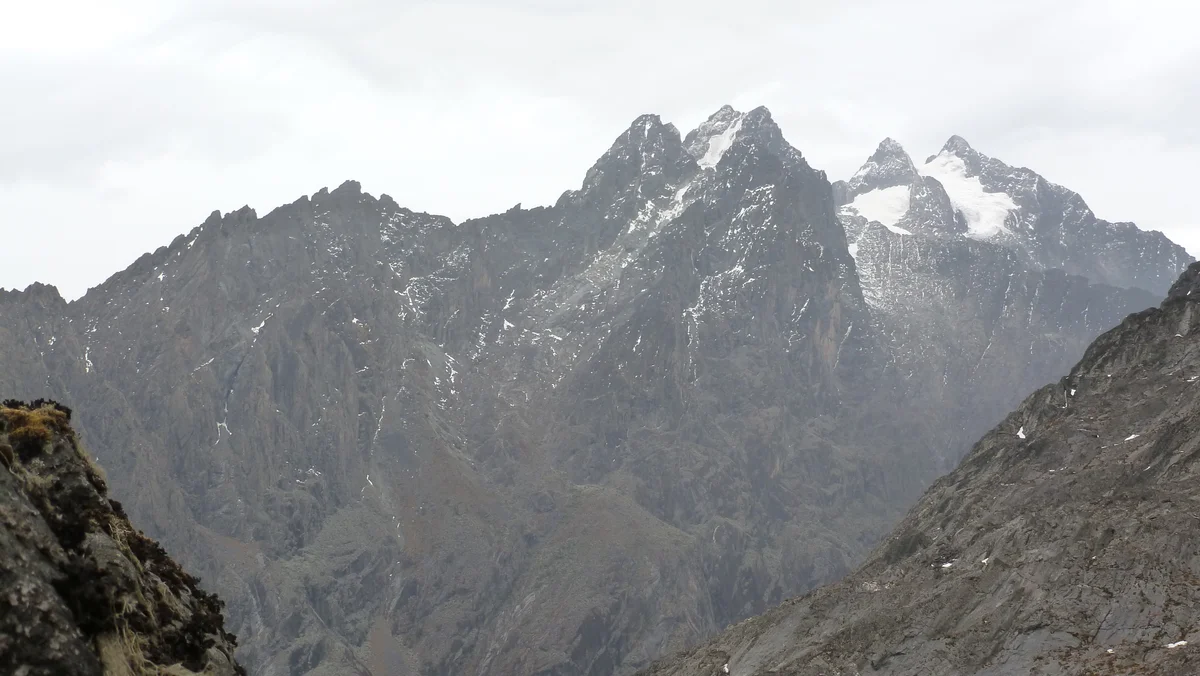
Mount Stanley is the third-highest mountain in Africa at 5,109 metres (16,762 ft) and the supreme crown of the Rwenzori Mountains ('Mountains of the Moon'), straddling the international boundary between Uganda and the Democratic Republic of the Congo. Its highest point, Margherita Peak, is a formidable horn of glaciated metamorphic rock, first summitted on June 18, 1906, by Prince Luigi Amedeo, Duke of the Abruzzi, accompanied by master Courmayeur guides Joseph Petigax, César Ollier, and Josef Brocherel.
Documented Sources & Archival Citations
- Across East African Glaciers(Hans Meyer / George Philip & Son)
Supporting claim: Primary historical source documentation
Accessed/Documented: 1891 - The Geographical Journal(Royal Geographical Society)
Supporting claim: Official expedition chronicle
Accessed/Documented: 1900