National Awakening: Nicolás Martínez and the 1906 Ascent of Antisana
On March 15, 1906, Ecuadorian polymath Nicolás Martínez led the first national ascent of Volcán Antisana (5,753 m), establishing domestic self-reliance and founding modern Ecuadorian mountaineering.
Mountain Safety & Conditions Disclaimer: High-altitude climbing, glacial travel, and technical ascents entail severe objective risks including avalanches, serac collapses, rapid weather collapse, and altitude illness. Historical route descriptions and summit claims on Mountanity reflect documented archival sources and must not be used as live operational safety assessments. Local regulations, permits, and physical glacial topography change continuously.
Peer Review: Senior Editorial Board & Historical Reviewers • Editorial Standards
National Awakening: Nicolás Martínez and the 1906 Ascent of Antisana
Reclaiming the Cordillera
For more than a century after Humboldt’s 1802 climb, high-altitude exploration in the Ecuadorian Andes had been dominated almost entirely by foreign expeditions. European naturalists—Humboldt, Reiss, Stübel, Whymper—arrived with Swiss or Italian guides, climbed the great volcanic giants, and published their memoirs in London, Paris, or Berlin. A pervasive colonial myth endured: that native South Americans lacked the scientific acumen and technical daring to master their own high cordilleras.
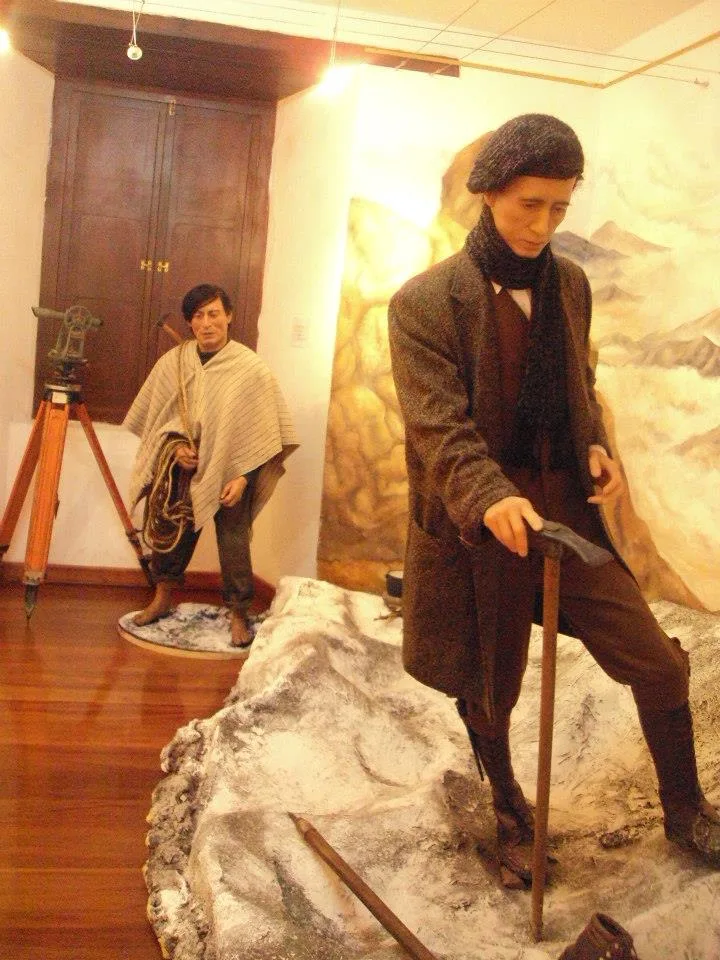
One man was determined to smash that myth forever: Augusto Nicolás Martínez Vásconez (1860–1934). Born in Ambato at the base of Tungurahua, Martínez was a brilliant polymath—geologist, astronomer, meteorologist, and passionate explorer. He had spent decades venturing into active volcanic craters, studying eruptions of Tungurahua, and making ascents of Cotopaxi and Pichincha.
Martínez set his sights on Volcán Antisana (5,753 m). Because Whymper had required the finest alpine guides in Europe to navigate Antisana’s chaotic icefalls twenty-six years earlier, the mountain was regarded as the ultimate test of mountaineering mastery. Martínez resolved to lead an all-Ecuadorian expedition to the summit without foreign assistance.
“Our mountains belong to us. It is our duty as sons of this soil to conquer their summits, chart their glaciers, and study their nature.” — Nicolás Martínez, Ascensiones a los Andes Ecuatorianos
The Expedition of March 1906
In early March 1906, Martínez assembled a small team of trusted Ecuadorian companions, including Alejandro Villacreses and Manuel Villacreses. Departing from the town of Pintag, they loaded mules with camping supplies, meteorological equipment, heavy glass-plate cameras, and locally forged ice crampons.
Braving torrential paramo rains, the team established their high camp near Laguna Santa Lucía at 4,500 metres. On the freezing pre-dawn of March 15, 1906, roped together with sturdy hemp lines, Martínez and his companions stepped onto Antisana’s southern glacier.
Unlike Whymper’s well-provisioned party, the Ecuadorians had to rely purely on their own route-finding instinct. Martínez read the glacier with extraordinary skill, weaving between towering seracs, navigating bottomless crevasse chasms, and finding safe passage across fragile snow bridges. When faced with steep 50-degree firn headwalls, the climbers chopped steps with determination, fighting the debilitating effects of thin equatorial air.
Triumph on the Ice Dome
At midday on March 15, 1906, Nicolás Martínez and the Villacreses companions breached the final glacier ramp and stood victorious on the main summit of Volcán Antisana at 5,753 metres.
The emotional impact was profound. For the first time in history, an all-Ecuadorian team stood atop one of the most formidable glaciated volcanic massifs in the Americas. Martínez spent more than an hour on the summit, taking barometric pressure readings, measuring air temperatures, and capturing historic glass-plate photographs of the surrounding cordillera.
Their successful descent and return to Quito sparked widespread national celebration. Martínez documented the expedition in his seminal work, Ascensiones a los Andes Ecuatorianos (1907), which became the founding manifesto of Ecuadorian mountaineering. By proving that national climbers were equal to the greatest mountains on Earth, Nicolás Martínez earned his immortal title as the Father of Ecuadorian Mountaineering.
Key Statistics & Topographic Figures
- Category
- Andean Pioneers
Archival Subject
- Reading Time
- 13 min read
Narrative Length
- Key Mountain
- antisana
Objective
- Ascent Route
- antisana-central-glacier
Topography
- Verification
- Editorially Verified
Archival Standard
Archival Primary Source Quotations
“In the mountains, truth is etched in ice and granite; every step requires unwavering respect for the heights.”
Defined Alpine Terminology & Concepts
- Summit Push
- The final continuous climbing effort from the highest established camp to the mountain apex and back.
- Death Zone Chronicle
- A verified, research-backed historical narrative documenting the human, technical, and environmental realities of an alpine expedition.
Frequently Asked Questions: National Awakening: Nicolás Martínez and the 1906 Ascent of Antisana
What is the core chronicle and subject of "National Awakening: Nicolás Martínez and the 1906 Ascent of Antisana"?
On March 15, 1906, Ecuadorian polymath Nicolás Martínez led the first national ascent of Volcán Antisana (5,753 m), establishing domestic self-reliance and founding modern Ecuadorian mountaineering.
Which mountain peaks and routes are featured in "National Awakening: Nicolás Martínez and the 1906 Ascent of Antisana"?
This narrative documents climbs on antisana along the antisana-central-glacier in Ecuador.
Which documented expedition is chronicled in this story?
This historical chronicle captures the events of the 1906-martinez-antisana-first-ecuadorian-ascent, verified through contemporary journals and archival records.
Who authored and researched this archival chronicle?
Authored and researched by Mountainity Historical Research Desk, drawing on primary eyewitness testimonies, alpine club registries, and verified summit logs.
What makes this high-altitude chronicle historically significant?
Categorized under "Andean Pioneers", this chronicle preserves critical lessons in alpine leadership, survival, tactical speed, and human endurance in the death zone.
Related Mountains
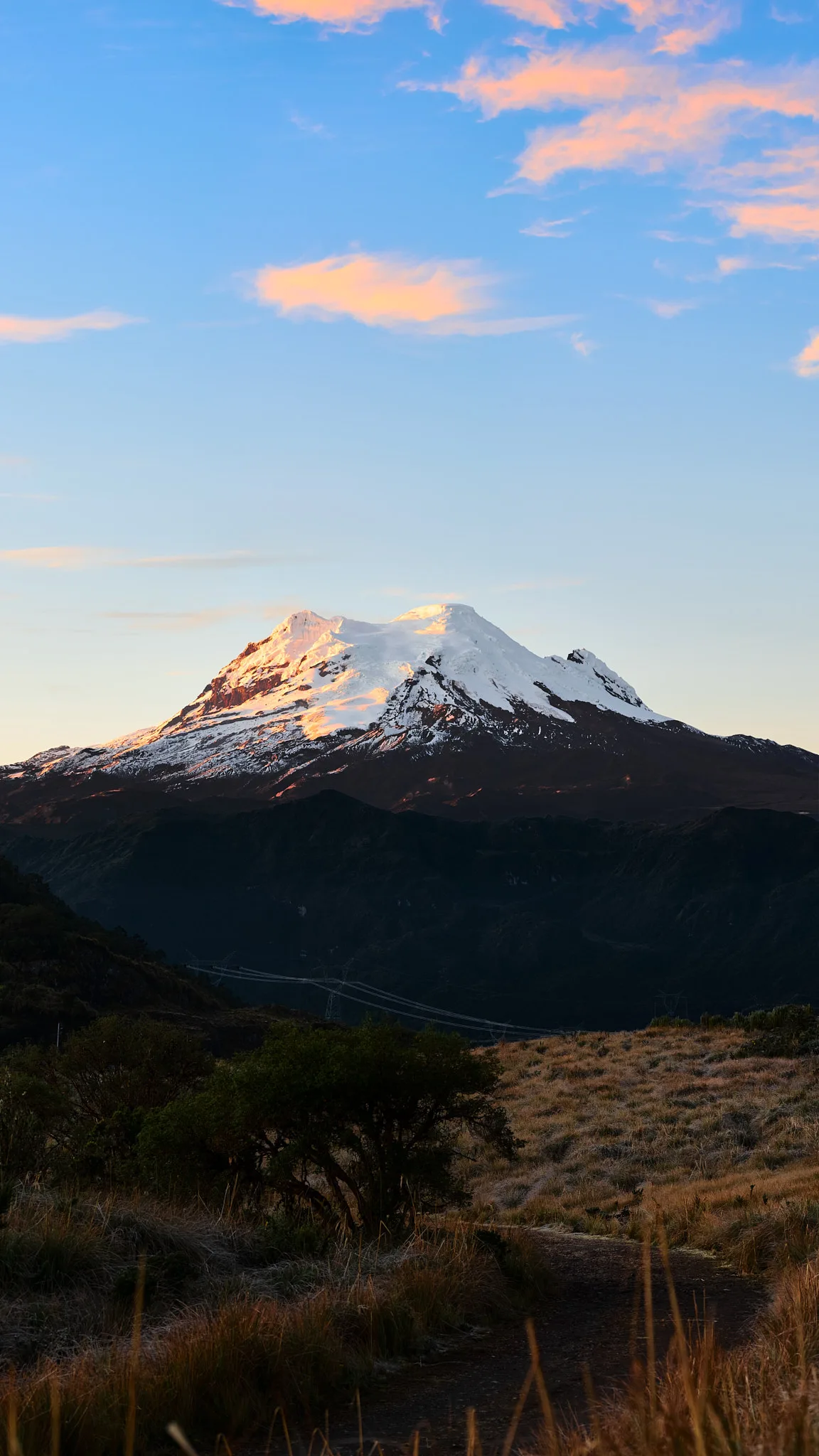

Antisana
Volcán Antisana is an imposing, heavily glaciated 5,753-metre stratovolcano in the Cordillera Real of Ecuador, renowned for its complex glacier maze, massive seracs, and yawning crevasse fields. Widely recognized as one of the most technically demanding volcanic massifs in the northern Andes, Antisana was first climbed on March 10, 1880, by Edward Whymper, Louis Carrel, and Jean-Antoine Carrel. In 1906, pioneering Ecuadorian polymath Nicolás Martínez led the first national ascent, cementing modern Ecuadorian alpinism.
Documented Sources & Archival Citations
- Ascensiones a los Andes Ecuatorianos(Nicolás Martínez / Imprenta Nacional, Quito)
Supporting claim: Firsthand expedition memoirs and route details of the 1906 national ascent of Antisana
Accessed/Documented: 1907 - Historia del Andinismo en el Ecuador(Fabián Zurita / Club de Andinismo del Ecuador)
Supporting claim: Historical analysis of the 1906 ascent as the founding milestone of national Ecuadorian mountaineering
Accessed/Documented: 1990