The Needle of Rock: Chōjirō Uji and the 1907 Conquest of Mount Tsurugi
Master matagi hunter Chōjirō Uji guides surveyor Yoshitaro Shibasaki up Mount Tsurugi's sheer walls in 1907, discovering ancient Heian relics on the virgin peak.
Mountain Safety & Conditions Disclaimer: High-altitude climbing, glacial travel, and technical ascents entail severe objective risks including avalanches, serac collapses, rapid weather collapse, and altitude illness. Historical route descriptions and summit claims on Mountanity reflect documented archival sources and must not be used as live operational safety assessments. Local regulations, permits, and physical glacial topography change continuously.
Peer Review: Senior Editorial Board & Historical Reviewers • Editorial Standards
The Mountain of Swords
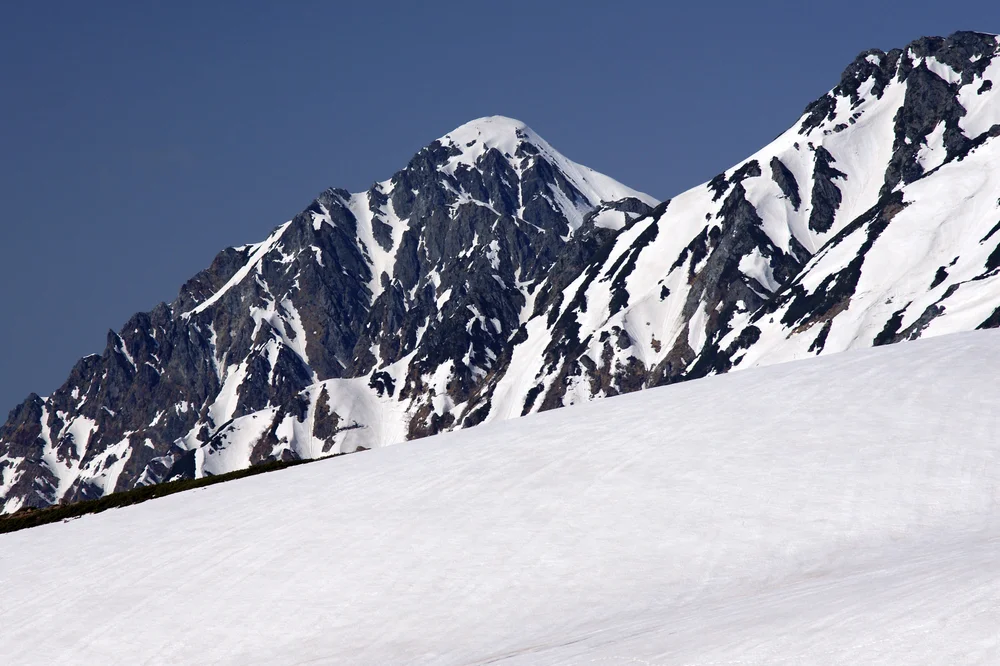
In the northern reaches of the Hida Mountains, where the snowpacks of the Sea of Japan collide with vertical granitic massifs, rises Mount Tsurugi (Tsurugidake, 2,999 m)—the Peak of the Sword. For centuries, this razor-sharp spire of shattered diorite and granite was considered by local villagers to be an unapproachable realm of hell. According to Shinto-Buddhist folklore, anyone who dared set foot upon its frozen precipices would be pierced by thousands of demonic blades and cast into the bottomless abyss.
By 1907, the Imperial Japanese Army Land Survey had systematically mapped almost the entire Japanese archipelago. Only one glaring void remained on the national topographic chart: Mount Tsurugi. Because no human had ever stood atop its summit, no trigonometric survey pillar could be established, leaving the surrounding maps incomplete.
The Imperial General Staff assigned surveyor Yoshitaro Shibasaki to rectify this national embarrassment. But Shibasaki faced fierce competition: the newly founded Japanese Alpine Club had announced that its elite amateur climbers were launching an expedition to claim the virgin summit as a modern sporting victory. For the military survey, failing to reach the top first would be a catastrophic loss of prestige.
The Old Hunter of Kamiichi
To conquer a mountain deemed impossible, Shibasaki knew he needed more than military discipline and brass theodolites; he needed the greatest mountain scout in the region. He traveled to the village of Kamiichi and sought out Chōjirō Uji.
Chōjirō was 66 years old—an age when most men in Meiji Japan were long retired. But Chōjirō was no ordinary villager; he was a master matagi (traditional mountain hunter) who had spent half a century pursuing bears and serow through the terrifying gorges of the Tateyama range. He could smell avalanches in the wind, read the stability of ice bridges with a tap of his timber staff, and scramble across vertical cliff bands with breathtaking agility.
Examining the south face of Tsurugi, Chōjirō bluntly told Shibasaki that attempting the direct rock walls was suicide. Instead, Chōjirō conceived an audacious strategy: they would circumnavigate the mountain through the Kurobe headwaters and assault the peak from the east, using a colossal, hidden snow couloir that slashed through the vertical rock like a frozen highway. That canyon is known to this day as Chōjirō Snow Gully (Chōjirō-setsu-kei).
The Crux: Vertical Claws on the Wall of Rock
In early July 1907, Shibasaki, Chōjirō, and three survey assistants established a high camp beneath the eastern cliffs. For days, violent storms battered their primitive canvas tents with blinding rain and howling gales. As food supplies dwindled, word reached them that the Alpine Club party was already climbing on the southern ridges.
On July 13, 1907, the weather broke into crystalline clarity. At 4:00 AM, Chōjirō strapped on his straw waraji sandals and led the survey team onto the frozen snowpack of the couloir. Cutting steps with iron axes and wooden clubs, Chōjirō navigated past gaping crevasses and hanging seracs that threatened to sweep them down the 1,000-metre drop.
Near the head of the couloir, the snow vanished into a sheer granite headwall—what modern climbers call the Kani-no-Tatebai (‘Crab’s Vertical Crawl’). Hauling heavy surveying equipment and timber stakes on their backs, the team pressed their bodies flat against the frozen rock, clawing for microscopic fingertip holds and inching upward over sheer empty space.
At 10:00 AM, Chōjirō hauled himself over the final cornice and stepped onto the sharp, serrated summit crest of Mount Tsurugi. Shibasaki and the surveyors scrambled up behind him, collapsing onto the rock in utter exhaustion and triumph. They had conquered the unconquerable peak.
The Miracle on the Summit
As the surveyors prepared to erect their tripod and trigonometric marker among the jumbled summit boulders, Chōjirō noticed something extraordinary half-buried beneath moss and lichen in a narrow rock crevice.
Reaching down, he pulled out a rusted iron sword point and a beautifully cast bronze Shakujō—the ringed staff carried by Buddhist ascetic pilgrims. Laboratory analysis would later date these sacred artifacts to the late Nara or early Heian period, around the 8th or 9th century.
More than a thousand years before European alpine technique or modern military cartography arrived in Japan, an unknown ascetic pilgrim had scaled Mount Tsurugi in sandals and hemp robes, leaving his sacred staff as an offering to the gods of the summit.
Rather than diminishing their modern conquest, the miraculous discovery deepened it with ancient reverence. Chōjirō Uji and Yoshitaro Shibasaki had not merely conquered a mountain; they had reunited modern Japan with its timeless spiritual heritage on the highest granite needle of the Japanese Alps.
Key Statistics & Topographic Figures
- Category
- Epic Ascents
Archival Subject
- Reading Time
- 19 min read
Narrative Length
- Key Mountain
- mount-tsurugi
Objective
- Ascent Route
- mount-tsurugi-bessan-ridge
Topography
- Verification
- Editorially Verified
Archival Standard
Archival Primary Source Quotations
“In the mountains, truth is etched in ice and granite; every step requires unwavering respect for the heights.”
Defined Alpine Terminology & Concepts
- Summit Push
- The final continuous climbing effort from the highest established camp to the mountain apex and back.
- Death Zone Chronicle
- A verified, research-backed historical narrative documenting the human, technical, and environmental realities of an alpine expedition.
Frequently Asked Questions: The Needle of Rock: Chōjirō Uji and the 1907 Conquest of Mount Tsurugi
What is the core chronicle and subject of "The Needle of Rock: Chōjirō Uji and the 1907 Conquest of Mount Tsurugi"?
Master matagi hunter Chōjirō Uji guides surveyor Yoshitaro Shibasaki up Mount Tsurugi's sheer walls in 1907, discovering ancient Heian relics on the virgin peak.
Which mountain peaks and routes are featured in "The Needle of Rock: Chōjirō Uji and the 1907 Conquest of Mount Tsurugi"?
This narrative documents climbs on mount-tsurugi along the mount-tsurugi-bessan-ridge in Japan.
Which documented expedition is chronicled in this story?
This historical chronicle captures the events of the 1907-shibasaki-uji-tsurugidake-first-ascent, verified through contemporary journals and archival records.
Who authored and researched this archival chronicle?
Authored and researched by Chōjirō Uji, drawing on primary eyewitness testimonies, alpine club registries, and verified summit logs.
What makes this high-altitude chronicle historically significant?
Categorized under "Epic Ascents", this chronicle preserves critical lessons in alpine leadership, survival, tactical speed, and human endurance in the death zone.
Related Mountains

Mount Tsurugi / Tsurugidake
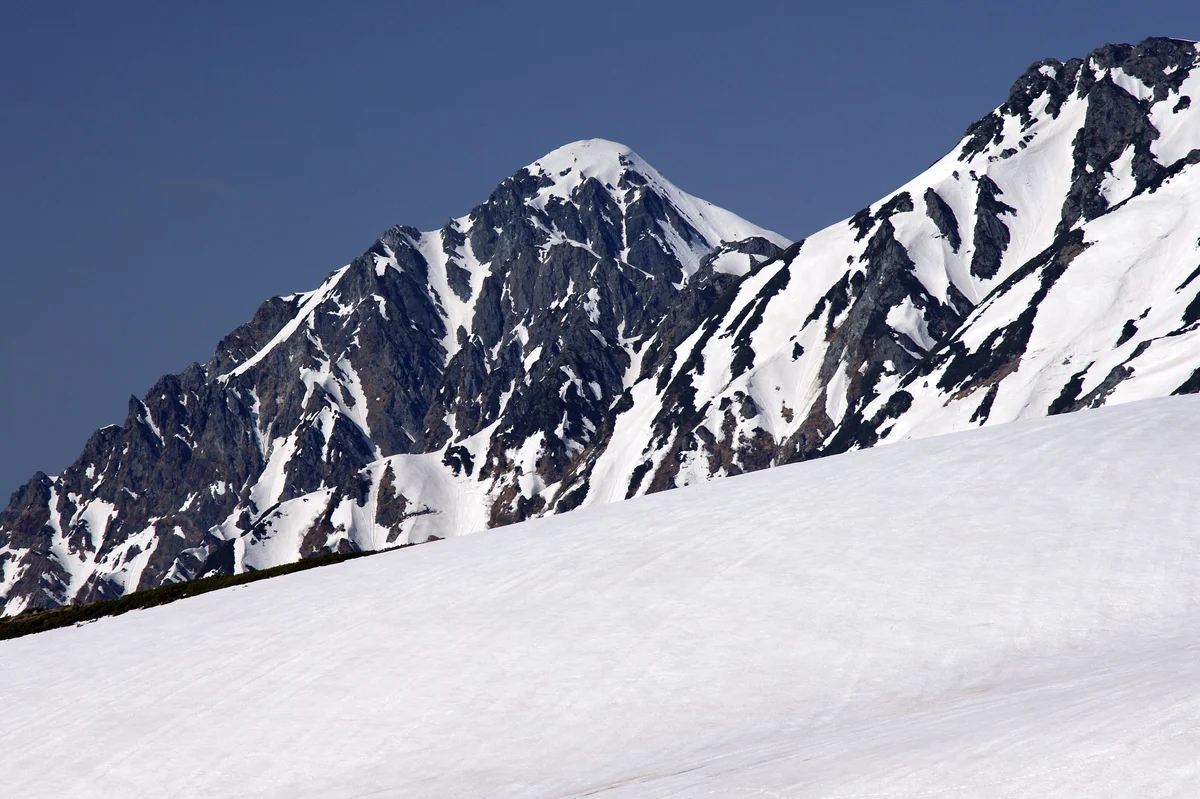
Mount Tsurugi (Tsurugidake) is a fearsome 2,999-metre (9,839 ft) granite horn in the northern Hida Mountains of Toyama Prefecture, known as the most hazardous and technically challenging alpine peak in Japan. Revered in ancient esoteric Buddhism as a realm of hell forbidden to human feet, the mountain became the epicenter of an epic race in 1907 between the Imperial Land Survey team led by Yoshitaro Shibasaki and master hunter Chōjirō Uji, and the newly established Japanese Alpine Club. Upon reaching the virgin summit, the survey team made the astonishing discovery of an ancient Heian-period bronze cane head and sword tip, revealing that ascetic Shugendō pilgrims had scaled the perilous peak over a millennium earlier.
Documented Sources & Archival Citations
- Tsurugidake: Ten no Ki (The Summit: A Chronicle of Mount Tsurugi)(Bungeishunjū / Jirō Nitta)
Supporting claim: Primary documentary chronicle of the 1907 Imperial Land Survey climb
Accessed/Documented: 1977