Into the Cauldron of Ice: The 1908 First Ascent of Mount Erebus
Through polar blizzards and geothermal ice towers to the glowing lava lake of Earth's southernmost active volcano.
Mountain Safety & Conditions Disclaimer: High-altitude climbing, glacial travel, and technical ascents entail severe objective risks including avalanches, serac collapses, rapid weather collapse, and altitude illness. Historical route descriptions and summit claims on Mountanity reflect documented archival sources and must not be used as live operational safety assessments. Local regulations, permits, and physical glacial topography change continuously.
Peer Review: Senior Editorial Board & Historical Reviewers • Editorial Standards
Into the Cauldron of Ice: The 1908 First Ascent of Mount Erebus
A Smoking Sentinel at the Edge of the World
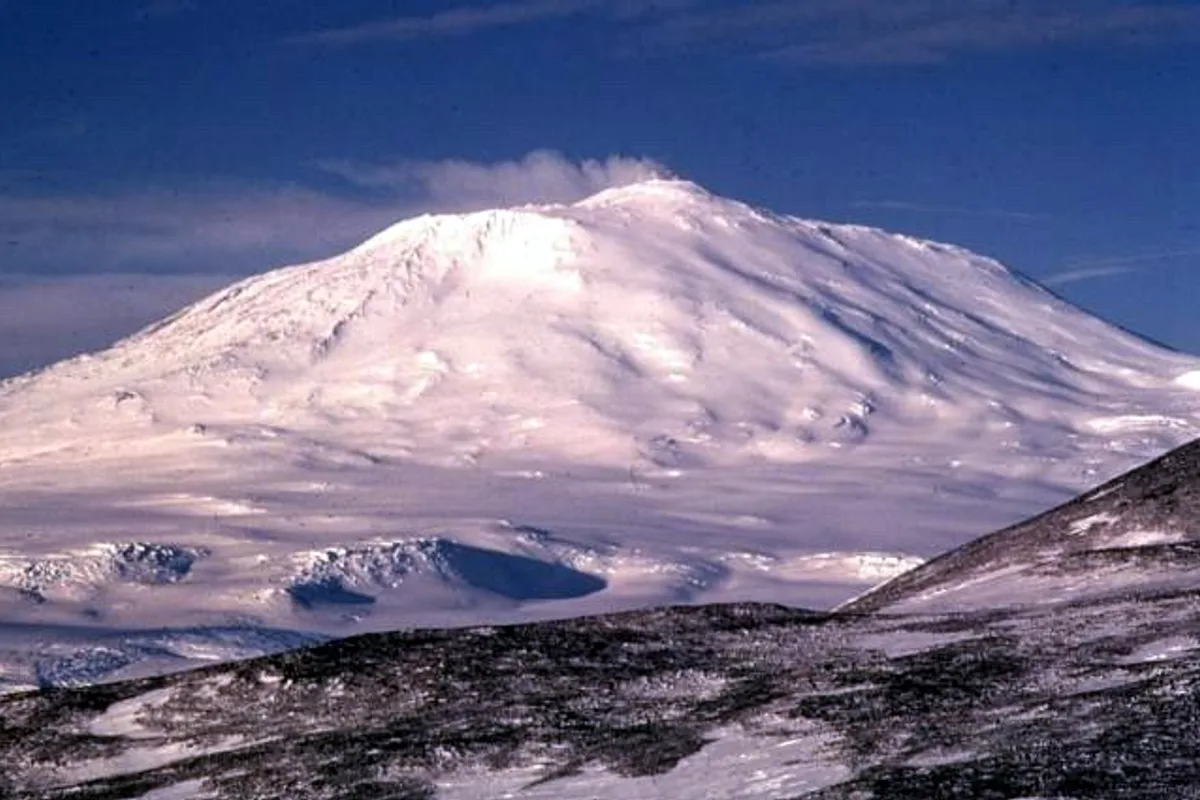
On the southern edge of McMurdo Sound, where the frozen ocean collides with the Ross Ice Shelf, a white monster dominates the polar sky. Soaring to 3,794 metres, Mount Erebus is unlike any other mountain on planet Earth: it is an active stratovolcano rising directly out of the Antarctic ice sheets, trailing a perpetual plume of steam and volcanic gas into the sub-zero atmosphere.
Discovered in 1841 by Sir James Clark Ross, who named it after his bomb vessel HMS Erebus, the mountain was regarded for over sixty years as an impossible, frozen inferno.
In early 1908, when Sir Ernest Shackleton sailed into McMurdo Sound aboard the Nimrod to establish winter base at Cape Royds, Erebus rose directly above their tiny wooden hut. Shackleton’s primary goal was the Geographic South Pole, but his scientific team looked upon the smoking summit with uncontrollable scientific desire.
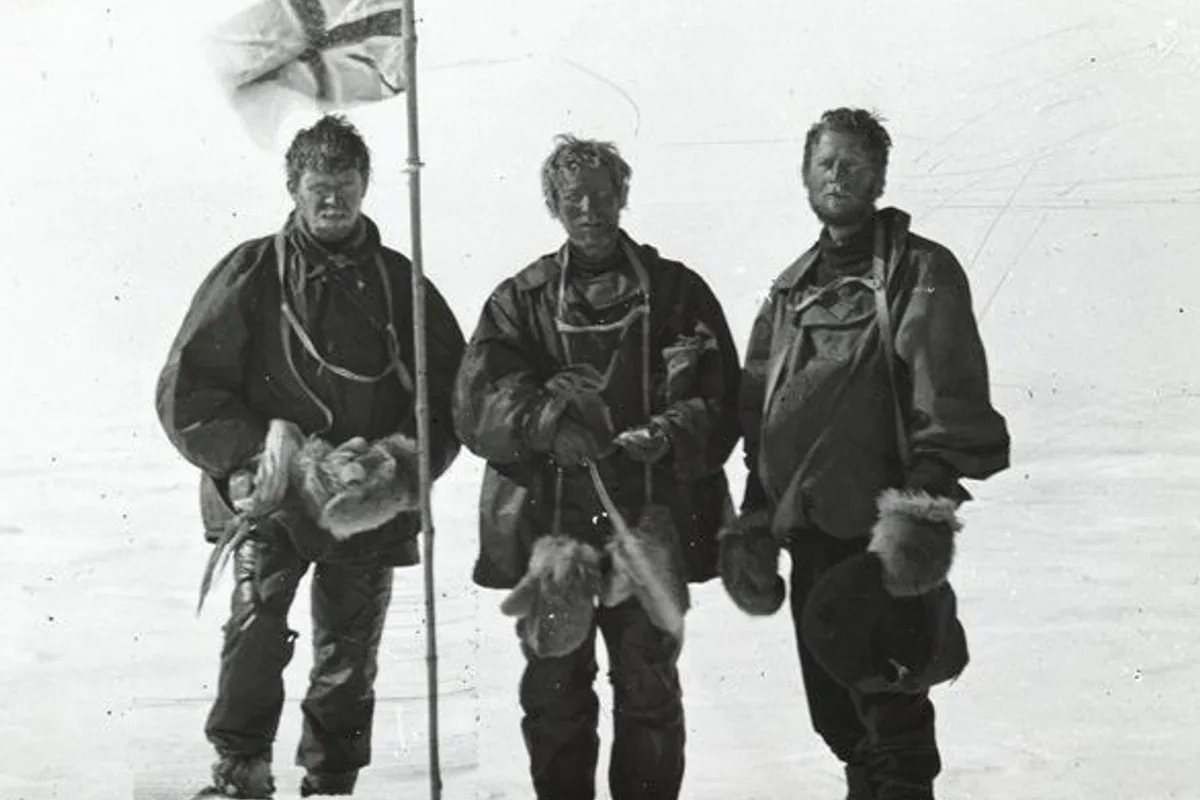
Leading the push was Professor Tannatt William Edgeworth David, a 50-year-old Welsh-Australian geologist of iron will; Douglas Mawson, a brilliant 26-year-old physicist who would become Australia’s greatest Antarctic explorer; and Raymond Priestley, a 21-year-old British geology student whose youth belied an extraordinary resilience.
“There stood Erebus, towering over our little camp, throwing up great volumes of steam and sulphur fumes, challenging us to discover the secrets of its icy heart.” — Sir Raymond Priestley, Antarctic Adventure, 1914
Hauling Sledges up the Fang
On March 5, 1908, the six-man party departed Cape Royds. Accompanied by Dr. Alistair Mackay, Dr. Eric Marshall, and Philip Brocklehurst, the climbers shouldered heavy swags and dragged an eleven-foot birch sledge weighing over 250 kilograms across the lower moraines and bare basalt ridges.
Their climbing gear was shockingly primitive compared to modern polar apparel. They wore heavy woollen underwear beneath Burberry windproof smocks, thick woolen mitts, and leather boots studded with iron hobs.
Ascending the heavily crevassed snow ramps of the Fang Glacier, the party struggled upward under blinding whiteout conditions. At 2,600 metres, a ferocious polar tempest hit the mountain. For over thirty hours, the men lay jammed three-to-a-tent inside flimsy canvas shelters as hurricane-force winds screamed across the volcano. Brocklehurst suffered catastrophic frostbite in both feet, forcing him to remain inside the tent while the other five pushed toward the summit.
The Forest of Ice Chimneys
Emerging above the clouds at 3,350 metres, David, Mawson, and Priestley stepped onto the vast outer caldera floor—and stopped in absolute amazement.
Scattered across the frozen plateau were hundreds of surreal ice fumaroles: hollow towers of crystalline ice, rising up to ten metres into the sky like frozen chimneys. Formed by warm geothermal steam escaping from subterranean fissures and immediately freezing in the -40°C polar air, the chimneys exhaled steady puffs of volcanic smoke from their snowy tops like an alien industrial city.
Navigating carefully between treacherous thermal chasms, the five men crossed the snowfields to the foot of the active inner cone.
The Boiling Abyss
At 10:00 AM on March 10, 1908, Edgeworth David, Douglas Mawson, Raymond Priestley, Alistair Mackay, and Eric Marshall reached the crowning rim of Mount Erebus: 3,794 metres above sea level.
Standing upon the razor-edge of the active crater, the men braced against buffeting gusts of toxic sulfurous gas. Below them lay an awe-inspiring sight that no human being had ever witnessed: a gaping, 300-metre-deep volcanic abyss containing a permanent, churning phonolitic lava lake. Red-hot molten magma bubbled and heaved in the frozen darkness, throwing off showers of glowing pumice that hissed against the surrounding rime ice.
To the north, the endless white expanse of the Ross Ice Shelf stretched into infinity; to the south, the jagged peaks of the Transantarctic Mountains gleamed in the midnight sun.
The party safely descended the mountain in forty-eight hours, sliding hundreds of metres down the hard snow slopes on their backs to return to Shackleton’s hut to roaring cheers. Raymond Priestley, Douglas Mawson, and Edgeworth David had written the very first chapter of high-altitude polar alpinism.
Key Statistics & Topographic Figures
- Category
- Polar Pioneers
Archival Subject
- Reading Time
- 15 min read
Narrative Length
- Key Mountain
- mount-erebus
Objective
- Ascent Route
- mount-erebus-caldera-route
Topography
- Verification
- Editorially Verified
Archival Standard
Archival Primary Source Quotations
“In the mountains, truth is etched in ice and granite; every step requires unwavering respect for the heights.”
Defined Alpine Terminology & Concepts
- Summit Push
- The final continuous climbing effort from the highest established camp to the mountain apex and back.
- Death Zone Chronicle
- A verified, research-backed historical narrative documenting the human, technical, and environmental realities of an alpine expedition.
Frequently Asked Questions: Into the Cauldron of Ice: The 1908 First Ascent of Mount Erebus
What is the core chronicle and subject of "Into the Cauldron of Ice: The 1908 First Ascent of Mount Erebus"?
Through polar blizzards and geothermal ice towers to the glowing lava lake of Earth's southernmost active volcano.
Which mountain peaks and routes are featured in "Into the Cauldron of Ice: The 1908 First Ascent of Mount Erebus"?
This narrative documents climbs on mount-erebus along the mount-erebus-caldera-route in Antarctica.
Which documented expedition is chronicled in this story?
This historical chronicle captures the events of the 1908-david-mawson-priestley-mount-erebus-first-ascent, verified through contemporary journals and archival records.
Who authored and researched this archival chronicle?
Authored and researched by Mountainity Historical Research Desk, drawing on primary eyewitness testimonies, alpine club registries, and verified summit logs.
What makes this high-altitude chronicle historically significant?
Categorized under "Polar Pioneers", this chronicle preserves critical lessons in alpine leadership, survival, tactical speed, and human endurance in the death zone.
Related Mountains

Mount Erebus
Mount Erebus is an active stratovolcano rising to 3,794 metres (12,448 ft) on Ross Island in Antarctica, making it the southernmost active volcano on Earth and the second-highest volcano in Antarctica. Famous for its persistent, bubbling phonolitic lava lake inside its inner crater and unique fumarolic ice towers (ice fumaroles), it was discovered in 1841 by Sir James Clark Ross. In March 1908, a six-man party led by Professor Edgeworth David and including Douglas Mawson and Raymond Priestley during Sir Ernest Shackleton's Nimrod Expedition achieved the heroic maiden first ascent, hauling sledges through ferocious polar blizzards to peer into the glowing volcanic abyss.
Documented Sources & Archival Citations
- The Heart of the Antarctic(Sir Ernest Shackleton / William Heinemann)
Supporting claim: Primary historical source
Accessed/Documented: 1909 - Antarctic Adventure(Raymond Priestley / T. Fisher Unwin)
Supporting claim: Firsthand expedition memoir
Accessed/Documented: 1914