Queen of the Climbers: Annie Smith Peck's 1908 Conquest of Huascarán Norte
In September 1908, 57-year-old scholar and suffragist Annie Smith Peck defied Victorian society, ferocious Andean blizzards, and shattering icefalls to achieve the first ascent of Huascarán Norte.
Mountain Safety & Conditions Disclaimer: High-altitude climbing, glacial travel, and technical ascents entail severe objective risks including avalanches, serac collapses, rapid weather collapse, and altitude illness. Historical route descriptions and summit claims on Mountanity reflect documented archival sources and must not be used as live operational safety assessments. Local regulations, permits, and physical glacial topography change continuously.
Peer Review: Senior Editorial Board & Historical Reviewers • Editorial Standards
Queen of the Climbers: Annie Smith Peck’s 1908 Conquest of Huascarán Norte
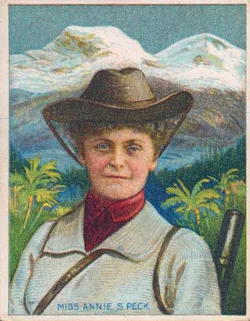
In the late winter of 1908, high above the Callejón de Huaylas in northern Peru, an improbable alpine drama reached its climax. Standing at 6,655 metres on the knife-edge ice crest of Nevado Huascarán Norte was a fifty-seven-year-old former Greek professor from Rhode Island: Annie Smith Peck. Dressed in wool knickerbockers, heavily nailed boots, a felt mask, and layers of flannel, Peck looked out across the sea of glaciated Andean giants. In her gloved hand, she held a banner bearing four simple words: Votes for Women.
The ascent marked the first time human feet had touched the summit of Peru’s great northern titan. It was a triumph forged through sheer willpower after five grueling, heartbreaking expeditions over five years, silencing critics who insisted that high-altitude exploration was strictly the domain of men.
A Passion for the Heights
Born in Providence, Rhode Island, in 1850, Annie Smith Peck refused every constraint imposed upon women of the Victorian era. She insisted on a university education when few institutions admitted females, earning two degrees from the University of Michigan before becoming the first woman to study classical archaeology at the American School of Classical Studies in Athens.
In her forties, Peck discovered alpine mountaineering. In 1895, she caused an international scandal by ascending the Matterhorn in a tunic and climbing trousers. Newspapers expressed moral outrage, but Peck brushed aside the criticism with wry humor: “A woman who climbs a mountain has no business thinking of anything but climbing that mountain.”
Yet the European Alps soon felt crowded to Peck. She looked to South America, where the colossal, uncharted cordilleras remained largely unmeasured and unclimbed. Believing that Mount Sorata (Illampu) in Bolivia or Nevado Huascarán in Peru might rival or exceed Mount Aconcagua, she launched her quest to find the “Apex of America.”
Five Years of Heartbreak on Huascarán
Between 1903 and 1906, Peck mounted four expeditions to Mount Sorata and Mount Huascarán. Each campaign was plagued by logistical nightmares: local porters fled in terror from the glaciated “spirits,” blizzards shredded primitive canvas tents, and funding constantly evaporated.
Refusing defeat, Peck returned to Switzerland in early 1908. She sought out veteran Zermatt mountain guides Gabriel Zumtaugwald and Rudolf Taugwalder. Both men were hardened alpine professionals who had guided wealthy aristocrats across the Swiss Alps. Convinced by Peck’s determination, the guides agreed to sail to South America and attempt the northwest ice face of Huascarán.
Arriving in Yungay in August 1908, the party assembled a modest pack train of mules and local porters to carry supplies to the snowline at 5,100 metres. From there, the Swiss guides and Peck were on their own.
The Battle with the Seracs
The northwest flank of Huascarán presented a chaotic labyrinth of hanging glaciers, collapsing seracs, and gaping crevasses. Zumtaugwald led the rope team, wielding his ice axe for eight to ten hours every day to cut thousands of stepped notches into blue glacial ice. Peck, laden with heavy wool and down garments, matched the guides step for step, balancing across precarious snow bridges that creaked beneath their weight.
At 5,900 metres, night overtook them. Carving out a narrow snow bench beneath an overhanging ice wall, the trio endured a sleepless bivouac in temperatures plunging below minus twenty degrees Celsius. The wind roared down the mountain like an express train, threatening to blow their canvas shelter into the abyss.
On the morning of September 2, 1908, with their feet and fingers aching from creeping frostbite, the trio began the final push. Scaling steep 50-degree ice aprons, they broke through the bergschrund and emerged onto the windswept northern crest. At 3:30 in the afternoon, Annie Smith Peck planted her boots upon the summit of Huascarán Norte at 6,655 metres.
Vindication and Legacy
The descent was an ordeal of survival. Gabriel Zumtaugwald suffered severe frostbite on his hands, losing several fingers after descending to Yungay, while Peck battled hypothermia. Yet she had achieved the unimaginable: setting the highest altitude ever attained by an American climber, male or female, up to that date.
Back in the United States, rival mountaineer Fanny Bullock Workman disputed Peck’s claim that Huascarán was higher than Aconcagua, privately financing a French engineering team to triangulate the peak’s height. While the survey confirmed that Huascarán Norte stood at 6,655 metres (slightly below Aconcagua), the measurement firmly established that Peck had set an undisputed world altitude record for female climbers.
In 1927, the Peruvian government officially named the northern peak Cumbre Aña Peck in her honor. Annie Smith Peck climbed her final mountain, Mount Madison in New Hampshire, at the age of eighty-two. Her historic ascent of Huascarán Norte remains a beacon in mountaineering history—a triumph of intellect, grit, and the indomitable fight for human equality.
Key Statistics & Topographic Figures
- Category
- Andean Pioneers
Archival Subject
- Reading Time
- 15 min read
Narrative Length
- Key Mountain
- huascaran-norte
Objective
- Ascent Route
- huascaran-norte-peck-route
Topography
- Verification
- Editorially Verified
Archival Standard
Archival Primary Source Quotations
“In the mountains, truth is etched in ice and granite; every step requires unwavering respect for the heights.”
Defined Alpine Terminology & Concepts
- Summit Push
- The final continuous climbing effort from the highest established camp to the mountain apex and back.
- Death Zone Chronicle
- A verified, research-backed historical narrative documenting the human, technical, and environmental realities of an alpine expedition.
Frequently Asked Questions: Queen of the Climbers: Annie Smith Peck's 1908 Conquest of Huascarán Norte
What is the core chronicle and subject of "Queen of the Climbers: Annie Smith Peck's 1908 Conquest of Huascarán Norte"?
In September 1908, 57-year-old scholar and suffragist Annie Smith Peck defied Victorian society, ferocious Andean blizzards, and shattering icefalls to achieve the first ascent of Huascarán Norte.
Which mountain peaks and routes are featured in "Queen of the Climbers: Annie Smith Peck's 1908 Conquest of Huascarán Norte"?
This narrative documents climbs on huascaran-norte along the huascaran-norte-peck-route in Peru.
Which documented expedition is chronicled in this story?
This historical chronicle captures the events of the 1908-peck-huascaran-norte-first-ascent, verified through contemporary journals and archival records.
Who authored and researched this archival chronicle?
Authored and researched by Mountainity Historical Research Desk, drawing on primary eyewitness testimonies, alpine club registries, and verified summit logs.
What makes this high-altitude chronicle historically significant?
Categorized under "Andean Pioneers", this chronicle preserves critical lessons in alpine leadership, survival, tactical speed, and human endurance in the death zone.
Related Mountains
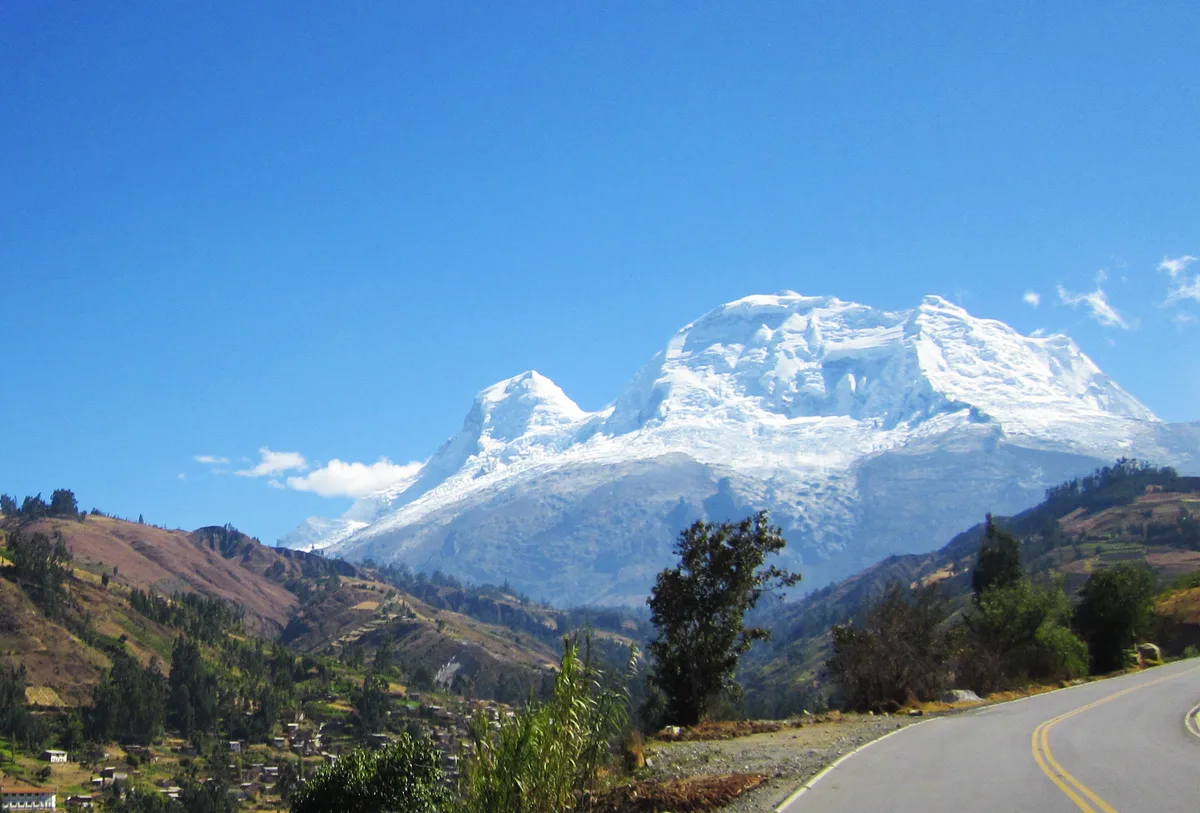

Huascarán Norte
Huascarán Norte is the northern summit of Peru's highest mountain massif, rising to 6,655 metres in the Cordillera Blanca. It was first climbed in September 1908 by pioneering American suffragist Annie Smith Peck alongside Swiss guides Gabriel Zumtaugwald and Rudolf Taugwalder. The peak features steep ice aprons and towering seracs connected to Huascarán Sur via the Garganta col.
Documented Sources & Archival Citations
- A Search for the Apex of America(Annie Smith Peck / Dodd, Mead and Company)
Supporting claim: Firsthand autobiographical account of the five expeditions and the 1908 summit victory
Accessed/Documented: 1911 - The American Alpine Journal: Annie Smith Peck Retrospective(American Alpine Club)
Supporting claim: Historical appraisal of the 1908 Huascarán Norte first ascent and altitude records
Accessed/Documented: 2026