The Matterhorn of the South: The 1909 First Ascent of Mount Aspiring
Jack Clarke and Alec Graham guide Bernard Head up the icy ramparts of Tititea to claim the crown of Otago.
Mountain Safety & Conditions Disclaimer: High-altitude climbing, glacial travel, and technical ascents entail severe objective risks including avalanches, serac collapses, rapid weather collapse, and altitude illness. Historical route descriptions and summit claims on Mountanity reflect documented archival sources and must not be used as live operational safety assessments. Local regulations, permits, and physical glacial topography change continuously.
Peer Review: Senior Editorial Board & Historical Reviewers • Editorial Standards
The Matterhorn of the South: The 1909 First Ascent of Mount Aspiring
The Glistening Horn of Tititea
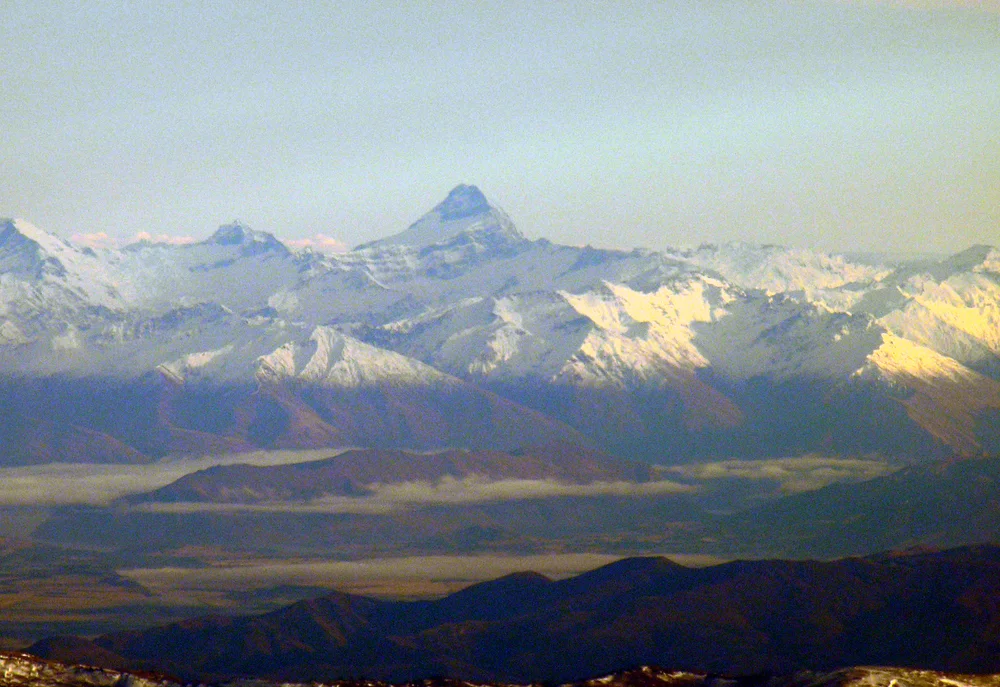
Rising in splendid isolation above the beech-forested valleys of western Otago, Mount Aspiring—known to Māori as Tititea, “the steep peak of glistening white”—is widely regarded as the most graceful mountain in the Southern Hemisphere. Its sheer triangular rock faces and gleaming ice fields earned it the enduring title of the “Matterhorn of the South.”
While Mount Cook had fallen to Tom Fyfe, George Graham, and Jack Clarke in 1894, Aspiring remained completely untouched fifteen years later. Guarded by impenetrable river gorges, trackless sub-Antarctic rainforests, and the vast, heavily crevassed plateau of the Bonar Glacier, the peak had repulsed several early exploratory forays.
In late 1909, English alpinist Captain Bernard Head arrived in New Zealand with a singular ambition: to make the maiden ascent of Tititea. To ensure success, Head engaged the two most celebrated alpine professionals in New Zealand: Jack Clarke, the veteran hero of Mount Cook’s 1894 ascent, and Alec Graham, the legendary guide from Franz Josef Glacier.
“Aspiring is an isolated monarch. When you look across the wilderness from Bevan Col, it stands like a soaring white fang against the western sky, daring any human being to set foot upon its ice.” — Jack Clarke, Alpine Notes, 1909
Into the Matukituki Wilderness
The expedition began far from the comfortable tourist trails. Starting from Lake Wanaka, Head, Clarke, and Graham loaded heavy swags onto pack horses, pushing up the broad braided shingles of the Matukituki River. When the riverbeds narrowed into boulder-choked gorges, they shouldered 30-kilogram packs, hacking through dense subalpine scrub and mossy beech stands.
Ascending the steep, tumbling torrents of the Hector River, they fought their way up vertical tussock slopes to gain Bevan Col at 1,800 metres. Stepping onto the col, the climbers were greeted by a breathtaking panorama: the vast, pristine expanse of the Bonar Glacier lay before them like a frozen sea, with the sharp pyramid of Aspiring soaring over 1,200 metres directly from the ice.
Clarke studied the mountain’s southwestern profile with expert eyes. The sheer southern face was swept by hanging serac avalanches, while the north ridge presented broken rock towers. However, connecting the Bonar Glacier to the upper southwest arête was an inclined shelf of ice: a natural ramp sloping upwards at 45 degrees.
The Assault up The Ramp
Before dawn on November 23, 1909, Head, Clarke, and Graham roped together and stepped onto the frozen snow of the Bonar Glacier. Walking by the cold light of the moon, Clarke navigated around yawning crevasses, testing snow bridges with his ice axe.
Reaching the foot of the mountain at 6:30 AM, they were confronted by a formidable obstacle: the bergschrund—a gaping, overhanging crevasse separating the moving glacier from the stationary mountain ice. Clarke probed the lip, found a narrow bridge of compacted snow, and crawled across on belly and knees before driving his axe deep to belay Head and Graham across.
Now began the supreme technical challenge: The Ramp. The slope rose at a sustained 45-degree angle, coated in hard blue ice that deflected kicked boot steps. With Clarke in the lead, the rhythmic ring of steel against ice echoed across the amphitheatre. Clarke cut deep, secure bucket steps, pausing every thirty feet to hammer a piton into the adjoining rock wall.
For three exhausting hours, the three men moved up the icy staircase, suspended directly above the Bonar abyss.
The Summit Horn
Breaching the top of The Ramp, the climbers emerged onto the knife-edge crest of the Southwest Ridge at 2,700 metres. Here, the ice gave way to shattered schist rock. Scrambling along the exposed arête, balancing on narrow ledges with precipitous drops on both sides, they ascended the final steep horn.
At 11:30 AM on November 23, 1909, Jack Clarke stepped onto the glistening summit ice cap of Mount Aspiring. Drawing Bernard Head and Alec Graham up to join him, the three men stood upon the virgin apex of Tititea.
The view was staggering: hundreds of unnamed, glaciated peaks stretched across the South Island wilderness, from the Tasman Sea in the west to the turquoise waters of Lake Wanaka in the east. To the northeast, the sharp pyramid of Aoraki / Mount Cook stood out against the horizon—a fitting greeting between New Zealand’s two greatest summits.
The trio safely retraced their route down The Ramp, completing what the New Zealand Alpine Club hailed as the cleanest and most brilliant alpine first ascent of the decade.
Key Statistics & Topographic Figures
- Category
- Australasian Pioneers
Archival Subject
- Reading Time
- 13 min read
Narrative Length
- Key Mountain
- mount-aspiring
Objective
- Ascent Route
- mount-aspiring-southwest-ridge
Topography
- Verification
- Editorially Verified
Archival Standard
Archival Primary Source Quotations
“In the mountains, truth is etched in ice and granite; every step requires unwavering respect for the heights.”
Defined Alpine Terminology & Concepts
- Summit Push
- The final continuous climbing effort from the highest established camp to the mountain apex and back.
- Death Zone Chronicle
- A verified, research-backed historical narrative documenting the human, technical, and environmental realities of an alpine expedition.
Frequently Asked Questions: The Matterhorn of the South: The 1909 First Ascent of Mount Aspiring
What is the core chronicle and subject of "The Matterhorn of the South: The 1909 First Ascent of Mount Aspiring"?
Jack Clarke and Alec Graham guide Bernard Head up the icy ramparts of Tititea to claim the crown of Otago.
Which mountain peaks and routes are featured in "The Matterhorn of the South: The 1909 First Ascent of Mount Aspiring"?
This narrative documents climbs on mount-aspiring along the mount-aspiring-southwest-ridge in New Zealand.
Which documented expedition is chronicled in this story?
This historical chronicle captures the events of the 1909-head-clarke-graham-mount-aspiring-first-ascent, verified through contemporary journals and archival records.
Who authored and researched this archival chronicle?
Authored and researched by Mountainity Historical Research Desk, drawing on primary eyewitness testimonies, alpine club registries, and verified summit logs.
What makes this high-altitude chronicle historically significant?
Categorized under "Australasian Pioneers", this chronicle preserves critical lessons in alpine leadership, survival, tactical speed, and human endurance in the death zone.
Related Mountains

Mount Aspiring / Tititea
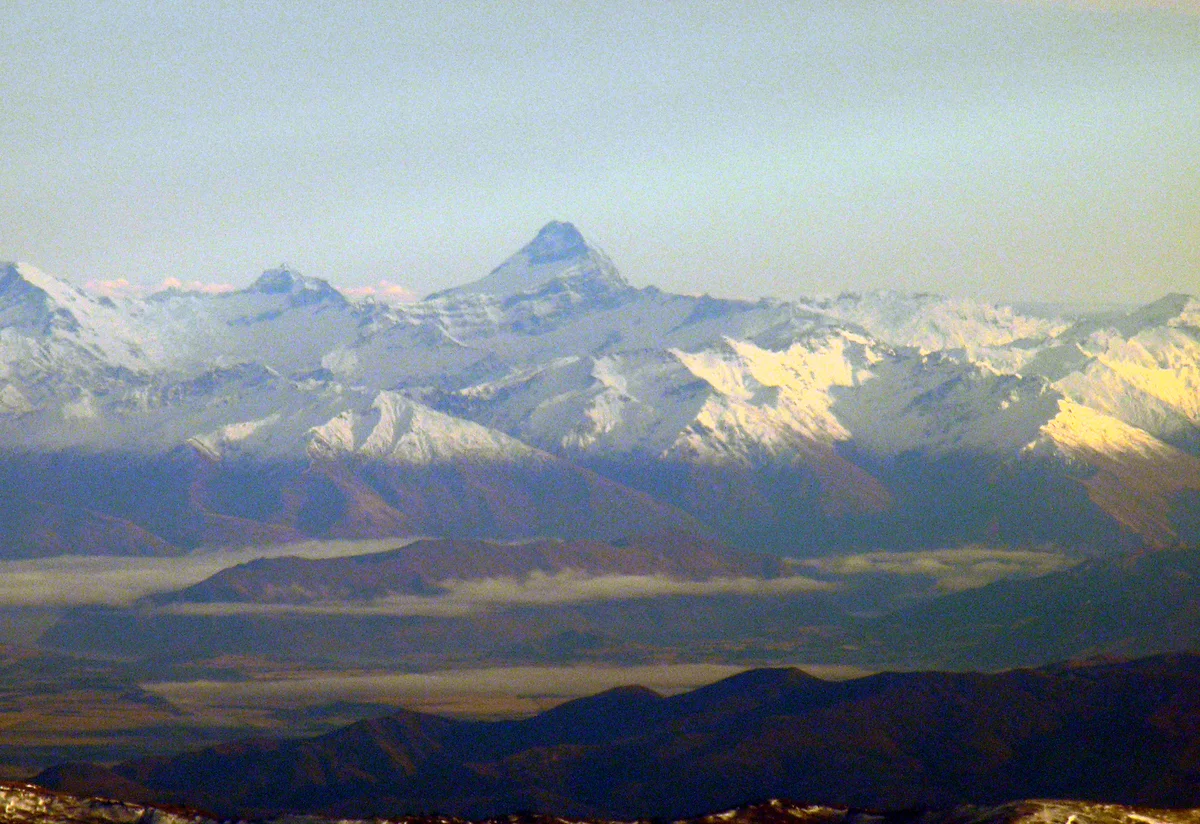
Mount Aspiring / Tititea is a majestic glaciated horn rising to 3,033 metres (9,951 ft) in Mount Aspiring National Park in the Southern Alps of New Zealand. Often celebrated as the 'Matterhorn of the South' due to its sharp pyramidal geometry and towering ice-plastered rock facets, it is sacred to southern Māori as Tititea ('steep peak of glistening white'). First ascended on November 23, 1909, by Bernard Head accompanied by legendary guides Jack Clarke and Alec Graham via the Southwest Ridge, it stands as one of the premier classic alpine ascents in Australasia.
Documented Sources & Archival Citations
- Mr Bernard Head's Ascent of Mount Aspiring(New Zealand Alpine Journal)
Supporting claim: Primary expedition record
Accessed/Documented: 1910 - Mount Aspiring: The Romantic Mountain(Hugh Logan / Craig Potton Publishing)
Supporting claim: Historical documentation
Accessed/Documented: 1987