Gentlemen, That's So Far as I Can Take You: Conrad Kain on Mount Robson
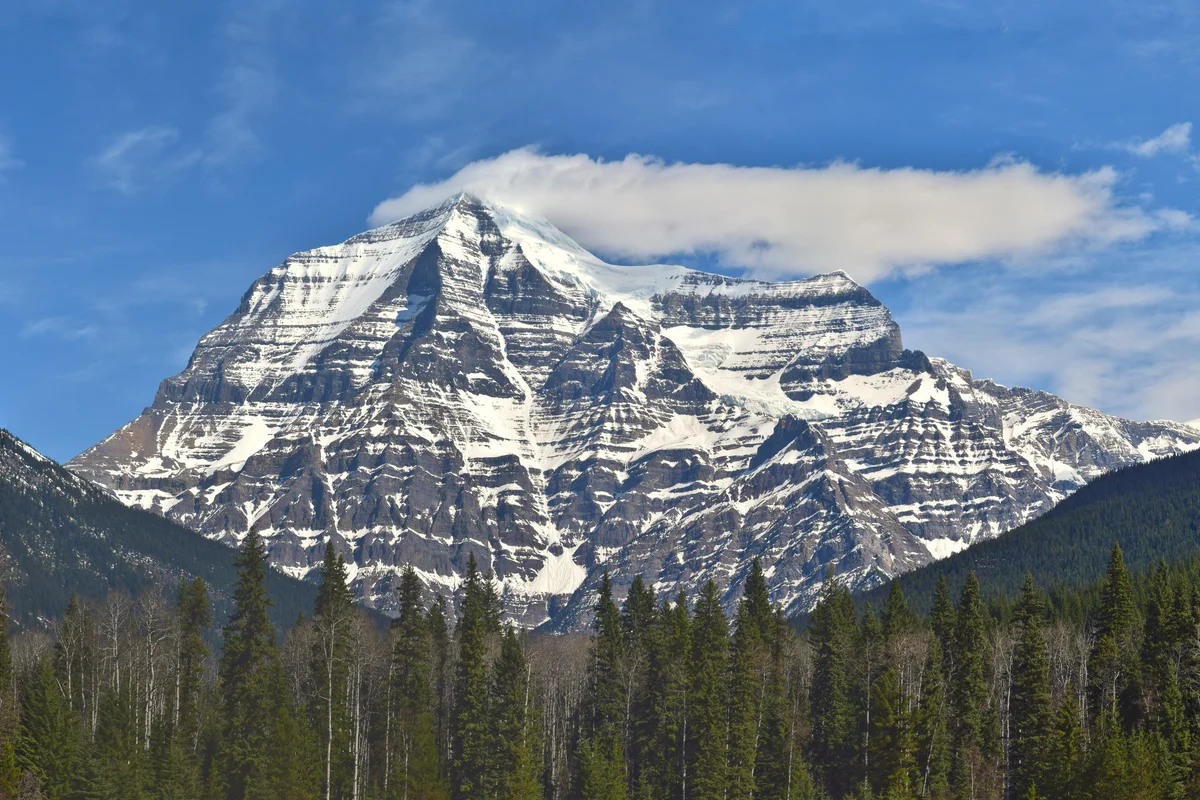
On July 31, 1913, Austrian-Canadian guide Conrad Kain led Albert MacCarthy and William Foster up a 55-degree hanging ice face on Mount Robson, carving hundreds of steps by hand to conquer the monarch of the Canadian Rockies.
Mountain Safety & Conditions Disclaimer: High-altitude climbing, glacial travel, and technical ascents entail severe objective risks including avalanches, serac collapses, rapid weather collapse, and altitude illness. Historical route descriptions and summit claims on Mountanity reflect documented archival sources and must not be used as live operational safety assessments. Local regulations, permits, and physical glacial topography change continuously.
Peer Review: Senior Editorial Board & Historical Reviewers • Editorial Standards
The Monarch of the Northern Rockies
Rising nearly 10,000 vertical feet above the glacial waters of Berg Lake, Mount Robson (3,954 m) was long regarded by early European explorers as an impregnable fortress. Its colossal triangular bulk, banded by sweeping horizontal strata of ancient Cambrian limestone and brittle quartzite, caught the violent, moisture-laden weather systems blowing off the Pacific Ocean, shrouding its upper cliffs in sudden, blinding blizzards and plastering its summit crest in grotesque rime-ice feathers.
Previous expeditions led by prominent British climbers, including Reverend George Kinney and A. P. Coleman, had been turned back repeatedly by avalanche-swept couloirs, crumbling rockfall, and impenetrable ice walls. While Kinney claimed to have reached the summit rim in 1909 amidst a raging gale, his account was widely doubted by the alpine community due to contradictory topographic descriptions.
To thirty-year-old Conrad Kain, the newly appointed chief guide of the Alpine Club of Canada, Mount Robson was the ultimate prize. Born in rural poverty in the Austrian Alps and possessing supernatural stamina, Kain was widely considered the most gifted natural mountaineer to set foot on North American soil. He was determined to settle the question of Mount Robson once and for all with an undisputed, definitive ascent.
The Alpine Club Camp at Berg Lake
In July 1913, the Alpine Club of Canada established its eighth annual summer camp on the gravel flats of Berg Lake. A small city of white canvas tents sprang up beneath the roaring face of the Mist Glacier.
Kain selected two exceptional amateur alpinists to join his rope: Albert MacCarthy, a wealthy American-born Canadian rancher of immense physical endurance, and William Foster, a seasoned British Columbia mountaineer and future provincial chief of police.
On July 30, the trio packed light bivouac gear and departed base camp, scrambling past the tumbled séracs of the Robson Glacier to establish an open bivouac beside the Extinguisher Tower at 9,000 feet. The night was cold and clear, the stars blazing with crystalline sharpness over the immense frozen cirque.
The Hanging Wall of Blue Ice
At 4:00 AM on July 31, 1913, Kain roped up with MacCarthy and Foster and began their push across the upper glacier. Navigating around yawning crevasses, they reached the base of the mountain’s steep northeast hanging face.
Looming directly above them was an intimidating 500-metre wall of sheer, blue glacial ice tilted at angles between 50 and 55 degrees. Neither MacCarthy nor Foster wore crampons with front points, which had not yet been popularized in North America.
Kain did not hesitate. Stepping onto the smooth ice face, he began an epic exhibition of physical strength and step-cutting mastery that would become immortal in mountain history. For hours on end, Kain swung his heavy wooden-shafted ice axe, carving deep, level bucket-steps into the hard, bulletproof ice so his companions could advance securely on their flat boot soles.
Kain hacked hundreds of distinct steps up the vertical void, showered continuously by ice chips and cold spindrift. The exposure beneath his heels grew dizzying, plunging thousands of feet into the gaping bergschrund below, yet Kain’s cadence never faltered.
The Gargoyles of The Roof
By mid-afternoon, Kain surmounted the final lip of the hanging ice sheet and brought MacCarthy and Foster onto the high snow dome at 11,500 feet.
Above them lay the surreal final summit ridge, known as The Roof. Here, howling Pacific gales had sculpted the summit cornice into a bizarre forest of wind-blasted rime-ice towers, some rising twenty to thirty feet high like frozen gothic gargoyles.
Kain carefully threaded a route between the fragile, hollow ice formations, probing with his axe pick to ensure the cornices would not collapse beneath their boots.
At 5:30 in the afternoon on July 31, 1913, Conrad Kain stepped onto the highest point of Mount Robson. He turned, extended his hand to MacCarthy and Foster, and uttered his legendary words:
“Gentlemen, that’s so far as I can take you; there’s nowhere higher to go.”
The Epic Night Descent
The three men stood atop the undisputed monarch of the Canadian Rockies, looking across an endless sea of glaciated peaks stretching north toward the Peace River and south toward the Columbia Icefield.
Their celebration was brief. The afternoon sun had softened the steep ice steps of the Kain Face, rendering a descent down the northeast wall an invitation to certain death from avalanches and pulled anchors.
Demonstrating audacious alpine judgment, Kain decided to descend via an entirely unexplored route down the mountain’s south and southwest glaciers. Navigating blind down steep rock chimneys, jumping crevasses in the gathering dusk, and sliding down steep snow couloirs, the trio continued through the night.
At daybreak on August 1, after twenty-four continuous hours on the rope, Kain led his exhausted, triumphant party into camp at Berg Lake. The conquest of Mount Robson was complete—a golden chapter in the history of Canadian mountaineering and a timeless testament to Conrad Kain’s alpine genius.
Key Statistics & Topographic Figures
- Category
- Canadian Rockies Alpine Lore
Archival Subject
- Reading Time
- 15 min read
Narrative Length
- Key Mountain
- mount-robson
Objective
- Ascent Route
- mount-robson-kain-face
Topography
- Verification
- Editorially Verified
Archival Standard
Archival Primary Source Quotations
“In the mountains, truth is etched in ice and granite; every step requires unwavering respect for the heights.”
Defined Alpine Terminology & Concepts
- Summit Push
- The final continuous climbing effort from the highest established camp to the mountain apex and back.
- Death Zone Chronicle
- A verified, research-backed historical narrative documenting the human, technical, and environmental realities of an alpine expedition.
Frequently Asked Questions: Gentlemen, That's So Far as I Can Take You: Conrad Kain on Mount Robson
What is the core chronicle and subject of "Gentlemen, That's So Far as I Can Take You: Conrad Kain on Mount Robson"?
On July 31, 1913, Austrian-Canadian guide Conrad Kain led Albert MacCarthy and William Foster up a 55-degree hanging ice face on Mount Robson, carving hundreds of steps by hand to conquer the monarch of the Canadian Rockies.
Which mountain peaks and routes are featured in "Gentlemen, That's So Far as I Can Take You: Conrad Kain on Mount Robson"?
This narrative documents climbs on mount-robson along the mount-robson-kain-face in Canada.
Which documented expedition is chronicled in this story?
This historical chronicle captures the events of the 1913-conrad-kain-mount-robson, verified through contemporary journals and archival records.
Who authored and researched this archival chronicle?
Authored and researched by Mountainity Historical Research Desk, drawing on primary eyewitness testimonies, alpine club registries, and verified summit logs.
What makes this high-altitude chronicle historically significant?
Categorized under "Canadian Rockies Alpine Lore", this chronicle preserves critical lessons in alpine leadership, survival, tactical speed, and human endurance in the death zone.
Related Mountains
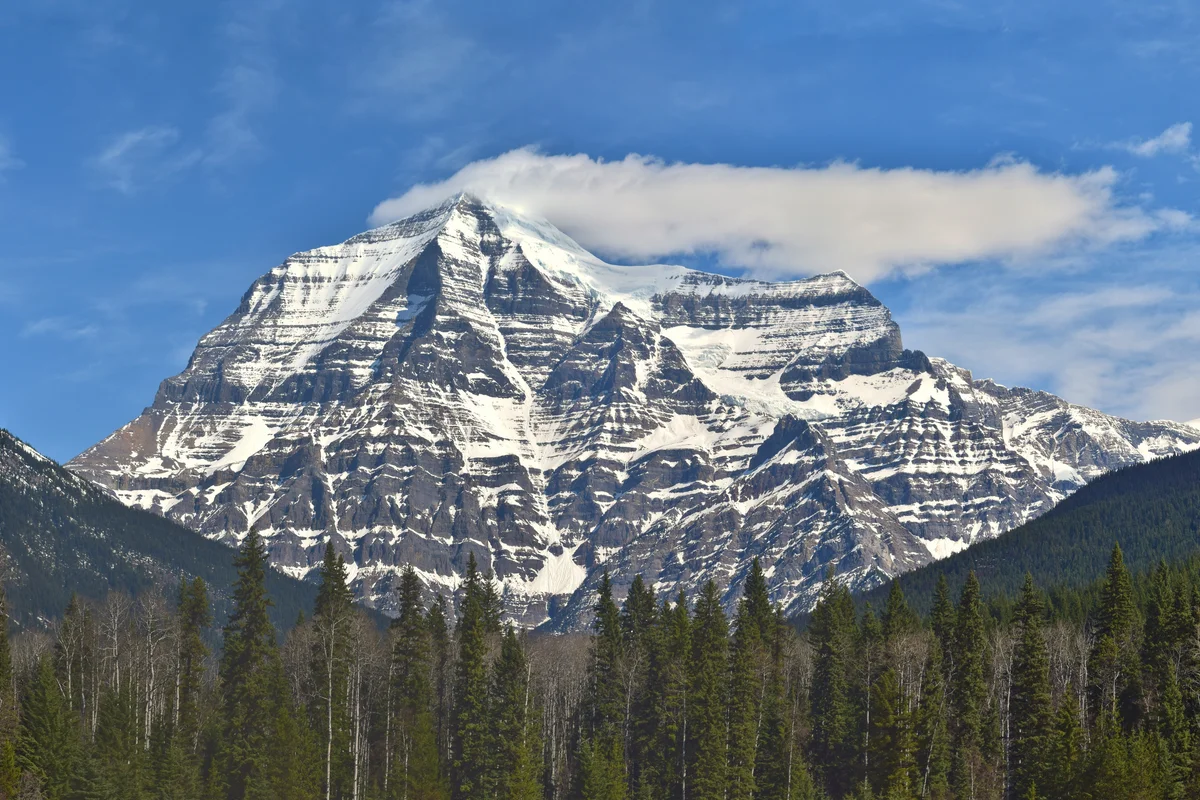

Mount Robson
Mount Robson is the highest mountain peak in the Canadian Rocky Mountains, soaring to an elevation of 3,954 metres in east-central British Columbia. Rising almost 3,000 vertical metres above Berg Lake with tremendous topographic prominence, it is celebrated as the monarch of the Canadian Rockies, featuring immense glaciated ramparts, unpredictable Pacific storms, and historic alpine routes including the Kain Face and the Emperor Face.
Documented Sources & Archival Citations
- Where the Clouds Can Go(Conrad Kain / The American Alpine Club)
Supporting claim: Primary autobiographical account of the 1913 Mount Robson first ascent
Accessed/Documented: 2026 - Canadian Alpine Journal: The First Ascent of Mount Robson (1914)(Alpine Club of Canada)
Supporting claim: Official expedition journal chronicling the climb by Kain, MacCarthy, and Foster
Accessed/Documented: 2026