Mount Robson
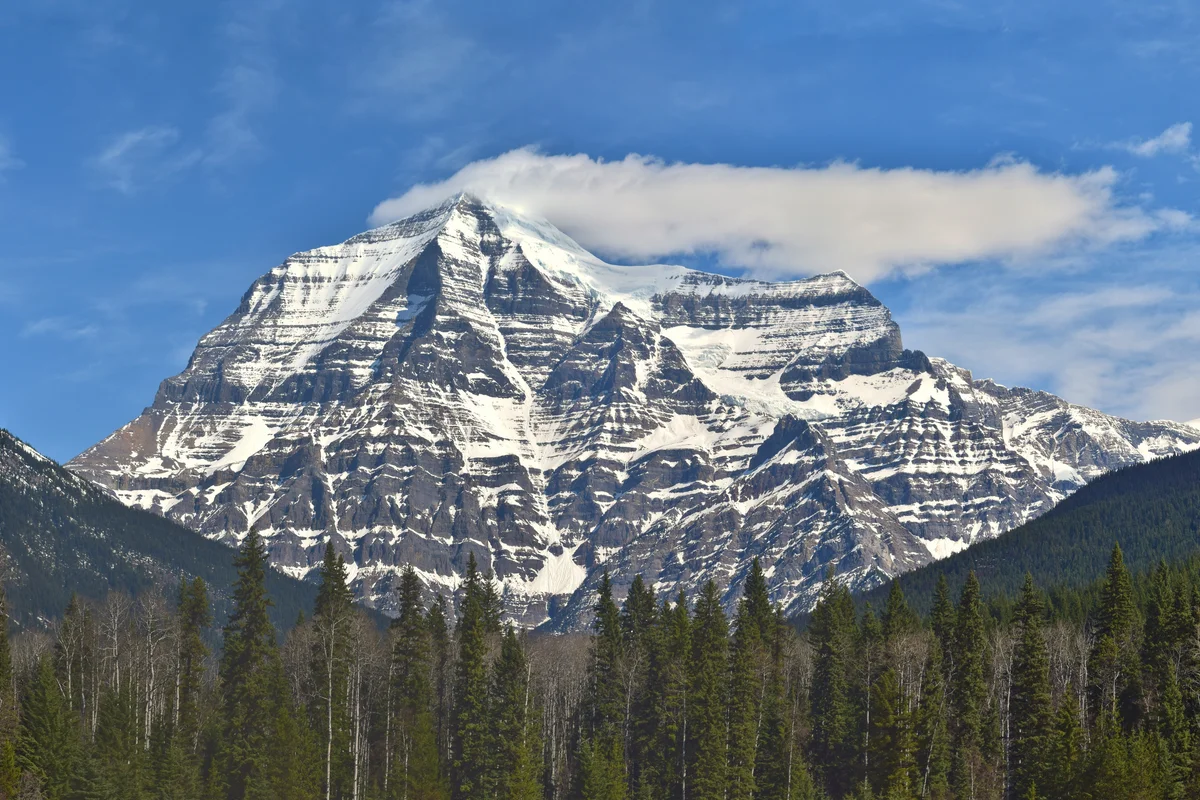
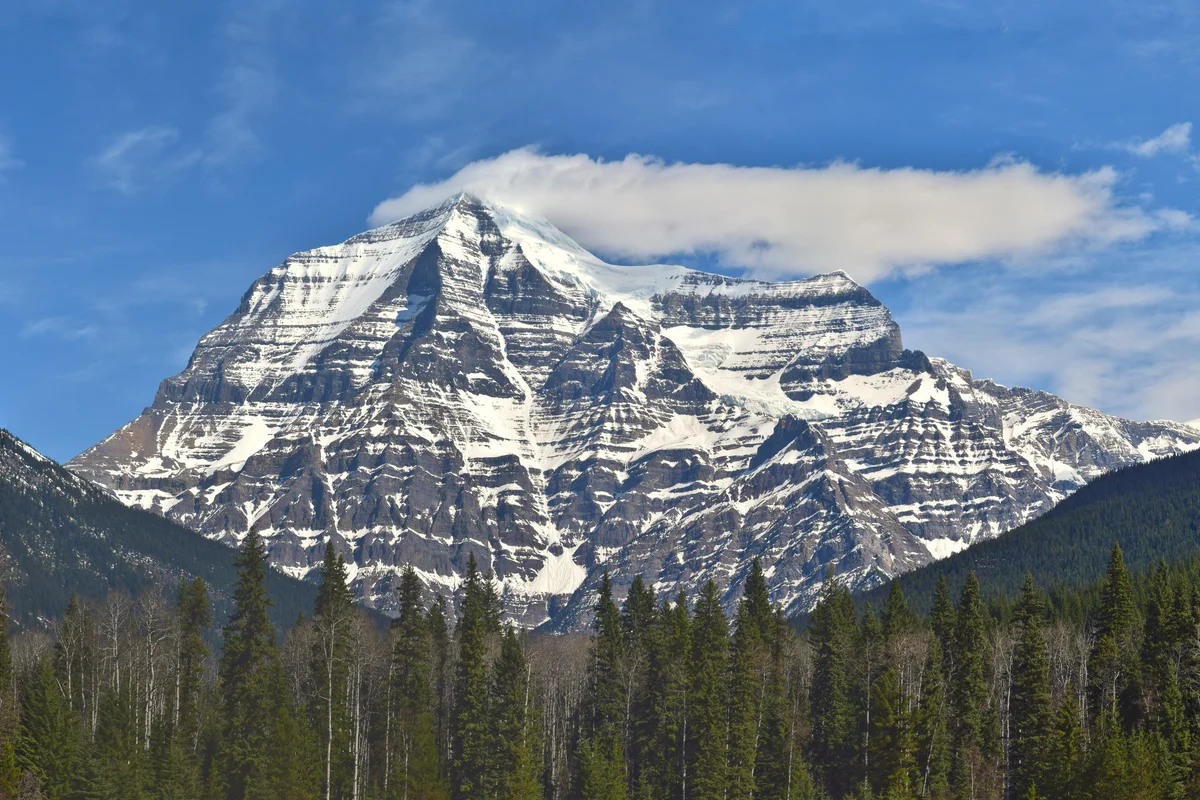
Mount Robson is the highest mountain peak in the Canadian Rocky Mountains, soaring to an elevation of 3,954 metres in east-central British Columbia. Rising almost 3,000 vertical metres above Berg Lake with tremendous topographic prominence, it is celebrated as the monarch of the Canadian Rockies, featuring immense glaciated ramparts, unpredictable Pacific storms, and historic alpine routes including the Kain Face and the Emperor Face.
 Canada
Mountain Safety & Conditions Disclaimer: High-altitude climbing, glacial travel, and technical ascents entail severe objective risks including avalanches, serac collapses, rapid weather collapse, and altitude illness. Historical route descriptions and summit claims on Mountanity reflect documented archival sources and must not be used as live operational safety assessments. Local regulations, permits, and physical glacial topography change continuously.
Peer Review: Senior Editorial Board & Historical Reviewers • Editorial Standards
Geographical Setting & Topography
Situated within Mount Robson Provincial Park and designated part of the Canadian Rocky Mountain Parks UNESCO World Heritage Site, Mount Robson is composed of ancient Precambrian quartzite and Cambrian limestone. Its massive Southwest Face looms over the Yellowhead Highway, while its North Face, known as the Emperor Face, forms one of the greatest mixed alpine big walls in North America.
Historic First Ascent
Date: 1913-07-31
Ascent Team: Conrad Kain, Albert MacCarthy, William Foster
Key Statistics & Topographic Figures
- Summit Elevation
- 3,954 metres (12,972 feet)
- Topographic Prominence
- 2,829 metres
- First Ascent Date
- July 31, 1913
- First Ascent Guide
- Conrad Kain (Austria / Canada)
- Mountain Range
- Canadian Rockies, British Columbia
Archival Primary Source Quotations
“Gentlemen, that's so far as I can take you; there's nowhere higher to go.”
Defined Alpine Terminology & Concepts
- Rime Gargoyles
- Extravagant, wind-sculpted rime ice and snow towers formed on exposed mountain crests by freezing moisture-laden Pacific winds.
- Hanging Glacier
- A glacier originating high on a steep mountain face that terminates abruptly over a cliff, frequently calving avalanches.
Mount Robson Mountain Weather Forecast
Detailed 14-Day Summit Window & Weather Timeline
Explore day-by-day summit push safety windows, wind shear analysis, and extended multi-day forecasts for Mount Robson.
Explore Mount Robson (3,954 m) in Interactive 3D
Inspect steep glacial walls, hanging seracs, ridge approaches, and elevation relief with 360° rotation and terrain tilt in WebGL.
Documented Climbing Routes (1)
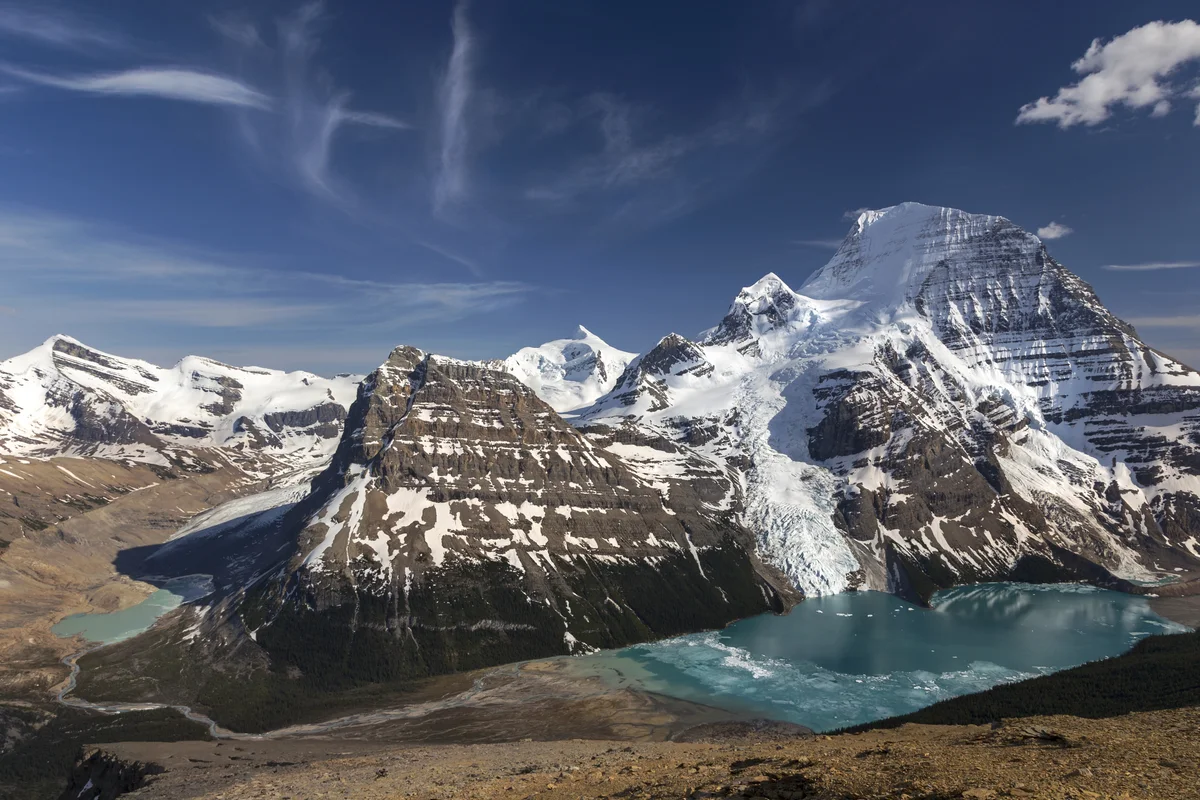
Kain Face (Mount Robson)
The Kain Face is the historic first-ascent route on Mount Robson, ascending the sweeping 500-metre northeast hanging glacier face above the Robson Cirque. Graded French D with sustained 50° to 55° hard alpine ice, it is celebrated in world mountaineering lore for Conrad Kain's extraordinary 1913 feat of hand-hewing hundreds of ice steps up the face to lead his clients to the highest summit in the Canadian Rockies.
Historical Expeditions (1)
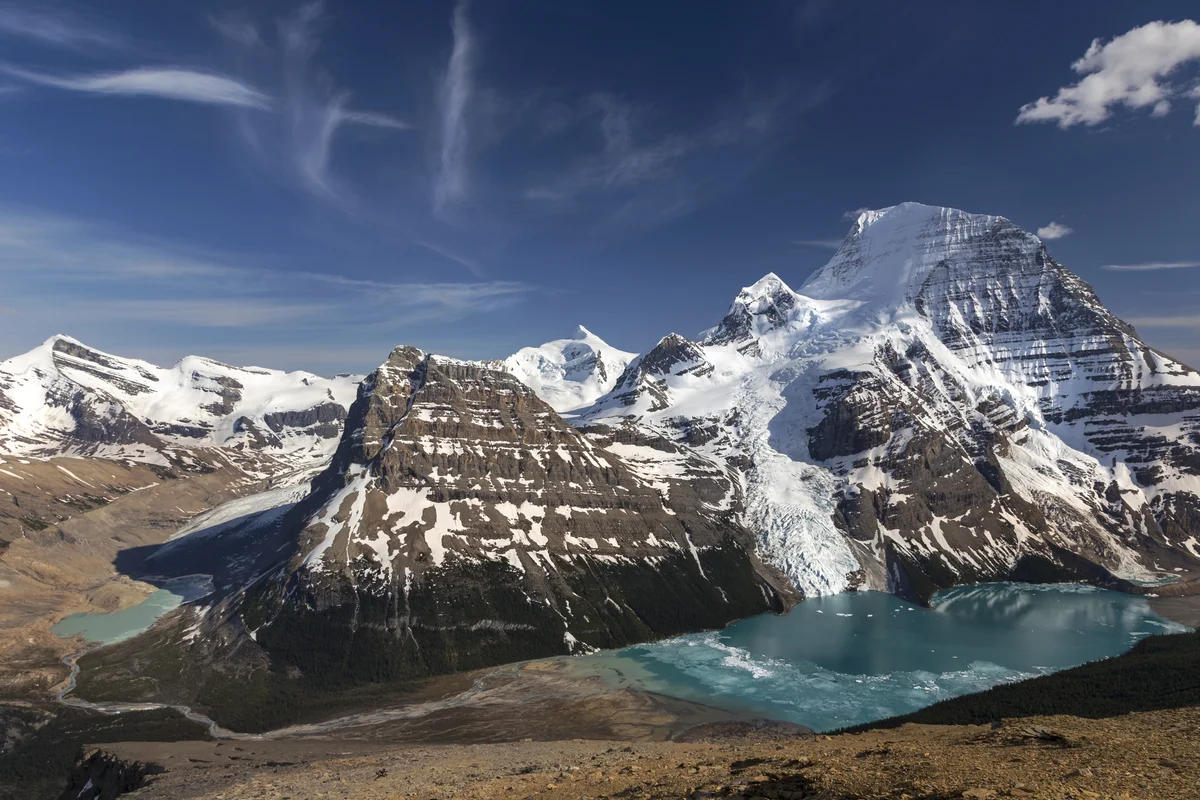
1913 Historic First Ascent of Mount Robson by Conrad Kain
On July 31, 1913, Austrian-Canadian guide Conrad Kain led Albert MacCarthy and William Foster to the summit of Mount Robson, hand-hewing hundreds of steps up a 55-degree hanging ice wall in one of the greatest feats in alpine history.
Summit Chronicles & Stories (1)
Gentlemen, That's So Far as I Can Take You: Conrad Kain on Mount Robson
On July 31, 1913, Austrian-Canadian guide Conrad Kain led Albert MacCarthy and William Foster up a 55-degree hanging ice face on Mount Robson, carving hundreds of steps by hand to conquer the monarch of the Canadian Rockies.
Frequently Asked Questions: Mount Robson
What is Mount Robson and where is it located in Canada?
Mount Robson is the highest mountain peak in the Canadian Rockies, rising to 3,954 metres in east-central British Columbia near Jasper.
What is the official elevation and prominence of Mount Robson?
Mount Robson stands at 3,954 metres with a prominence of 2,829 metres, making it one of the most topographically prominent summits in North America.
Who made the first ascent of Mount Robson and when?
Austrian-Canadian guide Conrad Kain led Albert MacCarthy and William Foster to the summit on July 31, 1913, via the historic Kain Face.
What is the Emperor Face on Mount Robson?
The Emperor Face is a renowned 1,500-metre vertical wall of quartzite, snow, and ice on the north-northwest aspect, considered one of North America's premier big-wall mixed climbs.
What is Berg Lake in relation to Mount Robson?
Berg Lake is a turquoise glacial lake at 1,640 metres directly beneath the mountain's sheer northern cliffs, fed by calving ice from the Mist and Berg glaciers.
What is the standard climbing route on Mount Robson today?
The standard route is the Kain Face via the Robson Glacier, requiring French D ice-climbing skills, crevasse navigation, and multi-day expedition logistics.
What provincial park surrounds Mount Robson?
Mount Robson Provincial Park, established in 1913 and designated a UNESCO World Heritage Site as part of the Canadian Rocky Mountain Parks.
What makes climbing Mount Robson uniquely hazardous?
Extremely volatile Pacific weather, rapid snow accumulation, massive serac avalanches from hanging glaciers, and frequent rockfall on its stratified limestone cliffs.
Documented Sources & Archival Citations
- Where the Clouds Can Go(Conrad Kain / The American Alpine Club)
Supporting claim: Official narrative of the 1913 first ascent of Mount Robson via the Kain Face
Accessed/Documented: 2026 - Canadian Alpine Journal: The First Ascent of Mount Robson (1914)(Alpine Club of Canada)
Supporting claim: Primary expedition chronicle documenting the climb by Kain, MacCarthy, and Foster
Accessed/Documented: 2026