First Footsteps on the High One: Walter Harper, Hudson Stuck, and the 1913 Conquest of Denali
On June 7, 1913, twenty-year-old Koyukon Athabascan woodsman Walter Harper led Hudson Stuck and Harry Karstens onto the summit of Denali, completing the historic first ascent of North America's highest peak.
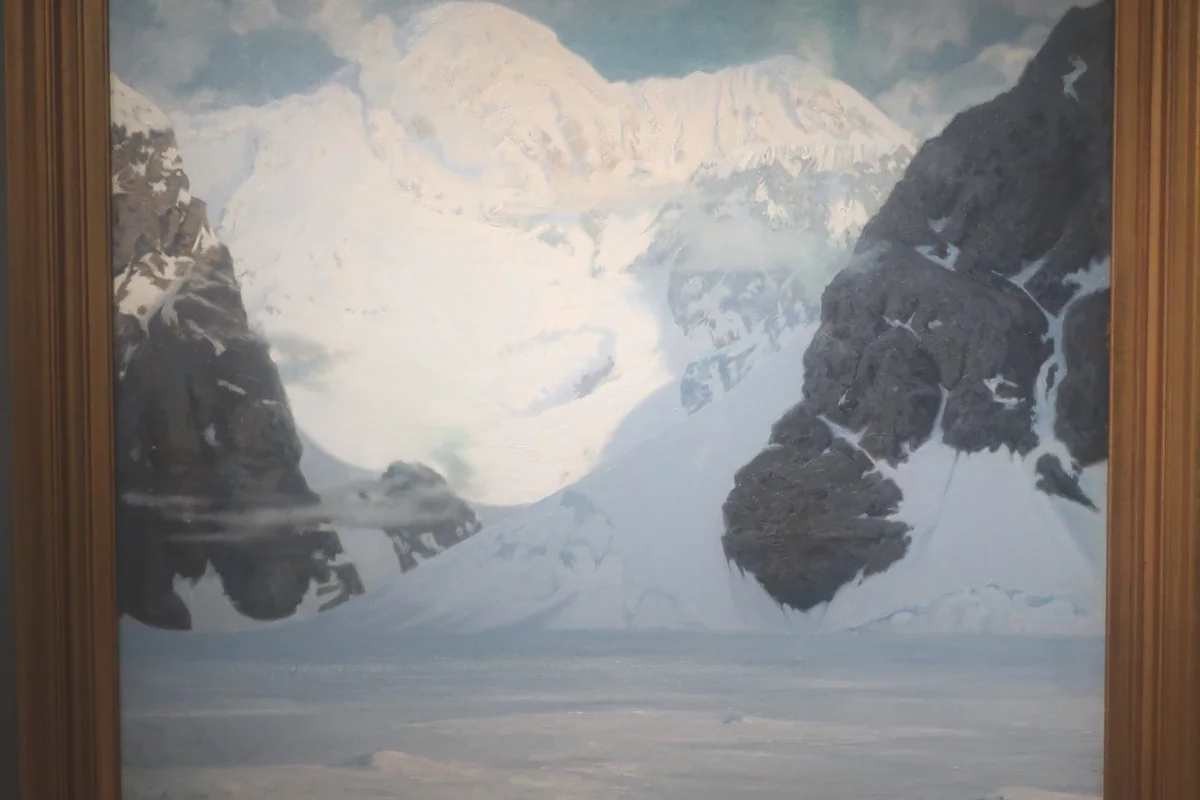
Mountain Safety & Conditions Disclaimer: High-altitude climbing, glacial travel, and technical ascents entail severe objective risks including avalanches, serac collapses, rapid weather collapse, and altitude illness. Historical route descriptions and summit claims on Mountanity reflect documented archival sources and must not be used as live operational safety assessments. Local regulations, permits, and physical glacial topography change continuously.
Peer Review: Senior Editorial Board & Historical Reviewers • Editorial Standards
The Great White Giant of the Yukon
For centuries, the indigenous Koyukon Athabascan peoples of interior Alaska gazed upward at the colossal double-peaked massif anchoring the southern horizon and called it Deenaalee—The High One. Rising abruptly more than 18,000 feet above the surrounding tundra plains, its immense granite flanks held deeper vertical relief than Mount Everest, battered perpetually by Arctic gales and temperatures cold enough to freeze mercury in its bulb.
By the early twentieth century, the mountain had become an obsession for frontier explorers. Contested claims, gold prospector scrambles, and the notorious 1906 hoax perpetrated by Dr. Frederick Cook—who published a staged photograph of a small rock outcropping miles away, falsely claiming to have reached the top—left the true summit virgin and unclimbed.
To Archdeacon Hudson Stuck, a British-born Episcopal missionary who traveled thousands of miles across interior Alaska by dog sled each winter, the mountain held profound spiritual and cultural significance. Stuck was determined not only to achieve the first authentic ascent, but to restore the mountain’s venerable native name and ensure that indigenous Alaskans stood at the forefront of the endeavor.
Forging the Pioneer Team
In the winter of 1912, Stuck partnered with thirty-four-year-old Harry Karstens, known throughout the Yukon basin as “The General”. A veteran of the 1897 Klondike Gold Rush, Karstens was an iron-willed frontier musher, master woodsman, and route architect who understood northern survival better than any man in the territory.
To lead the climbing party, Stuck selected twenty-year-old Walter Harper, the son of a Koyukon Athabascan mother and pioneer trader Arthur Harper. Possessing extraordinary physical stamina, cheerful resilience, and expert mountain instincts, Harper became the expedition’s lead scout. The party was rounded out by Robert Tatum, a young missionary postulant, and two teenage Native support boys, John Fredson and Esaias George, who managed the dog teams at base camp.
In March 1913, the team departed Nenana, freighting tons of pemmican, pilot bread, dried fruit, and heavy canvas gear by dog sled across frozen rivers to the northern foot of the Alaska Range.
The Earthquake on Karstens Ridge
Ascending the sprawling Muldrow Glacier, the expedition faced an unforeseen catastrophe. In the summer of 1912, the massive Katmai volcanic eruption and associated earthquakes had convulsed the central Alaska Range.
When Karstens and Harper reached the northeastern ridge connecting the Muldrow Glacier to the upper basin, they were horrified to discover that the once-gentle snow crest had been violently shattered into a terrifying, chaotic nightmare of tumbled ice blocks, razor-edged seracs, and gaping abysses.
For three grueling weeks, Karstens and Harper labored with ice axes and heavy shovels, hand-cutting thousands of steps into sheer blue ice and clearing pathways through the fractured labyrinth. Karstens’s brilliant engineering and Harper’s tireless chopping transformed the ruined spine into a secure transit line, forever immortalized on maps as Karstens Ridge.
The Final Push through Thin Arctic Air
By late May, the party had freighted their supplies onto the wind-scoured Grand Basin at 17,500 feet. Here, the extreme northern latitude took a punishing toll. Because atmospheric pressure decreases toward the poles, the thin air at Denali’s high altitude produced hypoxia comparable to 23,000 feet in the Himalayas.
Archdeacon Stuck, suffering from chronic bronchitis and exhaustion, could only take a dozen steps before resting his head against his ice axe, gasping for breath. Yet the sixty-year-old priest refused to turn back, sustained by Karstens’s unrelenting drive and Harper’s quiet vigilance on the rope.
On the freezing morning of June 7, 1913, under crisp, cobalt-blue skies, the four men roped together for the final summit push. Crossing the gently inclined snow of the Football Field, they arrived at the foot of the final 800-foot dome of snow.
A Koyukon Athabascan on the Top of North America
With generous grace and recognition of ability, Stuck and Karstens insisted that Walter Harper lead the final rope. Kicking steady steps into the frozen crust, Harper crested the rounded crown.
At 1:30 in the afternoon on June 7, 1913, Walter Harper became the first human being in history to step onto the highest point of North America at 20,310 feet.
Moments later, Karstens, Tatum, and Stuck joined him on the summit crest. Looking around at the staggering 360-degree panorama, the men wept with emotion. Looking south, Robert Tatum remarked that the horizon resembled “looking out the windows of heaven.”
They erected a six-foot cross fashioned from Alaskan birch and spruce, unfurled a small United States flag, and conducted a brief Episcopal thanksgiving service. Stuck took barometric and boiling-point readings to record the accurate scientific altitude, while Karstens looked eastward and confirmed that Cook’s “fake peak” lay far below in the distant foothill mist.
The Immortal Legacy
The descent down Karstens Ridge and the Muldrow Glacier was completed without serious injury, and by mid-June, the party returned to Tanana to broadcast their triumph to the world.
Hudson Stuck used the success to publish The Ascent of Denali (1914), using his platform to champion Native Alaskan education, civil rights, and the preservation of indigenous culture. Walter Harper became a revered figure throughout Alaska, remembered not only as a peerless mountain pioneer, but as the indigenous son of the north who paved the way to the crown of the continent.
Key Statistics & Topographic Figures
- Category
- North American Alpine History
Archival Subject
- Reading Time
- 15 min read
Narrative Length
- Key Mountain
- denali
Objective
- Ascent Route
- the ascent route
Topography
- Verification
- Editorially Verified
Archival Standard
Archival Primary Source Quotations
“In the mountains, truth is etched in ice and granite; every step requires unwavering respect for the heights.”
Defined Alpine Terminology & Concepts
- Summit Push
- The final continuous climbing effort from the highest established camp to the mountain apex and back.
- Death Zone Chronicle
- A verified, research-backed historical narrative documenting the human, technical, and environmental realities of an alpine expedition.
Frequently Asked Questions: First Footsteps on the High One: Walter Harper, Hudson Stuck, and the 1913 Conquest of Denali
What is the core chronicle and subject of "First Footsteps on the High One: Walter Harper, Hudson Stuck, and the 1913 Conquest of Denali"?
On June 7, 1913, twenty-year-old Koyukon Athabascan woodsman Walter Harper led Hudson Stuck and Harry Karstens onto the summit of Denali, completing the historic first ascent of North America's highest peak.
Which mountain peaks and routes are featured in "First Footsteps on the High One: Walter Harper, Hudson Stuck, and the 1913 Conquest of Denali"?
This narrative documents climbs on denali along the the ascent route in United States.
Which documented expedition is chronicled in this story?
This historical chronicle captures the events of the 1913-stuck-karstens-harper-denali, verified through contemporary journals and archival records.
Who authored and researched this archival chronicle?
Authored and researched by Mountainity Historical Research Desk, drawing on primary eyewitness testimonies, alpine club registries, and verified summit logs.
What makes this high-altitude chronicle historically significant?
Categorized under "North American Alpine History", this chronicle preserves critical lessons in alpine leadership, survival, tactical speed, and human endurance in the death zone.
Related Mountains
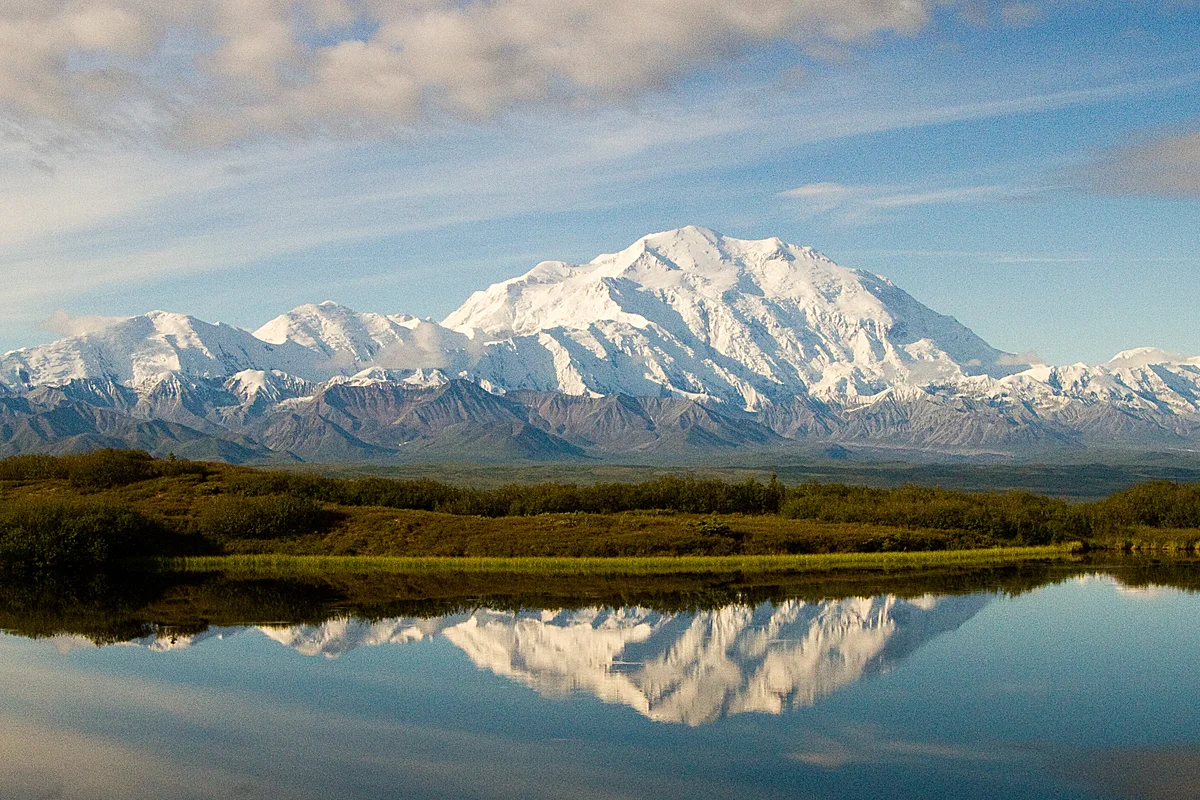

Denali
Denali is the highest mountain peak in North America, soaring to an elevation of 6,190 metres in south-central Alaska. Ranked third among the world's most topographically prominent summits, it possesses greater vertical base-to-peak relief than Mount Everest, rising over 5,500 vertical metres above the surrounding glacial plains amidst severe Arctic storms and extreme sub-zero temperatures.
Documented Sources & Archival Citations
- The Ascent of Denali (Mount McKinley)(Hudson Stuck / Charles Scribner's Sons)
Supporting claim: Primary autobiographical account of the 1913 first ascent of Denali
Accessed/Documented: 2026 - Walter Harper, Alaska Native Son(Mary F. Ehrlander / University of Nebraska Press)
Supporting claim: Historical biography detailing Walter Harper's pivotal role on the 1913 summit
Accessed/Documented: 2026