Conquering the Ogre's Crest: Aritsune Maki and the 1921 Eiger Mittellegi Ridge
Japanese climber Aritsune Maki teams up with Swiss guides to achieve the legendary maiden first ascent of the Eiger's Mittellegi Ridge in September 1921.
Mountain Safety & Conditions Disclaimer: High-altitude climbing, glacial travel, and technical ascents entail severe objective risks including avalanches, serac collapses, rapid weather collapse, and altitude illness. Historical route descriptions and summit claims on Mountanity reflect documented archival sources and must not be used as live operational safety assessments. Local regulations, permits, and physical glacial topography change continuously.
Peer Review: Senior Editorial Board & Historical Reviewers • Editorial Standards
The Unconquered Knife-Edge of the Bernese Oberland
In the golden age of European alpinism, the Eiger (3,967 m)—the Ogre of the Bernese Oberland—was dreaded for its forbidding, near-vertical ramparts. While its western flank had been climbed as early as 1858, its eastern arête, known as the Mittellegi Ridge, remained an unsolved enigma.
Rising like an impossibly narrow razor blade of shattered limestone from the Mittellegi col toward the apex of the mountain, the ridge presented terrifying obstacles: overhanging rock towers, crumbling knife-edge traverses with 1,800-metre drops plunging straight down into Grindelwald, and violent downdrafts from the Eiger North Face. For four decades, the premier climbers of Britain, Germany, and Switzerland had attempted the ridge; all had turned back defeated, declaring the Mittellegi utterly unclimbable.
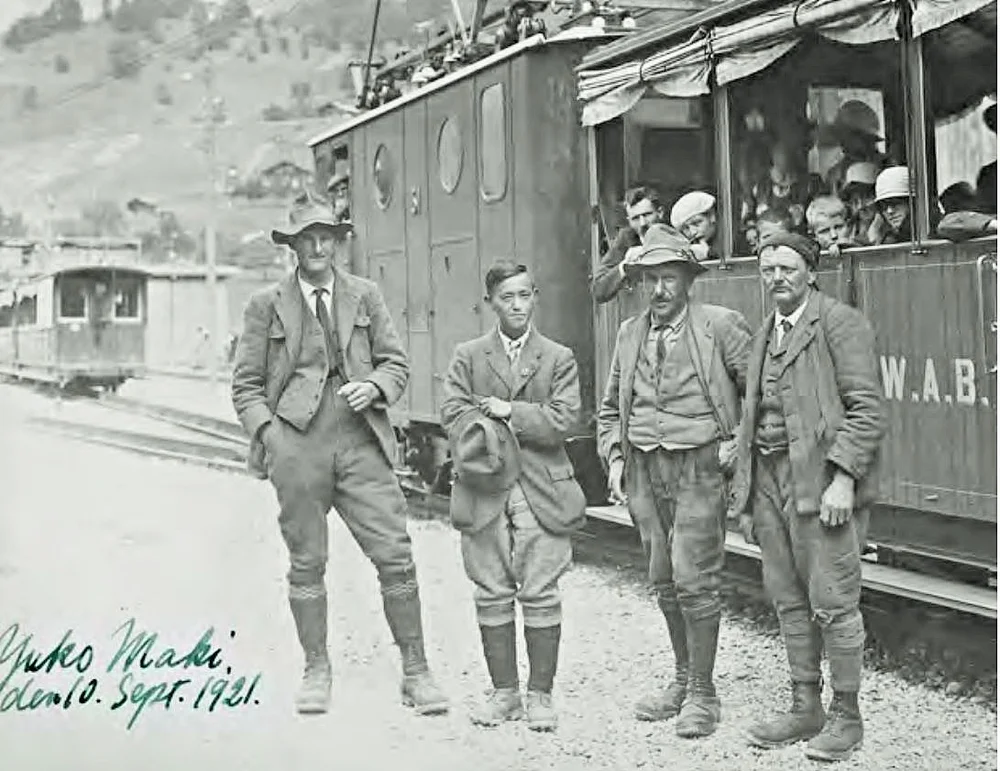
In 1921, a 27-year-old mountaineer from Japan arrived in Grindelwald. His name was Aritsune Maki (known affectionately as Maki Yūkō). Educated at Keio University and a master climber in the Japanese Alps, Maki had traveled to Europe to study and climb. Soft-spoken, exceptionally fit, and possessing iron nerves, Maki looked up at the Mittellegi Ridge and determined that Japanese climbing technique would solve the riddle of the Eiger.
The Dream Team of Grindelwald
Maki understood that success on the Mittellegi required total technical perfection. He approached the Grindelwald Mountain Guides Association and recruited three of the greatest alpine guides in Switzerland: Fritz Steuri, Samuel Brawand (a brilliant climber and scholar who would later become a member of the Swiss parliament), and Fritz Amatter.
Recognizing Maki’s supreme physical condition and quiet determination, the guides eagerly accepted his leadership. Together, they devised innovative techniques: long coils of high-strength hemp rope, custom steel pitons, and weighted throwing ropes designed to lasso vertical rock horns that could not be scaled by hand.
On September 9, 1921, Maki and his trio of guides ascended from the Eismeer railway station on the Jungfrau line onto the glaciers, bivouacking on a tiny rock ledge along the lower Mittellegi col under a canopy of freezing stars.
Dancing Above the Abyss
At 6:00 AM on September 10, 1921, the four men tied into two ropes and stepped onto the crest. The weather was crisp and clear, but a biting arctic wind whipped across the ridge.
The climb was relentless. The ridge was frequently so narrow that the climbers could not stand upright; they had to straddle the limestone knife-edge like a horse, one leg hanging over the 1,800-metre drop of the North Face and the other dangling over the South Face. The rock was brittle and rotten, requiring feather-light footwork to prevent lethal stonefall.
At the crux of the climb, a vertical 30-metre gendarme of yellow limestone completely barred the arête. Amatter and Brawand attempted to climb it directly, but found no holds. Thinking fast, Amatter tied a wooden block to a light cord and hurled it repeatedly until the rope caught securely over a rock spike atop the tower. Testing the anchor, Steuri and Maki hauled themselves up the free-hanging rope above the void, pulling their companions after them.
Hour after hour, the team battled fatigue, altitude, and freezing temperatures. Finally, at 7:15 PM, as the setting sun bathed the summit snows of the Jungfrau in fiery crimson, Aritsune Maki scrambled over the final summit cornice. The Mittellegi Ridge was conquered.
A Lasting Monument: The Mittellegi Hut
The news of a Japanese climber leading the first ascent of one of the Alps’ greatest unsolved ridges created a sensation across Europe and Japan. The London Times and the Swiss press hailed Maki’s achievement as a masterclass in modern mountaineering.
Yet Maki’s greatest legacy was his humility and generosity. Recognizing how perilous the approach was for future climbers, Maki donated 10,000 Swiss francs to the Grindelwald Guides Association. In 1924, using Maki’s donation, the guides constructed the Mittellegi Hut (Mittellegihütte) directly upon the narrow crest where the 1921 team had prepared for their assault.
Today, more than a century later, the Mittellegi Hut still clings to the knife-edge of the Eiger, welcoming thousands of climbers from across the globe—an everlasting testament to the skill and spirit of Aritsune Maki.
Key Statistics & Topographic Figures
- Category
- Alpine Pioneers
Archival Subject
- Reading Time
- 17 min read
Narrative Length
- Key Mountain
- eiger
Objective
- Ascent Route
- the ascent route
Topography
- Verification
- Editorially Verified
Archival Standard
Archival Primary Source Quotations
“In the mountains, truth is etched in ice and granite; every step requires unwavering respect for the heights.”
Defined Alpine Terminology & Concepts
- Summit Push
- The final continuous climbing effort from the highest established camp to the mountain apex and back.
- Death Zone Chronicle
- A verified, research-backed historical narrative documenting the human, technical, and environmental realities of an alpine expedition.
Frequently Asked Questions: Conquering the Ogre's Crest: Aritsune Maki and the 1921 Eiger Mittellegi Ridge
What is the core chronicle and subject of "Conquering the Ogre's Crest: Aritsune Maki and the 1921 Eiger Mittellegi Ridge"?
Japanese climber Aritsune Maki teams up with Swiss guides to achieve the legendary maiden first ascent of the Eiger's Mittellegi Ridge in September 1921.
Which mountain peaks and routes are featured in "Conquering the Ogre's Crest: Aritsune Maki and the 1921 Eiger Mittellegi Ridge"?
This narrative documents climbs on eiger along the the ascent route in Switzerland.
Which documented expedition is chronicled in this story?
This historical chronicle captures the events of the 1921-maki-yuko-eiger-mittellegi-ridge, verified through contemporary journals and archival records.
Who authored and researched this archival chronicle?
Authored and researched by Aritsune Maki, drawing on primary eyewitness testimonies, alpine club registries, and verified summit logs.
What makes this high-altitude chronicle historically significant?
Categorized under "Alpine Pioneers", this chronicle preserves critical lessons in alpine leadership, survival, tactical speed, and human endurance in the death zone.
Related Mountains

Eiger
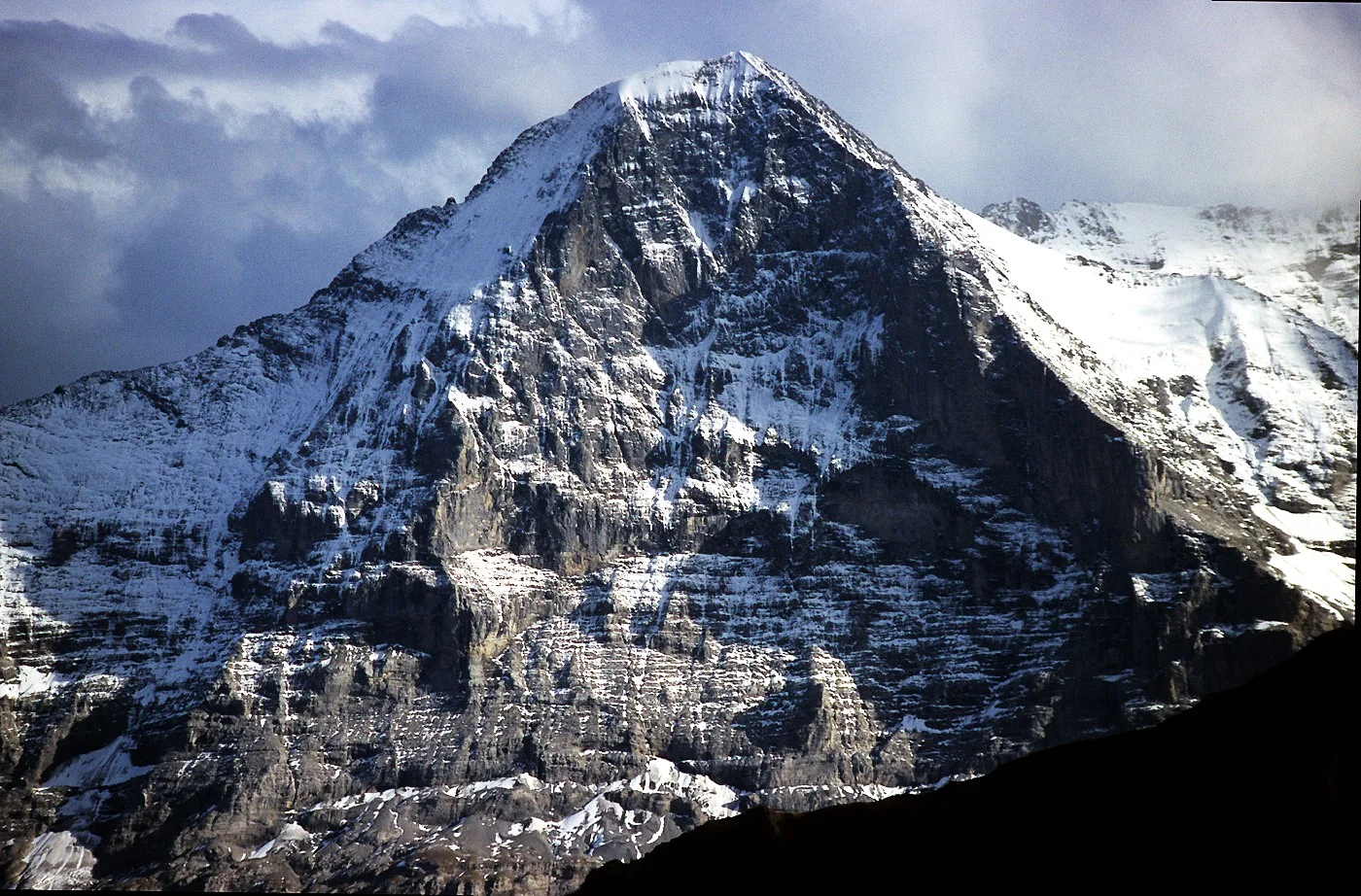
The Eiger, standing at 3,967 meters (13,015 ft) in the Bernese Alps of Switzerland, is globally renowned for its monstrous 1,800-meter (5,900 ft) sheer vertical North Face (the *Eiger-Nordwand*). Feared as the *Mordwand* ('Murder Wall') following catastrophic climbing tragedies in the 1930s, it remained the last great problem of the Alps until conquered in July 1938 by Anderl Heckmair, Ludwig Vörg, Heinrich Harrer, and Fritz Kasparek.
Documented Sources & Archival Citations
- The Mittellegi Ridge of the Eiger(The Alpine Journal / Aritsune Maki)
Supporting claim: Primary first-person ascent report published in the Alpine Journal
Accessed/Documented: 1922