Crown of the Fjords: The 1929 First Ascent of Petermann Peak
Shackleton veteran James Wordie leads the Cambridge Expedition through Greenland's labyrinthine fjords to conquer Petermann Peak.
Mountain Safety & Conditions Disclaimer: High-altitude climbing, glacial travel, and technical ascents entail severe objective risks including avalanches, serac collapses, rapid weather collapse, and altitude illness. Historical route descriptions and summit claims on Mountanity reflect documented archival sources and must not be used as live operational safety assessments. Local regulations, permits, and physical glacial topography change continuously.
Peer Review: Senior Editorial Board & Historical Reviewers • Editorial Standards
Crown of the Fjords: The 1929 First Ascent of Petermann Peak
The Myth of the Arctic Giant
For six decades following its discovery in 1870 by Julius Payer during the Second German North Polar Expedition, Petermann Peak (2,943 m) occupied a mythical status in Arctic geography. Rising as a sheer, isolated nunatak pyramid deep in the interior of Kejser Franz Joseph Fjord in Northeast Greenland, early cartographers estimated its elevation at over 3,300 metres, believing it to be the undisputed highest mountain on Earth’s largest island.
Approaching the peak, however, was an undertaking of immense complexity. The coast of King Christian X Land was defended by drifting floes of polar pack ice, while the peak itself lay guarded behind a multi-layered labyrinth of sheer fjord cliffs, rushing glacial torrents, and the crevassed chaos of the Gregory Glacier.
The explorer who stepped forward to unlock this Arctic mystery was Sir James Mann Wordie, a 40-year-old Scottish geologist from Cambridge University. Wordie was already a veteran of legendary stature, having served as Ernest Shackleton’s chief of scientific staff on the fateful 1914–1917 Endurance expedition. Having survived months drifting on ice floes and the open-boat ordeal to Elephant Island, Wordie possessed the consummate patience, iron resolve, and navigational skill required for high-latitude polar mountaineering.
Into Kejser Franz Joseph Fjord
In July 1929, Wordie sailed from Aberdeen aboard the Norwegian sealing vessel Heimland. Navigating through the grinding pack ice of the Greenland Sea, Wordie steered the ship deep into the dramatic chasm of Kejser Franz Joseph Fjord, where multi-hued red sandstone cliffs soared vertically thousands of feet out of still, iceberg-strewn waters.
Landing at the head of the fjord, Wordie assembled his summit party: surveyor R. C. Wakefield, geologist W. F. Whittard, and meteorologist Gordon Manley. With no aerial surveys or maps available, the team had to find their own path inland. Carrying heavy canvas packs, wooden ice axes, and hemp ropes, they marched up the steep, boulder-strewn canyon of Knækdalen, fording icy meltwater torrents that reached their waists.
Emerging onto the lateral moraines above Knækdalen, the climbers confronted the Gregory Glacier—a colossal river of ice tumbling off the Greenland Inland Ice. The glacier surface was a shattered labyrinth of open crevasses and blue-ice ridges. Roped in pairs, Wordie navigated the team through the maze of chasms, establishing High Camp on a rocky nunatak bench at 2,150 metres directly beneath the Southwest Ridge of Petermann Peak.
The Summit Ridge
On August 15, 1929, the Arctic weather dawned immaculate—crystal clear, calm, and bitterly cold. Leaving their tents in the pale dawn light, Wordie and his companions strapped on ten-point crampons and began kicking steps up a 40-degree hard snow ramp flanking the nunatak.
The route presented classic alpine challenges transplanted into the Arctic wilderness. Above the snow ramps, the ridge narrowed into a knife-edge crest of shattered metamorphic schist and gneiss. The rock was loose and frost-shattered, requiring delicate balance above thousands of feet of sheer vertical drops plunging toward the Gregory and Nordenskiöld glaciers.
Wordie led the technical sections with calm precision, carefully belaying Wakefield, Whittard, and Manley across exposed rock steps. In the early afternoon, the ridge rounded onto a final, wind-scoured snow cone. Stepping onto the apex at 2,943 metres, the four men stood victorious atop the summit of Petermann Peak.
“The panorama from the summit was overwhelming. To the east lay the deep blue fjords dotted with icebergs; to the west, stretching without interruption to the horizon, lay the immense, blinding white dome of the Inland Ice. We stood where human feet had never trodden.” — Sir James Mann Wordie, The Geographical Journal, 1930
On the summit, Wordie took boiling-point hypsometer readings and theodolite measurements, determining Petermann Peak’s true elevation at 2,943 metres. While lower than nineteenth-century estimates, it remained the crowning geographic monument of Northeast Greenland. Wordie’s expedition returned to Scotland without a single frostbite casualty, establishing the template for modern scientific Arctic mountaineering.
Key Statistics & Topographic Figures
- Category
- Polar Pioneers
Archival Subject
- Reading Time
- 15 min read
Narrative Length
- Key Mountain
- petermann-peak
Objective
- Ascent Route
- petermann-peak-southwest-ridge
Topography
- Verification
- Editorially Verified
Archival Standard
Archival Primary Source Quotations
“In the mountains, truth is etched in ice and granite; every step requires unwavering respect for the heights.”
Defined Alpine Terminology & Concepts
- Summit Push
- The final continuous climbing effort from the highest established camp to the mountain apex and back.
- Death Zone Chronicle
- A verified, research-backed historical narrative documenting the human, technical, and environmental realities of an alpine expedition.
Frequently Asked Questions: Crown of the Fjords: The 1929 First Ascent of Petermann Peak
What is the core chronicle and subject of "Crown of the Fjords: The 1929 First Ascent of Petermann Peak"?
Shackleton veteran James Wordie leads the Cambridge Expedition through Greenland's labyrinthine fjords to conquer Petermann Peak.
Which mountain peaks and routes are featured in "Crown of the Fjords: The 1929 First Ascent of Petermann Peak"?
This narrative documents climbs on petermann-peak along the petermann-peak-southwest-ridge in Greenland.
Which documented expedition is chronicled in this story?
This historical chronicle captures the events of the 1929-wordie-petermann-peak-first-ascent, verified through contemporary journals and archival records.
Who authored and researched this archival chronicle?
Authored and researched by Mountainity Historical Research Desk, drawing on primary eyewitness testimonies, alpine club registries, and verified summit logs.
What makes this high-altitude chronicle historically significant?
Categorized under "Polar Pioneers", this chronicle preserves critical lessons in alpine leadership, survival, tactical speed, and human endurance in the death zone.
Related Mountains

Petermann Peak
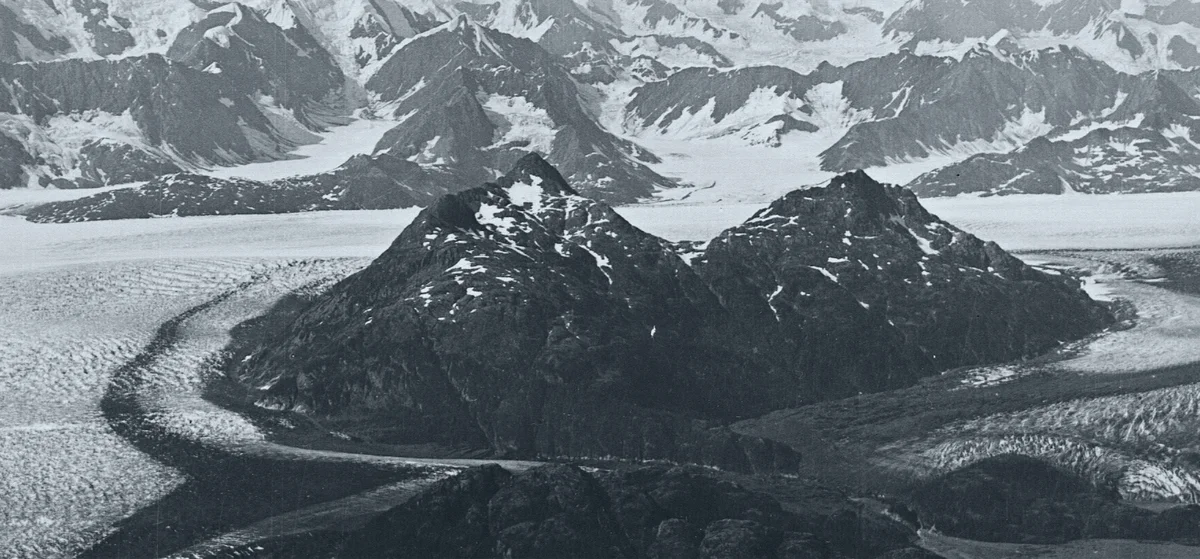
Petermann Peak is a dramatic 2,943-metre (9,656 ft) glaciated nunatak dominating western Fraenkel Land and the inner Kejser Franz Joseph Fjord in Northeast Greenland. Discovered in August 1870 by Julius Payer and named after German cartographer August Petermann, the mountain was long believed to be the highest summit in all of Greenland until the Watkins Range was surveyed. On August 15, 1929, Scottish polar geologist James Wordie led the Cambridge Expedition to its maiden first ascent via the Gregory Glacier. Standing within the Northeast Greenland National Park, Petermann Peak is an iconic monument of high-latitude Arctic mountaineering.
Documented Sources & Archival Citations
- Cambridge East Greenland Expedition, 1929: Ascent of Petermann Peak(J. M. Wordie / The Geographical Journal)
Supporting claim: Primary expedition record
Accessed/Documented: 1930