Conquering the Lord of Spirits: Mikhail Pogrebetsky's 1931 Khan Tengri Conquest
Ukrainian explorer Mikhail Pogrebetsky leads a three-year siege against the Central Tien Shan, achieving the historic 1931 maiden ascent of Khan Tengri (7,010 m).
Mountain Safety & Conditions Disclaimer: High-altitude climbing, glacial travel, and technical ascents entail severe objective risks including avalanches, serac collapses, rapid weather collapse, and altitude illness. Historical route descriptions and summit claims on Mountanity reflect documented archival sources and must not be used as live operational safety assessments. Local regulations, permits, and physical glacial topography change continuously.
Peer Review: Senior Editorial Board & Historical Reviewers • Editorial Standards
The Citadel of Marble and Ice
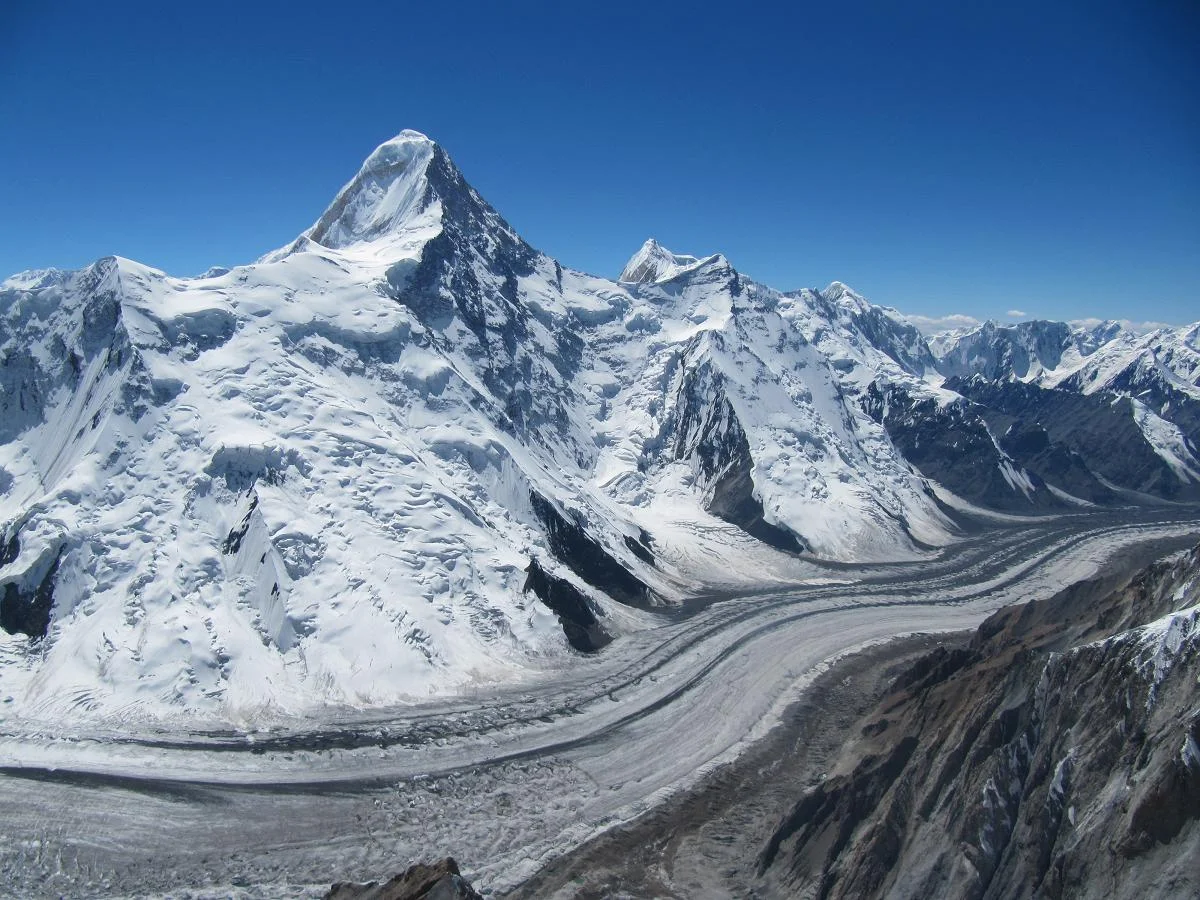
In the heart of the Tien Shan, where the borders of Kyrgyzstan, Kazakhstan, and China converge, rises Khan Tengri (7,010 m)—the Lord of the Spirits. Known across the Orient for its flawless four-sided pyramid of crystalline marble, Khan Tengri had defeated every explorer who dared approach it. German geographer Gottfried Merzbacher had spent two years attempting to map its flanks, ultimately declaring that the peak’s sheer vertical relief, catastrophic avalanches, and Arctic gales made it impossible for human beings to summit.
In 1929, a 37-year-old physician, geographer, and mountaineer from Ukraine named Mikhail Timofeyevich Pogrebetsky decided to challenge that verdict.
Pogrebetsky was an alpine visionary. At a time when Soviet mountaineering was just taking its first steps, Pogrebetsky understood that conquering a 7,000-metre giant required more than raw bravery; it demanded an unprecedented strategy of systematic reconnaissance, staged acclimatization camps, and psychological discipline.
Three Years of Struggle
Between 1929 and 1930, Pogrebetsky launched two grueling reconnaissance expeditions into the Central Tien Shan, supported by the Ukrainian Council of Physical Culture and Red Army border guards.
The approach alone was a monumental trial. Traveling by horse caravan along the turbulent Inylchek river, Pogrebetsky’s team had to outrace the sudden, terrifying outburst floods of Lake Merzbacher, where millions of tons of trapped water would burst through subglacial tunnels without warning, washing away trails and bridges.
By the summer of 1930, Pogrebetsky had unraveled the puzzle of the mountain. While the colossal North and South faces were vertical traps raked by continuous ice avalanches, the West Ridge—connecting Khan Tengri to Peak Chapaev via the high col of Chakan-Tau at 5,900 metres—offered a viable line of ascent.
The Assault of 1931
In July 1931, Pogrebetsky returned to the South Inylchek Glacier with an elite assault team, including Ukrainian mountaineer Boris Tyurin and Austrian alpine specialist Franz-Josef Zauberer.
Establishing Base Camp at 4,000 metres on the moraine, the party began hauling heavy hemp ropes, canvas tents, and dried mutton up the Semenovskiy Glacier. The route was treacherous: they had to sprint across the infamous ‘bottleneck’—a narrow ice couloir beneath Peak Chapaev where hanging seracs calved monstrous avalanches several times a day.
Braving frostbite and mountain sickness, Pogrebetsky and his companions established Camp 3 in a hand-carved ice cave on the wind-blasted West Col at 5,900 metres. For three days, a shrieking blizzard pinned them inside their frozen shelter. As food dwindled to emergency rations of chocolate and sugar, the storm finally exhausted itself on the morning of September 11.
The Summit of the Heavens
On September 11, 1931, at 6:00 AM, Pogrebetsky, Tyurin, and Zauberer tied into a single rope line and began climbing the West Ridge.
The climbing was harrowing. Above 6,500 metres, the snow gave way to smooth, angled slabs of pink and yellow marble glazed with verglas ice. In thin, freezing air that starved their lungs of oxygen, the men hauled themselves upward hold by hold. The exposure was vertigo-inducing: to their right, the South Face plunged 2,500 metres to the Inylchek Glacier; to their left, the North Face dropped sheer into Kazakhstan.
At 2:00 PM, after eight hours of agonizing exertion, Mikhail Pogrebetsky pulled himself over the final cornice and stepped onto the crowning apex of Khan Tengri at 7,010 metres.
Tyurin and Zauberer scrambled up beside him, weeping with joy and exhaustion. On the narrow summit crest, they erected a small stone cairn and left a tin cylinder containing their names and the flag of Ukraine.
Pogrebetsky’s conquest of Khan Tengri was hailed as the greatest mountaineering victory in early Soviet history. It proved that Central Asia’s formidable 7,000-metre peaks could be mastered, opening the golden age of Soviet high-altitude alpinism.
Key Statistics & Topographic Figures
- Category
- Central Asian Pioneers
Archival Subject
- Reading Time
- 19 min read
Narrative Length
- Key Mountain
- khan-tengri
Objective
- Ascent Route
- khan-tengri-west-ridge
Topography
- Verification
- Editorially Verified
Archival Standard
Archival Primary Source Quotations
“In the mountains, truth is etched in ice and granite; every step requires unwavering respect for the heights.”
Defined Alpine Terminology & Concepts
- Summit Push
- The final continuous climbing effort from the highest established camp to the mountain apex and back.
- Death Zone Chronicle
- A verified, research-backed historical narrative documenting the human, technical, and environmental realities of an alpine expedition.
Frequently Asked Questions: Conquering the Lord of Spirits: Mikhail Pogrebetsky's 1931 Khan Tengri Conquest
What is the core chronicle and subject of "Conquering the Lord of Spirits: Mikhail Pogrebetsky's 1931 Khan Tengri Conquest"?
Ukrainian explorer Mikhail Pogrebetsky leads a three-year siege against the Central Tien Shan, achieving the historic 1931 maiden ascent of Khan Tengri (7,010 m).
Which mountain peaks and routes are featured in "Conquering the Lord of Spirits: Mikhail Pogrebetsky's 1931 Khan Tengri Conquest"?
This narrative documents climbs on khan-tengri along the khan-tengri-west-ridge in Kyrgyzstan.
Which documented expedition is chronicled in this story?
This historical chronicle captures the events of the 1931-pogrebetsky-khan-tengri-first-ascent, verified through contemporary journals and archival records.
Who authored and researched this archival chronicle?
Authored and researched by Mikhail Pogrebetsky, drawing on primary eyewitness testimonies, alpine club registries, and verified summit logs.
What makes this high-altitude chronicle historically significant?
Categorized under "Central Asian Pioneers", this chronicle preserves critical lessons in alpine leadership, survival, tactical speed, and human endurance in the death zone.
Related Mountains



Khan Tengri / Lord of the Spirits
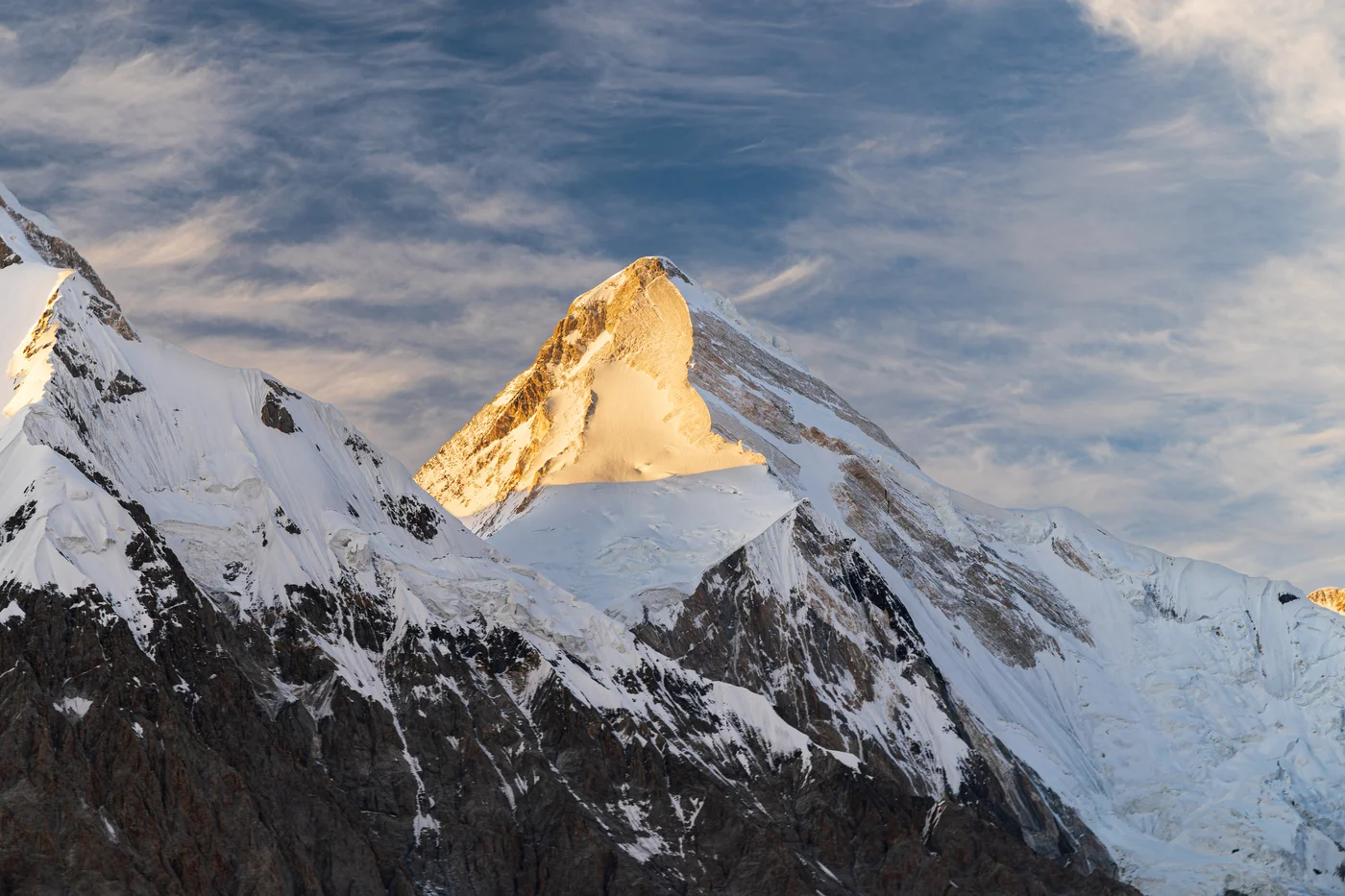
Khan Tengri is a breathtakingly symmetrical, marble-stratified pyramid rising to 7,010 metres (22,999 ft, including summit ice cap) in the Tengri-Tag range of the Central Tien Shan, straddling the borders of Kyrgyzstan, Kazakhstan, and China. Revered in ancient Tengrism as the sacred 'Lord of the Spirits' and famous for its fiery pink glow at sunset, the peak is one of the premier challenges of high-altitude mountaineering. First conquered on September 11, 1931, by a Ukrainian expedition led by Mikhail Pogrebetsky via the West Ridge, it was the scene of an epic survival climb in 1936 by the Abalakov brothers.
Documented Sources & Archival Citations
- Three Years of Struggle for Khan Tengri(Ukrainsky Robitnyk, Kharkov / Mikhail Pogrebetsky)
Supporting claim: Primary official narrative and route logs of the 1931 first ascent
Accessed/Documented: 1935