
Kyrgyzstan
Kyrgyzstan is an intensely mountainous Central Asian nation dominated by the soaring glaciated ranges of the Tien Shan and Pamir-Alay. Home to Jengish Chokusu (Peak Pobeda, 7,439 m) and the formidable Khan Tengri (7,010 m), Kyrgyzstan serves as the premier proving ground for extreme high-altitude alpine expeditions across Central Asia.
Peer Review: Senior Editorial Board & Historical Reviewers • Editorial Standards
Key Statistics & Topographic Figures
- Archive Classification
- COUNTRIES
Mountanity Knowledge Corpus
- Verification Status
- Editorially Verified
Archival Standards
- Citation Standard
- Primary Source Verified
Alpine Research Desk
Mountain Peaks in Kyrgyzstan
Technical profiles, elevations, and ascent histories for summits located in or spanning Kyrgyzstan.
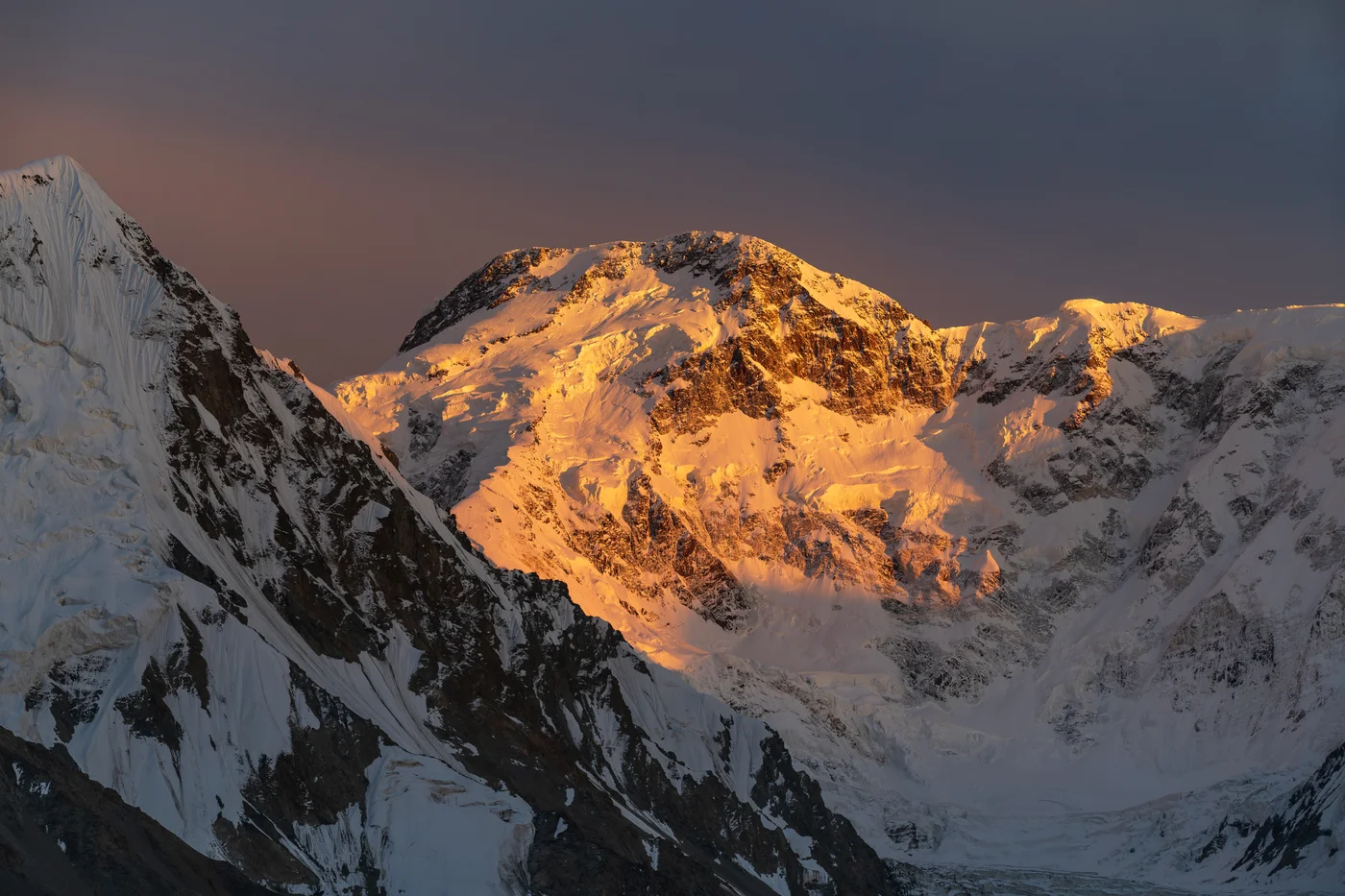

Jengish Chokusu / Peak Pobeda
Jengish Chokusu, historically renowned across the mountaineering world as Peak Pobeda ('Victory Peak'), is the supreme summit of the Tien Shan cordillera at 7,439 metres (24,406 ft) and the northernmost 7,000-metre peak on Earth. Rising along the formidable Kokshaal-Too range on the Kyrgyzstan-China border, Pobeda is notorious for catastrophic Arctic-like blizzards, sub-zero jet-stream gales, and massive hanging seracs that have claimed dozens of lives. The mountain was first conquered on August 30, 1956, by a legendary Soviet expedition led by Vitaly Abalakov via the harrowing North Ridge from the Zvyozdochka Glacier, marking one of the greatest high-altitude triumphs in Russian alpine history.
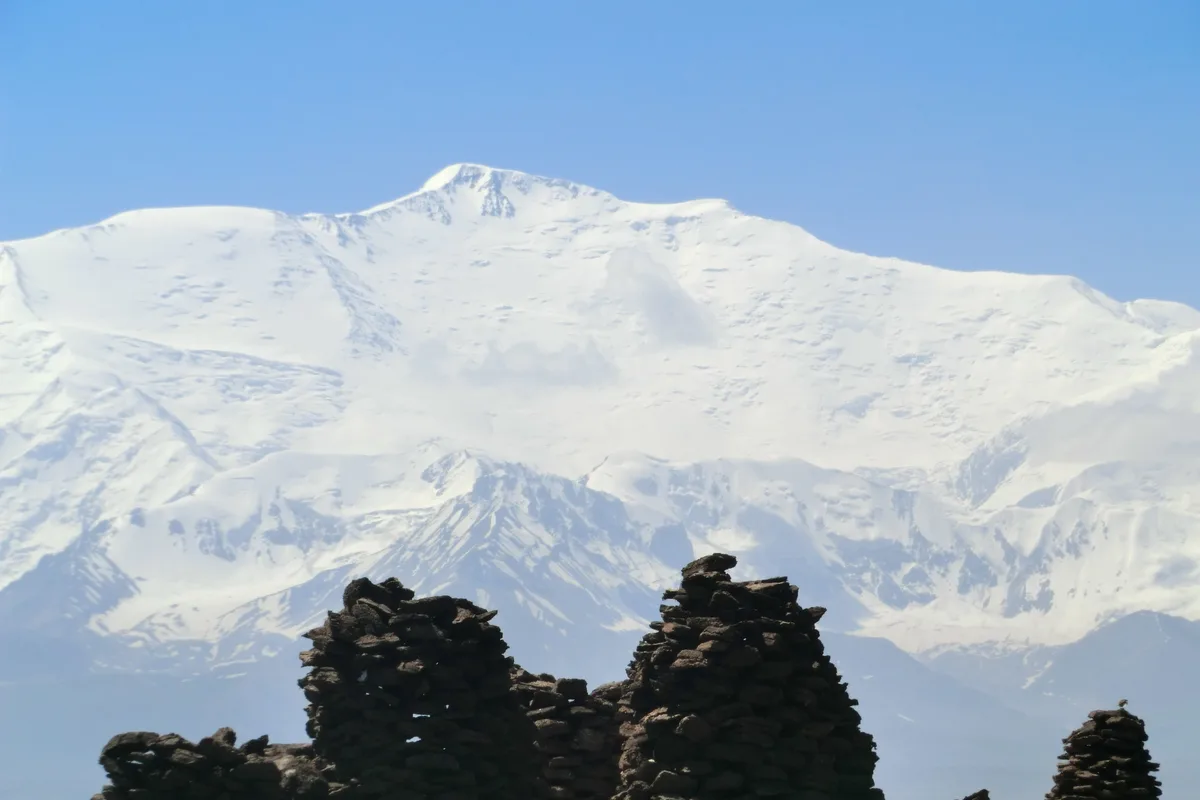

Lenin Peak / Ibn Sina Peak
Lenin Peak (officially Ibn Sina Peak in Tajikistan) is a colossal glaciated mountain rising to 7,134 metres (23,406 ft) on the border of Kyrgyzstan and Tajikistan in the Trans-Alay Range of the northern Pamirs. Famous for its massive non-technical snow slopes and broad summit plateau, it was first conquered during the 1928 German-Soviet Alay-Pamir Expedition by Karl Wien, Eugen Allwein, and Erwin Schneider, setting an international altitude record for that era. Today, it is revered as the world's most climbed and accessible 7,000-metre peak.
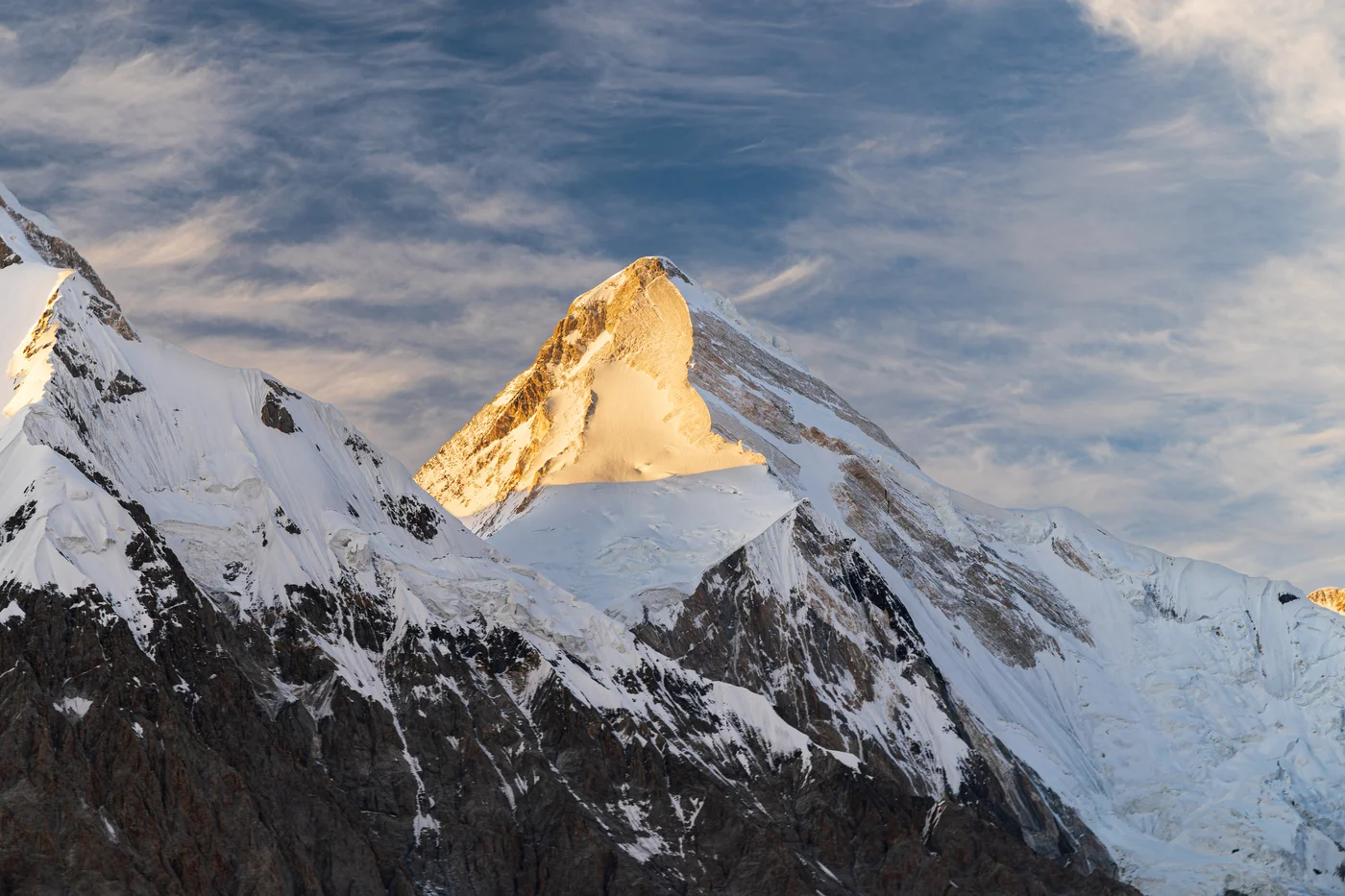

Khan Tengri / Lord of the Spirits
Khan Tengri is a breathtakingly symmetrical, marble-stratified pyramid rising to 7,010 metres (22,999 ft, including summit ice cap) in the Tengri-Tag range of the Central Tien Shan, straddling the borders of Kyrgyzstan, Kazakhstan, and China. Revered in ancient Tengrism as the sacred 'Lord of the Spirits' and famous for its fiery pink glow at sunset, the peak is one of the premier challenges of high-altitude mountaineering. First conquered on September 11, 1931, by a Ukrainian expedition led by Mikhail Pogrebetsky via the West Ridge, it was the scene of an epic survival climb in 1936 by the Abalakov brothers.
Mountain Ranges Spanning Kyrgyzstan
Geographic mountain massifs, regional topography, and glaciated chains within Kyrgyzstan.
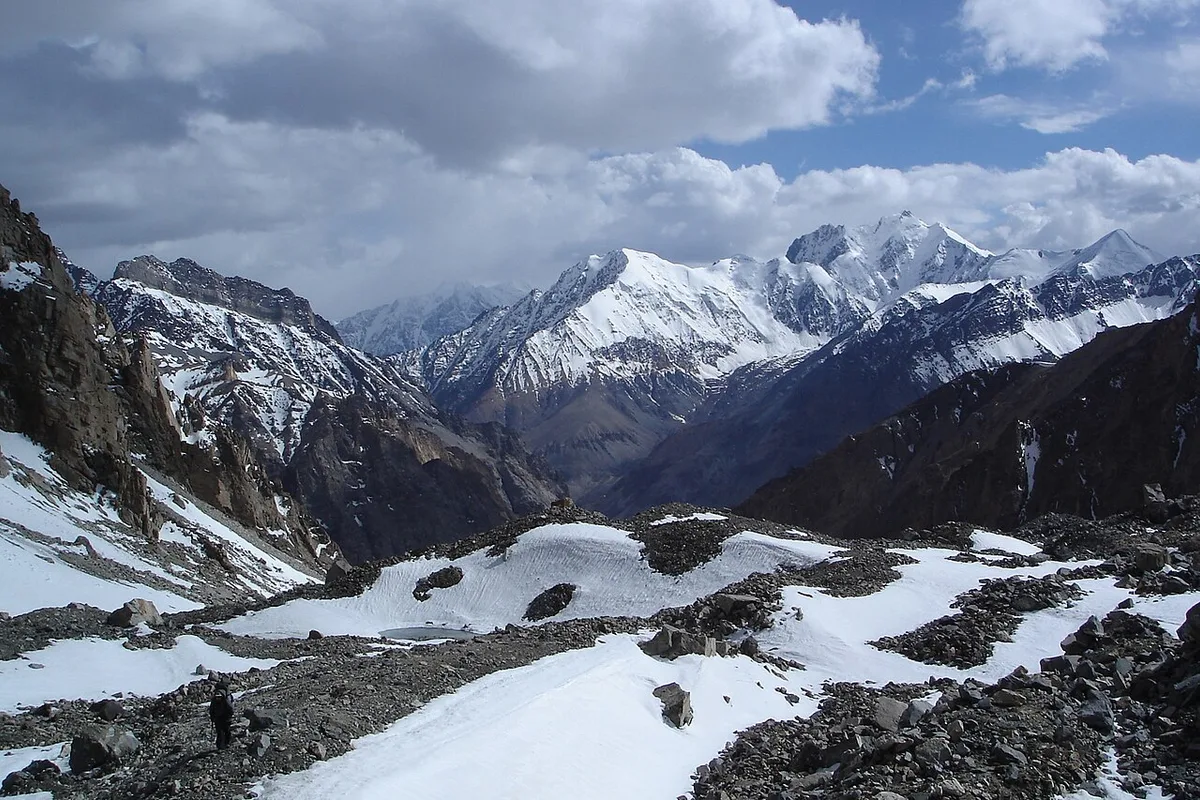
Pamir Mountains
The Pamir Mountains, famously revered across Central Asia as 'Bam-i-Dunya' ('Roof of the World'), form a colossal junction where the Himalayas, Karakoram, Hindu Kush, and Tien Shan mountain systems converge. Dominated by ice plateaus, vast braided valleys, and gigantic peaks soaring above 7,000 metres, the Pamirs served as the proving grounds of Soviet high-altitude mountaineering and the heart of the prestigious Snow Leopard challenge.
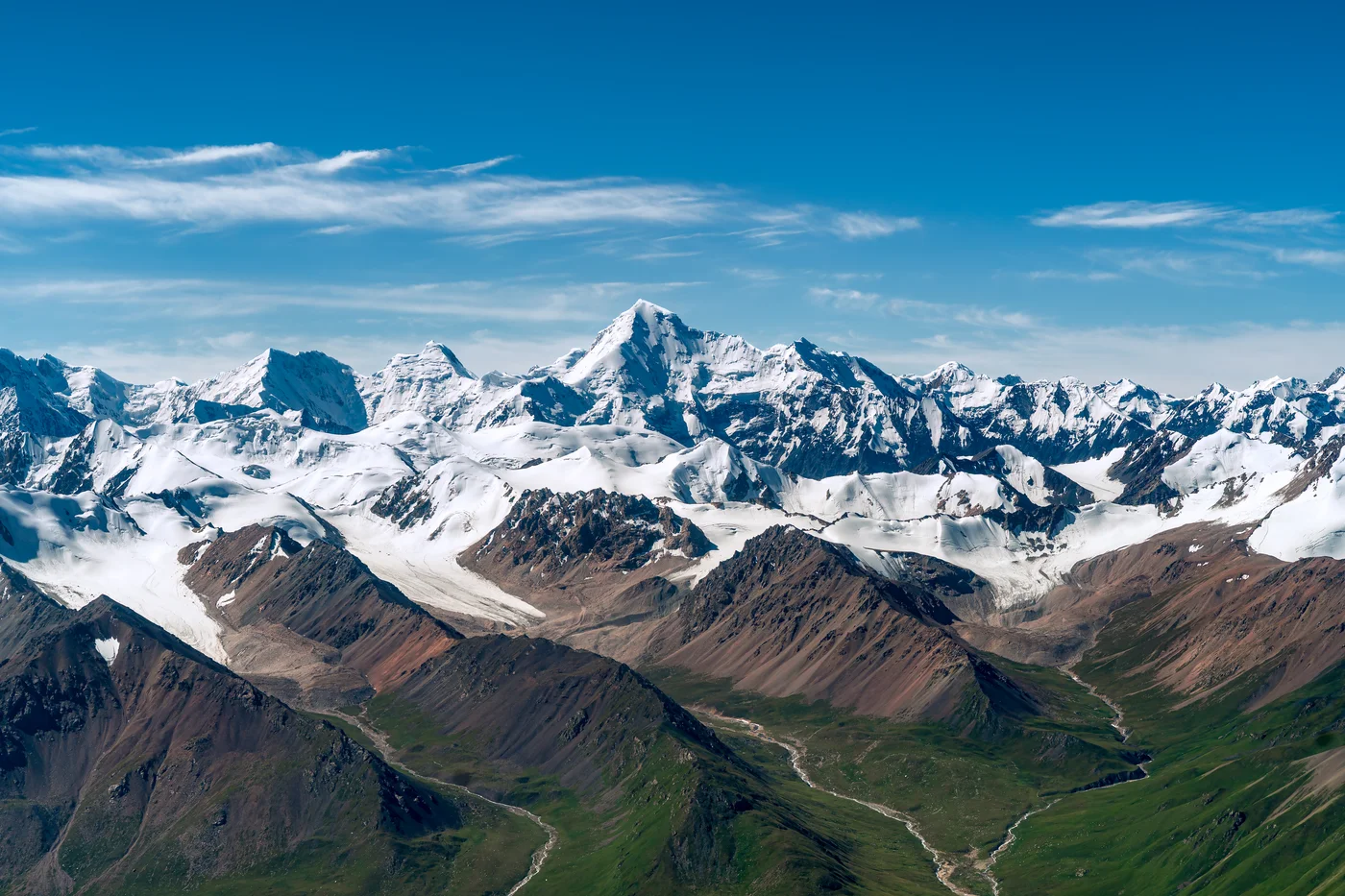
Tien Shan
The Tien Shan, meaning the 'Celestial Mountains', form one of the grandest alpine cordilleras on Earth, spanning over 2,500 kilometres across Central Asia. Anchored by the marble pyramid of Khan Tengri (7,010 m) and the massive summit bastion of Jengish Chokusu (Peak Pobeda, 7,439 m), the range is famed for colossal glaciers, catastrophic weather, and pioneer Soviet expeditions.
Documented Climbing Routes
Classic lines of ascent, technical difficulties, and objective hazards across Kyrgyzstan's summits.
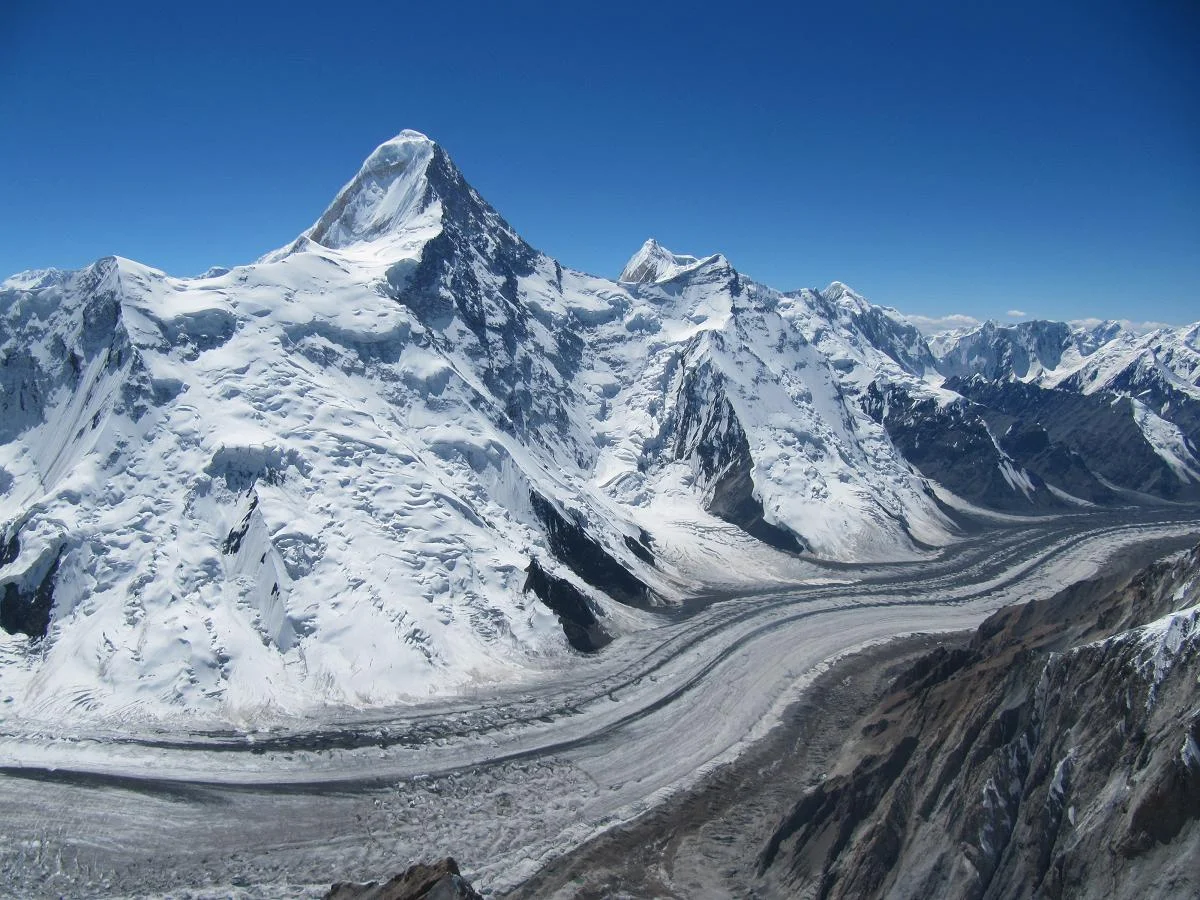
Khan Tengri West Ridge & Pogrebetsky Route
The West Ridge Pogrebetsky Route is the premier classic route on Khan Tengri (7,010 m), leading from the South Inylchek Glacier up the Semenovskiy Glacier to the West Col (Chakan-Tau, 5,900 m) and ascending the exposed western marble ridge. First climbed on September 11, 1931, by Mikhail Pogrebetsky, Boris Tyurin, and Franz-Josef Zauberer, the route involves sustained climbing on steep snow couloirs and technical marble rock bands above 6,700 metres. The route requires fixed-rope jumaring, rigorous acclimatization, and exceptional endurance against high-altitude hypothermia.
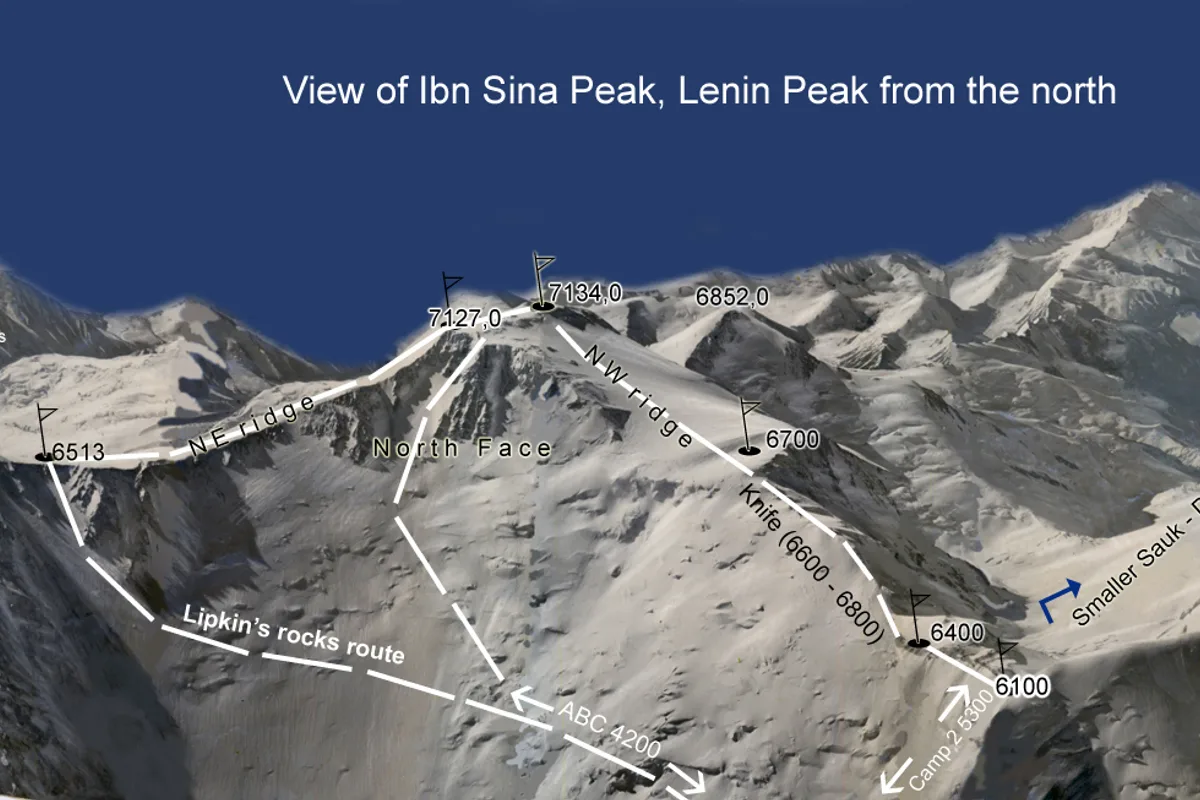
Lenin Peak Razdelnaya Route & West Ridge
The Razdelnaya Route via the North Face and West Ridge is the classic standard route on Lenin Peak (7,134 m). Starting from the Achik-Tash Base Camp (3,600 m), the route navigates the crevassed Lenin Glacier to Camp 2 (5,300 m), scales the steep snow slopes to Razdelnaya Peak (6,148 m) for Camp 3, and makes a sustained 1,000-metre summit push along the exposed West Ridge to 7,134 metres.
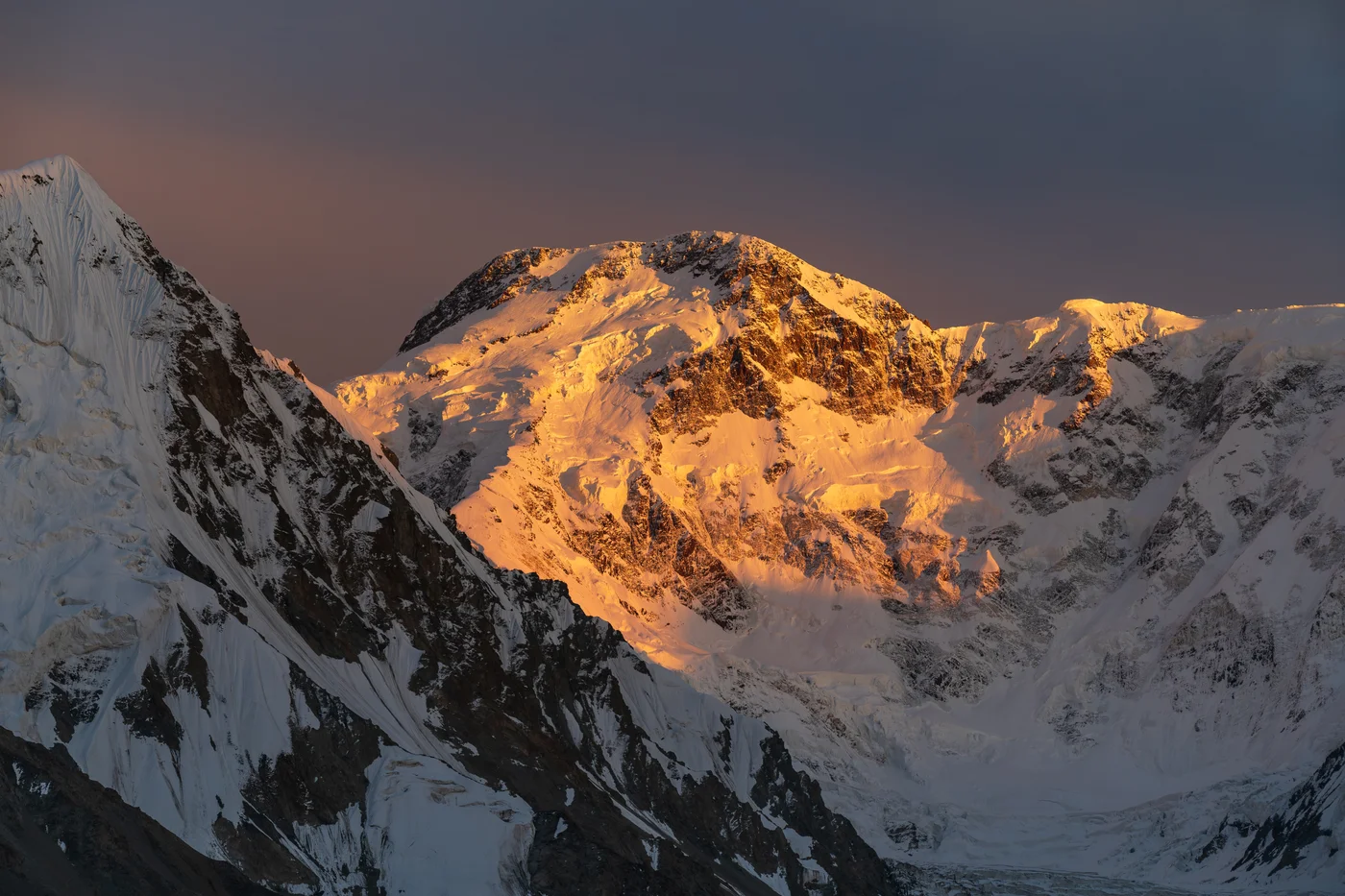
Peak Pobeda North Ridge & Abalakov Route
The North Ridge Abalakov Route on Jengish Chokusu / Peak Pobeda (7,439 m) is universally regarded as one of the most brutal and hazardous mountaineering endeavors on the planet. Originating from the Zvyozdochka Glacier, the route ascends the shattered icefalls of the North Ridge to gain the infamous Western Shoulder at 6,918 metres. From there, climbers must endure an exhausting, multi-day traverse along a knife-edge snow arête spanning several kilometres above 7,000 metres directly in the teeth of sub-zero Siberian winds before reaching the 7,439-metre summit crest. The descent requires complete self-reliance along the exposed ridge where rescue is virtually impossible.
Historic Expeditions & First Ascents
Epoch-making sieges and triumphant summits recorded within Kyrgyzstan's alpine history.

1902 Gottfried Merzbacher Central Tien Shan Scientific Expedition
Between 1902 and 1903, German explorer Gottfried Merzbacher mounted a landmark scientific expedition into the Central Tien Shan, mapping the colossal Inylchek Glacier, discovering the famous ice-dammed Lake Merzbacher, and establishing the true geographical coordinates and alpine morphology of Khan Tengri (7,010 m).
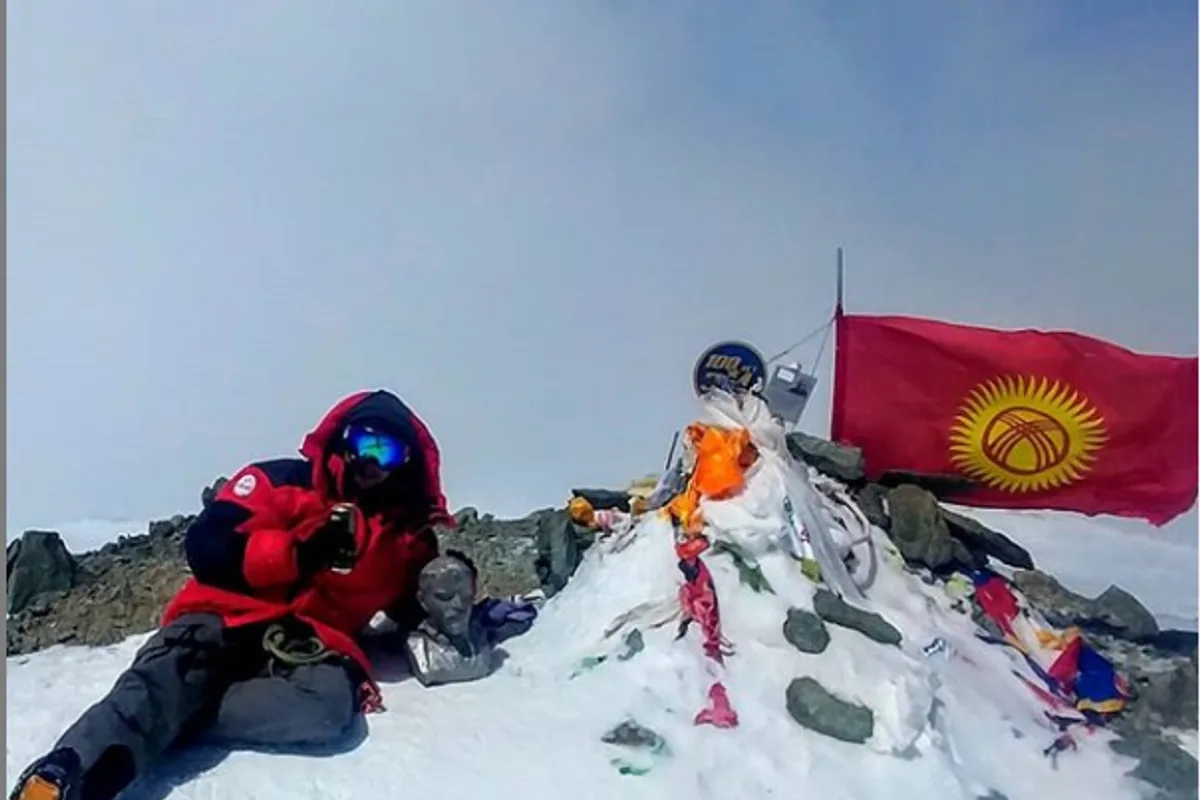
1928 German-Soviet Alay-Pamir Expedition: Maiden Ascent of Lenin Peak
On September 25, 1928, German and Austrian mountaineers Karl Wien, Eugen Allwein, and Erwin Schneider achieved the first ascent of Lenin Peak (7,134 m) in the Pamirs, setting a world climbing altitude record during the historic German-Soviet Alay-Pamir Expedition.
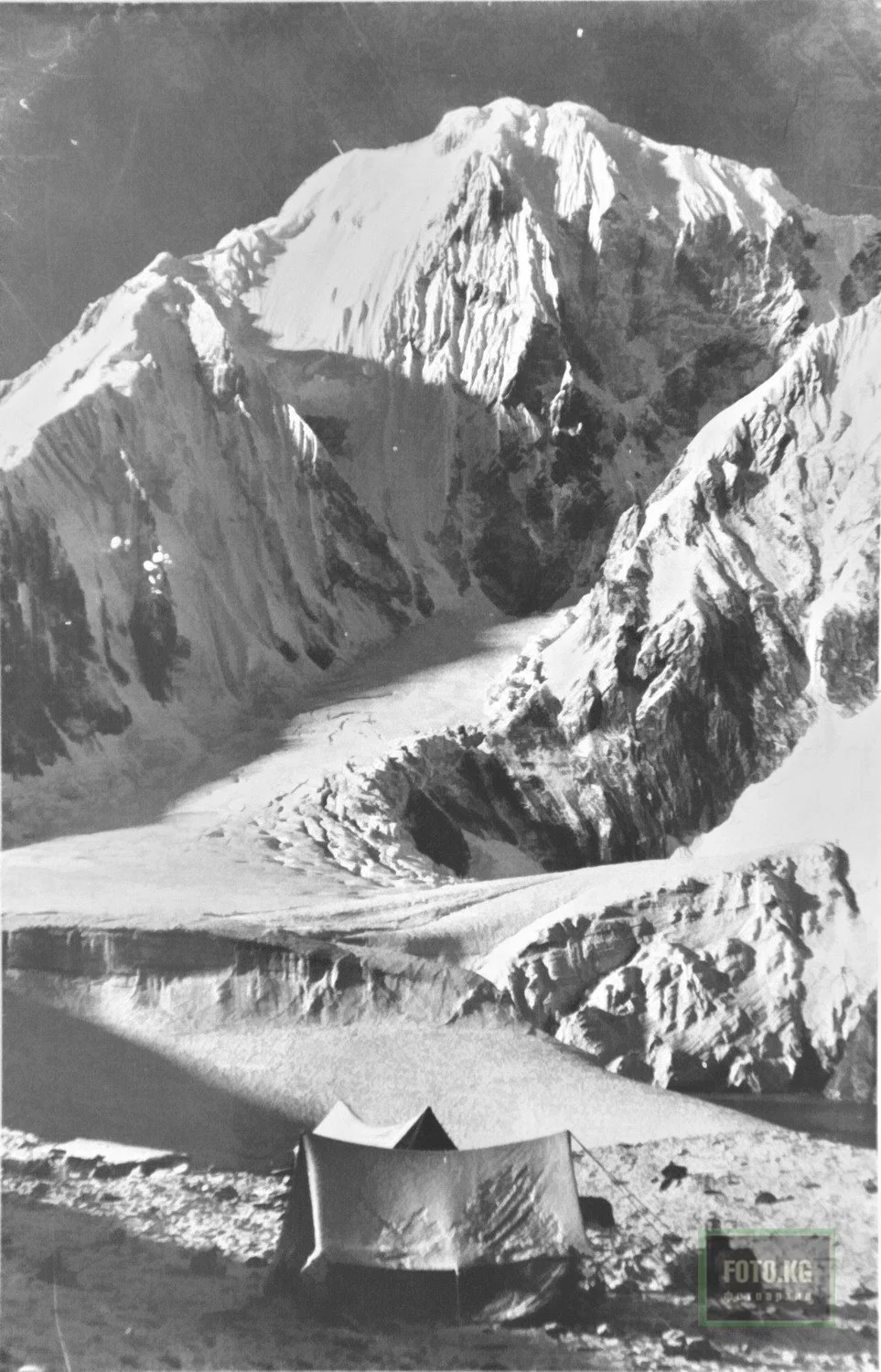
1931 Mikhail Pogrebetsky Ukrainian Expedition Historic First Ascent of Khan Tengri
On September 11, 1931, an intrepid Ukrainian expedition led by Mikhail Pogrebetsky alongside Boris Tyurin and Franz-Josef Zauberer achieved the historic maiden first ascent of Khan Tengri (7,010 m), conquering the dreaded marble pyramid via the West Ridge from the Inylchek Glacier.
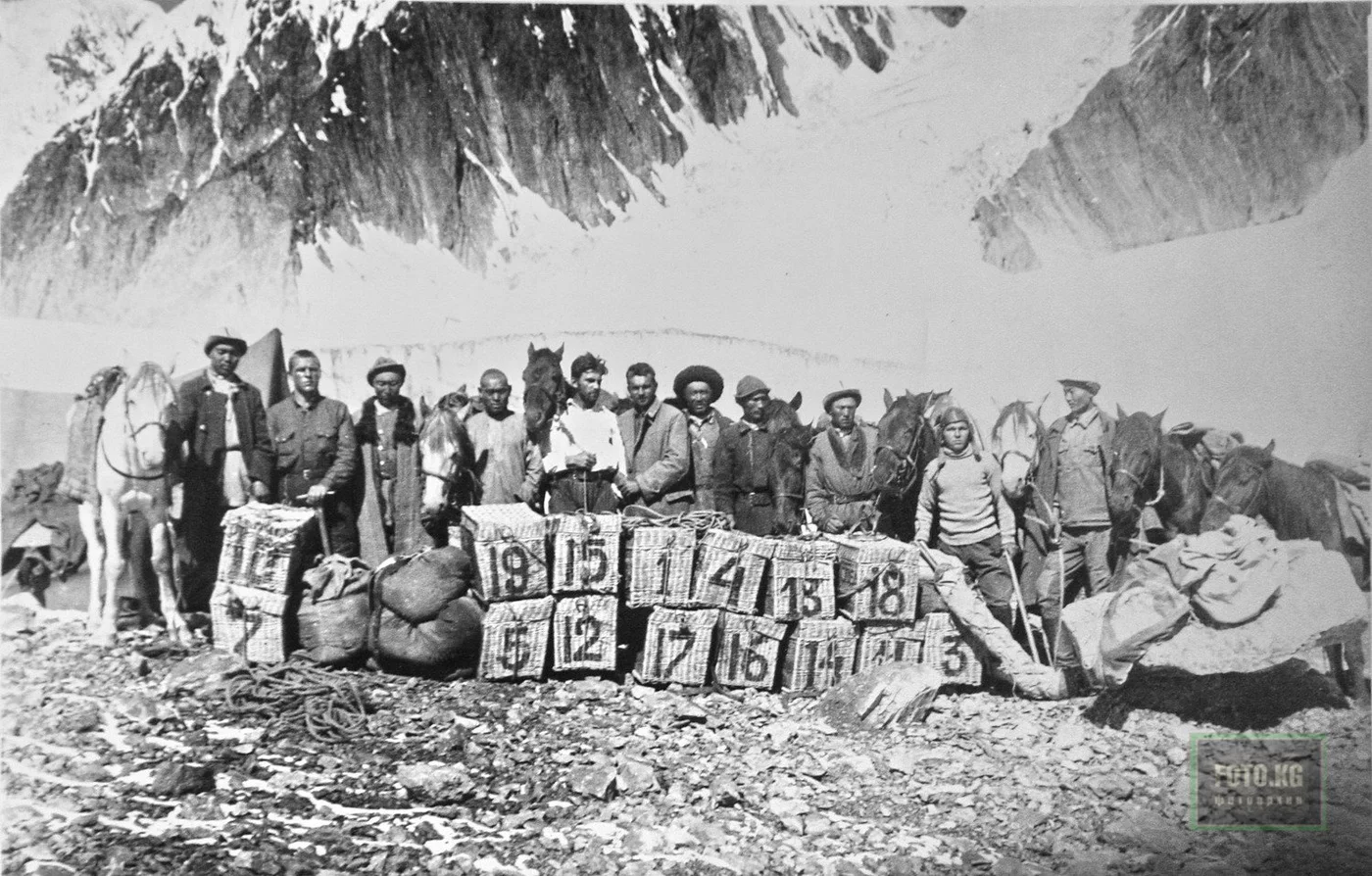
1936 Vitaly & Evgeny Abalakov Historic Khan Tengri Ascent & Survival Epic
In August 1936, legendary Siberian brothers Vitaly and Evgeny Abalakov led an assault up Khan Tengri (7,010 m), successfully summiting before battling through catastrophic sub-zero blizzards on a harrowing descent that became an epic of alpine courage.
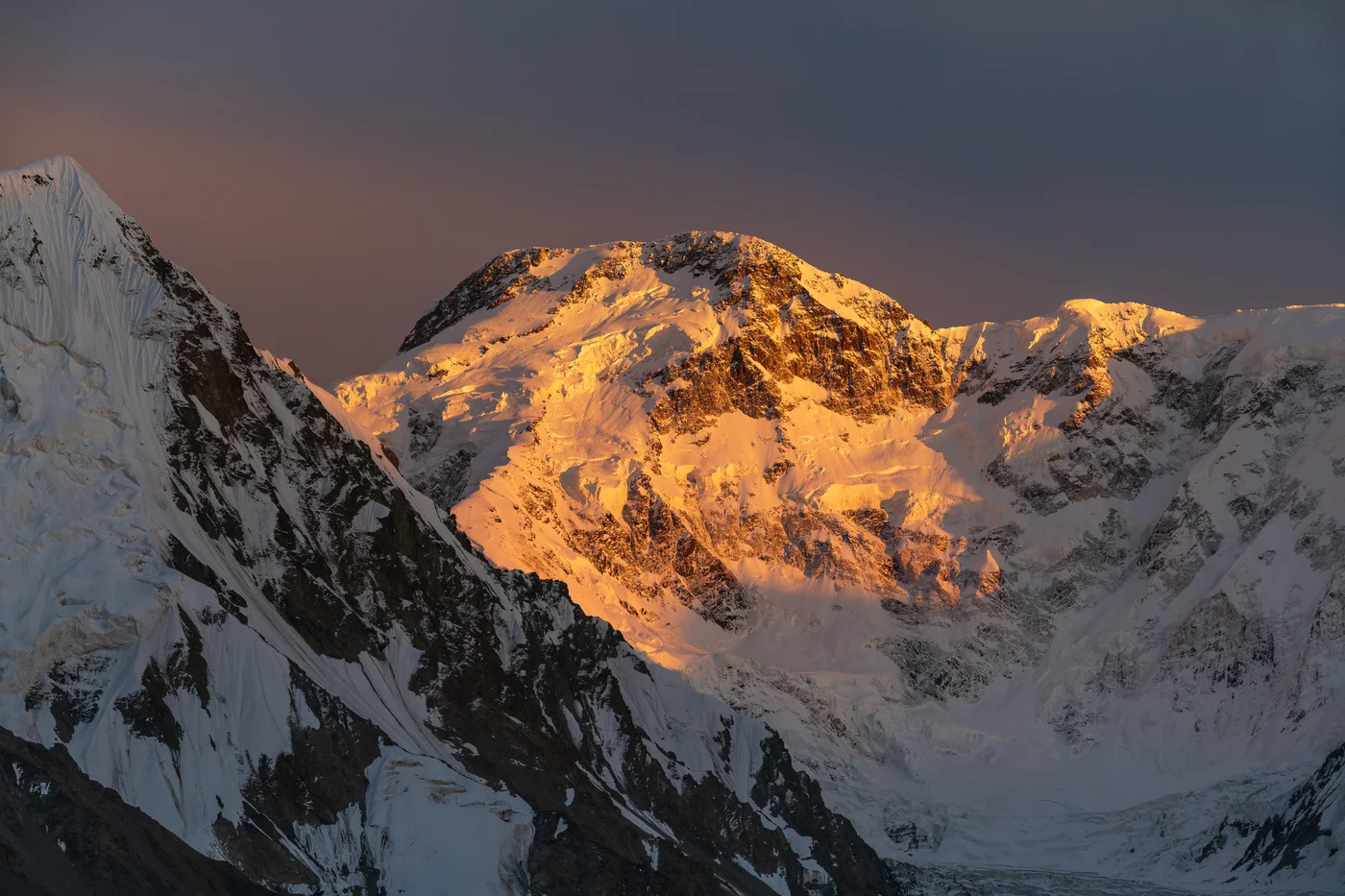
1956 Vitaly Abalakov Spartak Team Maiden First Ascent of Peak Pobeda
On August 30, 1956, a courageous 11-man Soviet Spartak expedition led by 50-year-old Vitaly Abalakov achieved the historic first ascent of Jengish Chokusu / Peak Pobeda (7,439 m), conquering the most lethal and northernmost 7,000-metre mountain on Earth via the treacherous North Ridge.
Archival Primary Source Quotations
“Great things are done when men and mountains meet; this is not done by jostling in the street.”
Defined Alpine Terminology & Concepts
- Archival Integrity
- The standard of verifying historical mountain facts, summit claims, and altitudes using primary expeditions journals and geodetic measurements.
Frequently Asked Questions: Kyrgyzstan Mountaineering
What historical significance does this countrie hold?
Kyrgyzstan represents an essential chapter in global mountaineering heritage, verified through contemporary expedition journals and archival sources.
How are the facts and records for Kyrgyzstan verified?
All records are checked against peer-reviewed journals, national alpine clubs, geodetic surveys, and the Mountanity Archival Integrity Policy.