1928 German-Soviet Alay-Pamir Expedition: Maiden Ascent of Lenin Peak
On September 25, 1928, German and Austrian mountaineers Karl Wien, Eugen Allwein, and Erwin Schneider achieved the first ascent of Lenin Peak (7,134 m) in the Pamirs, setting a world climbing altitude record during the historic German-Soviet Alay-Pamir Expedition.
Mountain Safety & Conditions Disclaimer: High-altitude climbing, glacial travel, and technical ascents entail severe objective risks including avalanches, serac collapses, rapid weather collapse, and altitude illness. Historical route descriptions and summit claims on Mountanity reflect documented archival sources and must not be used as live operational safety assessments. Local regulations, permits, and physical glacial topography change continuously.
Peer Review: Senior Editorial Board & Historical Reviewers • Editorial Standards
Official Expedition Narrative & Archival Record
In 1928, the governments of the Weimar Republic and the Soviet Union launched the most ambitious joint scientific expedition ever assembled in Central Asia: the German-Soviet Alay-Pamir Expedition. Led scientifically by Willi Rickmer Rickmers and supported by a caravan of hundreds of horses and pack camels, the expedition aimed to decipher the glaciology of the Trans-Alay Range and conquer its crowning summit: Lenin Peak (7,134 m). On September 25, 1928, after weeks of reconnaissance through deep powdered snow and sub-zero blizzards, three young alpine masters—Karl Wien, Eugen Allwein, and Austrian cartographer Erwin Schneider—commenced their final assault from a high tent at 6,000 metres. Front-pointing across wind-scoured névé and battling debilitating hypoxia without supplemental oxygen, the three men stepped onto the vast snow dome of the summit. At 7,134 metres, they had established an international altitude record for a climbed peak, inaugurating the golden age of high-altitude Himalayan and Pamir mountaineering.
Documented Team Composition
- Willi Rickmer Rickmers (Scientific Expedition Leader, Germany)
- Karl Wien (Summit Leader & Geographer, Germany)
- Dr. Eugen Allwein (Physician & Climber, Germany)
- Dr. Erwin Schneider (Cartographer & Climber, Austria)
- Nikolai Gorbunov (Soviet Government Representative)
- Willi Merkl (Climber, Germany)
Key Statistics & Topographic Figures
- Summit Elevation
- 7,134 metres (23,406 ft)
- Summit Date
- September 25, 1928
- Summit Climbers
- Karl Wien, Eugen Allwein, Erwin Schneider
- Scientific Leader
- Willi Rickmer Rickmers
- Mountain Range
- Trans-Alay Range, Northern Pamir
Archival Primary Source Quotations
“Standing on Lenin Peak at over 7,100 metres, the boundless glaciers of the Pamir unfolded like an icy Arctic sea.”
Defined Alpine Terminology & Concepts
- Trans-Alay Range
- The northernmost bastion of the Pamir Mountains, separating the Alay Valley of Kyrgyzstan from the high Pamir plateau of Tajikistan.
- Saukdara Glacier
- The extensive southern glacier draining the névé basins of Lenin Peak toward the Muksu River.
Frequently Asked Questions: 1928 German-Soviet Alay-Pamir Expedition: Maiden Ascent of Lenin Peak
Who made the historic first ascent of Lenin Peak in 1928?
German and Austrian climbers Karl Wien, Eugen Allwein, and Erwin Schneider achieved the first ascent of Lenin Peak (7,134 m) on September 25, 1928.
What altitude record was set on Lenin Peak in 1928?
By reaching 7,134 metres, Karl Wien, Eugen Allwein, and Erwin Schneider established an international climbing altitude record for a successfully summited peak.
What route did the 1928 expedition take on Lenin Peak?
The 1928 team ascended from the south via the Saukdara Glacier and followed the long, exposed East Ridge to the summit.
Ascent Route & Topography
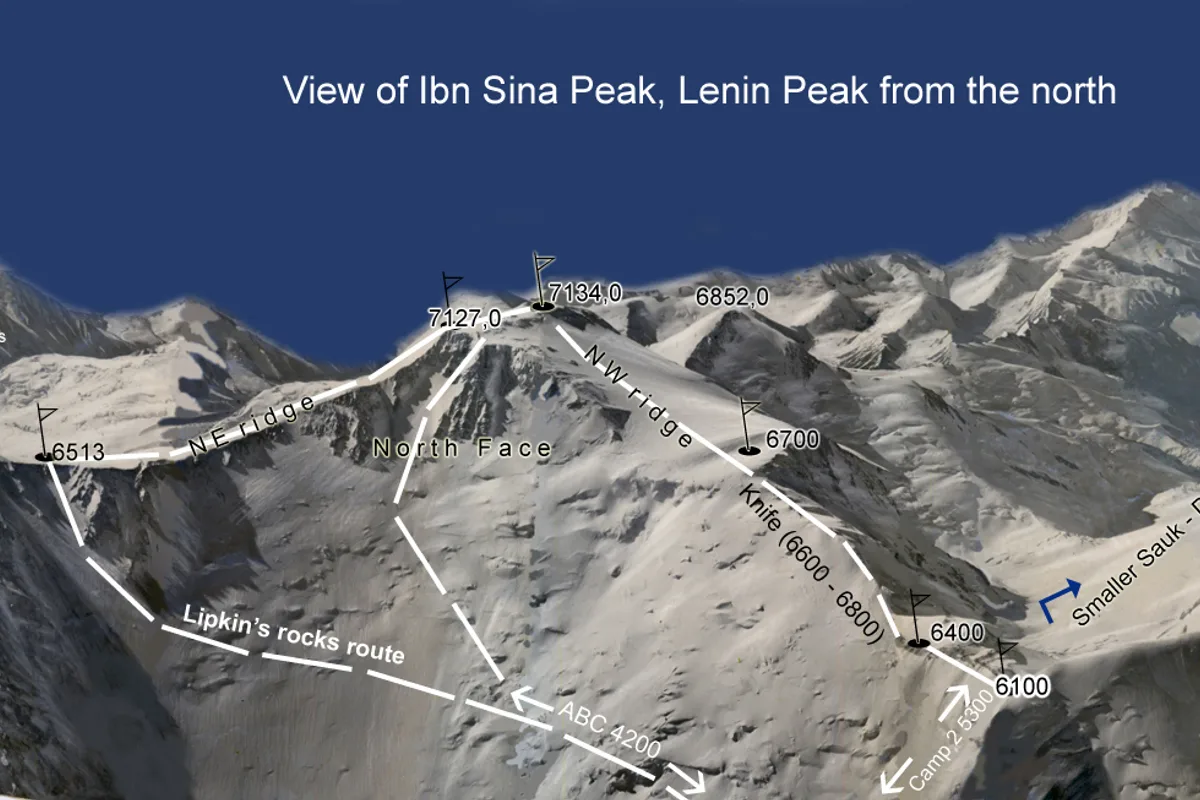
Lenin Peak Razdelnaya Route & West Ridge
The Razdelnaya Route via the North Face and West Ridge is the classic standard route on Lenin Peak (7,134 m). Starting from the Achik-Tash Base Camp (3,600 m), the route navigates the crevassed Lenin Glacier to Camp 2 (5,300 m), scales the steep snow slopes to Razdelnaya Peak (6,148 m) for Camp 3, and makes a sustained 1,000-metre summit push along the exposed West Ridge to 7,134 metres.
Target Objective Peak
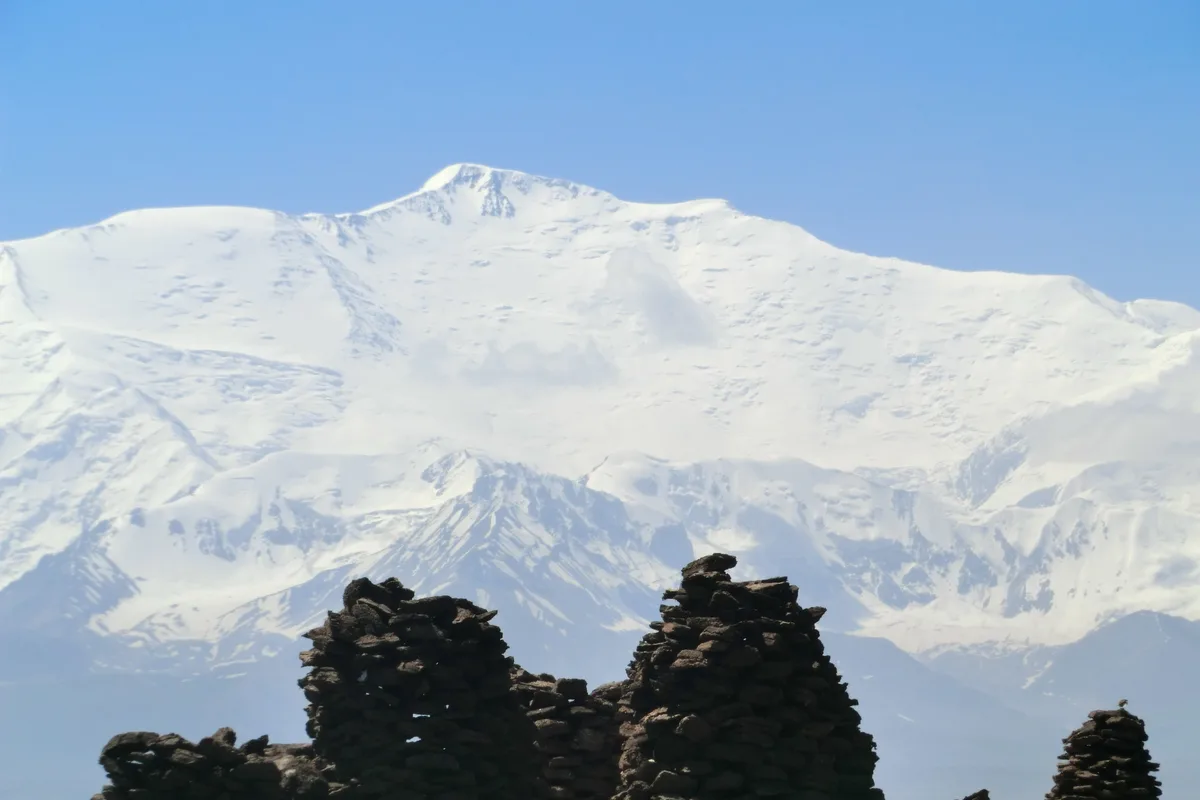


Lenin Peak / Ibn Sina Peak
Lenin Peak (officially Ibn Sina Peak in Tajikistan) is a colossal glaciated mountain rising to 7,134 metres (23,406 ft) on the border of Kyrgyzstan and Tajikistan in the Trans-Alay Range of the northern Pamirs. Famous for its massive non-technical snow slopes and broad summit plateau, it was first conquered during the 1928 German-Soviet Alay-Pamir Expedition by Karl Wien, Eugen Allwein, and Erwin Schneider, setting an international altitude record for that era. Today, it is revered as the world's most climbed and accessible 7,000-metre peak.
Featured Expedition Climbers
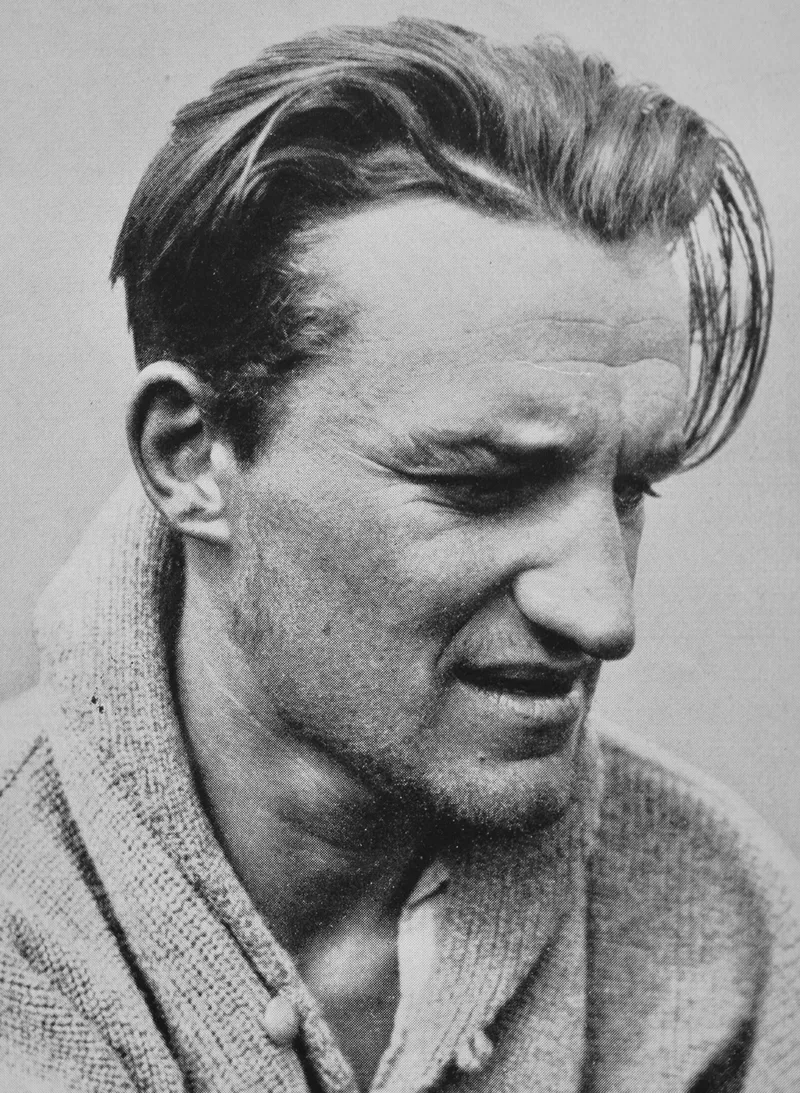
Erwin Schneider
Born in Sankt Joachimsthal on April 13, 1906, Erwin Schneider became one of the most prolific high-altitude mountaineers of the twentieth century. In 1928, as a member of the German-Soviet Alay-Pamir Expedition, Schneider summited Lenin Peak (7,134 m) alongside Karl Wien and Eugen Allwein. In 1930, during the International Himalaya Expedition to Kangchenjunga, Schneider summited Jongsong Peak (7,462 m), setting an undisputed world altitude summit record that stood for years. Schneider's greatest lasting legacy lies in high-altitude photogrammetry and mountain cartography. Between 1955 and 1963, Schneider led the Austrian Alpine Club mapping expeditions that created the legendary 'Schneider Map of the Khumbu Himal and Mount Everest', widely regarded by geographers and mountaineers as a masterpiece of cartographic precision.
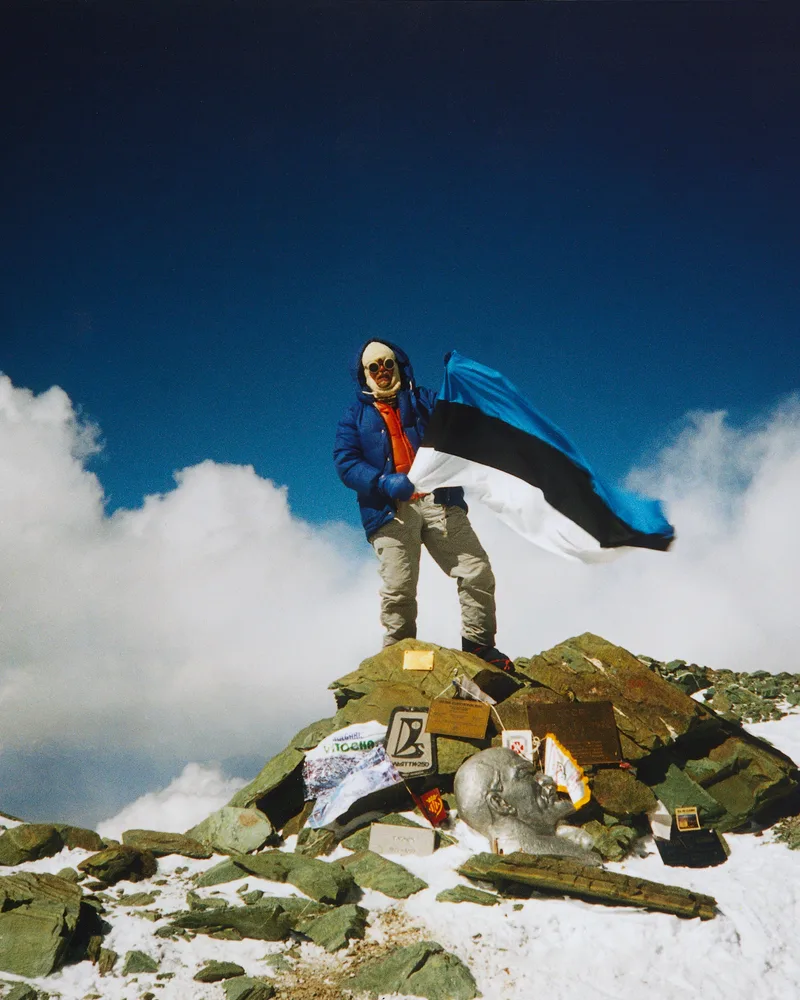
Eugen Allwein
Eugen Allwein was born on February 26, 1900, in Munich and combined a career in medicine with elite mountaineering. Partnering with Willo Welzenbach, Allwein made early landmark ascents in the Western Alps, including the daring 1926 first ascent of the sheer North Face of the Dent d'Hérens. In 1928, Allwein served as expedition medical officer and lead climber on the landmark German-Soviet Alay-Pamir Expedition. Enduring brutal sub-zero gales and thin air on the high névé slopes, Allwein reached the 7,134-metre summit of Lenin Peak. He later served on the 1929 and 1931 German Kangchenjunga expeditions under Paul Bauer, pioneering high-altitude physiological research and extreme ridge climbing in the Himalaya.
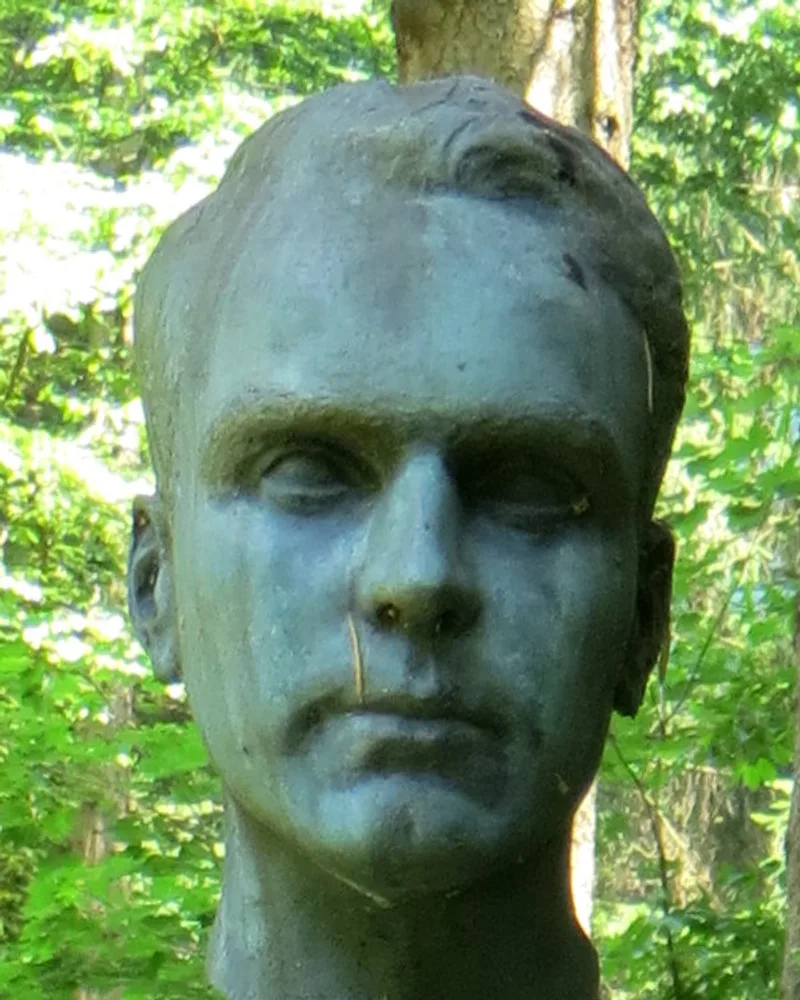
Karl Wien
Karl Wien was born on September 10, 1906, in Würzburg and studied physics and geography under Professor Willi Rickmer Rickmers at the University of Munich. A gifted alpinist from an early age, Wien was a core member of the Academic Alpine Club of Munich (AAVM), completing daring technical first ascents across the Bavarian Alps, Dolomites, and Western Alps. In 1928, at just twenty-two years of age, Wien joined the joint German-Soviet Alay-Pamir Expedition. On September 25, 1928, alongside Eugen Allwein and Erwin Schneider, Wien stood on the summit of Lenin Peak (7,134 m), establishing a new world altitude record for a climbed peak. In 1937, Wien was selected as the overall leader of the German Nanga Parbat expedition, where he and fifteen teammates tragically perished in a colossal ice avalanche at Camp IV on June 15, 1937.
Associated Historical Chronicles & Stories
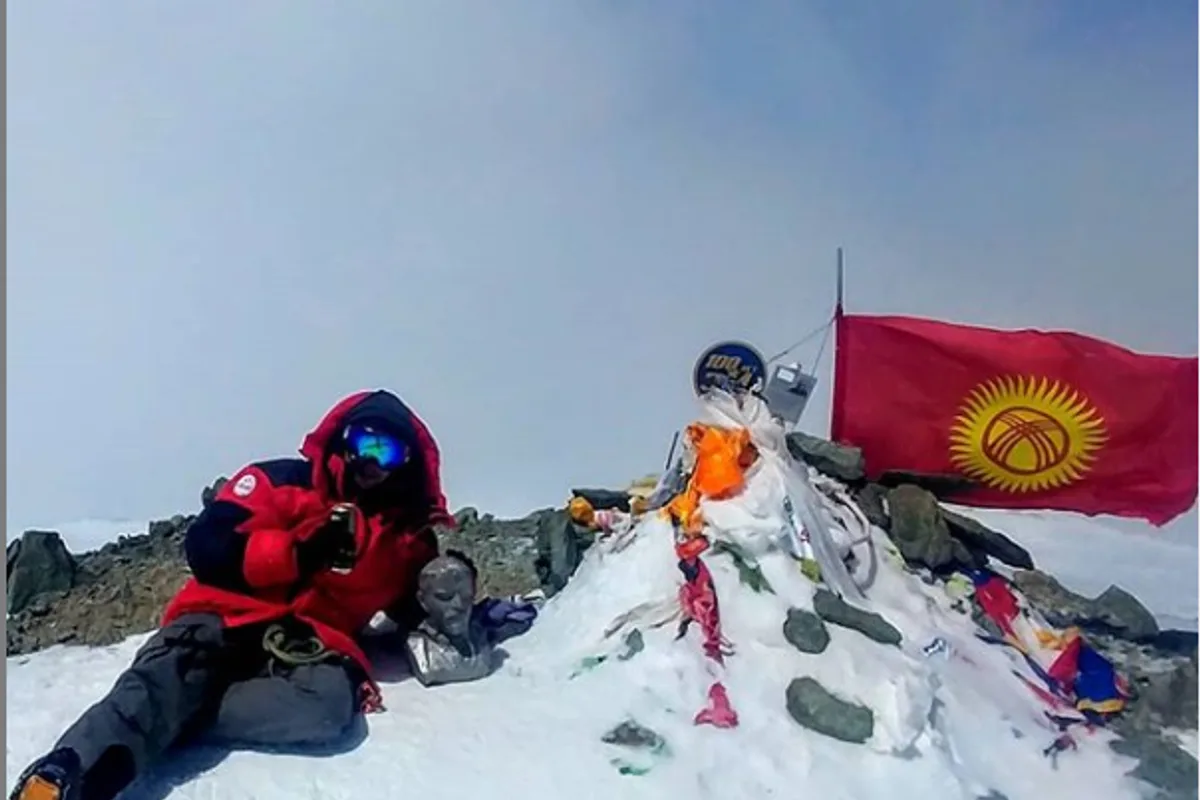
At the Roof of the World: The 1928 Conquest of Lenin Peak
In 1928, the governments of the Weimar Republic and the Soviet Union launched the most ambitious joint scientific expedition ever assembled in Central Asia: the...
Documented Sources & Archival Citations
- The Alai-Pamir Expedition 1928(Zeitschrift des Deutschen und Oesterreichischen Alpenvereins / Karl Wien)
Supporting claim: Primary official narrative of the 1928 first ascent of Lenin Peak
Accessed/Documented: 1929