1936 Vitaly & Evgeny Abalakov Historic Khan Tengri Ascent & Survival Epic
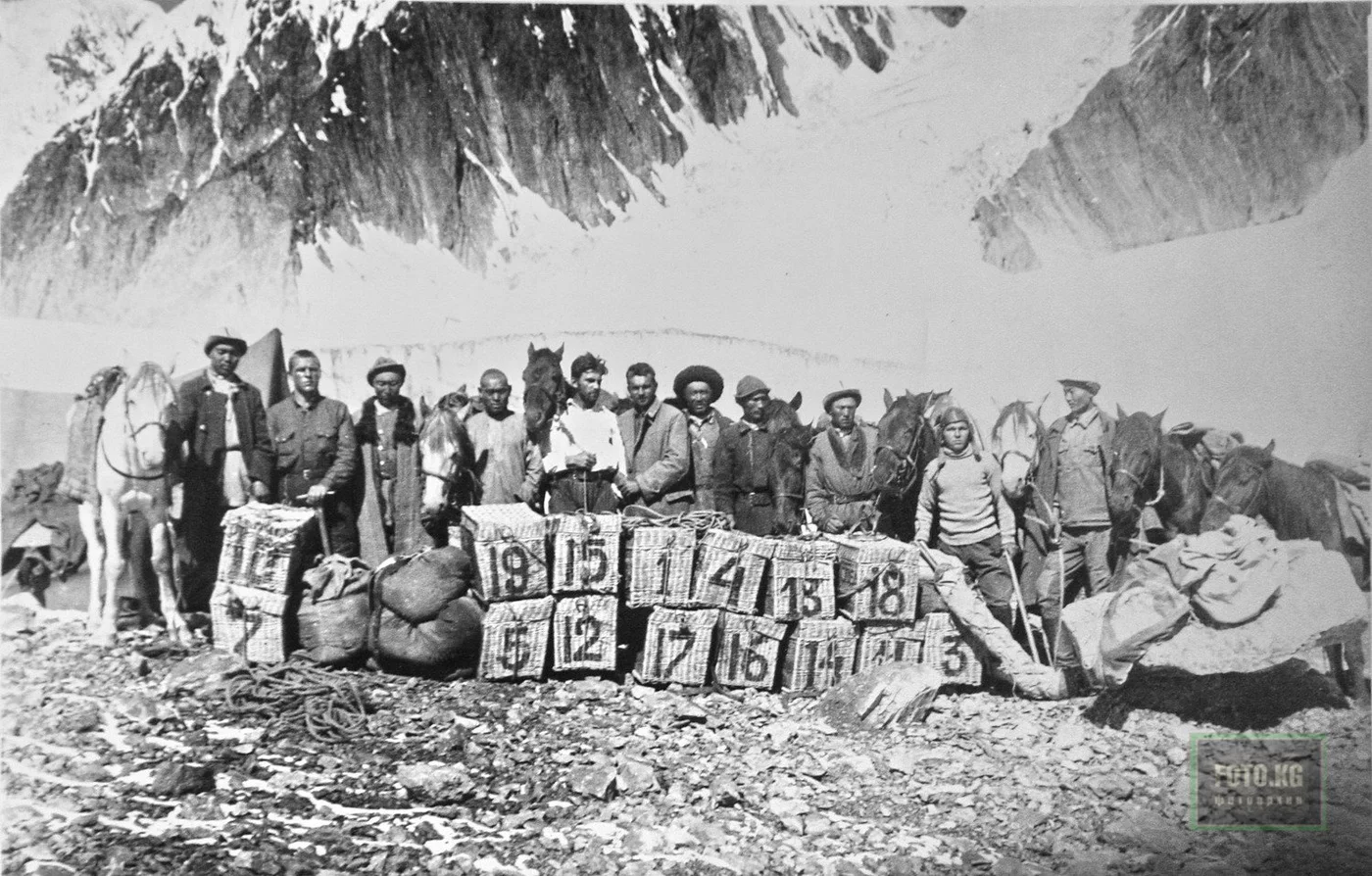
In August 1936, legendary Siberian brothers Vitaly and Evgeny Abalakov led an assault up Khan Tengri (7,010 m), successfully summiting before battling through catastrophic sub-zero blizzards on a harrowing descent that became an epic of alpine courage.
Mountain Safety & Conditions Disclaimer: High-altitude climbing, glacial travel, and technical ascents entail severe objective risks including avalanches, serac collapses, rapid weather collapse, and altitude illness. Historical route descriptions and summit claims on Mountanity reflect documented archival sources and must not be used as live operational safety assessments. Local regulations, permits, and physical glacial topography change continuously.
Peer Review: Senior Editorial Board & Historical Reviewers • Editorial Standards
Official Expedition Narrative & Archival Record
In the summer of 1936, an elite Soviet team comprising brothers Vitaly and Evgeny Abalakov, Leonid Gutman, Mikhail Dadiomov, and Swiss doctor Lorenz Saladin set out to complete the second ascent of Khan Tengri (7,010 m) via a bold new line on the West Face and Ridge. Climbing without modern oxygen or high-altitude parkas, the five climbers pushed through deep, unconsolidated powder and navigated steep marble walls to reach the summit on August 24, 1936. But during their stay on the summit ridge, a monstrous Central Asian blizzard struck the mountain, dropping temperatures below -35°C and blinding the team in hurricane-force gales. On the descent, Gutman fell over a cliff, suffering severe head trauma and paralysis. Vitaly suffered catastrophic frostbite to his hands and feet, while Saladin was rapidly succumbing to gangrene. Evgeny Abalakov displayed superhuman endurance: despite hypothermia, he carried Gutman down vertical rock pitches on his back, broke trail through waist-deep snow drifts, and guided the battered party down the frozen labyrinth of the Inylchek Glacier. Although Saladin tragically died of blood poisoning near Base Camp, Evgeny's heroism saved Gutman and Vitaly, cementing the Abalakov brothers as legends of world mountaineering.
Documented Team Composition
- Vitaly Mikhaylovich Abalakov (Co-Leader, Russia)
- Evgeny Mikhaylovich Abalakov (Co-Leader & Rescuer, Russia)
- Leonid Gutman (Alpinist, Russia)
- Mikhail Dadiomov (Alpinist, Russia)
- Lorenz Saladin (Physician & Photographer, Switzerland)
Key Statistics & Topographic Figures
- Official Outcome
- Second Ascent of Khan Tengri (7,010 m) and Heroic High-Altitude Survival Epic
Expedition Status
- Summit Date
- 1936-08-24
Ascent Timestamp
- Target Objective
- khan-tengri
Mountain Peak
- Ascent Route
- khan-tengri-west-ridge
Climbing Path
- Team Size
- 5 Climbers
High-Altitude Team
- Region / Country
- Kyrgyzstan (Central Tien Shan, Tengri-Tag Range)
Geography
Archival Primary Source Quotations
“In the summer of 1936, an elite Soviet team comprising brothers Vitaly and Evgeny Abalakov, Leonid Gutman, Mikhail Dadiomov, and Swiss doctor Lorenz Saladin set out to complete the...”
Defined Alpine Terminology & Concepts
- Alpine Expedition
- A planned, self-contained high-altitude mountaineering undertaking operating in remote mountain terrain subject to extreme objective hazards.
- Death Zone
- The high-altitude region above 8,000 meters where atmospheric oxygen pressure is inadequate for sustained human survival.
Frequently Asked Questions: 1936 Vitaly & Evgeny Abalakov Historic Khan Tengri Ascent & Survival Epic
What was the primary outcome and achievement of the 1936 Vitaly & Evgeny Abalakov Historic Khan Tengri Ascent & Survival Epic?
Second Ascent of Khan Tengri (7,010 m) and Heroic High-Altitude Survival Epic. In August 1936, legendary Siberian brothers Vitaly and Evgeny Abalakov led an assault up Khan Tengri (7,010 m), successfully summiting before battling through catastrophic sub-zero blizzards on a harrowing descent that became an epic of alpine courage.
When did the 1936 Vitaly & Evgeny Abalakov Historic Khan Tengri Ascent & Survival Epic reach the summit?
The expedition officially reached the summit on 1936-08-24, operating between 1936-07-15 and 1936-09-10.
Who were the documented climbing team members on the 1936 Vitaly & Evgeny Abalakov Historic Khan Tengri Ascent & Survival Epic?
The documented climbing roster included: Vitaly Mikhaylovich Abalakov (Co-Leader, Russia), Evgeny Mikhaylovich Abalakov (Co-Leader & Rescuer, Russia), Leonid Gutman (Alpinist, Russia), Mikhail Dadiomov (Alpinist, Russia), Lorenz Saladin (Physician & Photographer, Switzerland).
What climbing route and mountain objective were tackled during the 1936 Vitaly & Evgeny Abalakov Historic Khan Tengri Ascent & Survival Epic?
The expedition tackled khan-tengri via the khan-tengri-west-ridge in Kyrgyzstan (Central Tien Shan, Tengri-Tag Range).
How are the records and summit claims of the 1936 Vitaly & Evgeny Abalakov Historic Khan Tengri Ascent & Survival Epic verified?
Summit claims, route topography, and timeline logs for the 1936 Vitaly & Evgeny Abalakov Historic Khan Tengri Ascent & Survival Epic are cross-referenced with official alpine registries, national mountaineering federations, and primary expedition journals.
Ascent Route & Topography
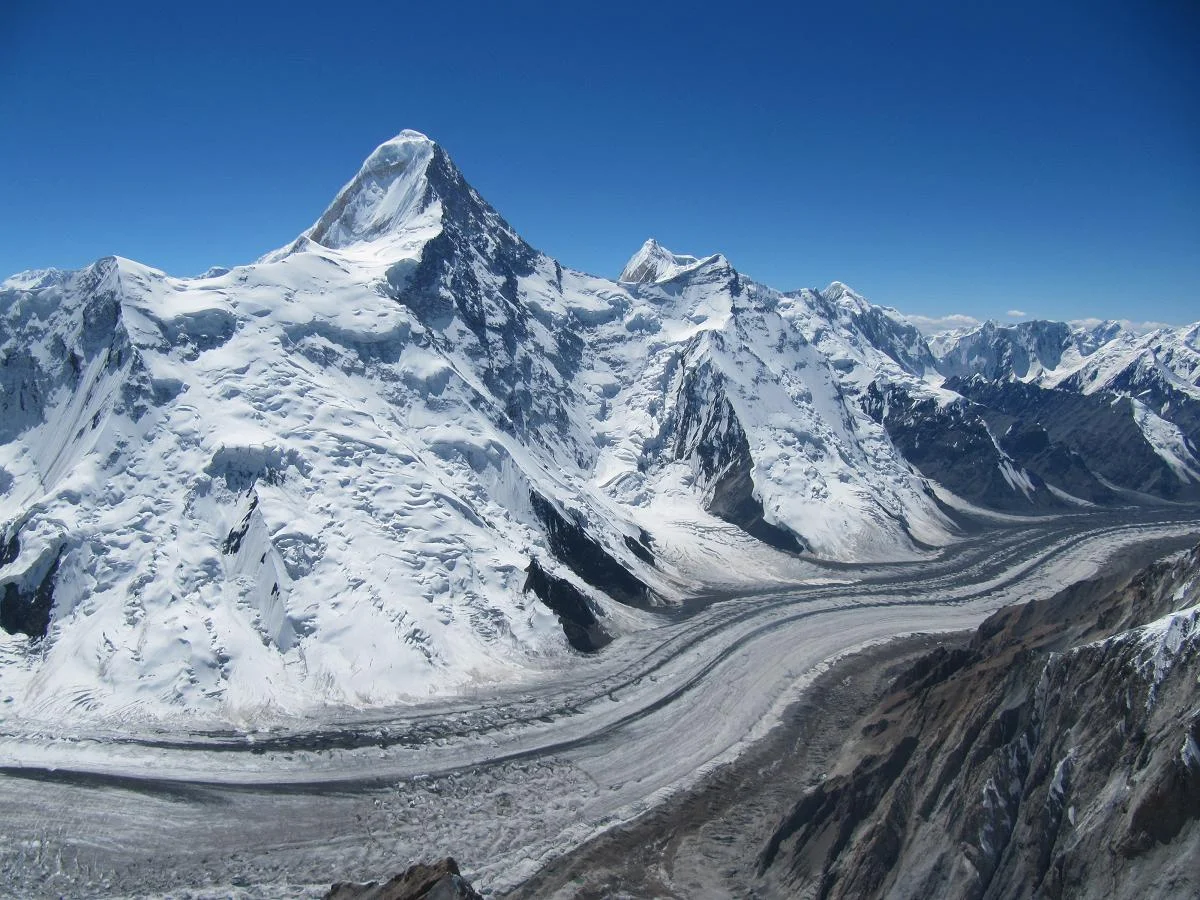
Khan Tengri West Ridge & Pogrebetsky Route
The West Ridge Pogrebetsky Route is the premier classic route on Khan Tengri (7,010 m), leading from the South Inylchek Glacier up the Semenovskiy Glacier to the West Col (Chakan-Tau, 5,900 m) and ascending the exposed western marble ridge. First climbed on September 11, 1931, by Mikhail Pogrebetsky, Boris Tyurin, and Franz-Josef Zauberer, the route involves sustained climbing on steep snow couloirs and technical marble rock bands above 6,700 metres. The route requires fixed-rope jumaring, rigorous acclimatization, and exceptional endurance against high-altitude hypothermia.
Target Objective Peak
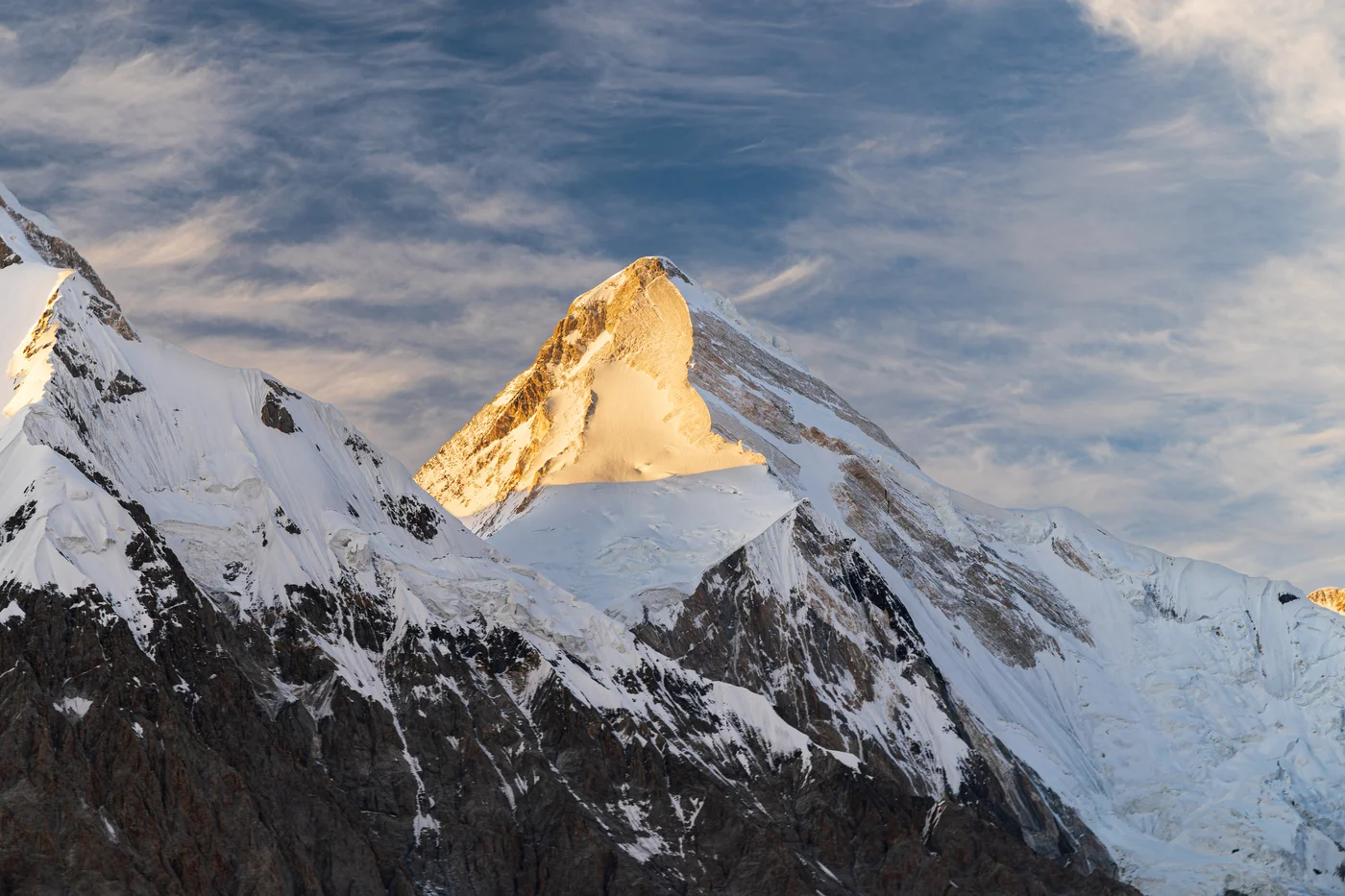



Khan Tengri / Lord of the Spirits
Khan Tengri is a breathtakingly symmetrical, marble-stratified pyramid rising to 7,010 metres (22,999 ft, including summit ice cap) in the Tengri-Tag range of the Central Tien Shan, straddling the borders of Kyrgyzstan, Kazakhstan, and China. Revered in ancient Tengrism as the sacred 'Lord of the Spirits' and famous for its fiery pink glow at sunset, the peak is one of the premier challenges of high-altitude mountaineering. First conquered on September 11, 1931, by a Ukrainian expedition led by Mikhail Pogrebetsky via the West Ridge, it was the scene of an epic survival climb in 1936 by the Abalakov brothers.
Featured Expedition Climbers
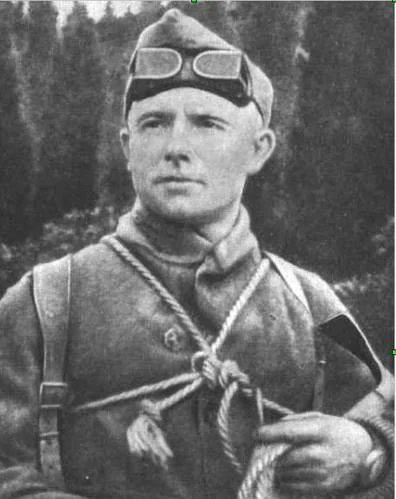
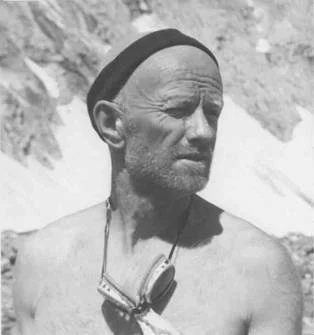
Evgeny Abalakov
Evgeny Mikhaylovich Abalakov was born on February 17, 1907, in Krasnoyarsk, Siberia. Like his elder brother Vitaly, Evgeny began climbing on the volcanic cliffs of the Krasnoyarsk Stolby. Possessing extraordinary physical stamina, grace, and an artistic soul, Evgeny graduated from the prestigious Surikov Moscow State Art Institute as a master sculptor, creating monuments that celebrated the heroic human spirit. In 1933, as a key member of the Soviet-German Pamir Expedition, 26-year-old Evgeny accomplished one of the greatest feats in twentieth-century mountaineering. While teammates collapsed from severe altitude sickness and exhaustion on the unmapped slopes of Peak Communism (7,495 m, now Peak Ismail Somoni in Tajikistan), Evgeny pressed on alone into freezing gales. On September 3, 1933, he summited the peak solo, fixing a meteorological radio station on the roof of the Soviet Union. In 1936, Evgeny joined Vitaly on the second ascent of Khan Tengri (7,010 m). When severe frostbite crippled his teammates on the descent, Evgeny shouldered superhuman burdens, breaking trail and carrying injured companions through blizzards down the Inylchek Glacier to safety. During World War II, Evgeny trained Soviet mountain warfare troops in the Caucasus. He tragically passed away in Moscow on March 24, 1948, honored as one of the bravest mountaineers in Soviet history.
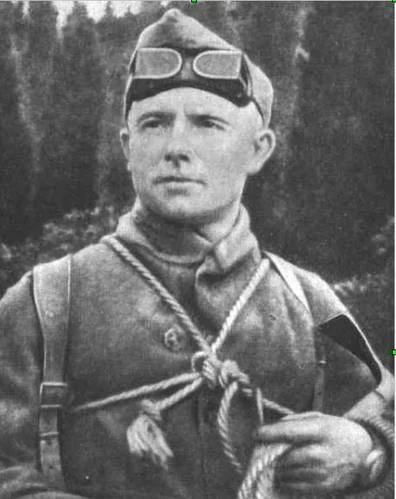
Vitaly Abalakov
Vitaly Mikhaylovich Abalakov was born on January 13, 1906, in Krasnoyarsk, Siberia, Russian Empire. Raised near the towering granite spires of the Krasnoyarsk Stolby nature reserve, Vitaly and his younger brother Evgeny developed into formidable rock climbers from boyhood. Trained as a mechanical engineer at the Moscow Mendeleev Institute, Vitaly combined relentless athletic power with an extraordinary inventive mind. In 1934, Vitaly led the first Soviet ascent of Peak Lenin (7,134 m) in the Pamirs. Two years later, in 1936, Vitaly and Evgeny conquered Khan Tengri (7,010 m). On the descent, trapped in a blizzard, the team endured horrific frostbite; Vitaly lost thirteen fingers and toes, as well as part of his foot. Defying doctors who insisted he would never climb again, Vitaly engineered custom prosthetics, orthopedic boots, and training apparatus, returning to the highest levels of Soviet mountaineering. In 1956, at age 50, Vitaly led the triumphant Spartak expedition that achieved the maiden first ascent of Peak Pobeda (7,439 m), the most lethal and northernmost 7,000-metre peak in the world. Vitaly's greatest enduring contribution to global climbing was his invention of the Abalakov Thread (V-thread)—an anchor drilled through solid ice with a tubular screw and threaded with webbing—which remains the universal standard for ice abseiling worldwide. He died on May 26, 1986, universally recognized as a titan of world alpine history.
Associated Historical Chronicles & Stories
Brothers of Iron: Vitaly & Evgeny Abalakov's 1936 Khan Tengri Ordeal
Siberian brothers Vitaly and Evgeny Abalakov conquer Khan Tengri in 1936 and endure a legendary high-altitude blizzard survival epic on the Inylchek Glacier.
Documented Sources & Archival Citations
- On the Highest Summits of the Soviet Union(Geografgiz, Moscow / Evgeny Abalakov)
Supporting claim: Firsthand documentary narrative of the 1936 Khan Tengri ascent and blizzard survival
Accessed/Documented: 1948 - Stalin's Mountaineers: The Abalakov Brothers(Tyrolia-Verlag / Cédric Gras)
Supporting claim: Comprehensive historical investigation into the 1936 Tien Shan expedition
Accessed/Documented: 2021