Brothers of Iron: Vitaly & Evgeny Abalakov's 1936 Khan Tengri Ordeal
Siberian brothers Vitaly and Evgeny Abalakov conquer Khan Tengri in 1936 and endure a legendary high-altitude blizzard survival epic on the Inylchek Glacier.
Mountain Safety & Conditions Disclaimer: High-altitude climbing, glacial travel, and technical ascents entail severe objective risks including avalanches, serac collapses, rapid weather collapse, and altitude illness. Historical route descriptions and summit claims on Mountanity reflect documented archival sources and must not be used as live operational safety assessments. Local regulations, permits, and physical glacial topography change continuously.
Peer Review: Senior Editorial Board & Historical Reviewers • Editorial Standards
The Siberian Prodigies
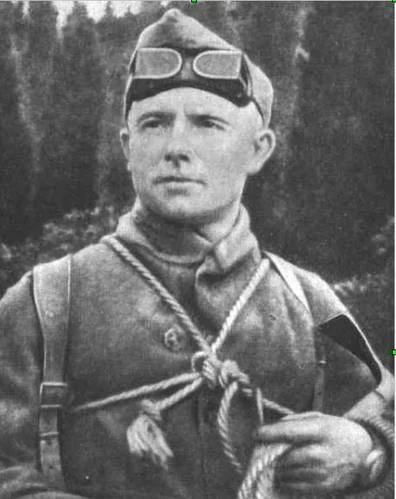
In the history of world mountaineering, few sibling partnerships match the legendary stature of Vitaly and Evgeny Abalakov. Born in the Siberian city of Krasnoyarsk, the brothers spent their childhood clambering over the sheer syenite pillars of the Krasnoyarsk Stolby nature reserve without ropes or safety gear. Vitaly was a brilliant mechanical engineer possessing a fiercely methodical mind; Evgeny was a gifted sculptor whose raw physical power and agility were matched by boundless personal courage.
By 1936, both brothers were already famous across the Soviet Union. In 1933, Evgeny had achieved the solitary maiden first ascent of Peak Communism (7,495 m) in the Pamirs, while Vitaly had led the first Soviet ascent of Peak Lenin (7,134 m) in 1934.
Together, the Abalakovs set their sights on the supreme prize of the Tien Shan: the formidable marble pyramid of Khan Tengri (7,010 m).
Assault in the Sky
In August 1936, the Abalakov brothers mounted an expedition alongside Russian climbers Leonid Gutman and Mikhail Dadiomov, accompanied by Swiss doctor and mountain photographer Lorenz Saladin.
Ascending via the Semenovskiy Glacier and the West Col, the five climbers pushed through deep, unstable snowfields. On August 24, 1936, under freezing skies, all five men stepped onto the summit of Khan Tengri. Evgeny photographed his companions holding aloft the red banner amidst the summit rocks. It was a glorious triumph, but disaster was already brewing in the clouds beneath them.
The Tempest of Death
As the team began their descent toward the West Col, a catastrophic hurricane-force blizzard slammed into Khan Tengri. In minutes, visibility collapsed to zero. The temperature plummeted to thirty-five degrees below zero, while howling jet-stream gales tore through their woolen clothing.
Trapped on the knife-edge marble ridge, disaster struck. Leonid Gutman slipped on an ice-glazed rock slab, plummeting two hundred feet down a vertical precipice before his rope caught on a rock spur. Gutman survived the fall, but suffered a severe skull fracture, internal injuries, and partial paralysis.
Dr. Saladin was rapidly deteriorating from acute frostbite and gangrene in both hands, while Vitaly’s fingers and toes were turning black and lifeless in his soaked leather boots. Only Evgeny Abalakov remained physically capable of moving.
The Heroism of Evgeny Abalakov
What followed over the next six days was one of the greatest epics of high-altitude brotherhood and endurance ever recorded.
Refusing to abandon his injured comrades, Evgeny shouldered the impossible burden. On the sheer rock faces, Evgeny lowered Gutman down on ropes, body-belaying his paralyzed teammate while standing on ice-glazed footholds above the abyss. When the ropes ran out, Evgeny carried Gutman on his back through waist-deep snow drifts.
At the West Col, the party collapsed into a tiny, battered tent. For three days, without food or fuel to melt snow for water, they endured the tempest. When the storm finally eased, Evgeny led the frostbitten party down the chaotic icefalls of the Semenovskiy Glacier. Vitaly could no longer walk; Evgeny dragged him across the ice on an improvised sledge made from climbing ropes and canvas.
The Price of Glory
Near the terminus of the South Inylchek Glacier, a rescue party dispatched by horse caravan finally reached the exhausted climbers.
Tragically, Dr. Lorenz Saladin succumbed to blood poisoning just miles from Base Camp, buried with deep honors beneath the stones of the Tien Shan. Vitaly Abalakov was rushed to a military hospital in Tashkent, where surgeons were forced to amputate thirteen of his fingers and toes.
Yet the spirit of the brothers was unconquerable. Rather than quitting the mountains, Vitaly invented specialized orthopedic prosthetics, designed the legendary Abalakov V-thread ice anchor, and returned to lead the maiden first ascent of Peak Pobeda twenty years later.
The 1936 ascent of Khan Tengri proved that the Abalakov brothers were indeed men of iron, whose brotherhood transcended the deadliest extremes of stone and cold.
Key Statistics & Topographic Figures
- Category
- Central Asian Pioneers
Archival Subject
- Reading Time
- 20 min read
Narrative Length
- Key Mountain
- khan-tengri
Objective
- Ascent Route
- khan-tengri-west-ridge
Topography
- Verification
- Editorially Verified
Archival Standard
Archival Primary Source Quotations
“In the mountains, truth is etched in ice and granite; every step requires unwavering respect for the heights.”
Defined Alpine Terminology & Concepts
- Summit Push
- The final continuous climbing effort from the highest established camp to the mountain apex and back.
- Death Zone Chronicle
- A verified, research-backed historical narrative documenting the human, technical, and environmental realities of an alpine expedition.
Frequently Asked Questions: Brothers of Iron: Vitaly & Evgeny Abalakov's 1936 Khan Tengri Ordeal
What is the core chronicle and subject of "Brothers of Iron: Vitaly & Evgeny Abalakov's 1936 Khan Tengri Ordeal"?
Siberian brothers Vitaly and Evgeny Abalakov conquer Khan Tengri in 1936 and endure a legendary high-altitude blizzard survival epic on the Inylchek Glacier.
Which mountain peaks and routes are featured in "Brothers of Iron: Vitaly & Evgeny Abalakov's 1936 Khan Tengri Ordeal"?
This narrative documents climbs on khan-tengri along the khan-tengri-west-ridge in Kyrgyzstan.
Which documented expedition is chronicled in this story?
This historical chronicle captures the events of the 1936-abalakov-brothers-khan-tengri-epic, verified through contemporary journals and archival records.
Who authored and researched this archival chronicle?
Authored and researched by Vitaly Abalakov, drawing on primary eyewitness testimonies, alpine club registries, and verified summit logs.
What makes this high-altitude chronicle historically significant?
Categorized under "Central Asian Pioneers", this chronicle preserves critical lessons in alpine leadership, survival, tactical speed, and human endurance in the death zone.
Related Mountains



Khan Tengri / Lord of the Spirits
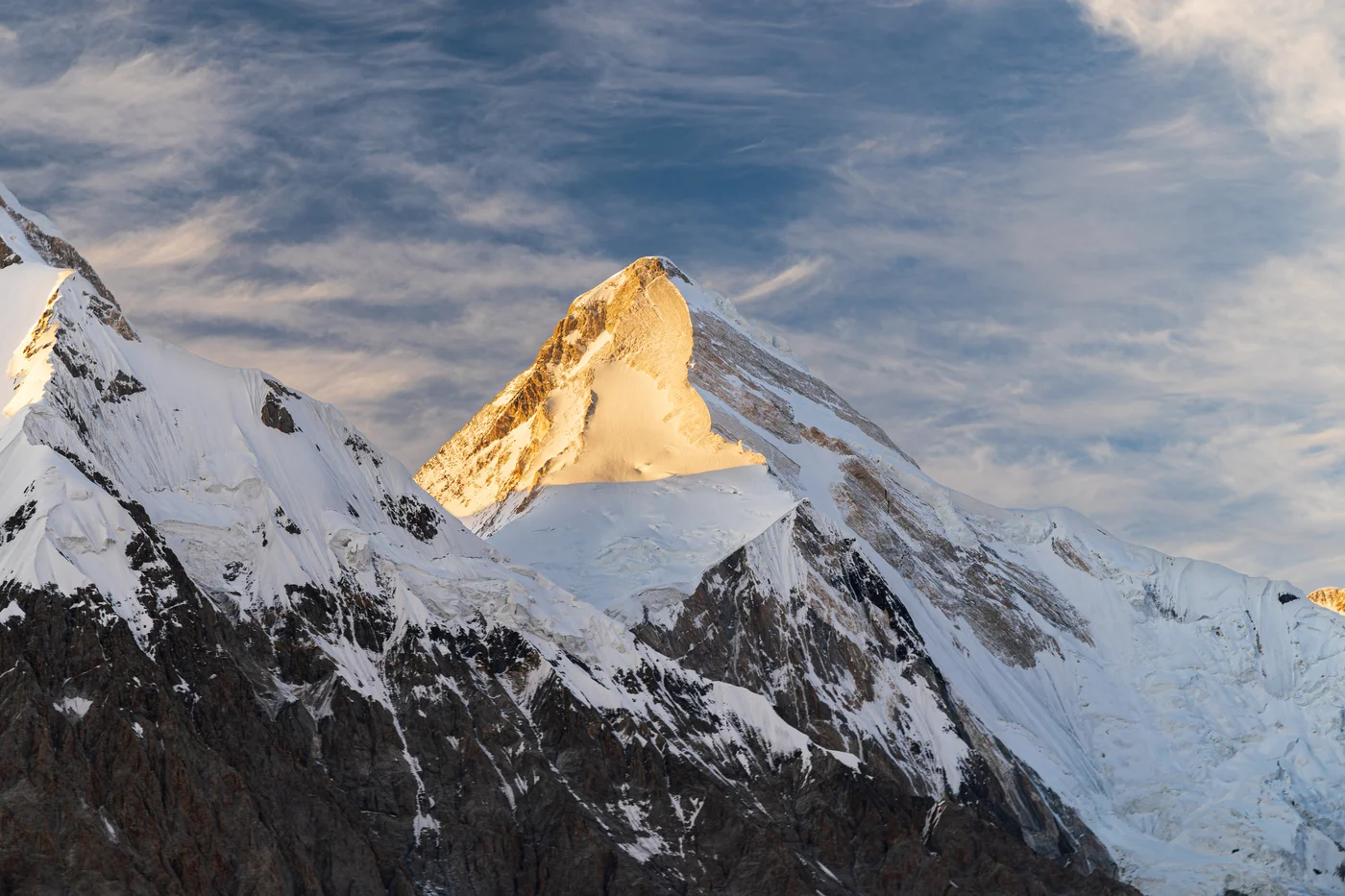
Khan Tengri is a breathtakingly symmetrical, marble-stratified pyramid rising to 7,010 metres (22,999 ft, including summit ice cap) in the Tengri-Tag range of the Central Tien Shan, straddling the borders of Kyrgyzstan, Kazakhstan, and China. Revered in ancient Tengrism as the sacred 'Lord of the Spirits' and famous for its fiery pink glow at sunset, the peak is one of the premier challenges of high-altitude mountaineering. First conquered on September 11, 1931, by a Ukrainian expedition led by Mikhail Pogrebetsky via the West Ridge, it was the scene of an epic survival climb in 1936 by the Abalakov brothers.
Documented Sources & Archival Citations
- On the Highest Summits of the Soviet Union(Geografgiz, Moscow / Evgeny Abalakov)
Supporting claim: Firsthand documentary narrative of the 1936 Khan Tengri ascent and blizzard survival
Accessed/Documented: 1948 - Stalin's Mountaineers: The Abalakov Brothers(Tyrolia-Verlag / Cédric Gras)
Supporting claim: Historical analysis of the 1936 Tien Shan expedition
Accessed/Documented: 2021