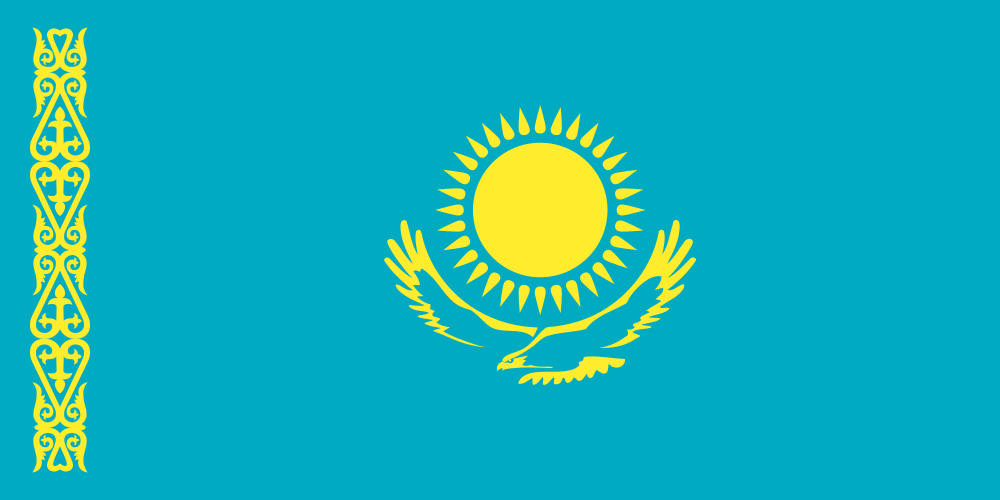
Kazakhstan
Kazakhstan is the world's largest landlocked nation, bounded in the east and southeast by the majestic alpine ramparts of the Altai and Tien Shan cordilleras. The country shares Khan Tengri (7,010 m)—the iconic marble pyramid of Central Asia—and Mount Belukha (4,506 m), boasting a storied history of high-altitude mountaineering expeditions.
Peer Review: Senior Editorial Board & Historical Reviewers • Editorial Standards
Key Statistics & Topographic Figures
- Archive Classification
- COUNTRIES
Mountanity Knowledge Corpus
- Verification Status
- Editorially Verified
Archival Standards
- Citation Standard
- Primary Source Verified
Alpine Research Desk
Mountain Peaks in Kazakhstan
Technical profiles, elevations, and ascent histories for summits located in or spanning Kazakhstan.
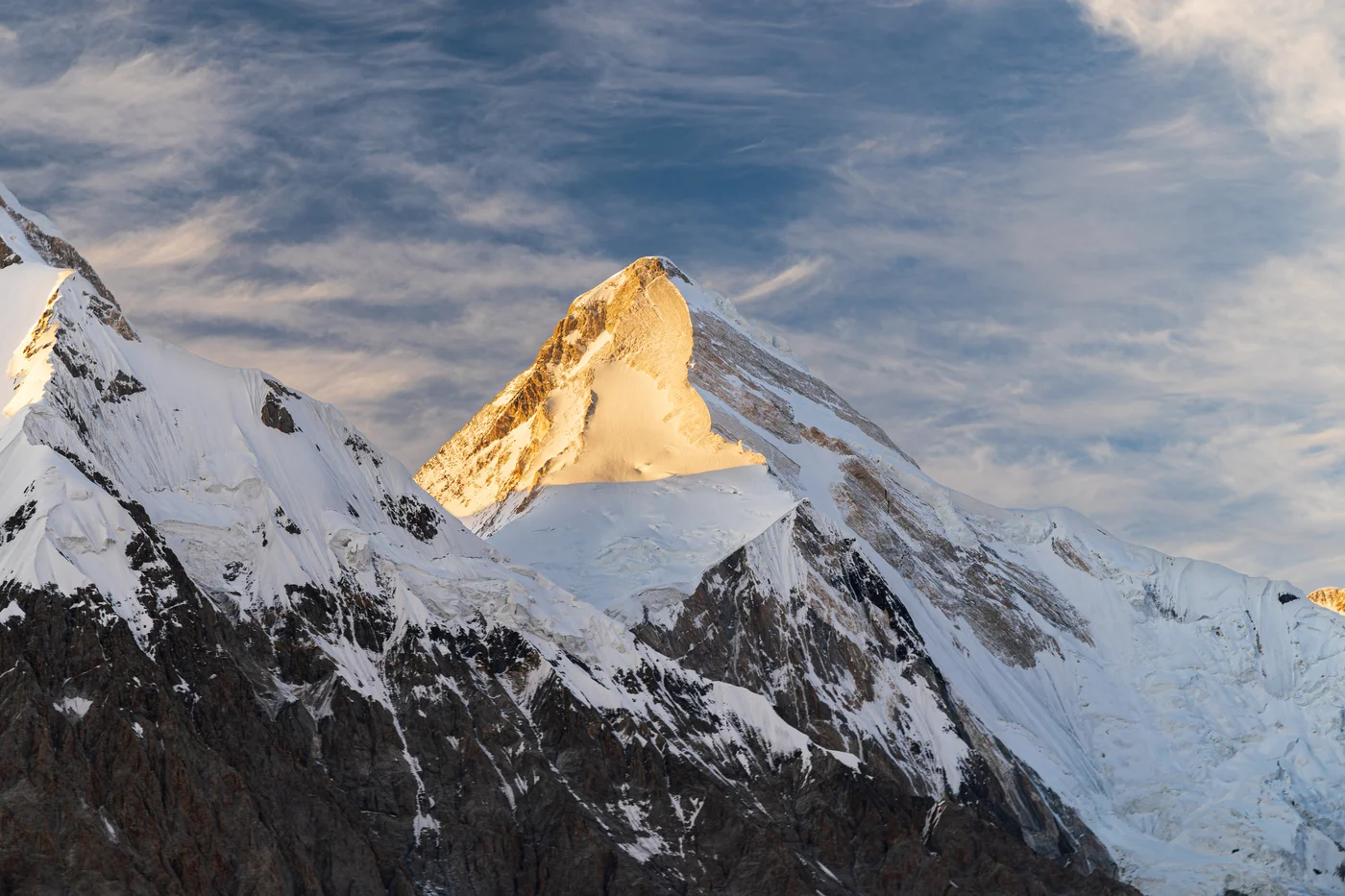


Khan Tengri / Lord of the Spirits
Khan Tengri is a breathtakingly symmetrical, marble-stratified pyramid rising to 7,010 metres (22,999 ft, including summit ice cap) in the Tengri-Tag range of the Central Tien Shan, straddling the borders of Kyrgyzstan, Kazakhstan, and China. Revered in ancient Tengrism as the sacred 'Lord of the Spirits' and famous for its fiery pink glow at sunset, the peak is one of the premier challenges of high-altitude mountaineering. First conquered on September 11, 1931, by a Ukrainian expedition led by Mikhail Pogrebetsky via the West Ridge, it was the scene of an epic survival climb in 1936 by the Abalakov brothers.
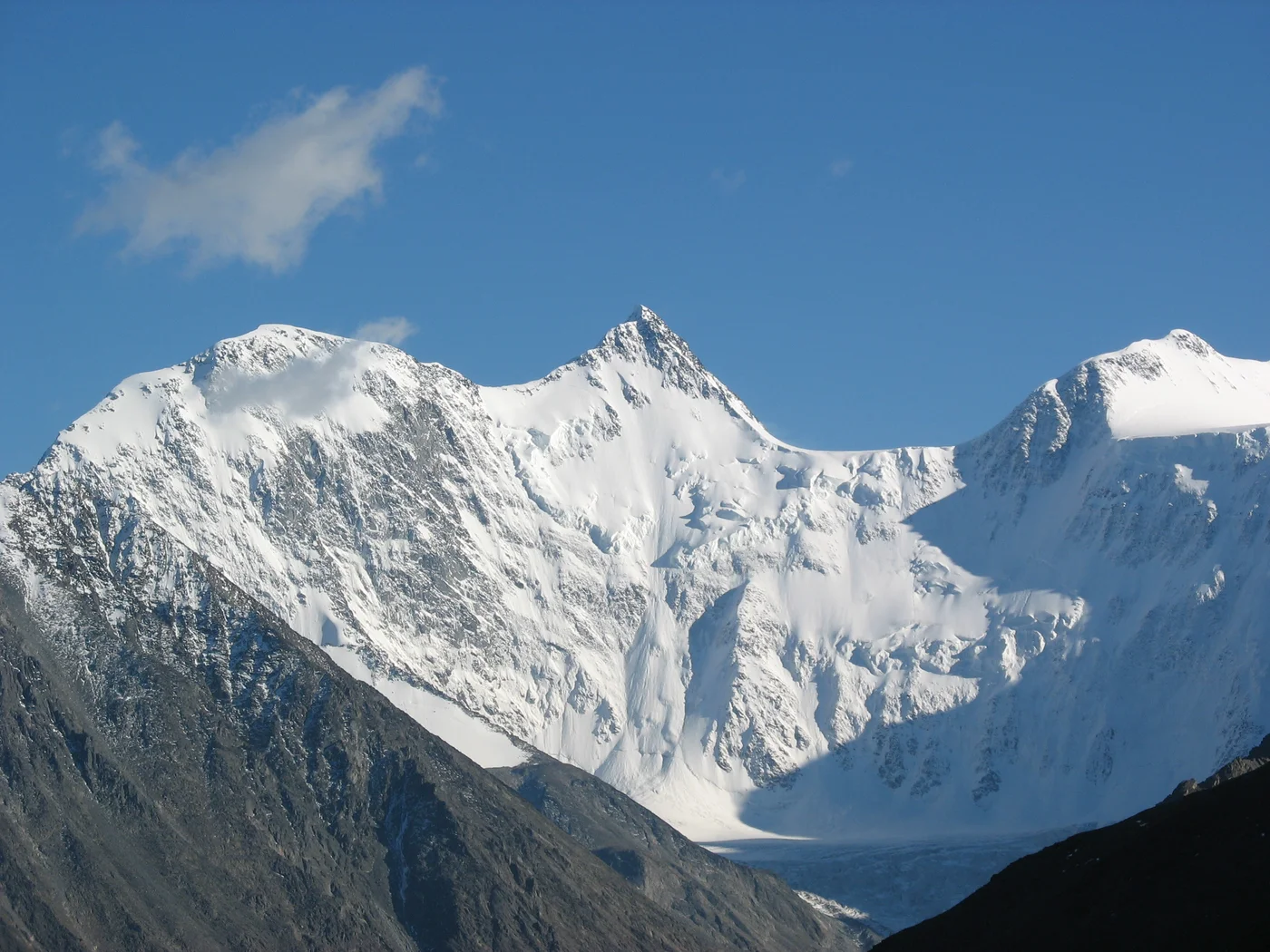
Mount Belukha / Belukha East Peak
Mount Belukha is a majestic double-headed glaciated massif rising to 4,506 metres (14,783 ft) on the border between Russia and Kazakhstan, reigning as the highest peak in the Altai Mountains and the crown of Siberia. Revered in indigenous Altai mythology as Uch-Sumer and linked by mystics to the legendary spiritual realm of Shambhala, Belukha feeds massive valley glaciers including the Mensu and Katun. First reached on July 26, 1914, by brothers Boris and Mikhail Tronov, the mountain was transformed into a proving ground for technical Soviet alpinism in 1926 when mathematician Boris Delone pioneered the classic route via the Delone Couloir and Saddle.
Mountain Ranges Spanning Kazakhstan
Geographic mountain massifs, regional topography, and glaciated chains within Kazakhstan.
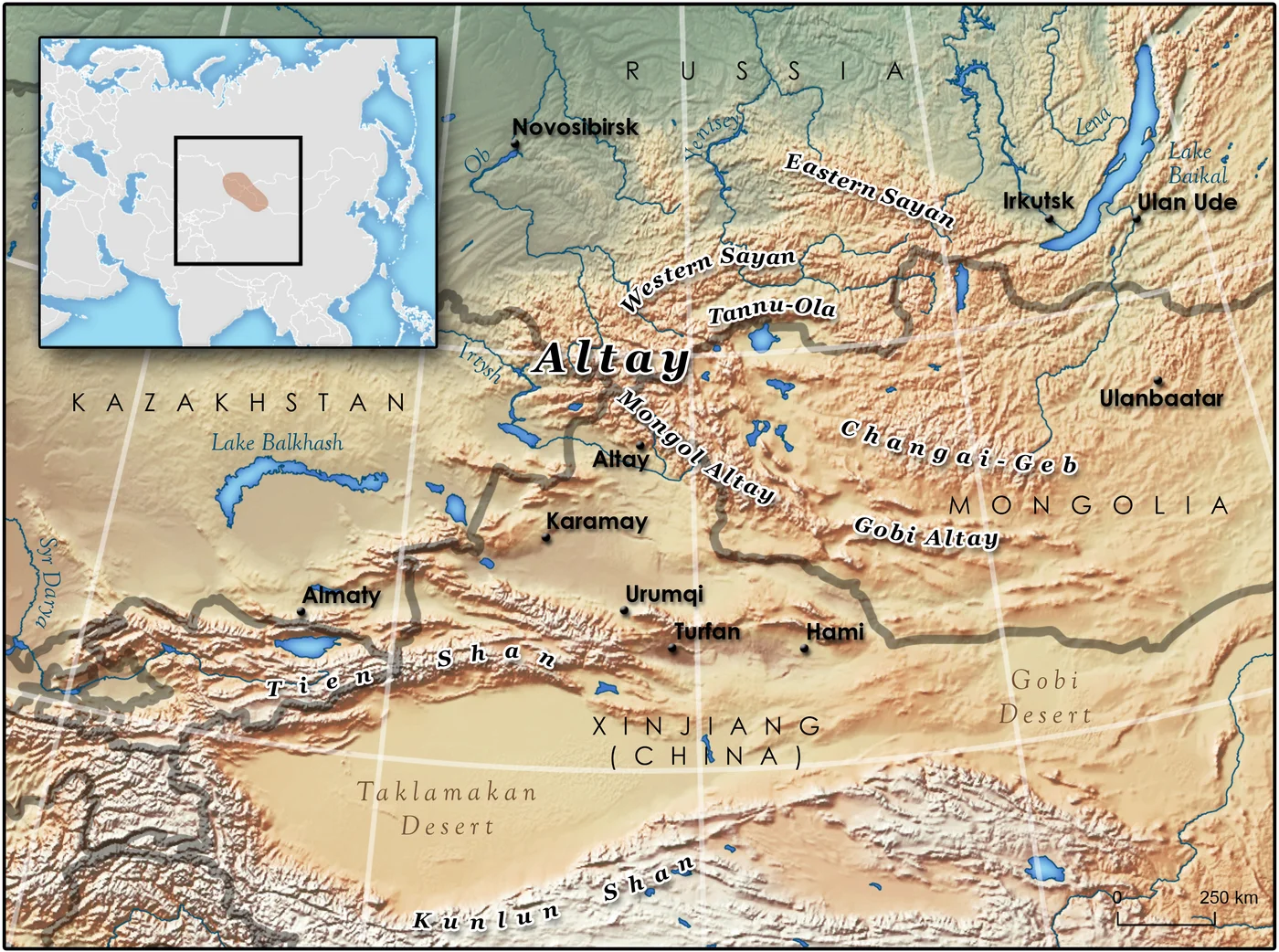
Altai Mountains
The Altai Mountains form a colossal, remote mountain system in Central and East Asia, where Russia, Kazakhstan, Mongolia, and China converge. Crowned by the double-headed glaciated pyramid of Mount Belukha (4,506 m), the range features pristine alpine tundra, vast taiga forests, and roaring glacial rivers that give birth to the Ob and Irtysh.
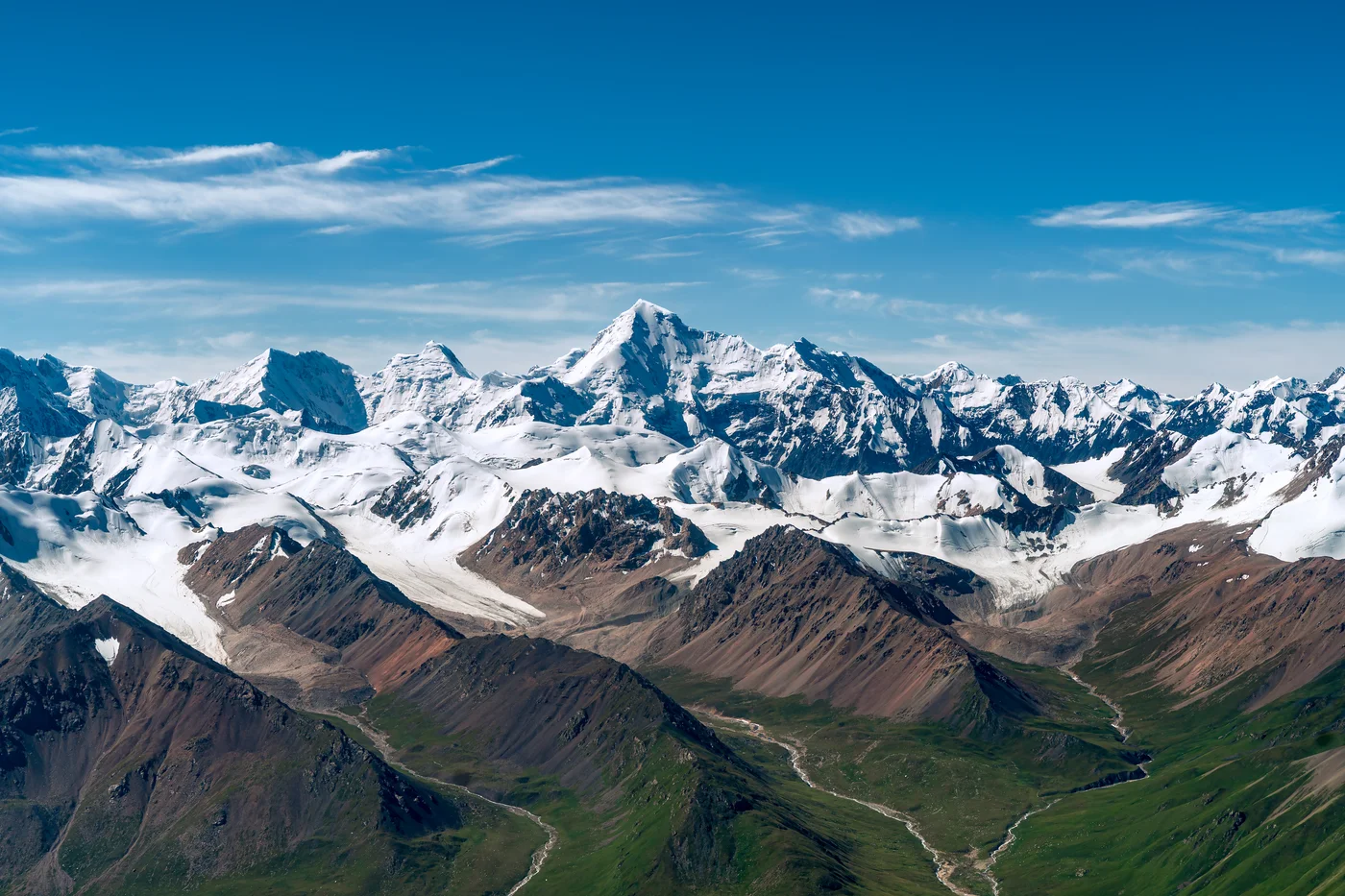
Tien Shan
The Tien Shan, meaning the 'Celestial Mountains', form one of the grandest alpine cordilleras on Earth, spanning over 2,500 kilometres across Central Asia. Anchored by the marble pyramid of Khan Tengri (7,010 m) and the massive summit bastion of Jengish Chokusu (Peak Pobeda, 7,439 m), the range is famed for colossal glaciers, catastrophic weather, and pioneer Soviet expeditions.
Documented Climbing Routes
Classic lines of ascent, technical difficulties, and objective hazards across Kazakhstan's summits.
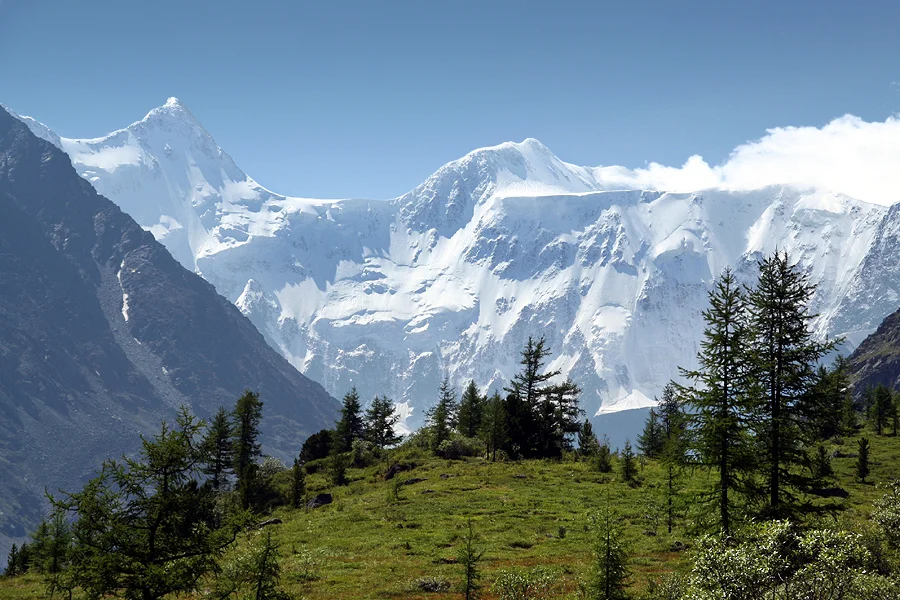
Mount Belukha Delone Couloir & Saddle Route
The Delone Couloir and Saddle Route is the classic technical line ascending Mount Belukha East Peak (4,506 m) from the Mensu Glacier basin. Pioneered in 1926 by eminent mathematician and alpinist Boris Delone, the route ascends a narrow, 300-metre ice chute angled at 40 to 45 degrees to gain the elevated Delone Pass at 3,400 metres. From the pass, climbers traverse the glaciated Berelskoye névé and negotiate heavily crevassed icefalls before ascending the steep summit snow plateau and the knife-edge crest to the highest point in Siberia.
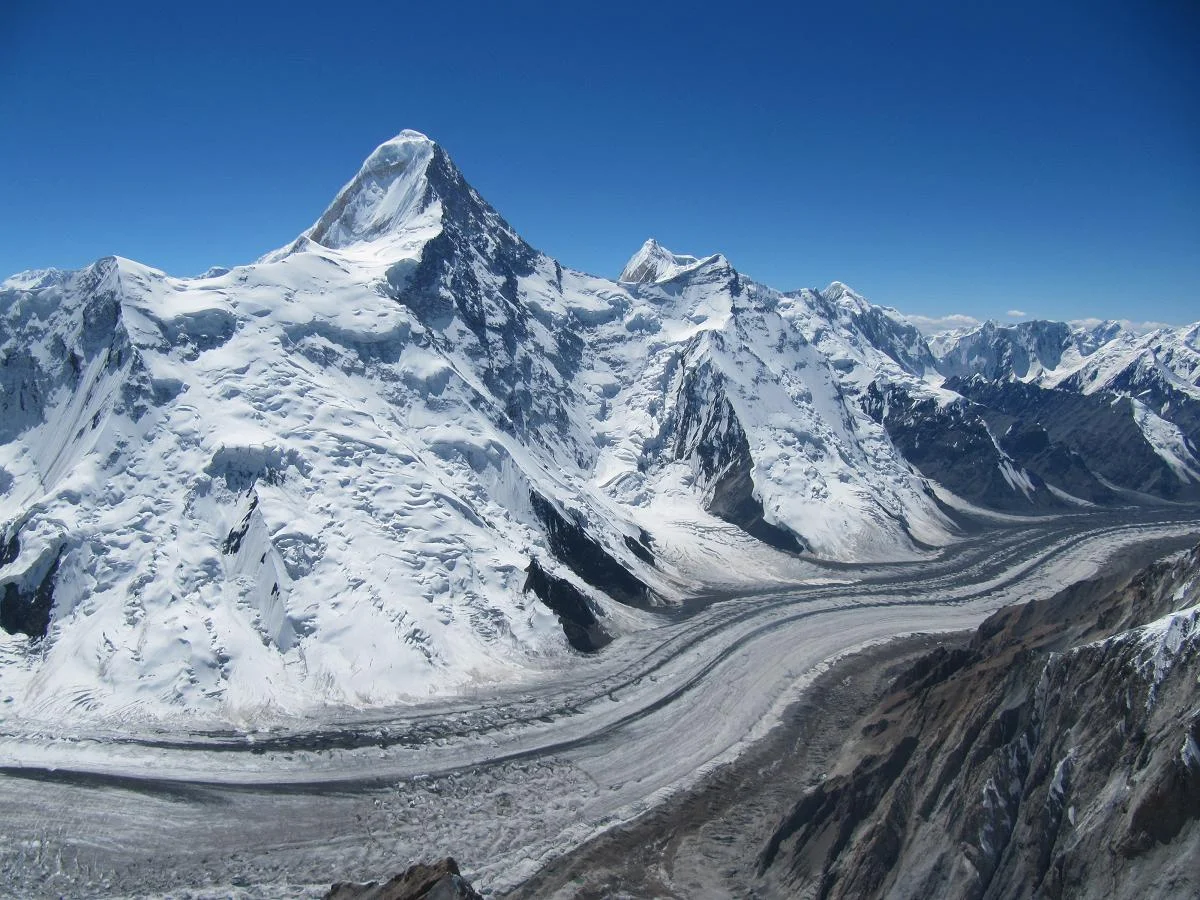
Khan Tengri West Ridge & Pogrebetsky Route
The West Ridge Pogrebetsky Route is the premier classic route on Khan Tengri (7,010 m), leading from the South Inylchek Glacier up the Semenovskiy Glacier to the West Col (Chakan-Tau, 5,900 m) and ascending the exposed western marble ridge. First climbed on September 11, 1931, by Mikhail Pogrebetsky, Boris Tyurin, and Franz-Josef Zauberer, the route involves sustained climbing on steep snow couloirs and technical marble rock bands above 6,700 metres. The route requires fixed-rope jumaring, rigorous acclimatization, and exceptional endurance against high-altitude hypothermia.
Pioneer Mountaineers of Kazakhstan
Biographical chronicles of legendary high-altitude alpinists hailing from Kazakhstan.
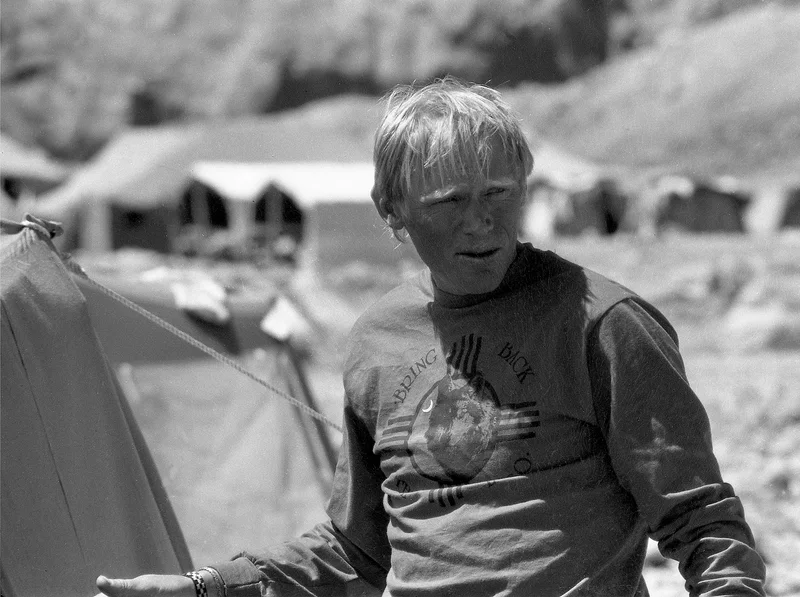
Anatoli Boukreev
Anatoli Nikolaevich Boukreev was born on January 16, 1958, in Korkino, Soviet Union, near the southern Ural Mountains. Moving to Alma-Ata in Kazakhstan to pursue physics and coaching, Boukreev integrated into the elite Soviet mountaineering program, developing superhuman aerobic stamina and extraordinary technical speed in the high Tian Shan and Pamir ranges. Between 1989 and 1997, Boukreev achieved eighteen summits of peaks over 8,000 metres—all of them climbed without supplemental bottled oxygen, cementing his reputation as one of the purest high-altitude athletes in human history. In 1989, as a member of the Soviet Second Himalayan Expedition, Boukreev made the first traverse of the four 8,000-metre summits of Kangchenjunga. In 1990, he established speed records on Denali (climbing the West Rib solo in ten and a half hours) and soon became in high demand as a lead high-altitude guide for international expeditions. In 1993, Boukreev made the first solo ascent of K2 without bottled oxygen via the Abruzzi Spur. Boukreev became a figure of global historical significance during the 1996 Mount Everest disaster while serving as lead climbing guide for Scott Fischer's Mountain Madness expedition. On May 10, Boukreev summitted Everest without bottled oxygen and descended to Camp IV on the South Col ahead of his clients to prepare hot drinks and emergency oxygen. When an apocalyptic blizzard engulfed the upper mountain, stranding dozens of climbers in zero visibility at 8,000 metres, Boukreev mounted a solitary rescue mission into the tempest. Operating at the limits of human survival in darkness and howling hurricane winds, he made multiple trips onto the South Col plateau, single-handedly locating and dragging Sandy Hill Pittman, Charlotte Fox, and Tim Madsen back to the safety of the tents. For his extraordinary valor, the American Alpine Club awarded him the David A. Sowles Memorial Award. In 1997, Boukreev co-authored 'The Climb', offering a meticulous, honest counter-narrative to Jon Krakauer's 'Into Thin Air'. Later that year, on December 25, 1997, while attempting a winter ascent of the South Face of Annapurna I (8,091m) with Simone Moro and cinematographer Dimitri Sobolev, a massive cornice collapsed high on the face. Boukreev and Sobolev were swept to their deaths in an avalanche, while Moro miraculously survived. Boukreev's memorial bell stands today at Annapurna Base Camp, honoring a man whose high-altitude power and selfless courage remain unmatched.

Denis Urubko
Born on July 29, 1973, in Nevinnomyssk, Soviet Union, Denis Urubko relocated to Almaty, Kazakhstan, where he joined the Central Sports Club of the Kazakh Army under legendary coach Ervand Ilyinsky. Urubko rapidly established himself as an elite high-altitude powerhouse, completing the Snow Leopard award by scaling all five 7,000-metre peaks of the former Soviet Union in an astonishing 42 days during the summer of 1999. In May 2009, he became the fifteenth person in history, and the eighth without supplemental oxygen, to summit all fourteen 8,000-metre peaks. Urubko is revered worldwide for his commitment to alpine style and new routes. In 2005, he established a new route on the Southwest Face of Broad Peak with Serguey Samoilov, followed by a new direct route on the Southeast Face of Cho Oyu in 2009, earning two Piolets d'Or. His partnership with Simone Moro yielded the historic first winter ascents of Makalu (2009) and Gasherbrum II (2011). In January 2018, while participating in the Polish winter K2 expedition, Urubko volunteered alongside Adam Bielecki to execute a desperate night rescue on Nanga Parbat, sprinting 1,200 vertical metres up the Kinshofer Route in pitch darkness to save French climber Élisabeth Revol.
Archival Primary Source Quotations
“Great things are done when men and mountains meet; this is not done by jostling in the street.”
Defined Alpine Terminology & Concepts
- Archival Integrity
- The standard of verifying historical mountain facts, summit claims, and altitudes using primary expeditions journals and geodetic measurements.
Frequently Asked Questions: Kazakhstan Mountaineering
What historical significance does this countrie hold?
Kazakhstan represents an essential chapter in global mountaineering heritage, verified through contemporary expedition journals and archival sources.
How are the facts and records for Kazakhstan verified?
All records are checked against peer-reviewed journals, national alpine clubs, geodetic surveys, and the Mountanity Archival Integrity Policy.