Mount Belukha / Belukha East Peak
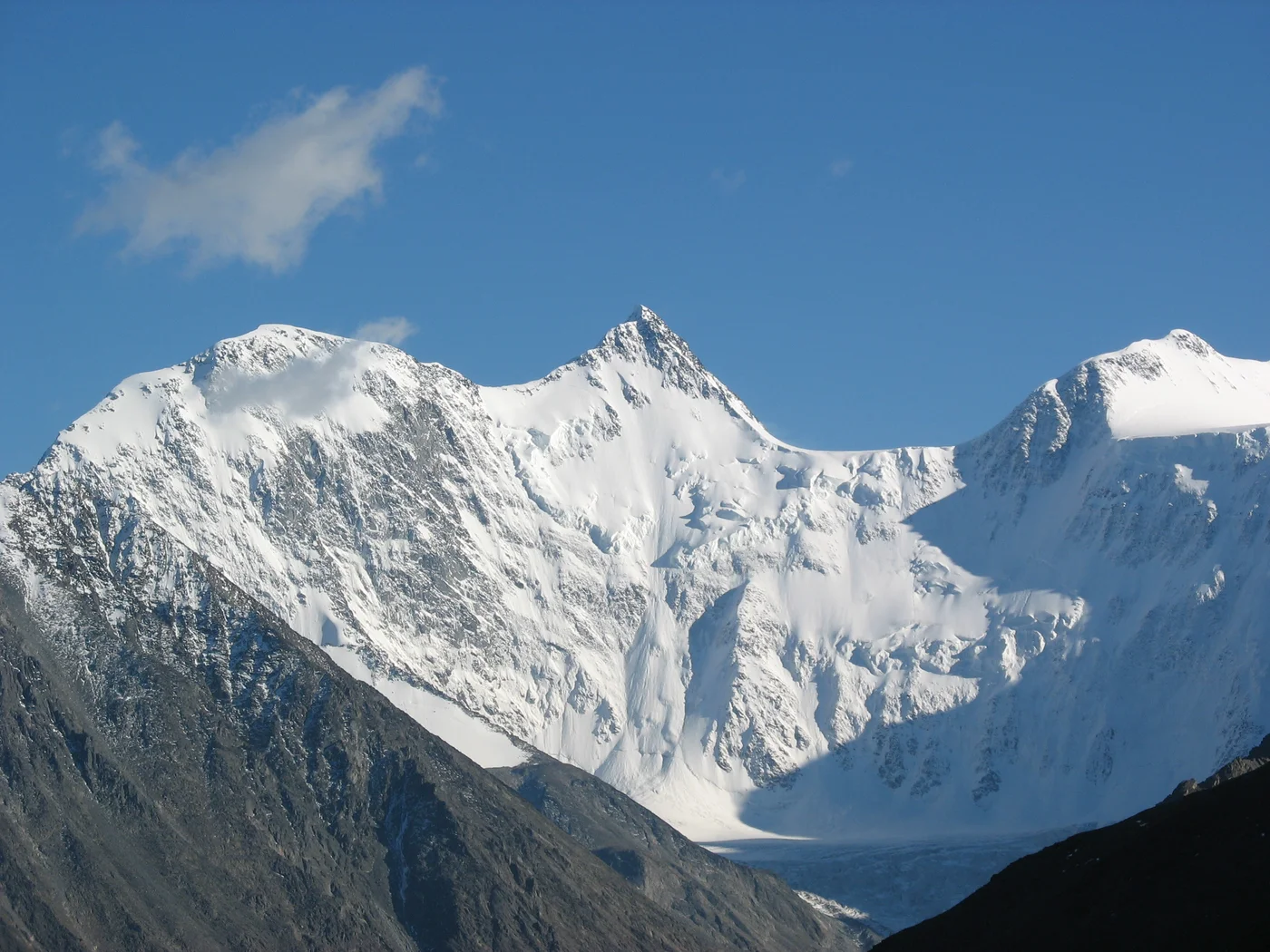
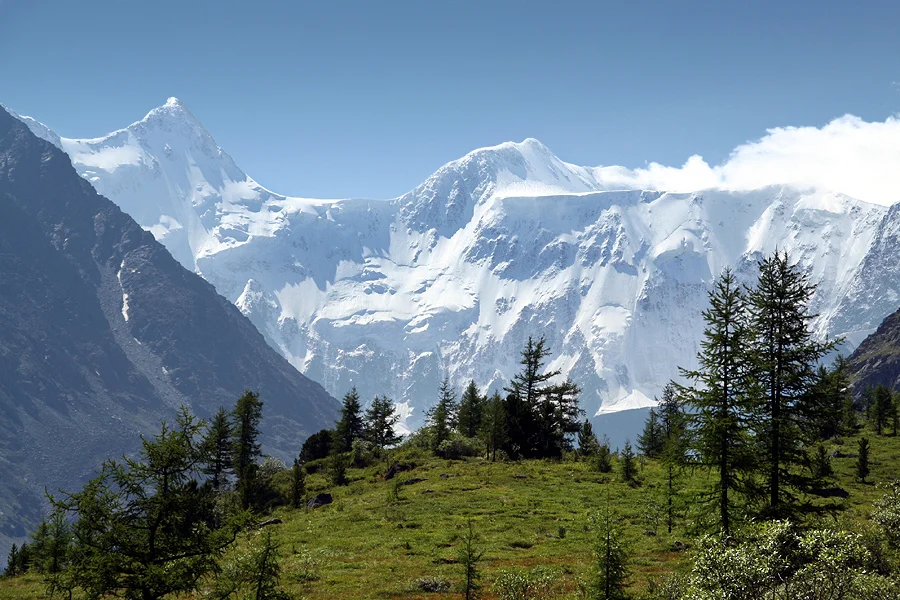
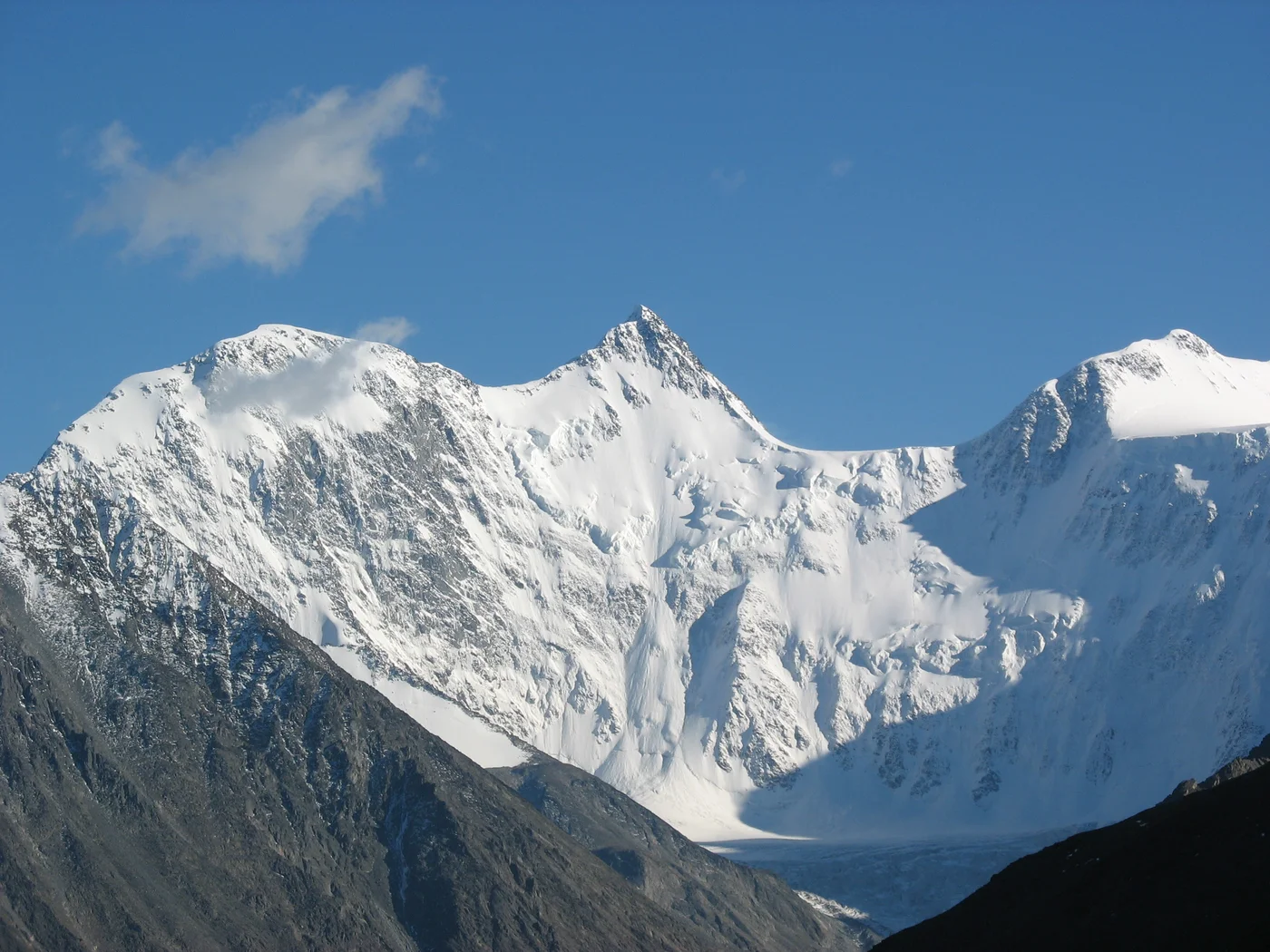
Mount Belukha is a majestic double-headed glaciated massif rising to 4,506 metres (14,783 ft) on the border between Russia and Kazakhstan, reigning as the highest peak in the Altai Mountains and the crown of Siberia. Revered in indigenous Altai mythology as Uch-Sumer and linked by mystics to the legendary spiritual realm of Shambhala, Belukha feeds massive valley glaciers including the Mensu and Katun.
 Russia,
 Kazakhstan
Mountain Safety & Conditions Disclaimer: High-altitude climbing, glacial travel, and technical ascents entail severe objective risks including avalanches, serac collapses, rapid weather collapse, and altitude illness. Historical route descriptions and summit claims on Mountanity reflect documented archival sources and must not be used as live operational safety assessments. Local regulations, permits, and physical glacial topography change continuously.
Peer Review: Senior Editorial Board & Historical Reviewers • Editorial Standards
Geographical Setting & Topography
Katun Range, border of Altai Republic (Russia) and East Kazakhstan Region (Kazakhstan).
Historic First Ascent
Date: July 26, 1914
Ascent Team: Boris Tronov and Mikhail Tronov (Delone Couloir first ascent: Boris Delone, 1926)
Key Statistics & Topographic Figures
- Elevation
- 4,506 m (14,783 ft)
- Prominence
- 3,343 m (Ultra-prominent)
- First Ascent
- July 26, 1914 by Boris & Mikhail Tronov
- Classic Technical Route
- Delone Couloir & Saddle (Grade 3B / III)
- UNESCO Site
- Golden Mountains of Altai (World Heritage)
Archival Primary Source Quotations
“The snowy twin crowns of Belukha rise like silver palaces above the cedar forests of the Altai.”
Defined Alpine Terminology & Concepts
- Katun Ridge
- The central glaciated crest of the Russian Altai, home to the headwaters of the Katun River and Belukha's twin summits.
- Belovodye
- The mythical utopian land of freedom and spiritual enlightenment in Russian folklore, often associated with the Altai Mountains.
Mount Belukha / Belukha East Peak Mountain Weather Forecast
Detailed 14-Day Summit Window & Weather Timeline
Explore day-by-day summit push safety windows, wind shear analysis, and extended multi-day forecasts for Mount Belukha / Belukha East Peak.
Explore Mount Belukha / Belukha East Peak (4,506 m) in Interactive 3D
Inspect steep glacial walls, hanging seracs, ridge approaches, and elevation relief with 360° rotation and terrain tilt in WebGL.
Documented Climbing Routes (1)
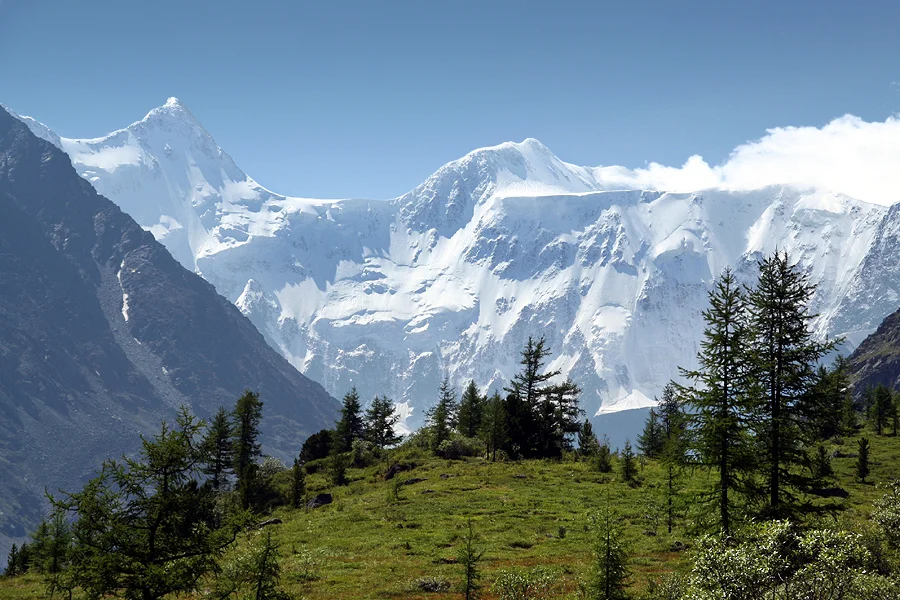
Mount Belukha Delone Couloir & Saddle Route
The Delone Couloir and Saddle Route is the classic technical line ascending Mount Belukha East Peak (4,506 m) from the Mensu Glacier basin. Pioneered in 1926 by eminent mathematician and alpinist Boris Delone, the route ascends a narrow, 300-metre ice chute angled at 40 to 45 degrees to gain the elevated Delone Pass at 3,400 metres. From the pass, climbers traverse the glaciated Berelskoye névé and negotiate heavily crevassed icefalls before ascending the steep summit snow plateau and the knife-edge crest to the highest point in Siberia.
Historical Expeditions (1)
1926 Boris Delone Historic First Ascent of Belukha via Delone Couloir
In August 1926, eminent Soviet mathematician and alpinist Boris Delone pioneered the historic technical route up Mount Belukha East Peak (4,506 m) in the Altai Mountains, scaling the steep 300-metre ice couloir to Delone Pass and proving that modern alpine techniques could conquer Siberian peaks.
Summit Chronicles & Stories (1)
The Mathematician and the Mountain: Boris Delone's 1926 Belukha Triumph
Eminent mathematician Boris Delone leads a daring 1926 expedition into the Altai Mountains, scaling the sheer ice couloir to conquer Mount Belukha East Peak.
Frequently Asked Questions: Mount Belukha / Belukha East Peak
What is the highest mountain in Siberia and the Altai range?
Mount Belukha is the highest peak in both the Altai Mountains and Siberia, reaching an elevation of 4,506 metres (14,783 ft).
Where is Mount Belukha located?
Mount Belukha is situated on the Katun Ridge in the Altai Mountains, right along the international border between Russia (Altai Republic) and Kazakhstan.
What cultural significance does Mount Belukha hold?
Belukha is revered as sacred by indigenous Altai peoples and is celebrated in Eurasian folklore as the gateway to the mystical realm of Shambhala or Belovodye.
Documented Sources & Archival Citations
- First Ascents in the Altai: Mount Belukha(Imperial Russian Geographical Society)
Supporting claim: Documentation of the 1914 Tronov brothers first ascent and subsequent 1926 Delone climbs
Accessed/Documented: 1915