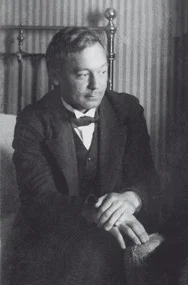
Boris Delone
Boris Nikolayevich Delone was a world-renowned Soviet mathematician and pioneer mountaineer who pioneered technical alpinism in the Altai and Caucasus mountains. In 1926, he achieved the historic first ascent of Mount Belukha East Peak via the Delone Couloir and Delone Pass, establishing classic routes that shaped Soviet climbing standards.
Mountain Safety & Conditions Disclaimer: High-altitude climbing, glacial travel, and technical ascents entail severe objective risks including avalanches, serac collapses, rapid weather collapse, and altitude illness. Historical route descriptions and summit claims on Mountanity reflect documented archival sources and must not be used as live operational safety assessments. Local regulations, permits, and physical glacial topography change continuously.
Peer Review: Senior Editorial Board & Historical Reviewers • Editorial Standards
Biographical Record & Archival Chronicle
Boris Nikolayevich Delone (Delaunay) was born on March 15, 1890, in Saint Petersburg, Russia. A brilliant scholar of algebra, geometry, and number theory—most famous in mathematics and computational geometry for inventing Delaunay triangulation—Delone was equally devoted to the mountains. Introduced to climbing in the Swiss Alps and the Western Caucasus, Delone became one of the foundational figures of early Soviet mountaineering in the 1920s.
In the summer of 1926, Delone organized a pioneering expedition to the Katun Range in the remote Altai Mountains. Mount Belukha (4,506 m)—the highest mountain in Siberia—had been summited only once before in 1914 via an arduous snow route. Delone sought to demonstrate that technical alpine climbing was possible on Siberian peaks. Reconnoitering from the Mensu Glacier, Delone identified a direct line up a steep, 300-metre snow and ice gully leading to the high col between Belukha and Peak Delone.
In August 1926, cutting ice steps and driving steel pitons, Delone and his team climbed the sheer couloir to gain the 3,400-metre pass (now officially named Delone Pass / Pereval Delone) and traversed the glaciated plateau to summit Mount Belukha East Peak. In 1930, Delone wrote The Peaks of the Western Caucasus, one of the earliest Soviet mountaineering guides, and was awarded the title of Master of Mountaineering in 1934. He remained active in mathematics and mountain leadership until his death on July 17, 1980, honored in both science and mountaineering.
Notable Milestones & Ascents
- Pioneered the classic Delone Couloir and Delone Pass route on Mount Belukha (4,506 m) in 1926
- Eponymous namesake of Delone Pass and Peak Delone (4,300 m) in the Katun Range of the Altai
- Authored The Peaks of the Western Caucasus (1930), a foundational Soviet climbing guide
- Awarded the title of Master of Soviet Alpinism in 1934
- World-renowned mathematician who developed Delaunay triangulation in computational geometry
Key Statistics & Topographic Figures
- Lifespan
- 1890 – 1980
- Nationality
- Russian / Soviet
- Key Ascent
- Mount Belukha East Peak via Delone Couloir (1926)
- Mathematical Legacy
- Delaunay Triangulation (Computational Geometry)
Archival Primary Source Quotations
“Mathematics teaches precision of thought, and high mountains demand precision of action.”
Defined Alpine Terminology & Concepts
- Delaunay Triangulation
- A geometric triangulation of points such that no point is inside the circumcircle of any triangle, fundamental to modern 3D graphics and GIS.
Frequently Asked Questions: Boris Delone
Who was Boris Delone in mathematics and mountaineering?
Boris Delone was a world-renowned Soviet mathematician who invented Delaunay Triangulation and a pioneer alpinist who climbed Mount Belukha in 1926.
What mountaineering feature is named after Boris Delone?
The Delone Couloir and Delone Saddle on Mount Belukha are named in honor of Boris Delone's 1926 ascent.
Associated Summits (1)

Mount Belukha / Belukha East Peak
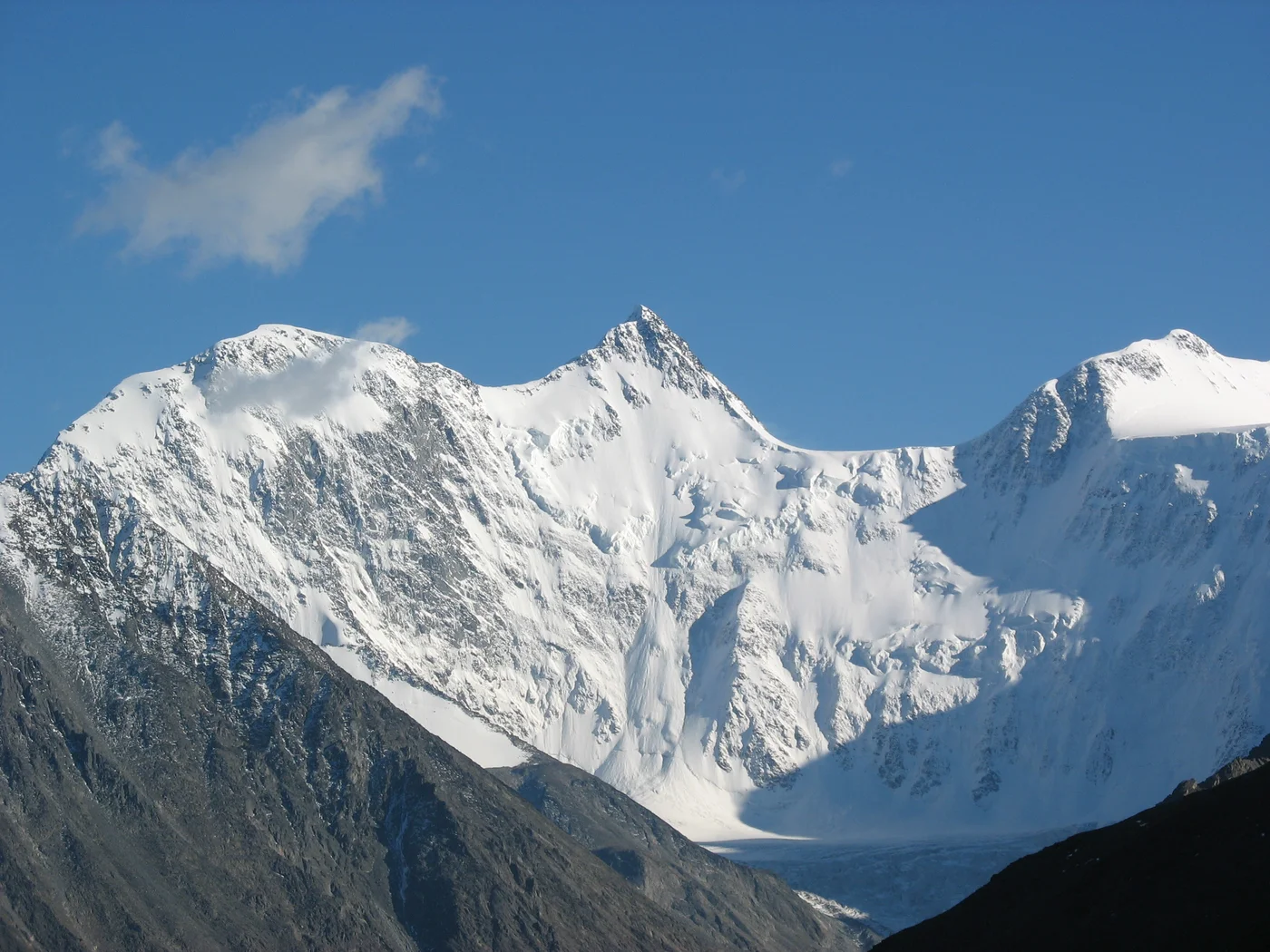
Mount Belukha is a majestic double-headed glaciated massif rising to 4,506 metres (14,783 ft) on the border between Russia and Kazakhstan, reigning as the highest peak in the Altai Mountains and the crown of Siberia. Revered in indigenous Altai mythology as Uch-Sumer and linked by mystics to the legendary spiritual realm of Shambhala, Belukha feeds massive valley glaciers including the Mensu and Katun. First reached on July 26, 1914, by brothers Boris and Mikhail Tronov, the mountain was transformed into a proving ground for technical Soviet alpinism in 1926 when mathematician Boris Delone pioneered the classic route via the Delone Couloir and Saddle.
Pioneered & Associated Routes (1)
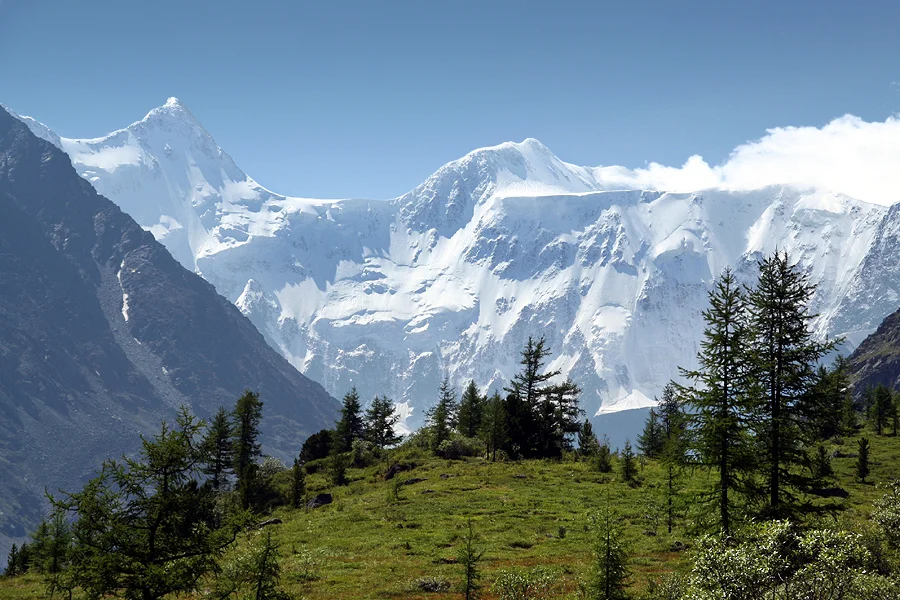
Mount Belukha Delone Couloir & Saddle Route
The Delone Couloir and Saddle Route is the classic technical line ascending Mount Belukha East Peak (4,506 m) from the Mensu Glacier basin. Pioneered in 1926 by eminent mathematician and alpinist Boris Delone, the route ascends a narrow, 300-metre ice chute angled at 40 to 45 degrees to gain the elevated Delone Pass at 3,400 metres. From the pass, climbers traverse the glaciated Berelskoye névé and negotiate heavily crevassed icefalls before ascending the steep summit snow plateau and the knife-edge crest to the highest point in Siberia.
Documented Expeditions (1)
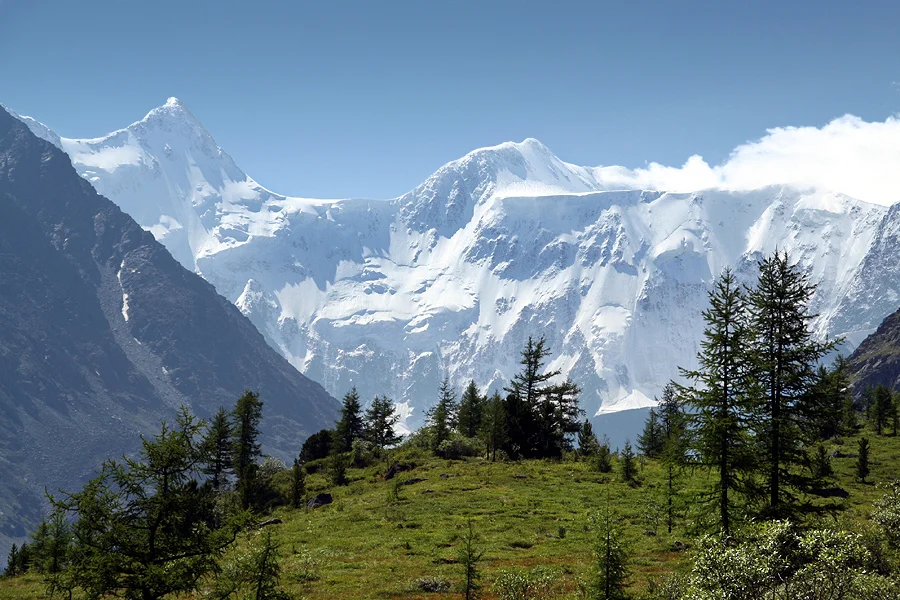
1926 Boris Delone Historic First Ascent of Belukha via Delone Couloir
In August 1926, eminent Soviet mathematician and alpinist Boris Delone pioneered the historic technical route up Mount Belukha East Peak (4,506 m) in the Altai Mountains, scaling the steep 300-metre ice couloir to Delone Pass and proving that modern alpine techniques could conquer Siberian peaks.
Associated Chronicles & Stories (1)
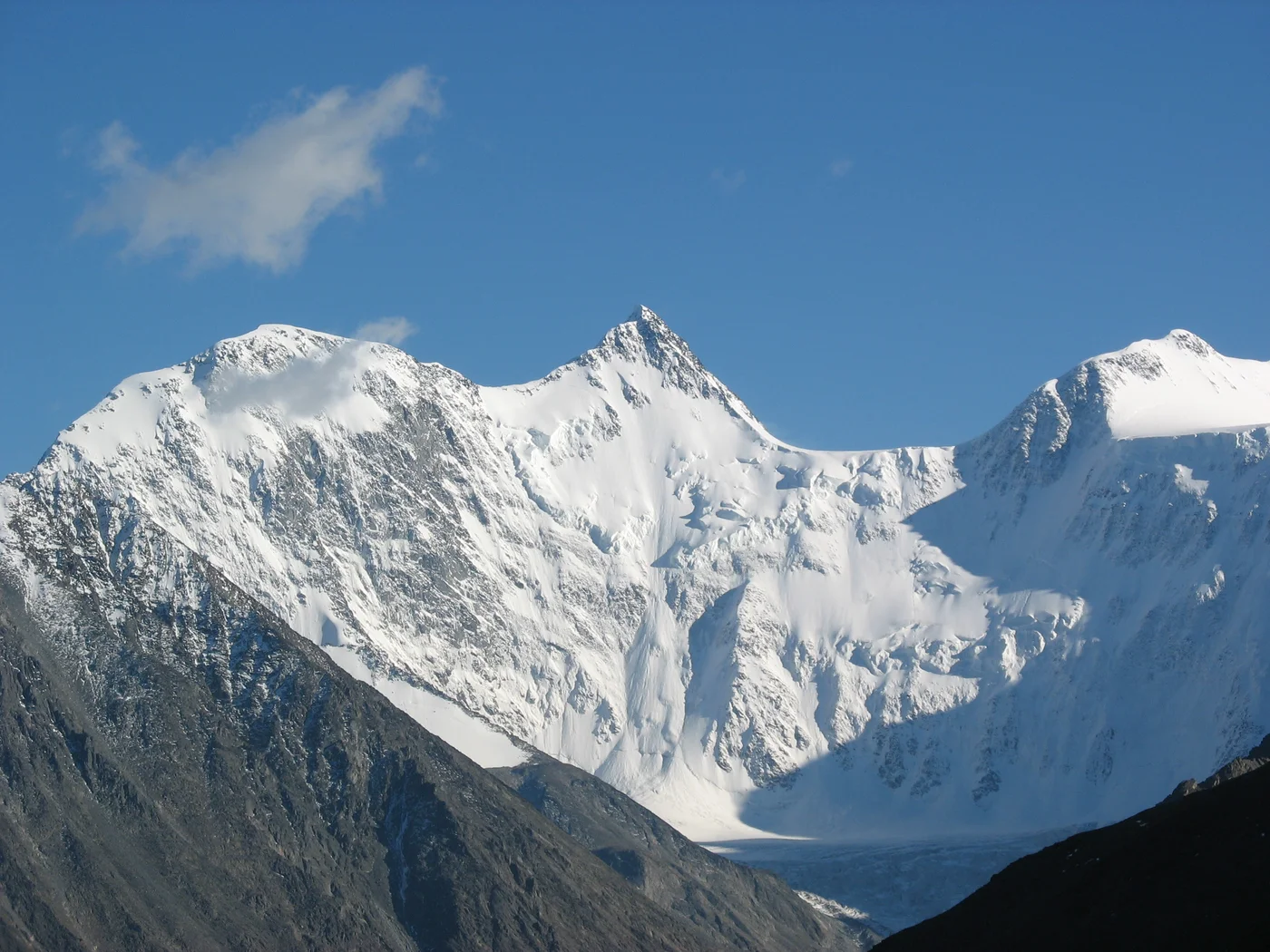
The Mathematician and the Mountain: Boris Delone's 1926 Belukha Triumph
Eminent mathematician Boris Delone leads a daring 1926 expedition into the Altai Mountains, scaling the sheer ice couloir to conquer Mount Belukha East Peak.
Documented Sources & Archival Citations
- The Peaks of the Western Caucasus(Soviet State Publishing House / Boris Delone)
Supporting claim: Primary climbing records and regional alpine guidelines
Accessed/Documented: 1930 - History of Mountaineering in the Altai(Altai State University Press)
Supporting claim: Documentary verification of the 1926 Belukha first ascent via Delone Couloir
Accessed/Documented: 2026