The Mathematician and the Mountain: Boris Delone's 1926 Belukha Triumph
Eminent mathematician Boris Delone leads a daring 1926 expedition into the Altai Mountains, scaling the sheer ice couloir to conquer Mount Belukha East Peak.
Mountain Safety & Conditions Disclaimer: High-altitude climbing, glacial travel, and technical ascents entail severe objective risks including avalanches, serac collapses, rapid weather collapse, and altitude illness. Historical route descriptions and summit claims on Mountanity reflect documented archival sources and must not be used as live operational safety assessments. Local regulations, permits, and physical glacial topography change continuously.
Peer Review: Senior Editorial Board & Historical Reviewers • Editorial Standards
The Shambhala of the Siberian Taiga
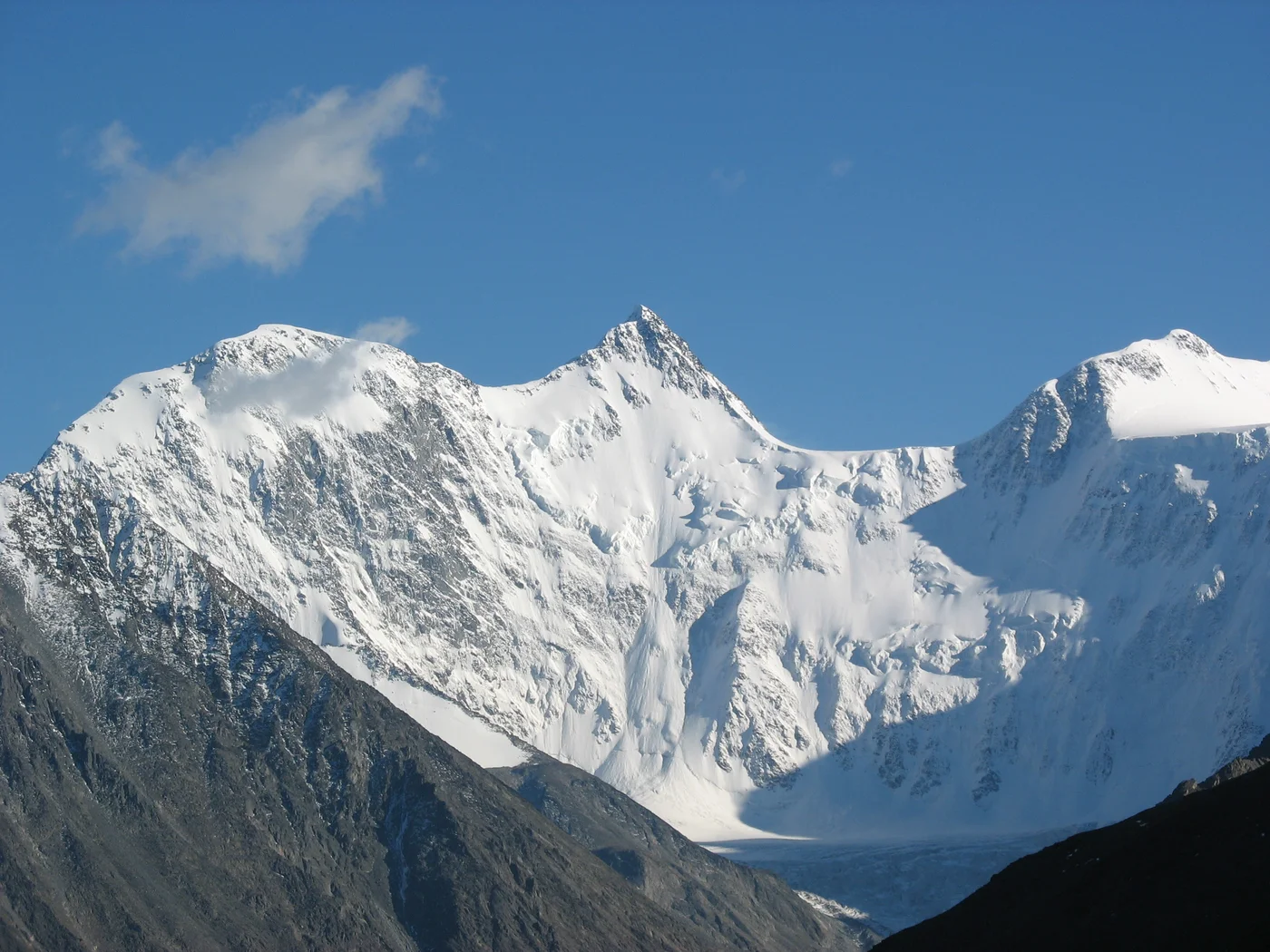
Deep in the heart of the Katun Range, where the Russian Federation borders Kazakhstan and Mongolia, stands Mount Belukha (4,506 m)—the white queen of the Altai Mountains and the highest geographical apex in Siberia. For centuries, indigenous Altai shamans revered the double-headed mountain as Uch-Sumer, the sacred dwelling of the earth gods where no mortal foot should ever tread. In Russian Old Believer folklore, Belukha was the gateway to Belovodye—the legendary land of white waters, identical to the Tibetan Buddhist myth of Shambhala.
In the early decades of the twentieth century, technical mountaineering in Russia was almost entirely confined to the Caucasus and the Crimean cliffs. The remote Siberian cordilleras were regarded as wild, inaccessible wildernesses suitable only for fur trappers and gold prospectors.
Enter Boris Nikolayevich Delone. A brilliant young professor of mathematics at Petrograd University who would achieve worldwide scientific renown for inventing Delaunay triangulation in computational geometry, Delone was also a passionate technical alpinist. Having honed his ice craft on Mont Blanc and Mount Kazbek, Delone looked at the maps of Southern Siberia and decided that Mount Belukha deserved a modern, technical alpine ascent.
The Approach Through the Katun Wilds
In July 1926, Delone assembled a small cadre of university scholars and Siberian mountain scouts in Novosibirsk. Traveling by wooden river steamer along the roaring Ob and Katun rivers, they transferred to horseback at the frontier settlement of Tyungur.
For a week, the party hacked their way through dense Siberian taiga, fording swollen glacial torrents and crossing marshy muskeg until they emerged into the high alpine valley of Lake Akkem at 2,050 metres. Looking up across the turquoise waters of the lake, Delone was confronted by the colossal Akkem Face of Belukha—a terrifying, vertical 1,000-metre wall of blue ice and shattered diorite.
While the pioneer botanist brothers Boris and Mikhail Tronov had made the first known ascent of Belukha in 1914 via an exhausting multi-day detour across the southern glaciers, Delone was determined to find a direct technical line through the northern cirques.
Conquering the Delone Couloir
Reconnoitering the Mensu Glacier névé, Delone identified a striking line of weakness: a steep, narrow snow and ice gully angled at 40 to 45 degrees, slashing 300 vertical metres straight through the rocky headwall to gain the high saddle between Belukha and an unnamed 4,300-metre peak.
On the freezing dawn of August 12, 1926, Delone and his companions tied into hemp ropes and stepped onto the ice. In 1926, modern front-point crampons and tubular ice screws did not exist; every vertical foot had to be won with sheer physical labor. Step by step, Delone swung his heavy forge-hammered ice axe, cutting handholds and footholds into the rock-hard glacial ice while belaying teammates on timber stakes driven into the snowpack.
Bypassing stonefall whistling down the gully, the party pulled themselves onto the razor-sharp saddle at 3,400 metres at midday. In recognition of this daring alpine triumph, the geographical commission would permanently christen this pass Delone Pass (Pereval Delone).
The Summit Ridge
From Delone Pass, the climb was far from over. The party had to navigate the vast, heavily crevassed Berelskoye icefield, traversing above yawning chasms masked by fragile summer snow bridges.
Buffeted by sub-zero Siberian winds that numbed their fingers through wool mittens, Delone and his team climbed the final 40-degree summit snow dome, stepping onto the crowning apex of Belukha East Peak at 4,506 metres.
Beneath them lay an endless sea of alpine majesty: to the south stretched the arid steppes of Kazakhstan; to the east rose the jagged, unexplored ridges of the Mongolian Altai; and to the north lay the boundless green ocean of the Siberian taiga. Boris Delone had brought modern technical mountaineering to Siberia, proving that the highest peaks of the Altai could be conquered by intellect, courage, and iron will.
Key Statistics & Topographic Figures
- Category
- Siberian Pioneers
Archival Subject
- Reading Time
- 17 min read
Narrative Length
- Key Mountain
- mount-belukha
Objective
- Ascent Route
- belukha-delone-couloir
Topography
- Verification
- Editorially Verified
Archival Standard
Archival Primary Source Quotations
“In the mountains, truth is etched in ice and granite; every step requires unwavering respect for the heights.”
Defined Alpine Terminology & Concepts
- Summit Push
- The final continuous climbing effort from the highest established camp to the mountain apex and back.
- Death Zone Chronicle
- A verified, research-backed historical narrative documenting the human, technical, and environmental realities of an alpine expedition.
Frequently Asked Questions: The Mathematician and the Mountain: Boris Delone's 1926 Belukha Triumph
What is the core chronicle and subject of "The Mathematician and the Mountain: Boris Delone's 1926 Belukha Triumph"?
Eminent mathematician Boris Delone leads a daring 1926 expedition into the Altai Mountains, scaling the sheer ice couloir to conquer Mount Belukha East Peak.
Which mountain peaks and routes are featured in "The Mathematician and the Mountain: Boris Delone's 1926 Belukha Triumph"?
This narrative documents climbs on mount-belukha along the belukha-delone-couloir in Russia.
Which documented expedition is chronicled in this story?
This historical chronicle captures the events of the 1926-delone-mount-belukha-first-ascent, verified through contemporary journals and archival records.
Who authored and researched this archival chronicle?
Authored and researched by Boris Delone, drawing on primary eyewitness testimonies, alpine club registries, and verified summit logs.
What makes this high-altitude chronicle historically significant?
Categorized under "Siberian Pioneers", this chronicle preserves critical lessons in alpine leadership, survival, tactical speed, and human endurance in the death zone.
Related Mountains
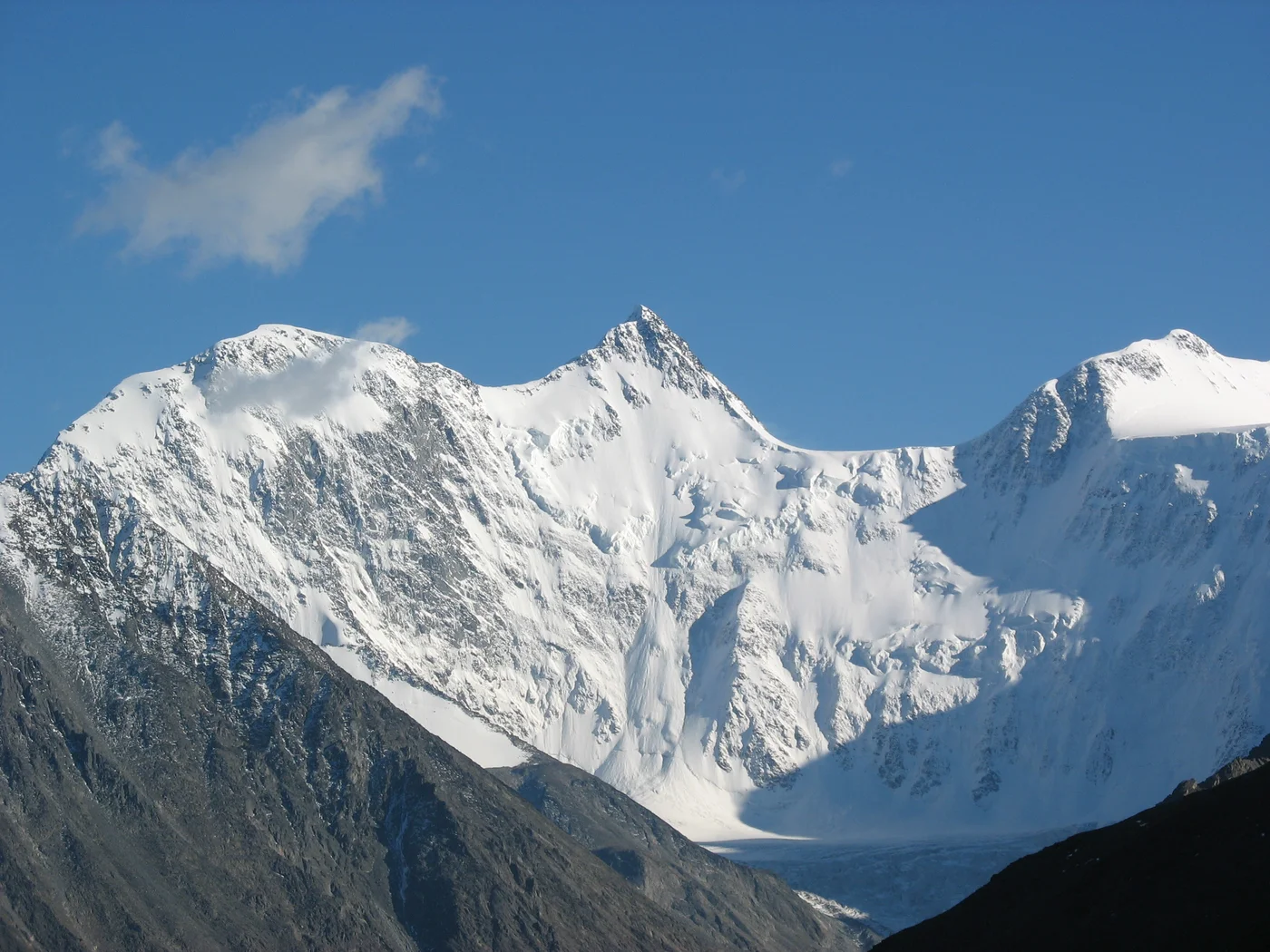


Mount Belukha / Belukha East Peak
Mount Belukha is a majestic double-headed glaciated massif rising to 4,506 metres (14,783 ft) on the border between Russia and Kazakhstan, reigning as the highest peak in the Altai Mountains and the crown of Siberia. Revered in indigenous Altai mythology as Uch-Sumer and linked by mystics to the legendary spiritual realm of Shambhala, Belukha feeds massive valley glaciers including the Mensu and Katun. First reached on July 26, 1914, by brothers Boris and Mikhail Tronov, the mountain was transformed into a proving ground for technical Soviet alpinism in 1926 when mathematician Boris Delone pioneered the classic route via the Delone Couloir and Saddle.
Documented Sources & Archival Citations
- The Peaks of the Western Caucasus and Altai(Soviet State Publishing House / Boris Delone)
Supporting claim: Primary climbing records and expedition memoirs
Accessed/Documented: 1930