The Knife-Edge of Llanganuco: Erwin Schneider's 1932 Triumph on Chopicalqui
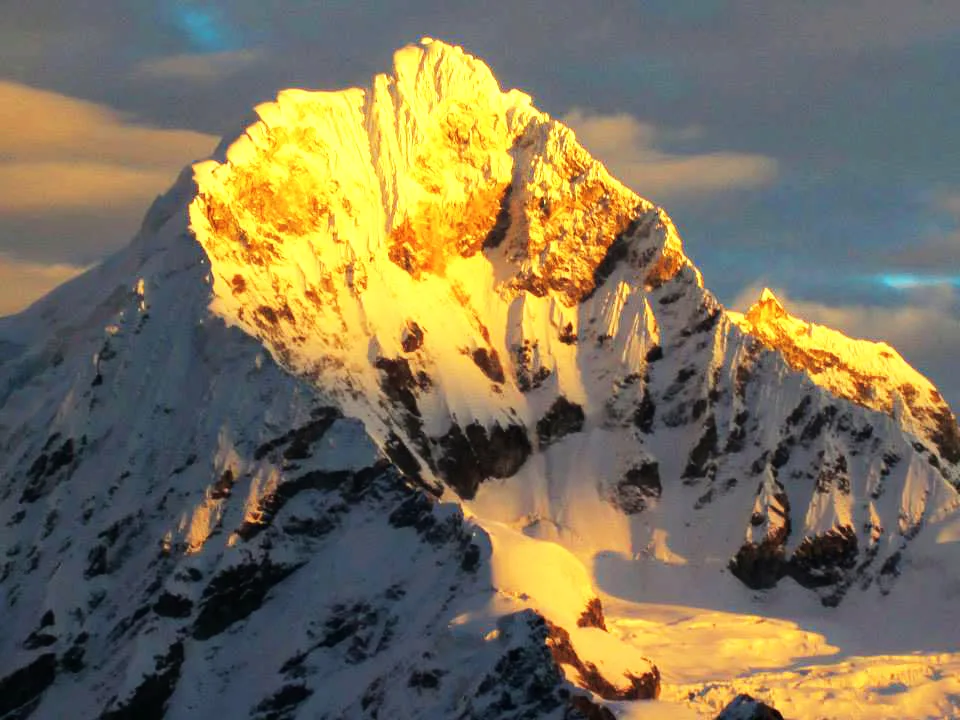
Just two weeks after conquering Huascarán Sur, Erwin Schneider, Philipp Borchers, and Hermann Hoerlin pioneered the razor-sharp Southwest Ridge of Chopicalqui (6,354 m).
Mountain Safety & Conditions Disclaimer: High-altitude climbing, glacial travel, and technical ascents entail severe objective risks including avalanches, serac collapses, rapid weather collapse, and altitude illness. Historical route descriptions and summit claims on Mountanity reflect documented archival sources and must not be used as live operational safety assessments. Local regulations, permits, and physical glacial topography change continuously.
Peer Review: Senior Editorial Board & Historical Reviewers • Editorial Standards
The Knife-Edge of Llanganuco: Erwin Schneider’s 1932 Triumph on Chopicalqui
In late July 1932, the members of the German-Austrian Alpine Club expedition descended from the icy dome of Huascarán Sur into the lush eucalyptus valleys of the Callejón de Huaylas. Most climbers would have rested for weeks after claiming the highest peak in Peru. But twenty-six-year-old Austrian topographer Erwin Schneider was possessed by relentless alpine curiosity.
Looking east toward the spectacular twin turquoise lagoons of Llanganuco, Schneider’s gaze was drawn to an elegant, symmetrical pyramid of snow and rock that towered above the high pass of Portachuelo de Llanganuco. It was Nevado Chopicalqui, soaring to 6,354 metres. While locals considered it an eastern spur of the Huascarán massif, Schneider recognized it as an independent, world-class mountain that offered one of the most aesthetic ridge lines in the Andes.
Scouting from Portachuelo
Gathering pack mules and porters in Yungay, Schneider, expedition leader Dr. Philipp Borchers, and physicist Hermann Hoerlin set out for the Quebrada Llanganuco. Winding through dense quenual groves, they climbed to the 4,767-metre pass of Portachuelo de Llanganuco. From this vantage point, the entire northern aspect of the Cordillera Blanca unfolded in dazzling white relief: the sheer granite faces of Huandoy, the fluted ice gullies of Chacraraju, and directly opposite, the soaring Southwest Ridge of Chopicalqui.
The line was obvious to an experienced eye: a winding crest of glacial firn that connected the high saddle between Huascarán and Chopicalqui directly to the summit pyramid. Yet the ridge was heavily defended. Gaping crevasses scarred its lower flanks, towering seracs threatened the intermediate slopes, and the upper section narrowed to a razor-sharp arête capped with fragile, wind-sculpted cornices that hung precariously over sheer vertical drops into the Ancush valley.
High Camp on the Glacial Col
On August 1, 1932, Schneider, Borchers, and Hoerlin climbed through the moraines above Quebrada Llanganuco and strapped on crampons at the glacier’s toe. Roping together, they negotiated a maze of hidden crevasses, establishing Moraine Camp at 4,900 metres before pushing their heavily laden packs to a tiny plateau perched at 5,600 metres on the Southwest Col.
The night at 5,600 metres was bitterly cold. Hoerlin, ever the scientist, methodically noted temperature inversions and prepared their photometers while Schneider inspected the crust of the snow. At dawn on August 3, the snow had transformed into firm, crisp nevé—ideal conditions for cramponing.
Dancing Along the Arête: August 3, 1932
Leaving their tent at first light, Schneider took the lead. With steady, rhythmic swings of his long wooden ice axe, he chipped small steps across hard blue-ice bulges, feeling for hollow pockets beneath the snow.
As the party ascended beyond 6,000 metres, the Southwest Ridge narrowed into a breathtaking knife-edge. On their left, the northwest ice wall plummeted two thousand metres toward the Llanganuco lakes; on their right, dizzying vertical slopes plunged toward the Quebrada Ulta. Schneider moved with cat-like balance, straddling the crest where necessary and keeping the rope taut between Borchers and Hoerlin.
Near 6,250 metres, a massive bergschrund opened across the ridge—a gaping crevasse with an overhanging upper lip of vertical rime ice. Pausing to catch his breath in the thin air, Schneider anchored himself, drove his ice axe deeply into the firn, and delicately chimneyed between two fragile snow bridges to bypass the chasm.
Emerging onto the upper headwall, the final challenge loomed: a colossal, rounded snow mushroom that formed the true summit of Chopicalqui. Schneider cut a series of deep footholds up the final 55-degree bulge, reached over the lip, and pulled himself onto the gleaming crest. Seconds later, Borchers and Hoerlin joined him on the narrow snow platform.
A Mountain for the Ages
At 6,354 metres, the three mountaineers embraced in quiet jubilation. Surrounding them in every direction were the untouched giants of the tropical Andes: Huascarán Sur towered directly to the west, its massive bulk throwing long morning shadows, while to the north, the sharp, fluted ridges of Huandoy and Chacraraju carved jagged silhouettes against the azure sky.
After spending an hour recording compass bearings, taking photographs, and constructing a small snow cairn, the party made a careful, methodical descent along the airy arête, safely regaining High Camp before the afternoon sun could destabilize the snow bridges.
Schneider’s 1932 line on Chopicalqui’s Southwest Ridge became an instant classic. Today, nearly a century later, it remains one of the most celebrated and sought-after alpine climbs in the Americas—a testament to Erwin Schneider’s peerless eye for alpine beauty and the daring spirit of the pioneers who first walked its knife-edge crest.
Key Statistics & Topographic Figures
- Category
- Andean Pioneers
Archival Subject
- Reading Time
- 14 min read
Narrative Length
- Key Mountain
- chopicalqui
Objective
- Ascent Route
- chopicalqui-southwest-ridge
Topography
- Verification
- Editorially Verified
Archival Standard
Archival Primary Source Quotations
“In the mountains, truth is etched in ice and granite; every step requires unwavering respect for the heights.”
Defined Alpine Terminology & Concepts
- Summit Push
- The final continuous climbing effort from the highest established camp to the mountain apex and back.
- Death Zone Chronicle
- A verified, research-backed historical narrative documenting the human, technical, and environmental realities of an alpine expedition.
Frequently Asked Questions: The Knife-Edge of Llanganuco: Erwin Schneider's 1932 Triumph on Chopicalqui
What is the core chronicle and subject of "The Knife-Edge of Llanganuco: Erwin Schneider's 1932 Triumph on Chopicalqui"?
Just two weeks after conquering Huascarán Sur, Erwin Schneider, Philipp Borchers, and Hermann Hoerlin pioneered the razor-sharp Southwest Ridge of Chopicalqui (6,354 m).
Which mountain peaks and routes are featured in "The Knife-Edge of Llanganuco: Erwin Schneider's 1932 Triumph on Chopicalqui"?
This narrative documents climbs on chopicalqui along the chopicalqui-southwest-ridge in Peru.
Which documented expedition is chronicled in this story?
This historical chronicle captures the events of the 1932-schneider-chopicalqui-first-ascent, verified through contemporary journals and archival records.
Who authored and researched this archival chronicle?
Authored and researched by Mountainity Historical Research Desk, drawing on primary eyewitness testimonies, alpine club registries, and verified summit logs.
What makes this high-altitude chronicle historically significant?
Categorized under "Andean Pioneers", this chronicle preserves critical lessons in alpine leadership, survival, tactical speed, and human endurance in the death zone.
Related Mountains

Chopicalqui
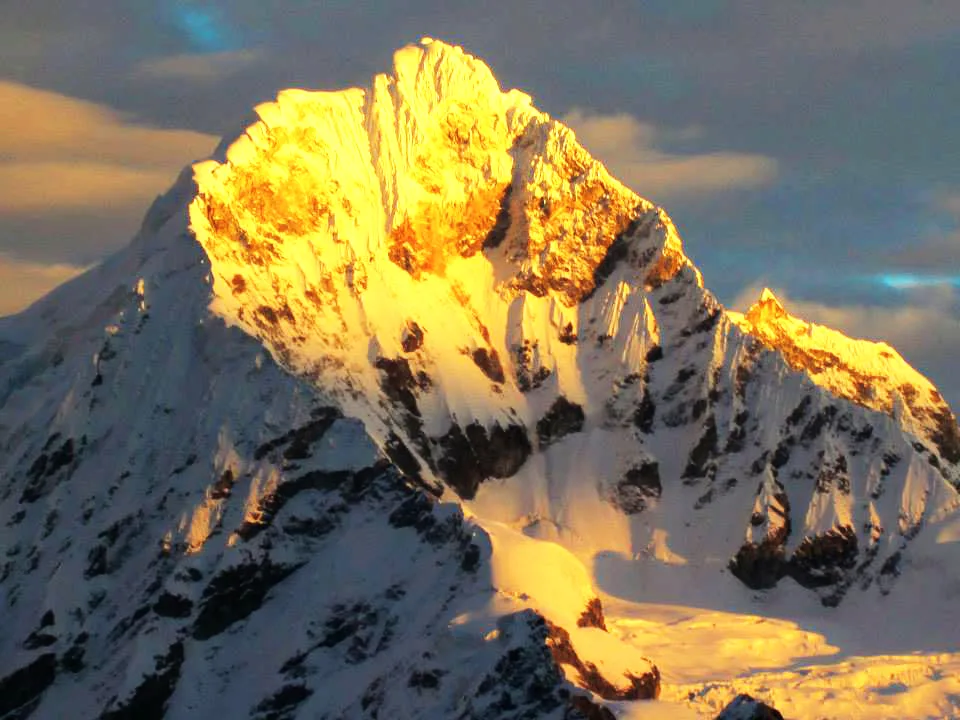
Chopicalqui is a magnificent 6,354-metre glaciated peak rising in the heart of Peru's Cordillera Blanca between Huascarán and Yanapaccha. First summited on August 3, 1932, by Erwin Schneider, Philipp Borchers, and Hermann Hoerlin, it is celebrated for its elegant Southwest Ridge route. The mountain offers complex crevassed glacier travel and knife-edge summit cornices.
Documented Sources & Archival Citations
- Die Weiße Kordillere(Philipp Borchers / Verlag F. Bruckmann)
Supporting claim: Primary account of the reconnaissance, high camp establishment, and summit ridge climb on Chopicalqui
Accessed/Documented: 1935 - American Alpine Journal: Cordillera Blanca First Ascents(American Alpine Club)
Supporting claim: Contemporary review of Erwin Schneider's ridge route on Chopicalqui
Accessed/Documented: 1933