Chasing Mystery Mountain: Don and Phyllis Munday's Decade-Long Quest for Mount Waddington
On July 7, 1934, Canadian pioneers Don and Phyllis Munday conquered the 4,000-metre Northwest Summit of Mount Waddington, completing an epic ten-year quest to unlock British Columbia's Mystery Mountain.
Mountain Safety & Conditions Disclaimer: High-altitude climbing, glacial travel, and technical ascents entail severe objective risks including avalanches, serac collapses, rapid weather collapse, and altitude illness. Historical route descriptions and summit claims on Mountanity reflect documented archival sources and must not be used as live operational safety assessments. Local regulations, permits, and physical glacial topography change continuously.
Peer Review: Senior Editorial Board & Historical Reviewers • Editorial Standards
The Phantom Mountain on the Horizon
In the summer of 1925, Canadian mountaineers Don and Phyllis Munday climbed the rocky slopes of Mount Arrowsmith on central Vancouver Island. Looking eastward across the waters of the Strait of Georgia toward the mainland Coast Range, they expected to see the familiar rolling ridges that official government maps indicated did not exceed 9,000 or 10,000 feet.
Instead, as the afternoon clouds burned off, the couple was stunned to see a colossal, unmapped alpine titan looming far above the surrounding peaks. It was an enormous fang of black rock and hanging ice, rising like an isolated sentinel into the stratosphere—a mountain so immense it clearly exceeded 13,000 feet.
When the Mundays reported their sighting to government surveyors and alpine officials in Vancouver, they were greeted with polite skepticism. Officials insisted that the Coast Range held no mountains of such stature.
Don Munday, a decorated World War I veteran who had survived severe shrapnel wounds at the Somme, and Phyllis, an intrepid outdoorswoman of boundless stamina, took the challenge personally. They vowed to penetrate the uncharted coastal wilderness, locate the mountain, and prove its grandeur to the world. They named it “Mystery Mountain.”
Ten Years of Coastal Bushwhacking
What followed was one of the most heroic chapters in exploratory mountaineering. Between 1926 and 1934, Don and Phyllis mounted eleven separate expeditions into the wild coastal fjords of British Columbia.
To reach Mystery Mountain—officially christened Mount Waddington in 1928—the Mundays had to navigate open wooden boats through treacherous tidal rips in Knight Inlet and Bute Inlet, battle dense tangles of Devil’s club and coastal rainforest, and haul 70-pound packs on foot through territory inhabited by coastal grizzly bears.
They were the first to set foot upon the thirty-mile-long Franklin and Tiedemann glaciers, the largest temperate glacier systems on planet Earth outside the polar zones. In 1927, they reached the foot of the mountain; in 1928, they climbed to within 1,000 feet of the summit before being turned back by ferocious Pacific tempests that dumped twelve feet of snow in forty-eight hours.
The Assault via the Bravo Glacier
In June 1934, seasoned by a decade of trials, Don and Phyllis returned to Mount Waddington for their tenth campaign, joined by skilled American mountaineer Henry Hall.
Approaching from the head of Knight Inlet, the team hauled sledges up the massive Tiedemann Glacier, pitching their high camp beneath the menacing séracs of the Bravo Glacier icefall.
On July 6, the climbers began navigating through the Bravo icefall. The terrain was terrifying: towering blue-ice pinnacles threatened to collapse without warning, and bottomless crevasses forced the trio to walk across fragile, razor-thin snow bridges.
Working with relentless patience, Don and Phyllis chopped steps up a sustained 50-degree ice couloir, pulling themselves over the bergschrund and gaining the windy notch of the Bravo Col at 11,200 feet.
Summiting the Northwest Crown
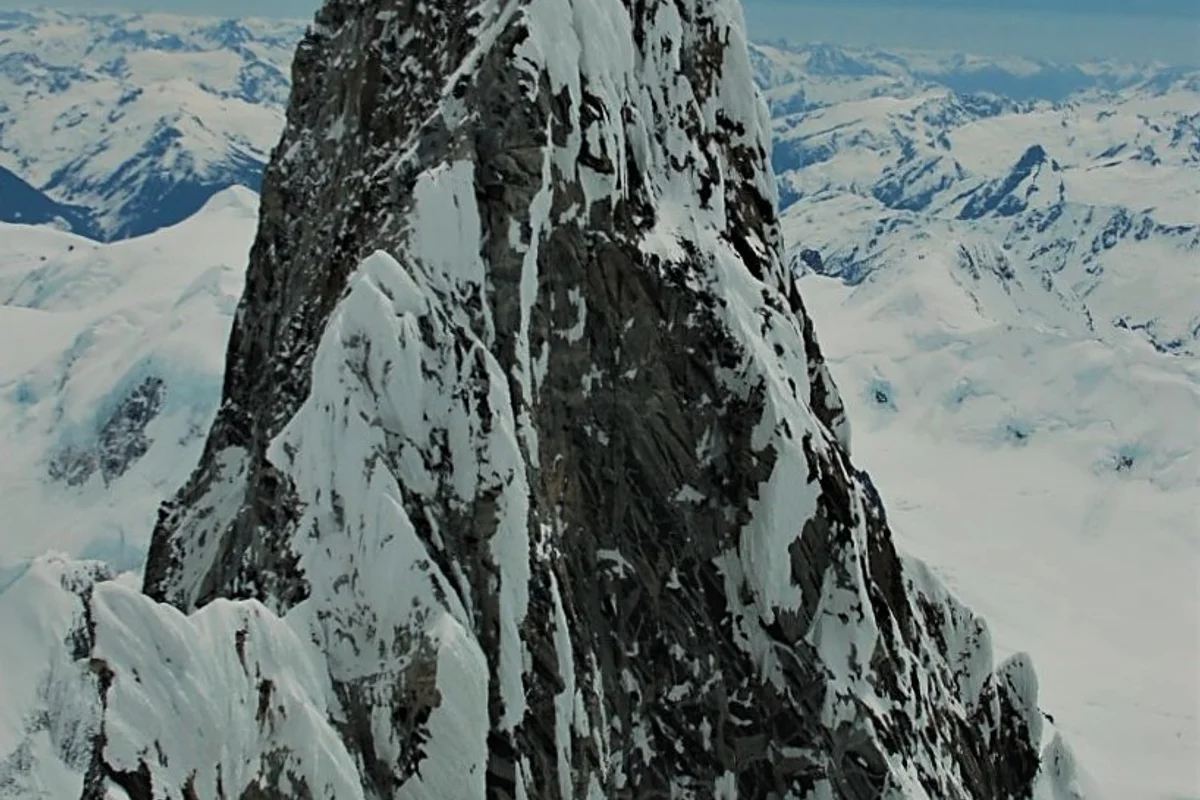
From the Bravo Col, the mountain presented two distinct summits: the terrifying, vertical granite tooth of the Main South Tower, and the broad, glaciated Northwest Summit.
The Main Tower was plastered in bulletproof green verglas and overhanging rime feathers, defying ascent with the equipment of the 1930s. But the Northwest Peak offered an aesthetic, sweeping knife-edge snow arête.
On the morning of July 7, 1934, under crisp, brilliant skies, Don and Phyllis roped together for the final push. Traversing the exposed ridge above the sheer precipices of the Scimitar Glacier, they steadily kicked steps through the hard crust.
At 1:30 PM, Don and Phyllis Munday stood upon the 4,000-metre Northwest Summit of Mount Waddington.
Looking out across hundreds of miles of untamed icefields and rugged granite spires stretching to the Pacific Ocean, the couple embraced in tears. Ten years of skepticism, injury, frostbite, and torrential rain were erased in an instant of pure alpine vindication.
The Legacy of the Mundays
Although the vertical rock tooth of the Main Tower would be conquered two years later in 1936 by Fritz Wiessner and Bill House using advanced European rock pitons, Wiessner himself paid glowing tribute to the Mundays, stating that without their decade of exploratory mapping and route reconnaissance, Mount Waddington would have remained an impenetrable mystery.
Don Munday’s 1948 book, The Unknown Mountain, became an enduring classic of North American exploration. Phyllis Munday was awarded the Order of Canada, remembered as the fearless First Lady of the Coast Mountains whose vision, tenacity, and love of wild nature unlocked the greatest mountain citadel on the Canadian Pacific coast.
Key Statistics & Topographic Figures
- Category
- Coast Mountains Epics
Archival Subject
- Reading Time
- 16 min read
Narrative Length
- Key Mountain
- mount-waddington
Objective
- Ascent Route
- mount-waddington-bravo-glacier
Topography
- Verification
- Editorially Verified
Archival Standard
Archival Primary Source Quotations
“In the mountains, truth is etched in ice and granite; every step requires unwavering respect for the heights.”
Defined Alpine Terminology & Concepts
- Summit Push
- The final continuous climbing effort from the highest established camp to the mountain apex and back.
- Death Zone Chronicle
- A verified, research-backed historical narrative documenting the human, technical, and environmental realities of an alpine expedition.
Frequently Asked Questions: Chasing Mystery Mountain: Don and Phyllis Munday's Decade-Long Quest for Mount Waddington
What is the core chronicle and subject of "Chasing Mystery Mountain: Don and Phyllis Munday's Decade-Long Quest for Mount Waddington"?
On July 7, 1934, Canadian pioneers Don and Phyllis Munday conquered the 4,000-metre Northwest Summit of Mount Waddington, completing an epic ten-year quest to unlock British Columbia's Mystery Mountain.
Which mountain peaks and routes are featured in "Chasing Mystery Mountain: Don and Phyllis Munday's Decade-Long Quest for Mount Waddington"?
This narrative documents climbs on mount-waddington along the mount-waddington-bravo-glacier in Canada.
Which documented expedition is chronicled in this story?
This historical chronicle captures the events of the 1934-munday-mount-waddington-northwest-peak, verified through contemporary journals and archival records.
Who authored and researched this archival chronicle?
Authored and researched by Mountainity Historical Research Desk, drawing on primary eyewitness testimonies, alpine club registries, and verified summit logs.
What makes this high-altitude chronicle historically significant?
Categorized under "Coast Mountains Epics", this chronicle preserves critical lessons in alpine leadership, survival, tactical speed, and human endurance in the death zone.
Related Mountains
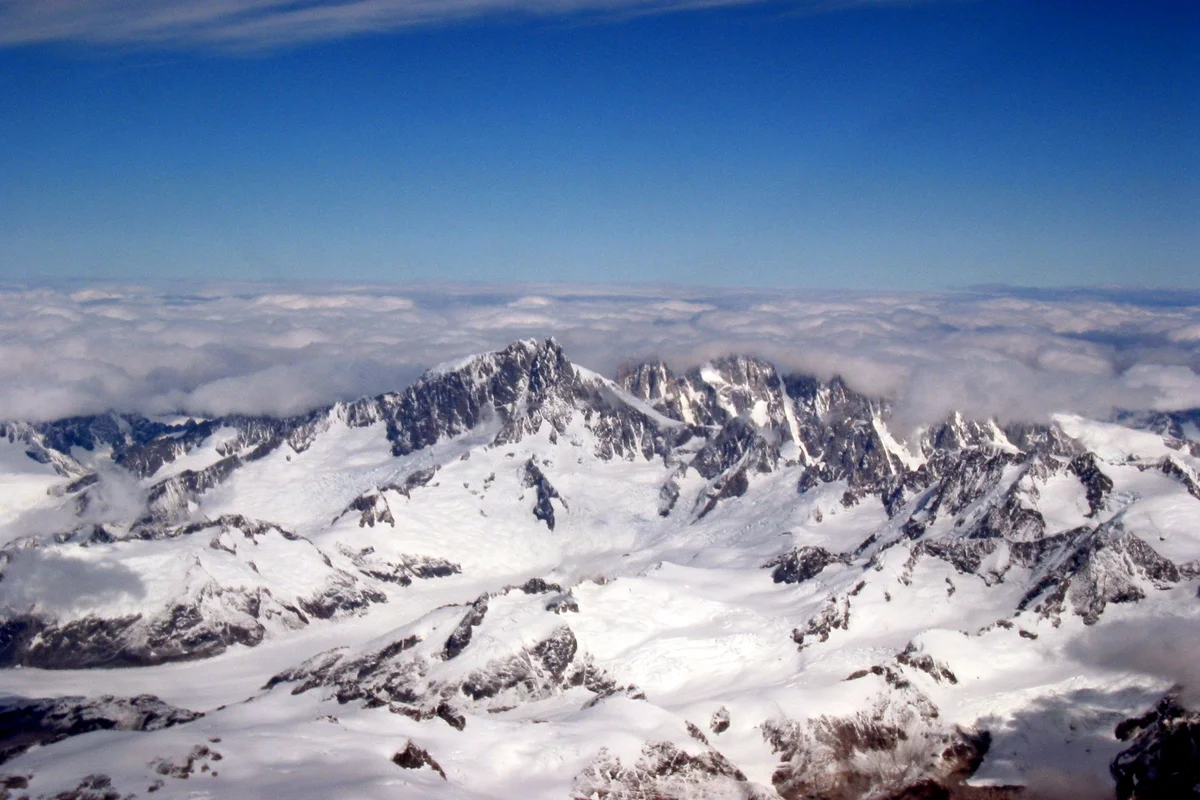

Mount Waddington
Mount Waddington is the highest peak in the Coast Mountains of British Columbia, rising to 4,019 metres amid the largest temperate icefield system in the world outside polar regions. Celebrated as Mystery Mountain during early exploration, this sheer granite monolith is perpetually guarded by Pacific maritime tempests, immense tidal glaciers, and vertical rock towers.
Documented Sources & Archival Citations
- The Unknown Mountain(Don Munday / Hodder & Stoughton)
Supporting claim: Primary chronicle of the discovery and exploration of Mount Waddington by the Mundays
Accessed/Documented: 2026 - Canadian Alpine Journal: Mount Waddington Northwest Peak (1935)(Alpine Club of Canada)
Supporting claim: Official expedition report on the 1934 first ascent of the Northwest Summit
Accessed/Documented: 2026