The Glacial Shield: The 1934 Polish First Ascent of Aconcagua's East Face
On March 8, 1934, four Polish mountaineers carved their way up the steep 1,000-metre hanging ice sheet on the eastern face of Aconcagua, pioneering the legendary Polish Glacier route.
Mountain Safety & Conditions Disclaimer: High-altitude climbing, glacial travel, and technical ascents entail severe objective risks including avalanches, serac collapses, rapid weather collapse, and altitude illness. Historical route descriptions and summit claims on Mountanity reflect documented archival sources and must not be used as live operational safety assessments. Local regulations, permits, and physical glacial topography change continuously.
Peer Review: Senior Editorial Board & Historical Reviewers • Editorial Standards
The Colossus of the Southern World
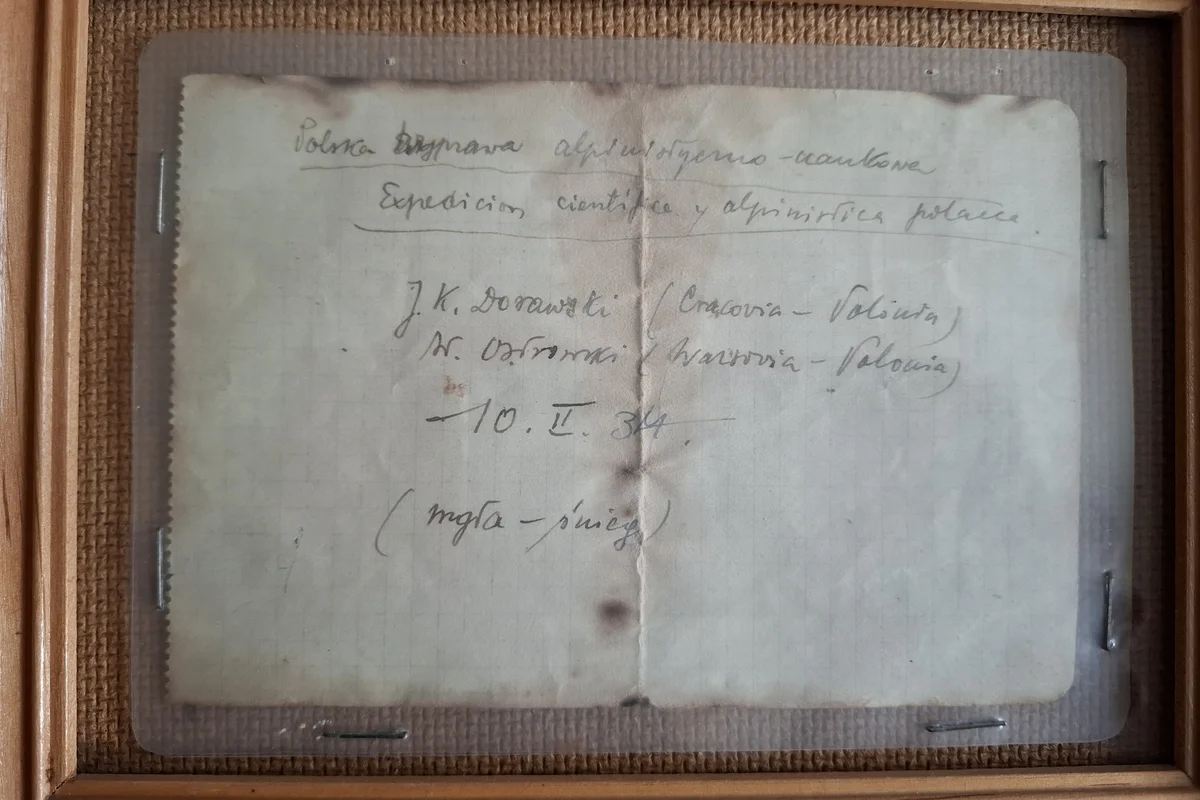
In the southern hemisphere summer of 1933–1934, four young Polish climbers sailed across the Atlantic Ocean toward South America. Organized under the auspices of the Polish Tatra Society, the party consisted of expedition leader Konstanty Narkiewicz-Jodko, geologist Stefan Daszyński, architect Stefan Osiecki, and engineer Wiktor Ostrowski. In an era when Himalayan exploration was dominated by well-funded British and German state expeditions, Poland’s alpinists sought to make their mark on the highest peaks of the New World.
Their primary objective was the giant of the Western Hemisphere: Mount Aconcagua. Rising to 6,961 metres in the Argentine province of Mendoza, Aconcagua was known primarily through the 1897 first ascent by Swiss guide Matthias Zurbriggen, who had scrambled up the loose scree and scree slopes of the North Face. But the eastern aspect of the mountain presented a radically different challenge: an immense, glittering hanging glacier tumbling down a 1,000-metre precipice at angles exceeding fifty degrees.
Before tackling Aconcagua, the Polish team had already achieved unprecedented success in the neighboring Cordón de la Ramada, completing first ascents of Mount Mercedario (6,720 m), Mount Alma Negra, and Pico Polaco. Confident in their acclimatization and equipment, they turned their pack mules toward the Relinchos Valley.
Approach Through the Relinchos Valley
The journey into the eastern cirque of Aconcagua was an exploration into complete wilderness. While modern expeditions follow well-trodden trails to Plaza Argentina, the 1934 Polish team navigated unmapped box canyons, raging glacial torrents, and treacherous moraine fields.
At 4,200 metres, they established an advanced base camp beneath the towering eastern amphitheater. Above them loomed the great glacial shield: an uninterrupted apron of hard, greenish-blue ice sweeping up toward the summit ridge. Flanked by crumbling volcanic towers and swept by violent afternoon rockfall, the glacier demanded flawless crampon technique and steady nerves.
Between late February and early March, working in freezing Andean gales and blinding snow flurries, Daszyński, Narkiewicz-Jodko, Osiecki, and Ostrowski established Campamento Polacos at 5,800 metres on a narrow rocky spur jutting into the ice.
The Battle with Blue Ice
On the morning of March 8, 1934, beneath a crystal-clear indigo sky, the four climbers stepped onto the glacier for their final summit bid. The temperature hovered far below minus twenty degrees Celsius, and the air was thin, cold, and razor-sharp.
Unlike modern climbers who utilize curved ice axes and rigid front-point crampons, the Polish mountaineers climbed with straight-shafted wooden ice axes and traditional ten-point crampons. This required thousands of continuous ice-axe blows to chop bucket steps and handholds into the hard, sun-crusted ice.
As they ascended past 6,200 metres, the slope steepened dramatically to sixty degrees. The physical exertion at nearly 6,500 metres was brutal. Ostrowski later wrote:
“Every breath felt like breathing hot needles, yet the sheer beauty of the vertical world beneath our boots kept our spirits unbroken. Step by step, the ice gave way to our hammers.”
Around mid-afternoon, navigating through complex crevasse fields and fields of towering penitente ice needles, the quartet reached the upper edge of the glacier. Breaching a rocky couloir onto the windswept summit crest, they pushed through exhaustion and stepped onto the highest point of the Americas.
Birth of an Alpine Legend
Standing on the 6,961-metre summit rim, the four Poles unfurled their national flag, gazing westward across the cloud-filled valleys toward the distant Pacific Ocean. Their descent back down the technical ice face demanded supreme concentration, yet they returned safely to Campamento Polacos without a single injury.
The 1934 ascent of the Polish Glacier transformed global perceptions of Aconcagua. It proved that South America’s highest peak was not merely a high-altitude scree hike, but a grand arena for world-class technical ice climbing. Furthermore, it ignited Poland’s proud tradition of high-altitude exploration, laying the foundation for the legendary “Ice Warriors” who would conquer the world’s 8,000-metre giants half a century later.
Key Statistics & Topographic Figures
- Category
- Andean Alpine Legends
Archival Subject
- Reading Time
- 14 min read
Narrative Length
- Key Mountain
- aconcagua
Objective
- Ascent Route
- aconcagua-polish-glacier
Topography
- Verification
- Editorially Verified
Archival Standard
Archival Primary Source Quotations
“In the mountains, truth is etched in ice and granite; every step requires unwavering respect for the heights.”
Defined Alpine Terminology & Concepts
- Summit Push
- The final continuous climbing effort from the highest established camp to the mountain apex and back.
- Death Zone Chronicle
- A verified, research-backed historical narrative documenting the human, technical, and environmental realities of an alpine expedition.
Frequently Asked Questions: The Glacial Shield: The 1934 Polish First Ascent of Aconcagua's East Face
What is the core chronicle and subject of "The Glacial Shield: The 1934 Polish First Ascent of Aconcagua's East Face"?
On March 8, 1934, four Polish mountaineers carved their way up the steep 1,000-metre hanging ice sheet on the eastern face of Aconcagua, pioneering the legendary Polish Glacier route.
Which mountain peaks and routes are featured in "The Glacial Shield: The 1934 Polish First Ascent of Aconcagua's East Face"?
This narrative documents climbs on aconcagua along the aconcagua-polish-glacier in Argentina.
Which documented expedition is chronicled in this story?
This historical chronicle captures the events of the 1934-polish-aconcagua-expedition, verified through contemporary journals and archival records.
Who authored and researched this archival chronicle?
Authored and researched by Mountainity Historical Research Desk, drawing on primary eyewitness testimonies, alpine club registries, and verified summit logs.
What makes this high-altitude chronicle historically significant?
Categorized under "Andean Alpine Legends", this chronicle preserves critical lessons in alpine leadership, survival, tactical speed, and human endurance in the death zone.
Related Mountains
Aconcagua
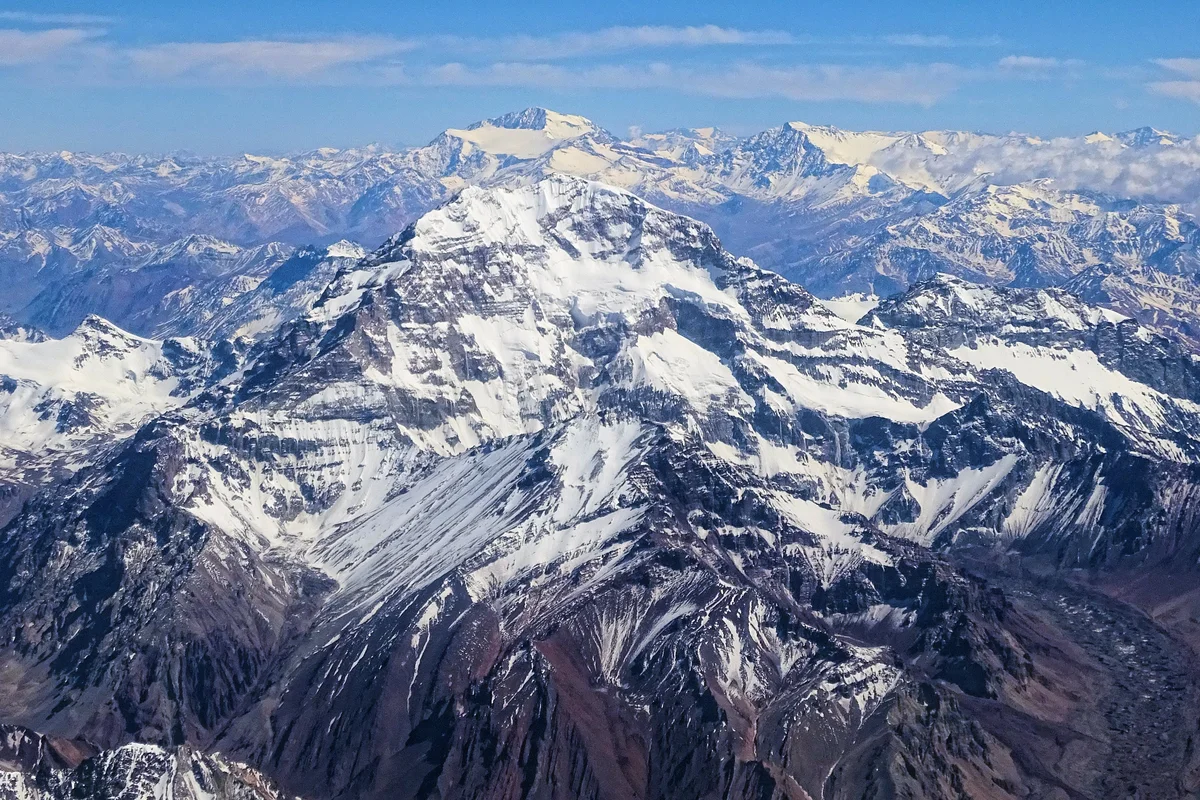
Aconcagua is the highest mountain in the Americas and the highest peak outside Asia, rising to 6,961 metres in Argentina's Andes. Celebrated as the second most topographically prominent mountain on Earth, it features colossal glaciated faces, intense high-altitude gales, and historic routes including the Polish Glacier.
Documented Sources & Archival Citations
- American Alpine Journal: Polish Expedition to the Andes (1935)(American Alpine Club)
Supporting claim: Official expedition report recording the 1934 first ascent of the Polish Glacier on Aconcagua
Accessed/Documented: 2026 - Wyprawa w Andy(Wiktor Ostrowski / Wydawnictwo Sport i Turystyka)
Supporting claim: Primary autobiographical chronicle of the first Polish Andean expedition
Accessed/Documented: 2026