The Frozen Spine of Liberty: Daiber's 1935 North Face Triumph on Rainier
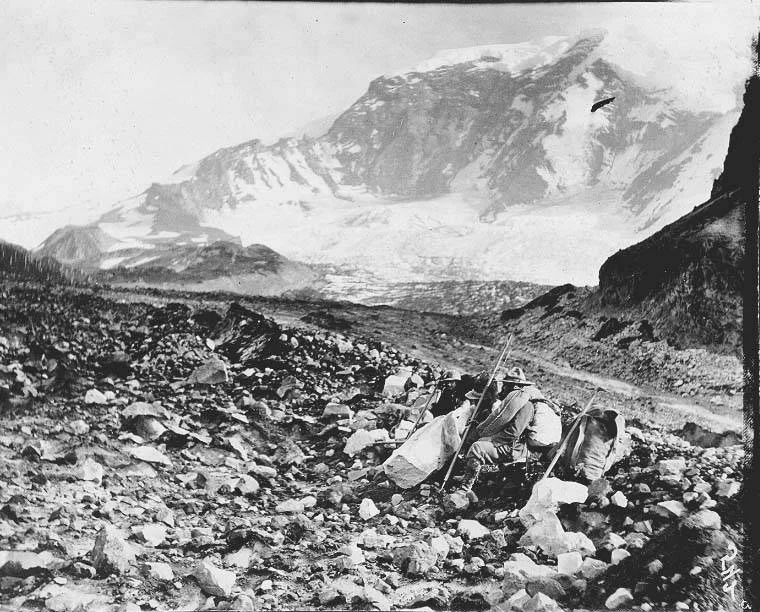
On September 29, 1935, Pacific Northwest climbers Ome Daiber, Arnie Campbell, and Jim Borrow achieved the bold first ascent of Liberty Ridge on Mount Rainier. Ascending 1,200 vertical metres of steep alpine ice and mixed rock flanked by the Willis Wall, they established an enduring North American classic.
Mountain Safety & Conditions Disclaimer: High-altitude climbing, glacial travel, and technical ascents entail severe objective risks including avalanches, serac collapses, rapid weather collapse, and altitude illness. Historical route descriptions and summit claims on Mountanity reflect documented archival sources and must not be used as live operational safety assessments. Local regulations, permits, and physical glacial topography change continuously.
Peer Review: Senior Editorial Board & Historical Reviewers • Editorial Standards
The Shadow of the Willis Wall
In the 1930s, the north face of Mount Rainier was considered the most fearsome and treacherous alpine theater in the contiguous United States. Dominating the north side of the mountain was the Willis Wall, a vertical, 4,000-foot amphitheater of rotten volcanic breccia and crumbling basalt capped by a colossal hanging glacier that continuously calved catastrophic avalanches of ice into the Carbon Glacier below.
Contemporary climbing guidebooks declared the north face of Rainier unapproachable and suicidal. Yet splitting the north face into two distinct glacial drainage basins was a magnificent, sweeping knife-edge arête of snow, ice, and dark rock: Liberty Ridge.
To twenty-eight-year-old Seattle climbing pioneer Ome Daiber, an inventive craftsman and leader in mountain search and rescue, Liberty Ridge appeared to offer the only logical, defensible line through the north face. By staying strictly on the crest of the narrow ridge, climbers could stay above the avalanche runout tracks that swept both flanks.
The Approach to Thumb Rock
In late September 1935, taking advantage of a stable autumn high-pressure system that froze the upper snowfields, Daiber teamed up with seasoned alpine partners Arnie Campbell and Jim Borrow. Packing ultralight rations, wool layers, hemp ropes, and triconi-nailed leather boots, the three men set out from Ipsut Creek on September 27.
Trekking through old-growth forests along the Carbon River, they emerged onto the snout of the Carbon Glacier, the lowest-elevation glacier in the contiguous forty-eight states. Traversing the crevassed, rubble-strewn ice sheets beneath the booming artillery of falling séracs from the Willis Wall, they approached the foot of Liberty Ridge.
Climbing steep, 45-degree snow slopes, the trio gained the rocky prow of Thumb Rock at 10,760 feet (3,280 m). Perched on this narrow, knife-edge rock island suspended over the icy void, they hacked out an exposed bivouac platform in the ice and spent a cold, starlit night wrapped in blankets.
Breaching the Black Ring and the Summit Ice Cap
At 4:30 AM on September 29, 1935, Daiber, Campbell, and Borrow roped together and embarked on the upper crest of Liberty Ridge. Immediately above Thumb Rock, the angle steepened severely into sustained 50-degree blue ice.
Ahead lay the Black Ring, a dark volcanic rock band banded by glazed water ice that formed the crux of the climb. Daiber took the lead, cautiously testing friable rock handholds with gloved fingers and chipping discrete ice stances with his axe. Moving smoothly through the technical mixed pitches, the team bypassed the rock barrier and gained the upper snowfields beneath the summit ice cap.
Here, the exposure was immense: to their left plunged the sheer chasm of the Willis Wall, while to their right dropped the vast, crevassed fields of the Winthrop Glacier. Pushing through deep wind-drifted powder and cold gusting winds at over 14,000 feet, they surmounted the final gaping bergschrund and emerged onto the broad volcanic crown of Liberty Cap (4,301 m) at three in the afternoon.
Their daring climb sent shockwaves through North American mountaineering circles. Daiber, Campbell, and Borrow had proved that the great north faces of the Pacific Northwest volcanoes could be conquered through alpine speed, precise route-finding, and courageous leadership. Liberty Ridge would go on to be enshrined in Steck and Roper’s Fifty Classic Climbs of North America as one of the most coveted alpine ice routes on the planet.
Key Statistics & Topographic Figures
- Category
- Cascade North Wall Lore
Archival Subject
- Reading Time
- 14 min read
Narrative Length
- Key Mountain
- mount-rainier
Objective
- Ascent Route
- mount-rainier-liberty-ridge
Topography
- Verification
- Editorially Verified
Archival Standard
Archival Primary Source Quotations
“In the mountains, truth is etched in ice and granite; every step requires unwavering respect for the heights.”
Defined Alpine Terminology & Concepts
- Summit Push
- The final continuous climbing effort from the highest established camp to the mountain apex and back.
- Death Zone Chronicle
- A verified, research-backed historical narrative documenting the human, technical, and environmental realities of an alpine expedition.
Frequently Asked Questions: The Frozen Spine of Liberty: Daiber's 1935 North Face Triumph on Rainier
What is the core chronicle and subject of "The Frozen Spine of Liberty: Daiber's 1935 North Face Triumph on Rainier"?
On September 29, 1935, Pacific Northwest climbers Ome Daiber, Arnie Campbell, and Jim Borrow achieved the bold first ascent of Liberty Ridge on Mount Rainier. Ascending 1,200 vertical metres of steep alpine ice and mixed rock flanked by the Willis Wall, they established an enduring North American classic.
Which mountain peaks and routes are featured in "The Frozen Spine of Liberty: Daiber's 1935 North Face Triumph on Rainier"?
This narrative documents climbs on mount-rainier along the mount-rainier-liberty-ridge in United States.
Which documented expedition is chronicled in this story?
This historical chronicle captures the events of the 1935-daiber-liberty-ridge-mount-rainier, verified through contemporary journals and archival records.
Who authored and researched this archival chronicle?
Authored and researched by Mountainity Historical Research Desk, drawing on primary eyewitness testimonies, alpine club registries, and verified summit logs.
What makes this high-altitude chronicle historically significant?
Categorized under "Cascade North Wall Lore", this chronicle preserves critical lessons in alpine leadership, survival, tactical speed, and human endurance in the death zone.
Related Mountains

Mount Rainier
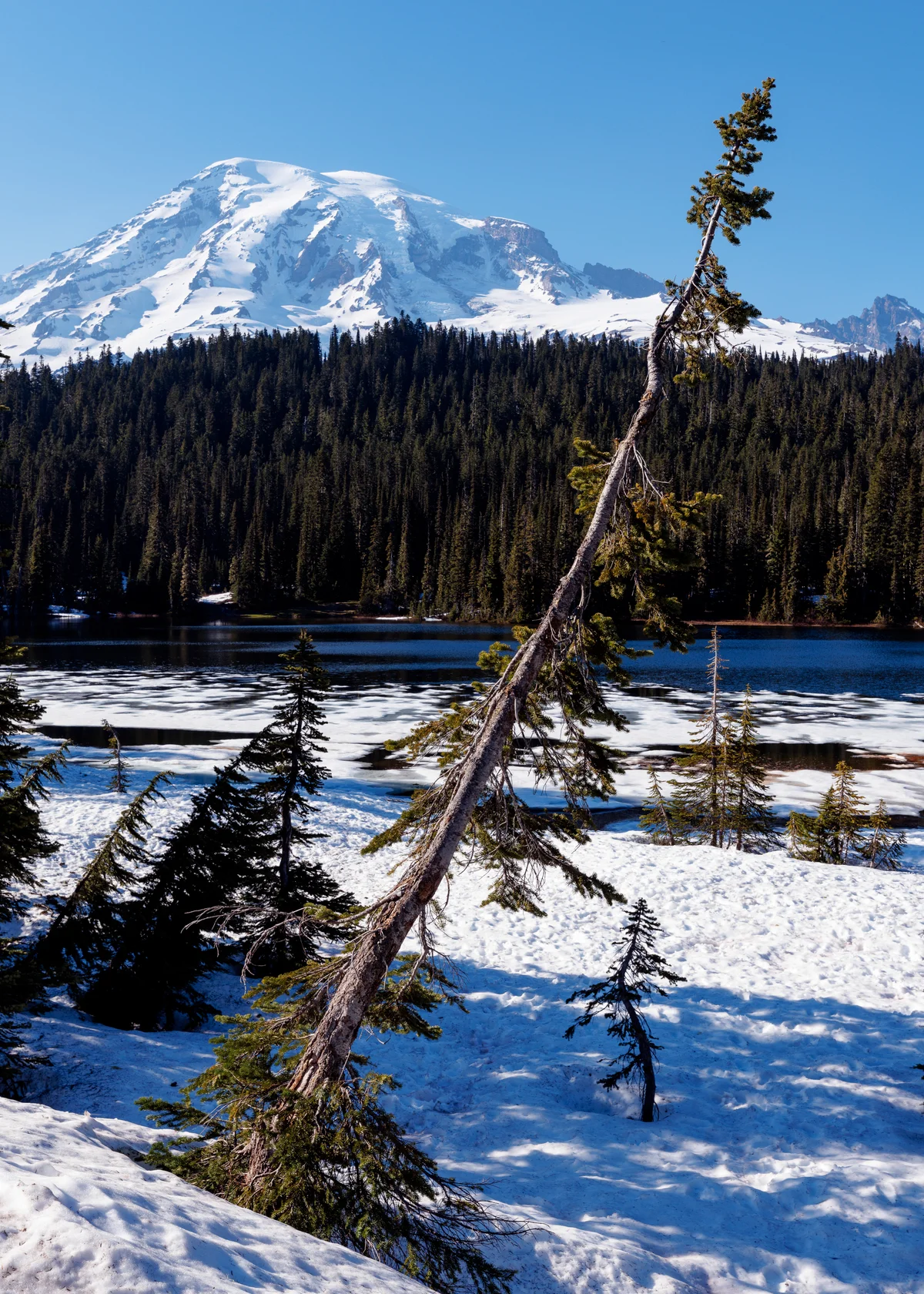
Mount Rainier is an episodic active stratovolcano in the Cascade Range of Washington, rising to an elevation of 4,392 metres as the highest peak in Washington and the Cascade Volcanic Arc. Enveloped by twenty-five major named glaciers spanning over thirty-five square miles of perpetual snow and ice, it is the most heavily glaciated peak in the contiguous United States, serving as the proving ground for American high-altitude mountaineering.
Documented Sources & Archival Citations
- The Challenge of Rainier(Dee Molenaar / The Mountaineers Books)
Supporting claim: Historical chronicle of the 1935 first ascent of Liberty Ridge
Accessed/Documented: 2026 - Fifty Classic Climbs of North America(Steve Roper and Allen Steck / Sierra Club Books)
Supporting claim: Definitive profile of Liberty Ridge as a classic North American alpine ascent
Accessed/Documented: 2026