Roof of the Arctic: The 1935 Maiden First Ascent of Gunnbjørn Fjeld
Lawrence Wager and Ebbe Munck lead an Anglo-Danish team into the Watkins Range to stand atop Gunnbjørn Fjeld (3,694 m), the highest peak in the Arctic.
Mountain Safety & Conditions Disclaimer: High-altitude climbing, glacial travel, and technical ascents entail severe objective risks including avalanches, serac collapses, rapid weather collapse, and altitude illness. Historical route descriptions and summit claims on Mountanity reflect documented archival sources and must not be used as live operational safety assessments. Local regulations, permits, and physical glacial topography change continuously.
Peer Review: Senior Editorial Board & Historical Reviewers • Editorial Standards
Roof of the Arctic: The 1935 Maiden First Ascent of Gunnbjørn Fjeld
The Unconquered Arctic Summit
When Gino Watkins sighted the jagged black nunataks of the Watkins Range from his Gipsy Moth biplane in 1930, one mountain stood supreme above all others: Gunnbjørn Fjeld (3,694 m). Named after the 9th-century Norse mariner Gunnbjørn Ulfsson, the first European to sight the shores of Greenland, this colossal pyramid was confirmed by aerial photogrammetry to be the highest mountain north of the Arctic Circle.
Yet reaching the foot of Gunnbjørn Fjeld was a formidable logistical barrier. The mountain stood eighty kilometres inland from the stormy, unpopulated coast of King Christian IX Land, surrounded by massive glaciated plateaus, bottomless crevasses, and the ever-shifting pack ice of the Denmark Strait.
In 1935, British geologist Lawrence Rickard Wager and Danish journalist-explorer Ebbe Munck resolved to finish what Watkins had begun. Wager was among Britain’s finest mountaineers; on the 1933 British Mount Everest Expedition, he had climbed to 8,570 metres without supplementary oxygen. Munck was an elite Arctic dog-sledder and navigator who would later achieve fame as a Danish Resistance hero in World War II.
Together, they forged the Anglo-Danish Expedition, securing the support of the Royal Geographical Society, the Royal Danish Geographical Society, and funding from Augustine Courtauld.
Sledging into the Watkins Range
In July 1935, the expedition sailed from Norway aboard the historic sealing ship Quest. Battling through heavy sea ice, they made landfall at the head of Kangerlussuaq Fjord.
Accompanied by Jack Longland (who had established Camp VI at 8,350 metres on Everest in 1933) and Patrick Courtauld, Wager and Munck established Base Camp on the coast. In early August, hauling heavily laden sledges and back-packing polar rations, the four climbers penetrated the rugged coastal glaciers, climbing steadily through crevassed icefalls until they reached the elevated glacier plateau of the Watkins Range at 2,250 metres.
Before them rose the majestic basalt mass of Gunnbjørn Fjeld, its stark, wind-scoured ridges rising 1,400 metres above the inland ice like a colossal fortress of stone and frost.
The Summit Conquest
On August 16, 1935, under clear, crystalline polar skies and a biting sub-zero Arctic wind, Wager, Munck, Longland, and Courtauld set out on the summit push.
Roping together in teams of two, they attacked the South Ridge. The route ascended broad, wind-packed snow ramps angled at 30 to 35 degrees, bypassing crevasses that cleaved the lower glacier basin. As they gained elevation, the snow gave way to shattered basalt ledges and narrow, exposed rock ribs scoured clean by perpetual polar gales.
Climbing with steady rhythm, the four men ascended through thin Arctic air. In the early afternoon, they reached the final corniced ridge crest. Stepping onto the highest block of dark basalt rock at 3,694 metres (12,119 ft), Lawrence Wager and Ebbe Munck stood atop the highest summit in Greenland and the entire Arctic.
“We stood at last on the summit of Gunnbjørn Fjeld. Around us lay an endless wilderness of snow and ice, broken only by the sharp, black teeth of the nunataks. The Union Jack and Dannebrog flew together over the roof of the Arctic.” — Lawrence Rickard Wager, The Geographical Journal, 1936
On the summit, Wager conducted detailed geological sampling of the continental flood basalts that had formed sixty million years ago during the opening of the North Atlantic Ocean. The four climbers descended safely back to their high camp, completing a flawless, landmark first ascent that remains a defining milestone in the annals of polar mountaineering.
Key Statistics & Topographic Figures
- Category
- Polar Pioneers
Archival Subject
- Reading Time
- 17 min read
Narrative Length
- Key Mountain
- gunnbjorn-fjeld
Objective
- Ascent Route
- gunnbjorn-south-ridge
Topography
- Verification
- Editorially Verified
Archival Standard
Archival Primary Source Quotations
“In the mountains, truth is etched in ice and granite; every step requires unwavering respect for the heights.”
Defined Alpine Terminology & Concepts
- Summit Push
- The final continuous climbing effort from the highest established camp to the mountain apex and back.
- Death Zone Chronicle
- A verified, research-backed historical narrative documenting the human, technical, and environmental realities of an alpine expedition.
Frequently Asked Questions: Roof of the Arctic: The 1935 Maiden First Ascent of Gunnbjørn Fjeld
What is the core chronicle and subject of "Roof of the Arctic: The 1935 Maiden First Ascent of Gunnbjørn Fjeld"?
Lawrence Wager and Ebbe Munck lead an Anglo-Danish team into the Watkins Range to stand atop Gunnbjørn Fjeld (3,694 m), the highest peak in the Arctic.
Which mountain peaks and routes are featured in "Roof of the Arctic: The 1935 Maiden First Ascent of Gunnbjørn Fjeld"?
This narrative documents climbs on gunnbjorn-fjeld along the gunnbjorn-south-ridge in Greenland.
Which documented expedition is chronicled in this story?
This historical chronicle captures the events of the 1935-wager-munck-gunnbjorn-fjeld-first-ascent, verified through contemporary journals and archival records.
Who authored and researched this archival chronicle?
Authored and researched by Mountainity Historical Research Desk, drawing on primary eyewitness testimonies, alpine club registries, and verified summit logs.
What makes this high-altitude chronicle historically significant?
Categorized under "Polar Pioneers", this chronicle preserves critical lessons in alpine leadership, survival, tactical speed, and human endurance in the death zone.
Related Mountains
Gunnbjørn Fjeld
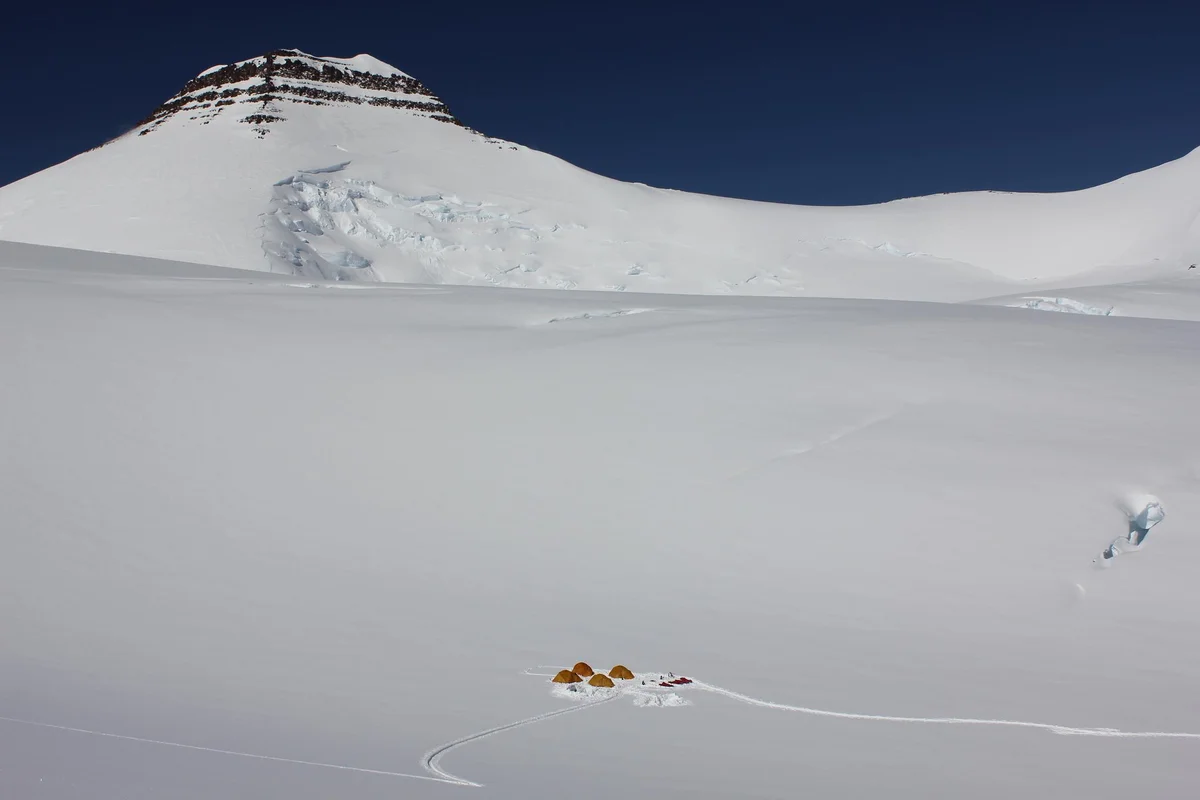
Gunnbjørn Fjeld is the highest mountain in Greenland and the highest peak north of the Arctic Circle at 3,694 metres (12,119 ft). Rising as an enormous basaltic nunatak above the glaciated plateau of the Watkins Range in East Greenland, it was first sighted from the air in 1930 by Gino Watkins and named after the 9th-century Norse explorer Gunnbjørn Ulfsson. The maiden first ascent was achieved on August 16, 1935, by Lawrence Wager, Ebbe Munck, Jack Longland, and Patrick Courtauld during an Anglo-Danish expedition. Climbing Gunnbjørn Fjeld involves moderate alpine glacier ascents, but requires complete self-reliance against extreme polar gales, severe windchill, and isolated Arctic conditions.
Documented Sources & Archival Citations
- The Anglo-Danish Expedition to East Greenland in 1935(L. R. Wager / The Geographical Journal)
Supporting claim: Primary expedition report and summit narrative
Accessed/Documented: 1936