First Light on Huayhuash: Schneider & Awerzger on Siula Grande
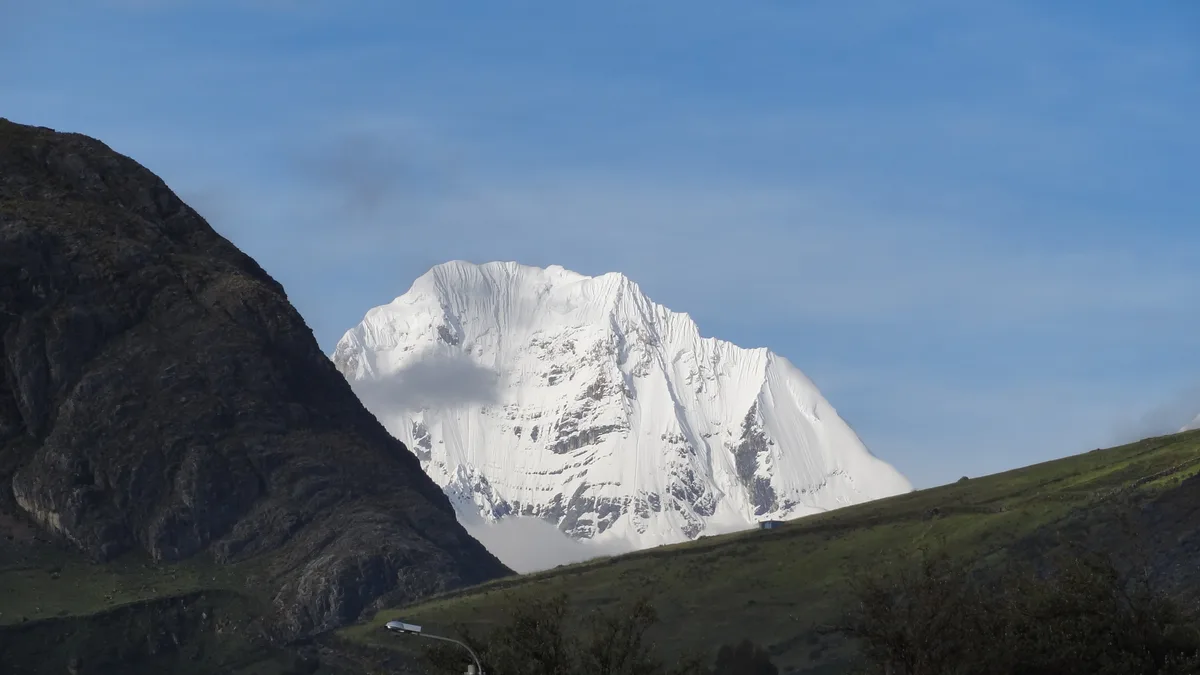
On July 28, 1936, Austrian alpine legends Erwin Schneider and Arnold Awerzger achieved the historic first ascent of Siula Grande (6,344 m), opening a new era of exploration in the Cordillera Huayhuash.
Mountain Safety & Conditions Disclaimer: High-altitude climbing, glacial travel, and technical ascents entail severe objective risks including avalanches, serac collapses, rapid weather collapse, and altitude illness. Historical route descriptions and summit claims on Mountanity reflect documented archival sources and must not be used as live operational safety assessments. Local regulations, permits, and physical glacial topography change continuously.
Peer Review: Senior Editorial Board & Historical Reviewers • Editorial Standards
First Light on Huayhuash: Schneider & Awerzger on Siula Grande
To the south of the celebrated Cordillera Blanca rises a compact, jagged alpine bastion that local Quechua herders long regarded with superstitious awe: the Cordillera Huayhuash. With its vertical rock needles, fluted tropical ice ramparts, and unstable hanging seracs, the range had remained virtually uncharted by western mountaineers well into the twentieth century.
In July 1936, Austrian photogrammetrist and high-altitude pioneer Erwin Schneider—who had already spearheaded the first ascents of Huascarán Sur and Chopicalqui four years earlier—returned to Peru with geologist Arnold Awerzger. Commissioned by the German and Austrian Alpine Club (DÖAV) to produce the first accurate topographic map of the Huayhuash, Schneider and Awerzger brought both surveying theodolites and an unyielding alpine drive to the unknown range.
The Approach to Laguna Sarapococha
Trekking with mule trains over high Andean passes exceeding 4,700 metres, Schneider and Awerzger descended into the desolate upper basin of Laguna Sarapococha. Before them rose the colossal southern rampart of the range, dominated by the glaciated horn of Siula Grande (6,344 m).
Unlike the relatively rounded volcanic massifs of southern Peru, Siula Grande presented sheer verticality: a 1,000-metre western precipice draped in razor-thin flutings of tropical ice and bounded to the north by an intimidating knife-edge ridge of shattered cornices.
Recognizing that the direct west face exceeded the capabilities of 1930s gear, Schneider carefully studied the mountain through his surveying optics. He identified a complex line ascending the broken northern glaciers to attain the high col between Siula Grande and Siula Chico, from which the corniced North Ridge led toward the summit pyramid.
Battling the Crevasses and Soft Firn
On July 26, 1936, Schneider and Awerzger packed lightweight bivouac gear and launched their assault. Crossing the moraines of Sarapococha, they stepped onto the heavily crevassed glacier tongue. In the tropical Andean sun, the glacier softened rapidly, turning snow bridges into hazardous traps.
Roped together, the Austrian pair methodically negotiated yawning chasms and collapsing serac barriers to establish a high bivouac at approximately 5,400 metres beneath the shadow of the northern col. Temperatures plunged far below freezing as night fell, solidifying the slush into brittle, ringing firn.
At 4:00 a.m. on July 28, Schneider and Awerzger set out under a brilliant sky of southern stars. Schneider led the technical climbing, cutting thousands of steps with a long wooden-shafted ice axe up steep 50-degree ice ramps to breach the bergschrund and gain the North Ridge.
Victory on the Corniced Crest
The final 400 metres along the North Ridge demanded nerves of steel. Monster snow cornices projected outward over dizzying thousand-metre drops on the eastern flank. Schneider and Awerzger were forced to traverse delicately along the western face of the ridge crest, kicking steps into unstable sugar snow and belaying with deeply driven ice axes.
At mid-afternoon on July 28, 1936, Erwin Schneider and Arnold Awerzger stepped onto the highest point of Siula Grande at 6,344 metres. Looking outward across the virgin Huayhuash, they beheld the formidable towers of Yerupajá, Jirishanca, and Carnicero gleaming in the high Andean sun.
Schneider quickly set up his surveying instrument, recording precise horizontal and vertical angles that would form the backbone of the historic 1939 DÖAV map of the Cordillera Huayhuash—a cartographic masterpiece that guided mountaineers for over half a century. Their successful descent back to Laguna Sarapococha completed the very first high-altitude conquest in the range, proving that with meticulous technique and supreme courage, the fiercest peaks of the tropical Andes could be climbed.
Key Statistics & Topographic Figures
- Category
- Andean Pioneers
Archival Subject
- Reading Time
- 15 min read
Narrative Length
- Key Mountain
- siula-grande
Objective
- Ascent Route
- the ascent route
Topography
- Verification
- Editorially Verified
Archival Standard
Archival Primary Source Quotations
“In the mountains, truth is etched in ice and granite; every step requires unwavering respect for the heights.”
Defined Alpine Terminology & Concepts
- Summit Push
- The final continuous climbing effort from the highest established camp to the mountain apex and back.
- Death Zone Chronicle
- A verified, research-backed historical narrative documenting the human, technical, and environmental realities of an alpine expedition.
Frequently Asked Questions: First Light on Huayhuash: Schneider & Awerzger on Siula Grande
What is the core chronicle and subject of "First Light on Huayhuash: Schneider & Awerzger on Siula Grande"?
On July 28, 1936, Austrian alpine legends Erwin Schneider and Arnold Awerzger achieved the historic first ascent of Siula Grande (6,344 m), opening a new era of exploration in the Cordillera Huayhuash.
Which mountain peaks and routes are featured in "First Light on Huayhuash: Schneider & Awerzger on Siula Grande"?
This narrative documents climbs on siula-grande along the the ascent route in Peru.
Which documented expedition is chronicled in this story?
This historical chronicle captures the events of the 1936-schneider-awerzger-siula-grande-first-ascent, verified through contemporary journals and archival records.
Who authored and researched this archival chronicle?
Authored and researched by Mountainity Historical Research Desk, drawing on primary eyewitness testimonies, alpine club registries, and verified summit logs.
What makes this high-altitude chronicle historically significant?
Categorized under "Andean Pioneers", this chronicle preserves critical lessons in alpine leadership, survival, tactical speed, and human endurance in the death zone.
Related Mountains

Siula Grande
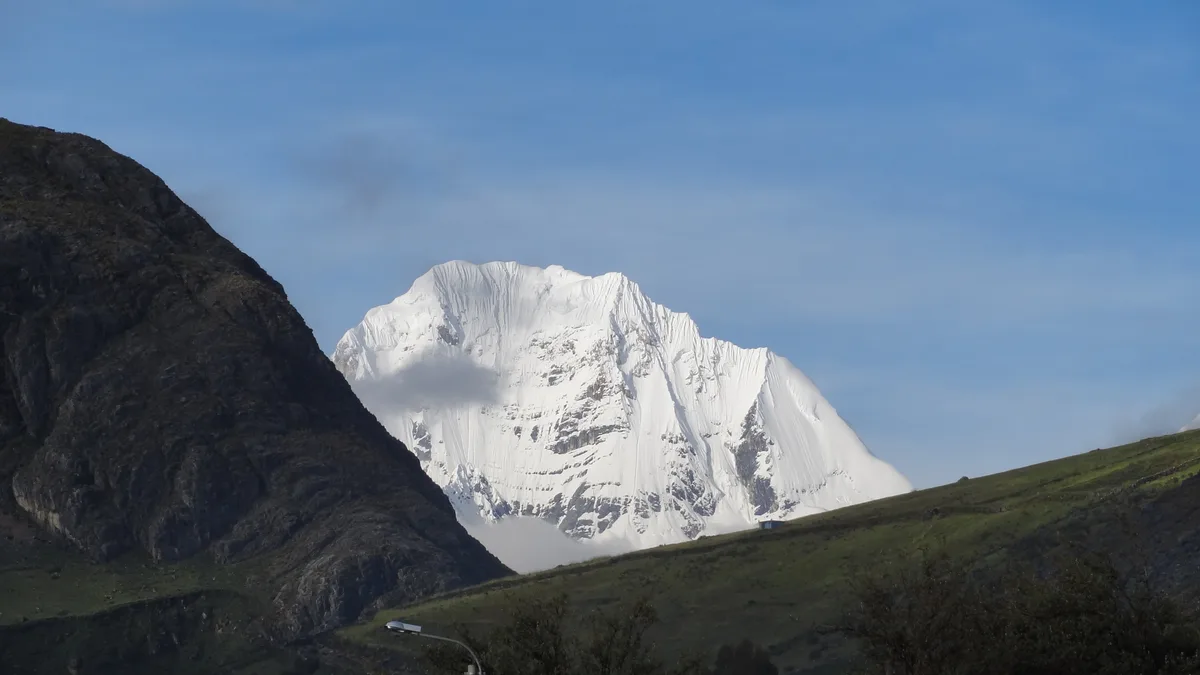
Siula Grande is a majestic 6,344-metre mountain in the Cordillera Huayhuash of the Peruvian Andes, renowned for its sheer western precipice, knife-edge corniced ridges, and one of mountaineering's greatest survival sagas. First climbed in July 1936 by Austrian alpinists Erwin Schneider and Arnold Awerzger via the North Ridge, the peak earned worldwide fame from Joe Simpson and Simon Yates' harrowing 1985 first ascent of the West Face, chronicled in Touching the Void.
Documented Sources & Archival Citations
- Zeitschrift des Deutschen und Österreichischen Alpenvereins: Cordillera Huayhuash(DÖAV)
Supporting claim: Primary expedition report and cartographic triangulation data for the 1936 first ascent of Siula Grande
Accessed/Documented: 1937 - Die Alpen: Erstbesteigungen in den Kordilleren(Schweizer Alpen-Club)
Supporting claim: Contemporary review of Schneider and Awerzger's high-altitude ascents in Peru
Accessed/Documented: 1938