White Fortress of El Cocuy: Kraus and Tamayo on Ritacuba Blanco in 1942
On April 3, 1942, Colombian pioneers Erwin Kraus and Guido Tamayo completed the historic first ascent of Ritacuba Blanco (5,410 m), crowning the Sierra Nevada del Cocuy.
Mountain Safety & Conditions Disclaimer: High-altitude climbing, glacial travel, and technical ascents entail severe objective risks including avalanches, serac collapses, rapid weather collapse, and altitude illness. Historical route descriptions and summit claims on Mountanity reflect documented archival sources and must not be used as live operational safety assessments. Local regulations, permits, and physical glacial topography change continuously.
Peer Review: Senior Editorial Board & Historical Reviewers • Editorial Standards
White Fortress of El Cocuy: Kraus and Tamayo on Ritacuba Blanco in 1942
The Glaciated Crown of Boyacá
Stretching along the jagged crest of the Cordillera Oriental in northeastern Colombia, the Sierra Nevada del Cocuy is a breathtaking alpine wonderland. Featuring more than twenty snow-capped peaks strung along a thirty-kilometre glaciated chain, El Cocuy represents the largest continuous ice reservoir in northern South America.
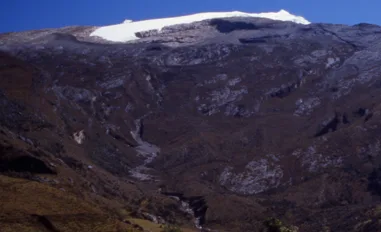
At the northern apex of this frozen fortress stood its undisputed monarch: Ritacuba Blanco (5,410 m), known in the indigenous U’wa language as Ritak’Uwa—the white peak of the spirits. Unlike its southern neighbour Ritacuba Negro, which presented dark, shattered rock precipices, Ritacuba Blanco was draped in a colossal, sweeping western glacier sheet that angled steeply toward an airy summit cornice.
Following his triumph on Pico Cristóbal Colón in 1939, Colombian alpine pioneer Erwin Kraus resolved to conquer El Cocuy without relying on foreign expeditions. Joining Kraus was Guido Tamayo, an exceptionally tough Colombian mountaineer, and companion Heriberto Degen. Together, they organized an entirely domestic assault on the highest peak of the Eastern Cordillera.
“Ritacuba Blanco appeared before us like an immense white sail frozen against the sky, commanding the silence of the high cordillera.” — Erwin Kraus, Ascensiones en la Sierra Nevada del Cocuy (1943)
The Assault of April 3, 1942
In late March 1942, Kraus, Tamayo, and Degen arrived in the remote mountain town of Güicán. Loading their gear onto pack mules, they ascended through steep paramo ridges dotted with blooming frailejones to establish a staging base at Kanwara (4,000 m).
From Kanwara, the three climbers shouldered heavy packs containing hemp climbing ropes, steel crampons, woolen clothing, and Kraus’s beloved glass-plate cameras. Navigating vast boulder fields, they established an assault bivy on the western moraine at 4,600 metres beneath the gleaming snout of the glacier.
On the freezing pre-dawn of April 3, 1942, roped together in the crisp mountain air, Kraus and Tamayo stepped onto the glacier. The ascent demanded steady, rhythmic crampon work up continuous 35- to 40-degree firn ramps. Kraus took the lead, probing snow bridges over deep crevasses and cutting steps where equatorial sun glare had hardened the firn into brittle ice.
Standing on the Knife-Edge Cornice
Above 5,200 metres, the slope steepened to 45 degrees. The thin air of the Eastern Cordillera burned their lungs, but the weather remained miraculously clear. Reaching the final summit shoulder, the climbers encountered a heart-stopping sight: a narrow, wind-sculpted snow cornice perched over a vertical drop of more than one thousand metres plunging down the sheer eastern rock faces toward the vast, green plains of the Casanare llanos.
With utmost caution, balancing on the knife-edge arête, Erwin Kraus and Guido Tamayo hauled themselves onto the true summit of Ritacuba Blanco at 5,410 metres.
The emotional triumph was overwhelming. For the first time in history, native Colombian climbers stood victorious upon the supreme summit of the Cordillera Oriental. Kraus captured magnificent photographs of the surrounding Cocuy spires—including Pan de Azúcar, El Púlpito del Diablo, and Ritacuba Negro—before commencing a safe descent. Their 1942 conquest proved that Colombian alpinists were masters of their own icy cordilleras, inaugurating the golden era of mountaineering in El Cocuy.
Key Statistics & Topographic Figures
- Category
- Andean Pioneers
Archival Subject
- Reading Time
- 14 min read
Narrative Length
- Key Mountain
- ritacuba-blanco
Objective
- Ascent Route
- ritacuba-blanco-normal-route
Topography
- Verification
- Editorially Verified
Archival Standard
Archival Primary Source Quotations
“In the mountains, truth is etched in ice and granite; every step requires unwavering respect for the heights.”
Defined Alpine Terminology & Concepts
- Summit Push
- The final continuous climbing effort from the highest established camp to the mountain apex and back.
- Death Zone Chronicle
- A verified, research-backed historical narrative documenting the human, technical, and environmental realities of an alpine expedition.
Frequently Asked Questions: White Fortress of El Cocuy: Kraus and Tamayo on Ritacuba Blanco in 1942
What is the core chronicle and subject of "White Fortress of El Cocuy: Kraus and Tamayo on Ritacuba Blanco in 1942"?
On April 3, 1942, Colombian pioneers Erwin Kraus and Guido Tamayo completed the historic first ascent of Ritacuba Blanco (5,410 m), crowning the Sierra Nevada del Cocuy.
Which mountain peaks and routes are featured in "White Fortress of El Cocuy: Kraus and Tamayo on Ritacuba Blanco in 1942"?
This narrative documents climbs on ritacuba-blanco along the ritacuba-blanco-normal-route in Colombia.
Which documented expedition is chronicled in this story?
This historical chronicle captures the events of the 1942-kraus-tamayo-ritacuba-blanco-first-ascent, verified through contemporary journals and archival records.
Who authored and researched this archival chronicle?
Authored and researched by Mountainity Historical Research Desk, drawing on primary eyewitness testimonies, alpine club registries, and verified summit logs.
What makes this high-altitude chronicle historically significant?
Categorized under "Andean Pioneers", this chronicle preserves critical lessons in alpine leadership, survival, tactical speed, and human endurance in the death zone.
Related Mountains
Ritacuba Blanco
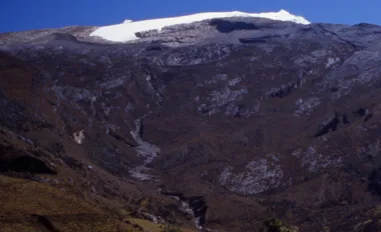
Ritacuba Blanco is the 5,410-metre crowning peak of the Cordillera Oriental of Colombia and the Sierra Nevada del Cocuy. Dominated by a massive western ice sheet and sheer eastern rock walls dropping precipitously toward the Amazonian llanos, Ritacuba Blanco is celebrated for its pristine glaciated ramps and high-altitude paramo lakes. The mountain was first climbed on April 3, 1942, by Erwin Kraus, Guido Tamayo, and Heriberto Degen.
Documented Sources & Archival Citations
- Ascensiones en la Sierra Nevada del Cocuy(Erwin Kraus / Revista Pan)
Supporting claim: Firsthand expedition memoirs and route details of the 1942 Ritacuba Blanco first ascent
Accessed/Documented: 1943 - Glaciares de Colombia(IDEAM)
Supporting claim: Historical documentation crediting the 1942 Kraus-Tamayo team with the first ascent
Accessed/Documented: 2012