The Missionary's Fortress: Father Alberto De Agostini's 1943 Conquest of Cerro San Lorenzo
In December 1943, sixty-year-old Salesian missionary Father Alberto María De Agostini led guides Alejandro Hemmi and Heriberto Schmoll to achieve the historic first ascent of Cerro San Lorenzo (3,706 m), Patagonia's second highest peak.
Mountain Safety & Conditions Disclaimer: High-altitude climbing, glacial travel, and technical ascents entail severe objective risks including avalanches, serac collapses, rapid weather collapse, and altitude illness. Historical route descriptions and summit claims on Mountanity reflect documented archival sources and must not be used as live operational safety assessments. Local regulations, permits, and physical glacial topography change continuously.
Peer Review: Senior Editorial Board & Historical Reviewers • Editorial Standards
The Apostle of the Patagonian Ice
Few explorers in mountaineering history carried a calling as remarkable as Father Alberto María De Agostini. Arriving in southern South America in 1910 as a young Salesian priest, De Agostini dedicated his life to spiritual ministry among the indigenous tribes of Tierra del Fuego while undertaking profound geographical, cartographic, and photographic explorations of the southern Andes. Armed with heavy wooden field cameras and glass plates, he braved uncharted fjords, dense lenga forests, and stormy continental icecaps to document a world never before captured on film.
By the 1940s, De Agostini had explored the Fitz Roy towers and the Cordillera Darwin. Yet one solitary titan had haunted his imagination for decades: Cerro San Lorenzo (3,706 m), an immense, ice-encrusted pyramid rising on the frontier between Chile and Argentina. Surrounded by four massive, heavily crevassed glaciers, San Lorenzo was defended by savage Pacific depressions that battered its flanks with horizontal blizzards for weeks on end.
The 1943 Expedition
In November 1943, during the height of global warfare in Europe, the sixty-year-old priest resolved to test himself against San Lorenzo’s formidable defenses. Partnering with seasoned alpine guides Alejandro Hemmi and Heriberto Schmoll, De Agostini established base camp in the remote valley of the Rio Tranquilo.
For nearly a month, the team was pinned inside their canvas tents by ferocious gales that dumped wet, heavy snow across the approach glaciers. Food ran dangerously low, and howling winds threatened to tear their camp into the river. But De Agostini’s patience was forged from thirty years of Patagonian exploration; he understood that survival in Patagonia belonged only to those who could outlast the sky.
The Summit Ridge
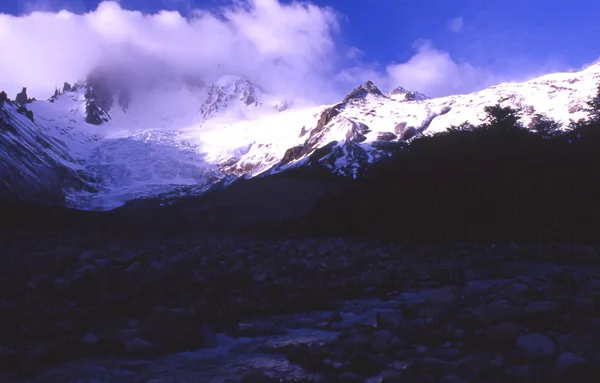
On December 16, the barometric pressure surged. The cloud ceiling tore open, revealing the blinding white fortress of San Lorenzo glistening against a deep azure sky. Moving swiftly, De Agostini, Hemmi, and Schmoll ascended the fractured icefalls of the southern glacier, threading a labyrinth of gaping crevasses and precarious snowbridges.
On the morning of December 17, 1943, they reached the steep upper ice slopes. Enduring piercing gales that threatened to sweep them off the exposed crest, the three men took turns cutting steps up 50-degree hard ice. At midday, they climbed onto the wind-carved rime summit mushroom at 3,706 metres. De Agostini offered prayers of gratitude for safe passage, planting the flags of Argentina and Chile side by side in the snowpack. At sixty years old, the humble Salesian priest had conquered the second highest mountain in Patagonia, writing one of the most romantic and enduring chapters in South American alpine history.
Key Statistics & Topographic Figures
- Category
- Patagonian Pioneers
Archival Subject
- Reading Time
- 15 min read
Narrative Length
- Key Mountain
- cerro-san-lorenzo
Objective
- Ascent Route
- the ascent route
Topography
- Verification
- Editorially Verified
Archival Standard
Archival Primary Source Quotations
“In the mountains, truth is etched in ice and granite; every step requires unwavering respect for the heights.”
Defined Alpine Terminology & Concepts
- Summit Push
- The final continuous climbing effort from the highest established camp to the mountain apex and back.
- Death Zone Chronicle
- A verified, research-backed historical narrative documenting the human, technical, and environmental realities of an alpine expedition.
Frequently Asked Questions: The Missionary's Fortress: Father Alberto De Agostini's 1943 Conquest of Cerro San Lorenzo
What is the core chronicle and subject of "The Missionary's Fortress: Father Alberto De Agostini's 1943 Conquest of Cerro San Lorenzo"?
In December 1943, sixty-year-old Salesian missionary Father Alberto María De Agostini led guides Alejandro Hemmi and Heriberto Schmoll to achieve the historic first ascent of Cerro San Lorenzo (3,706 m), Patagonia's second highest peak.
Which mountain peaks and routes are featured in "The Missionary's Fortress: Father Alberto De Agostini's 1943 Conquest of Cerro San Lorenzo"?
This narrative documents climbs on cerro-san-lorenzo along the the ascent route in Chile.
Which documented expedition is chronicled in this story?
This historical chronicle captures the events of the 1943-de-agostini-cerro-san-lorenzo-first-ascent, verified through contemporary journals and archival records.
Who authored and researched this archival chronicle?
Authored and researched by Mountainity Historical Research Desk, drawing on primary eyewitness testimonies, alpine club registries, and verified summit logs.
What makes this high-altitude chronicle historically significant?
Categorized under "Patagonian Pioneers", this chronicle preserves critical lessons in alpine leadership, survival, tactical speed, and human endurance in the death zone.
Related Mountains


Cerro San Lorenzo
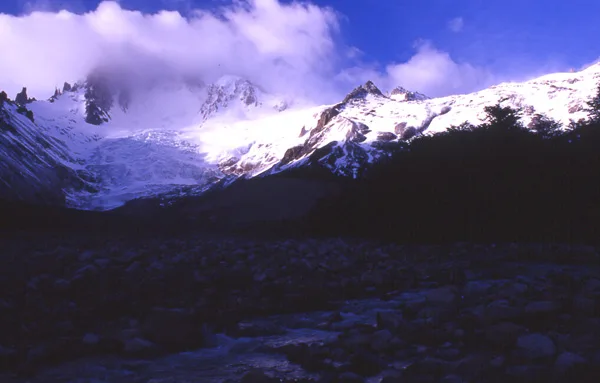
Cerro San Lorenzo, also known as Monte San Lorenzo or Mount Cochrane at 3,706 metres (12,159 ft), is the second highest peak in Patagonia, straddling the border between Chile and Argentina. Towering above the Patagonian steppes with a massive topographic prominence of 3,319 metres, it is an isolated giant surrounded by four heavily crevassed glaciers. In December 1943, sixty-year-old Salesian missionary and explorer Father Alberto María De Agostini led the historic first ascent with mountain guides Alejandro Hemmi and Heriberto Schmoll, overcoming brutal gales and treacherous sérac falls.
Documented Sources & Archival Citations
- Andes Patagónicos: Viaggi d'esplorazione(Alberto María De Agostini / Viglongo)
Supporting claim: Firsthand historical narrative of the 1943 expedition and ascent of Mount San Lorenzo
Accessed/Documented: 1949 - American Alpine Journal: Ascents in the San Lorenzo Massif(American Alpine Club)
Supporting claim: Historical analysis of early exploration and first ascents in central Patagonia
Accessed/Documented: 2026