Master of the Sierra: Erwin Kraus's 1952 Santa Marta Alpine Traverse
In 1952, Colombian pioneer Erwin Kraus executed a legendary three-week alpine traverse across the glaciated summits of the Sierra Nevada de Santa Marta.
Mountain Safety & Conditions Disclaimer: High-altitude climbing, glacial travel, and technical ascents entail severe objective risks including avalanches, serac collapses, rapid weather collapse, and altitude illness. Historical route descriptions and summit claims on Mountanity reflect documented archival sources and must not be used as live operational safety assessments. Local regulations, permits, and physical glacial topography change continuously.
Peer Review: Senior Editorial Board & Historical Reviewers • Editorial Standards
Master of the Sierra: Erwin Kraus’s 1952 Santa Marta Alpine Traverse
The Return of the Master
Thirteen years after his historic 1939 first ascent of Pico Cristóbal Colón, Erwin Kraus was widely acknowledged as the supreme authority on Colombia’s high mountains. He had stood atop the highest summits of Santa Marta, El Cocuy, Huila, and Tolima. Yet Kraus was troubled: global science had paid little heed to the fragile tropical glaciers of northern South America, and rapid warming was already beginning to shrink their icy margins.
In early 1952, supported by the Banco de la República, forty-seven-year-old Kraus organized an expedition of unprecedented ambition: a full high-altitude traverse across the glaciated core of the Sierra Nevada de Santa Marta. Rather than making a quick dash to a single summit, Kraus intended to spend three continuous weeks above 4,500 metres, climbing multiple virgin towers and systematically photographing every glacier basin.
“A mountain range is not conquered in a single day; to know its soul, one must live among its glaciers, endure its tempests, and walk its high ridges.” — Erwin Kraus, Travesías de la Sierra Nevada (1953)
High-Altitude Odyssey
In January 1952, Kraus and his team ascended from the southern slopes via the Donachui river valley. Trekking through the ancestral territories of the Arhuaco people, they established their primary high camp beside a remote glacial lake at 4,600 metres.
From this high outpost, Kraus embarked on an extraordinary sequence of climbs. In freezing, sub-zero dawn starts, Kraus led ascents across the North and South glaciers, summiting both Pico Cristóbal Colón (5,730 m) and Pico Simón Bolívar (5,728 m). He scrambled up surrounding unnamed granitic needles, establishing new routes and mapping unexplored glacier cirques.
Kraus carried bulky, custom-built view cameras and glass plates up steep firn ramps and rocky arêtes. Clinging to wind-swept ridges with numb fingers, he captured breathtaking panoramic photographs that documented the exact terminus of the glaciers, the morphology of moraines, and the altitudinal distribution of high paramo vegetation.
The Conservation Legacy
Kraus’s 1952 expedition was far more than an athletic triumph; it was a watershed moment for environmental conservation in Colombia. His photographs and scientific journals, published in the landmark monograph Travesías de la Sierra Nevada (1953), provided Colombian scientists with their first comprehensive photographic baseline of tropical alpine glaciation.
Kraus used his public prestige to advocate fiercely for the protection of Colombia’s fragile mountain ecosystems. His tireless campaigning was instrumental in the Colombian government’s decision to establish the Sierra Nevada de Santa Marta National Natural Park and the Sierra Nevada del Cocuy National Natural Park, protecting ancestral indigenous territories and fragile headwaters for future generations.
Until his death in 2003 at the age of ninety-seven, Erwin Kraus remained the revered patriarch of Colombian alpinism. His 1952 traverse remains celebrated as the pinnacle of exploratory mountaineering in northern South America.
Key Statistics & Topographic Figures
- Category
- Andean Pioneers
Archival Subject
- Reading Time
- 15 min read
Narrative Length
- Key Mountain
- pico-cristobal-colon
Objective
- Ascent Route
- cristobal-colon-north-face
Topography
- Verification
- Editorially Verified
Archival Standard
Archival Primary Source Quotations
“In the mountains, truth is etched in ice and granite; every step requires unwavering respect for the heights.”
Defined Alpine Terminology & Concepts
- Summit Push
- The final continuous climbing effort from the highest established camp to the mountain apex and back.
- Death Zone Chronicle
- A verified, research-backed historical narrative documenting the human, technical, and environmental realities of an alpine expedition.
Frequently Asked Questions: Master of the Sierra: Erwin Kraus's 1952 Santa Marta Alpine Traverse
What is the core chronicle and subject of "Master of the Sierra: Erwin Kraus's 1952 Santa Marta Alpine Traverse"?
In 1952, Colombian pioneer Erwin Kraus executed a legendary three-week alpine traverse across the glaciated summits of the Sierra Nevada de Santa Marta.
Which mountain peaks and routes are featured in "Master of the Sierra: Erwin Kraus's 1952 Santa Marta Alpine Traverse"?
This narrative documents climbs on pico-cristobal-colon along the cristobal-colon-north-face in Colombia.
Which documented expedition is chronicled in this story?
This historical chronicle captures the events of the 1952-kraus-santa-marta-traverse, verified through contemporary journals and archival records.
Who authored and researched this archival chronicle?
Authored and researched by Mountainity Historical Research Desk, drawing on primary eyewitness testimonies, alpine club registries, and verified summit logs.
What makes this high-altitude chronicle historically significant?
Categorized under "Andean Pioneers", this chronicle preserves critical lessons in alpine leadership, survival, tactical speed, and human endurance in the death zone.
Related Mountains
Pico Cristóbal Colón
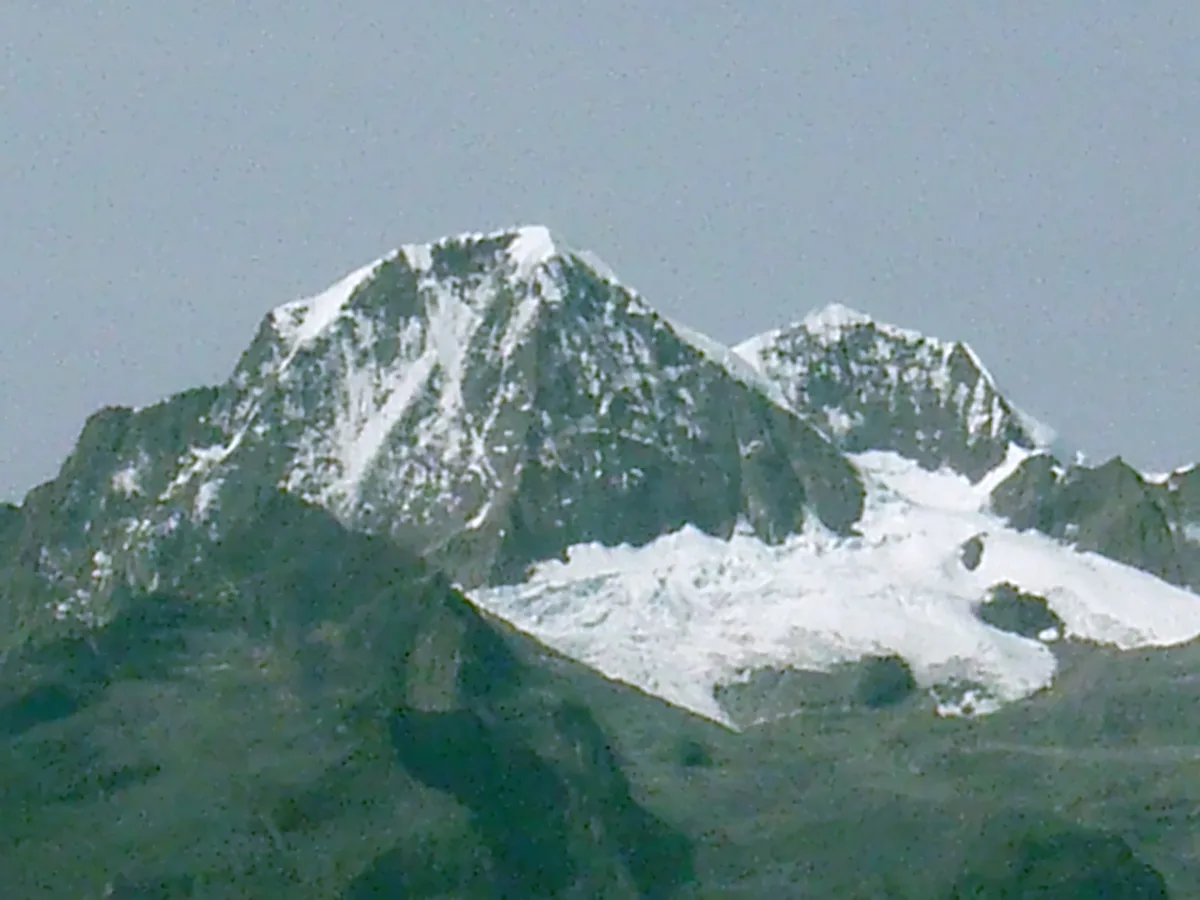
Pico Cristóbal Colón is the highest mountain in Colombia and the fifth most topographically prominent peak on Earth, soaring to 5,730 metres in the isolated coastal massif of the Sierra Nevada de Santa Marta. Rising abruptly just 42 kilometres from the Caribbean Sea, this glaciated titan holds profound sacred significance for indigenous Kogui, Arhuaco, Wiwa, and Kankuamo peoples as the heart of the world. The peak was first climbed in 1939 by Walter Wood, Anderson Bakewell, and Colombian mountaineering pioneer Erwin Kraus.
Documented Sources & Archival Citations
- Travesías de la Sierra Nevada(Erwin Kraus / Banco de la República)
Supporting claim: Firsthand expedition journal and glaciological survey of the 1952 Santa Marta traverse
Accessed/Documented: 1953 - Erwin Kraus: El Pintor de la Alta Montaña(Villegas Editores)
Supporting claim: Photographic monograph documenting Kraus's historic 1952 alpine journeys
Accessed/Documented: 2004