Conquering Begguya: Fred Beckey, Heinrich Harrer, and the West Ridge of Mount Hunter
In July 1954, legendary North American first ascent king Fred Beckey joined Eigerwand conqueror Heinrich Harrer and Henry Meybohm to achieve the historic first ascent of Mount Hunter.
Mountain Safety & Conditions Disclaimer: High-altitude climbing, glacial travel, and technical ascents entail severe objective risks including avalanches, serac collapses, rapid weather collapse, and altitude illness. Historical route descriptions and summit claims on Mountanity reflect documented archival sources and must not be used as live operational safety assessments. Local regulations, permits, and physical glacial topography change continuously.
Peer Review: Senior Editorial Board & Historical Reviewers • Editorial Standards
The Steepest Giant of the Central Range
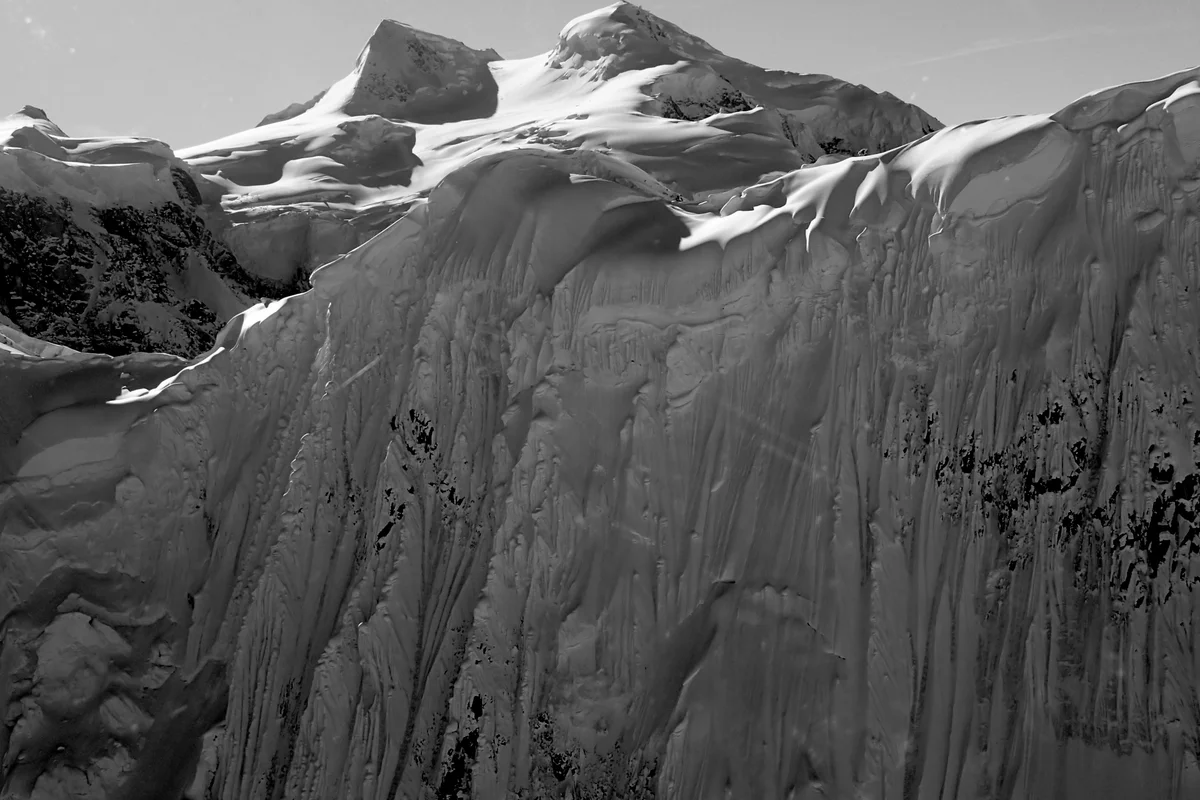
Standing just eight miles south of Denali in the heart of the Alaska Range, Mount Hunter (4,442 m) was long recognized by native Dena’ina Athabascans as Begguya—the child of Denali. While lower in absolute elevation than its giant neighbor, Mount Hunter presented an entirely different mountaineering proposition: a fortress of vertical granite walls, razor-sharp corniced arêtes, and hanging glacier tongues far steeper and more technically daunting than any other major mountain in the range.
By the mid-1950s, while both summits of Denali had been trodden, Mount Hunter remained completely unclimbed. Its sheer North Buttress and knife-edge western crest repelled early exploratory parties, who deemed its fragile snow mushrooms and avalanching flutes too dangerous for conventional alpine siege.
To thirty-one-year-old Fred Beckey, already on his way to becoming the most prolific first-ascent pioneer in North American history, Mount Hunter was the ultimate prize. Beckey assembled a brilliant, small international partnership: legendary Austrian mountaineer Heinrich Harrer—famed worldwide for completing the historic 1938 first ascent of the North Face of the Eiger and author of Seven Years in Tibet—and skilled German-American alpinist Henry Meybohm.
Landing in the Upper Kahiltna
In early June 1954, pioneer bush pilot Don Sheldon flew the three climbers onto the snowpack of the Kahiltna Glacier, landing at 7,000 feet directly beneath the northwest aspect of the mountain.
Surveying the massif with binoculars, Beckey and Harrer ruled out a direct assault on the terrifying vertical ice of the North Buttress. Instead, they identified an intricate, highly exposed line up the convoluted West Ridge: a three-mile-long spine of hanging cornices, knife-edge granite ribs, and shattered seracs that linked the Kahiltna basin to the vast summit plateau.
Hauling heavy loads across the crevassed lower slopes, the trio established Base Camp and began fixing lines up the initial steep couloirs. The technical climbing began immediately: pitches of 50-degree hard blue ice interspersed with rotten granite gendarmes requiring delicate piton placement in freezing fog.
The Knife-Edge of West Ridge
As the trio pushed along the upper crest of the West Ridge, the exposure became dizzying. In many sections, the ridge narrowed to a razor-sharp blade of aerated rime snow no wider than a climber’s boot. To the north, the ice dropped thousands of feet to the Kahiltna; to the south, sheer granite walls plunged into the untamed wilderness of the Tokositna Glacier.
Harrer’s masterclass in European ice technique complemented Beckey’s relentless speed and route-finding genius. The men had to straddle knife-edges à cheval—one leg dangling over each side of the mountain—while chopping through fragile, overhanging snow cornices that threatened to calve into the abyss.
Severe sub-arctic storms battered the ridge, trapping the climbers inside fragile tents pitched on narrow platforms carved into the ice. Spindrift avalanches poured over the canvas, threatening to sweep camp into the void. Yet during every fleeting break in the clouds, Beckey, Harrer, and Meybohm surged upward, fixing manila lines across treacherous ice towers.
Breakthrough to the Summit Plateau
On July 4, 1954, the team overcame the final rocky gendarme of the upper ridge and emerged onto the sweeping, heavily glaciated expanse of the summit plateau at 14,000 feet. Unlike Denali’s compact crown, Mount Hunter’s plateau is an undulating arctic icefield spanning nearly two miles, culminating in two distinct summits.
On the morning of July 5, 1954, beneath clear, sub-zero skies, Beckey, Harrer, and Meybohm roped together for the final summit push. Traversing the frozen crevasses of the plateau, they ascended the steepening southern snow dome.
At mid-afternoon, they reached the highest crest of the South Peak at 14,573 feet (4,442 metres), completing the historic first ascent of Mount Hunter.
Looking out across the central Alaska Range, the three men enjoyed a staggering view: the immense south face of Denali dominated the northern horizon, while the jagged granite spires of Mount Huntington and the Mooses Tooth pierced the ocean of clouds below.
An Enduring Alpine Masterpiece
The descent was an epic test of endurance. Navigating the knife-edge West Ridge in deteriorating weather, the men made dozens of rappels down iced cliffs, constantly re-anchoring ropes as summer warmth softened the snow bridges.
Reaching the Kahiltna base camp safely, they were picked up by Don Sheldon, concluding one of the cleanest and most technically impressive expeditions in Alaskan mountaineering history.
The 1954 first ascent of Mount Hunter proved that the extreme technical big walls and corniced ridges of the Alaska Range could be climbed by small, highly skilled teams in pure alpine spirit. It remains one of the crowning triumphs of Fred Beckey’s legendary seventy-year climbing career and a golden chapter in the exploration of the American north.
Key Statistics & Topographic Figures
- Category
- Alaska Range Technical Giants
Archival Subject
- Reading Time
- 15 min read
Narrative Length
- Key Mountain
- mount-hunter
Objective
- Ascent Route
- the ascent route
Topography
- Verification
- Editorially Verified
Archival Standard
Archival Primary Source Quotations
“In the mountains, truth is etched in ice and granite; every step requires unwavering respect for the heights.”
Defined Alpine Terminology & Concepts
- Summit Push
- The final continuous climbing effort from the highest established camp to the mountain apex and back.
- Death Zone Chronicle
- A verified, research-backed historical narrative documenting the human, technical, and environmental realities of an alpine expedition.
Frequently Asked Questions: Conquering Begguya: Fred Beckey, Heinrich Harrer, and the West Ridge of Mount Hunter
What is the core chronicle and subject of "Conquering Begguya: Fred Beckey, Heinrich Harrer, and the West Ridge of Mount Hunter"?
In July 1954, legendary North American first ascent king Fred Beckey joined Eigerwand conqueror Heinrich Harrer and Henry Meybohm to achieve the historic first ascent of Mount Hunter.
Which mountain peaks and routes are featured in "Conquering Begguya: Fred Beckey, Heinrich Harrer, and the West Ridge of Mount Hunter"?
This narrative documents climbs on mount-hunter along the the ascent route in United States.
Which documented expedition is chronicled in this story?
This historical chronicle captures the events of the 1954-beckey-meybohm-heinrich-mount-hunter, verified through contemporary journals and archival records.
Who authored and researched this archival chronicle?
Authored and researched by Mountainity Historical Research Desk, drawing on primary eyewitness testimonies, alpine club registries, and verified summit logs.
What makes this high-altitude chronicle historically significant?
Categorized under "Alaska Range Technical Giants", this chronicle preserves critical lessons in alpine leadership, survival, tactical speed, and human endurance in the death zone.
Related Mountains

Mount Hunter
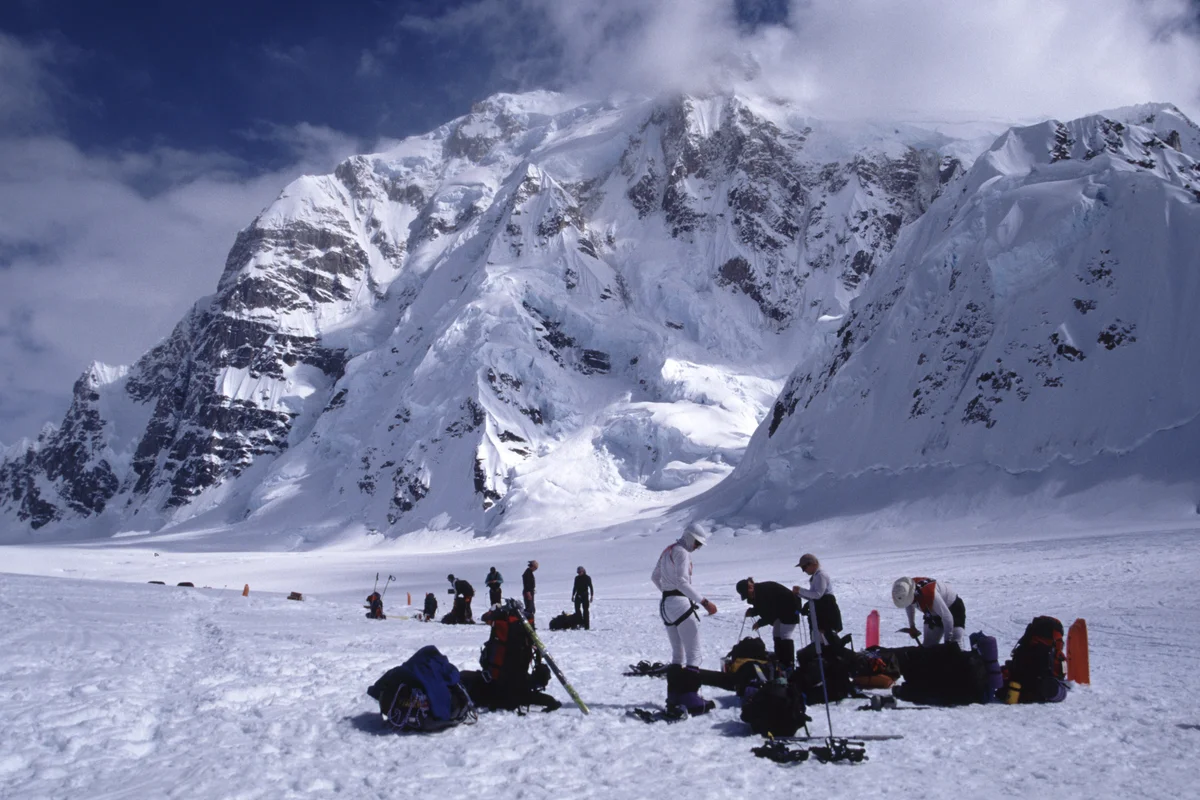
Mount Hunter, known natively in Dena'ina Athabascan as Begguya, is a 4,442-metre glaciated granite mountain situated approximately 13 kilometres south of Denali in the Alaska Range. Widely regarded as the steepest and most technically demanding of the central Alaska Range giants, it features soaring granite buttresses, hanging seracs, and severe corniced ridges.
Documented Sources & Archival Citations
- American Alpine Journal: Mount Hunter First Ascent (1955)(Fred Beckey / American Alpine Club)
Supporting claim: Primary expedition report written by Fred Beckey detailing the 1954 first ascent
Accessed/Documented: 2026 - High Alaska: A Historical Guide to Denali, Mount Foraker & Mount Hunter(Jonathan Waterman / The American Alpine Club)
Supporting claim: Historical analysis of the 1954 West Ridge route and team dynamics
Accessed/Documented: 2026