Mount Hunter
Mount Hunter, known natively in Dena'ina Athabascan as Begguya, is a 4,442-metre glaciated granite mountain situated approximately 13 kilometres south of Denali in the Alaska Range. Widely regarded as the steepest and most technically demanding of the central Alaska Range giants, it features soaring granite buttresses, hanging seracs, and severe corniced ridges.
 United States
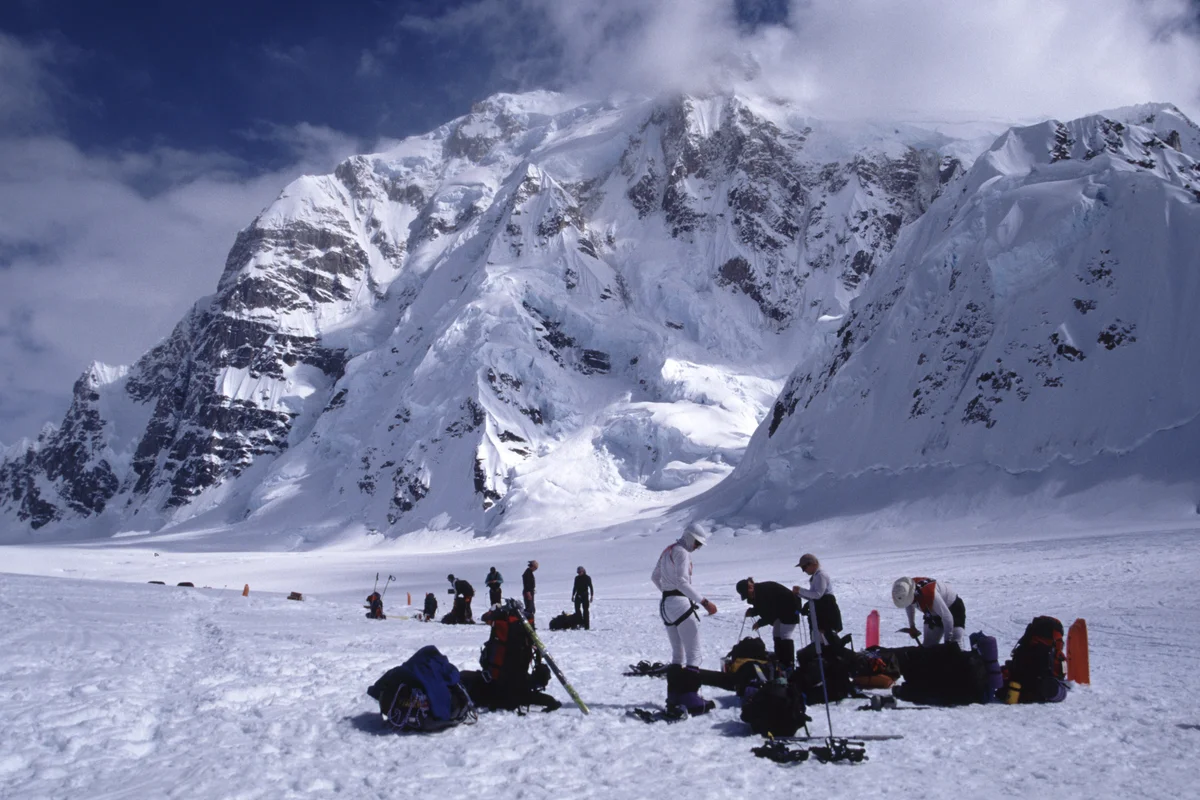
Mountain Safety & Conditions Disclaimer: High-altitude climbing, glacial travel, and technical ascents entail severe objective risks including avalanches, serac collapses, rapid weather collapse, and altitude illness. Historical route descriptions and summit claims on Mountanity reflect documented archival sources and must not be used as live operational safety assessments. Local regulations, permits, and physical glacial topography change continuously.
Peer Review: Senior Editorial Board & Historical Reviewers • Editorial Standards
Geographical Setting & Topography
Flanked by the Kahiltna Glacier on the west and the Tokositna Glacier on the east, Mount Hunter has a broad, glacier-sheathed summit plateau culminating in two distinct summits. Its North Buttress, home to iconic testpieces like the Moonflower Buttress, rises 1,200 vertical metres of sheer granite and vertical water ice, making it one of the premier extreme big-wall alpine objectives in the world.
Historic First Ascent
Date: 1954-07-05
Ascent Team: Fred Beckey, Heinrich Harrer, Henry Meybohm
Key Statistics & Topographic Figures
- Official Summit Elevation
- 4,442 metres (14,573 feet)
- Topographic Prominence
- 1,409 metres
- First Ascent Date
- July 5, 1954
- First Ascent Team
- Fred Beckey, Heinrich Harrer, Henry Meybohm
- Indigenous Name
- Begguya (Dena'ina Athabascan)
Archival Primary Source Quotations
“Mount Hunter is the most formidable, elegant, and steep rock and ice fortress in the central Alaska Range.”
Defined Alpine Terminology & Concepts
- Cornice
- An overhanging mass of wind-drifted hardened snow projecting over the leeward edge of a high-altitude mountain ridge.
- Rime Ice
- A crust of porous, fragile ice formed when supercooled water droplets in freezing fog freeze rapidly onto windward rock and snow.
Mount Hunter Mountain Weather Forecast
Detailed 14-Day Summit Window & Weather Timeline
Explore day-by-day summit push safety windows, wind shear analysis, and extended multi-day forecasts for Mount Hunter.
Explore Mount Hunter (4,442 m) in Interactive 3D
Inspect steep glacial walls, hanging seracs, ridge approaches, and elevation relief with 360° rotation and terrain tilt in WebGL.
Historical Expeditions (1)
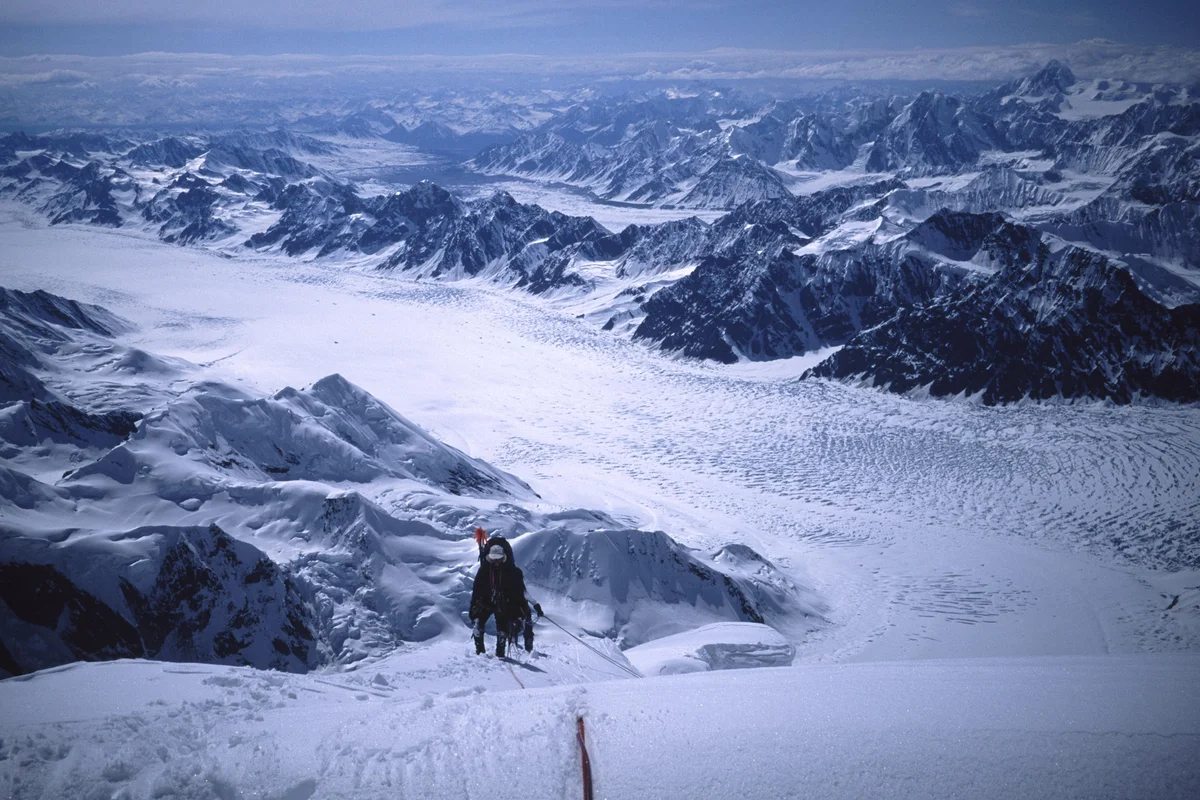
1954 First Ascent of Mount Hunter by Fred Beckey, Heinrich Harrer, and Henry Meybohm
On July 5, 1954, legendary North American mountaineer Fred Beckey, famed Eigerwand conqueror Heinrich Harrer, and German-American climber Henry Meybohm achieved the historic first ascent of Mount Hunter (4,442 m), conquering the heavily corniced West Ridge.
Summit Chronicles & Stories (1)
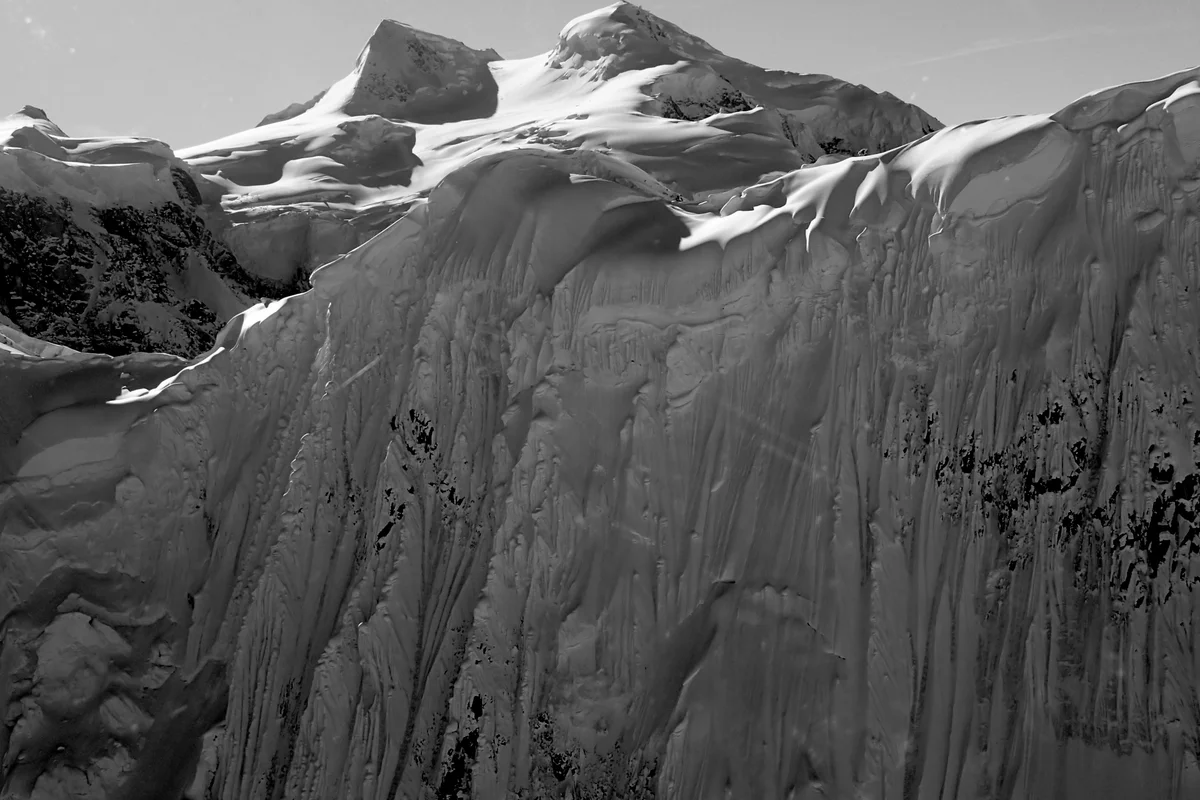
Conquering Begguya: Fred Beckey, Heinrich Harrer, and the West Ridge of Mount Hunter
In July 1954, legendary North American first ascent king Fred Beckey joined Eigerwand conqueror Heinrich Harrer and Henry Meybohm to achieve the historic first ascent of Mount Hunter.
Frequently Asked Questions: Mount Hunter
What is Mount Hunter and where is it located?
Mount Hunter, known natively as Begguya, is a 4,442-metre glaciated granite mountain situated eight miles south of Denali in the central Alaska Range.
Why is Mount Hunter regarded as the most difficult giant in the Alaska Range?
It combines extreme vertical relief, complex corniced knife-edge ridges, sweeping rime-covered faces, and severe objective avalanche hazards.
Who made the first ascent of Mount Hunter and when?
Fred Beckey, Heinrich Harrer, and Henry Meybohm completed the historic first ascent on July 5, 1954, via the challenging West Ridge.
What is the Native Alaskan name for Mount Hunter and what does it mean?
In the Dena'ina Athabascan language it is called Begguya, which translates poetically to Denali's Child.
What is the North Buttress of Mount Hunter famous for?
The North Buttress is home to extreme alpine testpieces, including the Moonflower Buttress, a 1,200-metre wall of sheer vertical granite and delicate water ice runnels.
What is the topography of Mount Hunter's summit?
The mountain features an expansive, gently undulating two-mile glaciated plateau with two distinct summits: the higher South Peak and the lower North Peak.
Which glaciers flank Mount Hunter?
It is bounded by the Southeast Fork of the Kahiltna Glacier on the west and north, and the wild Tokositna Glacier on the east and south.
How do climbers access Mount Hunter today?
Expeditions fly via ski-equipped bush aircraft from Talkeetna directly onto the Kahiltna Glacier base camp at 7,200 feet.
Documented Sources & Archival Citations
- American Alpine Journal: Mount Hunter First Ascent (1955)(American Alpine Club)
Supporting claim: Record of the 1954 first ascent via the West Ridge by Beckey, Harrer, and Meybohm
Accessed/Documented: 2026 - High Alaska: A Historical Guide to Denali, Mount Foraker & Mount Hunter(Jonathan Waterman / The American Alpine Club)
Supporting claim: Comprehensive alpine and climbing history of Mount Hunter
Accessed/Documented: 2026