Triumph on the Victory Ridge: Vitaly Abalakov's 1956 Conquest of Peak Pobeda
At age 50, climbing with amputated toes and fingers, Vitaly Abalakov leads an 11-man team to conquer Peak Pobeda (7,439 m), the deadliest peak in the Tien Shan.
Mountain Safety & Conditions Disclaimer: High-altitude climbing, glacial travel, and technical ascents entail severe objective risks including avalanches, serac collapses, rapid weather collapse, and altitude illness. Historical route descriptions and summit claims on Mountanity reflect documented archival sources and must not be used as live operational safety assessments. Local regulations, permits, and physical glacial topography change continuously.
Peer Review: Senior Editorial Board & Historical Reviewers • Editorial Standards
The Mountain of Death
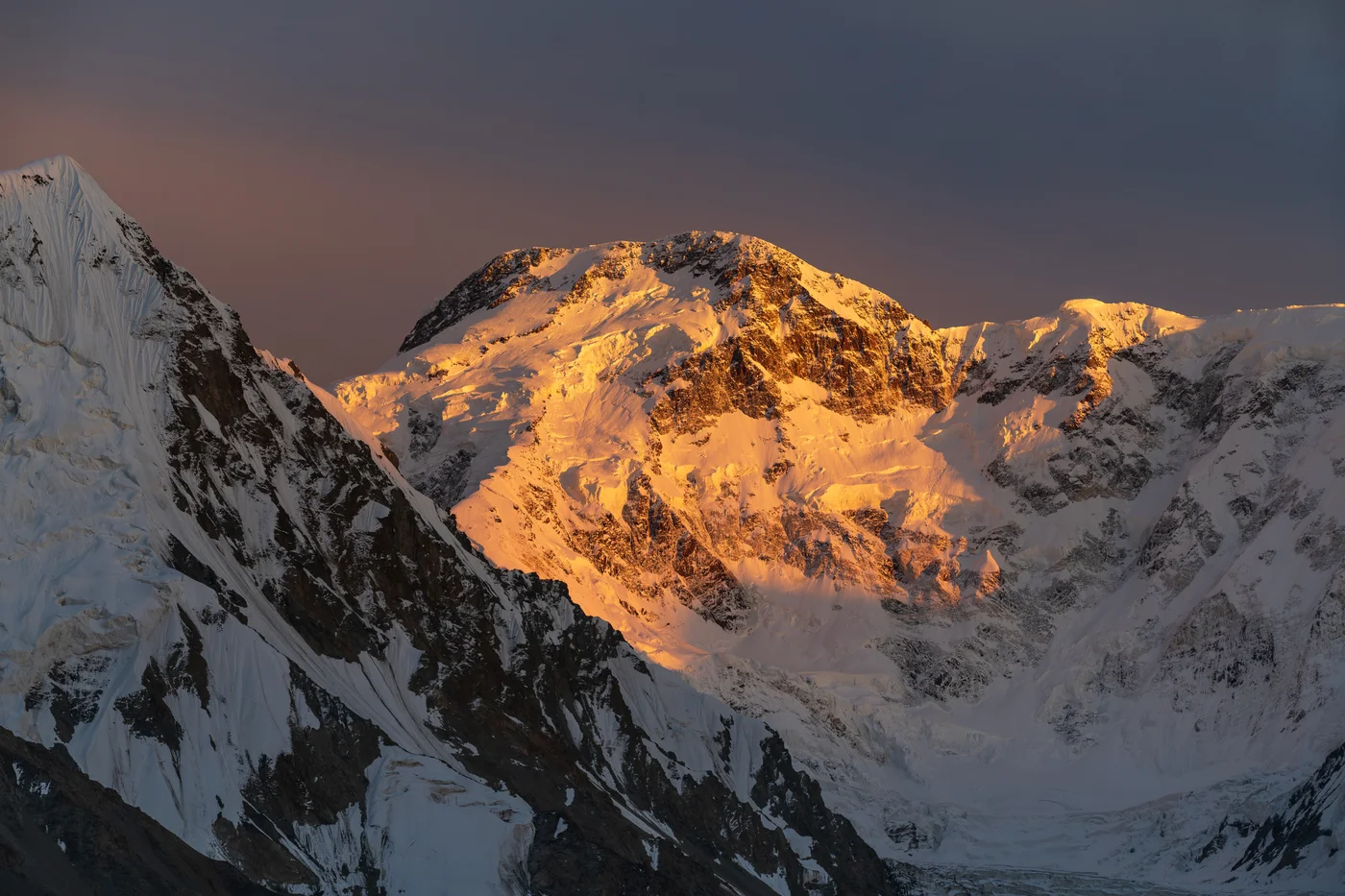
Along the frozen border between Kyrgyzstan and China, crowning the Kokshaal-Too range, stands Jengish Chokusu (7,439 m)—known throughout Soviet mountaineering as Peak Pobeda (‘Victory Peak’). It is the highest mountain in the entire Tien Shan, the northernmost 7,000-metre summit on Earth, and one of the most lethal alpine massifs in the world.
Unlike the isolated pyramids of the Karakoram, Pobeda is a colossal, multi-kilometre wall of ice and rock that blocks the bitter polar air masses sweeping down from the Siberian plains. Storms strike with apocalyptic fury, dropping temperatures to forty degrees below zero while hurricane winds scour the knife-edge summit crest.
In 1955, a twelve-man expedition from Kazakhstan attempted to climb Pobeda from the Chon-Teren pass. Caught in an unexpected blizzard above 6,900 metres, eleven climbers froze to death in a single catastrophic night, leaving only one sole survivor. Pobeda was officially declared an unclimbable mountain of death.
The Return of the Master
In 1956, Vitaly Mikhaylovich Abalakov accepted the challenge.
At age fifty, Vitaly was already a living legend. Twenty years earlier, he had lost thirteen fingers and toes to frostbite on Khan Tengri. Yet through relentless engineering ingenuity, he had designed custom prosthetics, rigid orthopedic boots, and innovative titanium climbing hardware that allowed him to climb at the highest technical grade.
Abalakov rejected the tactics of the doomed 1955 expedition. He recognized that high-altitude tents were completely useless in Pobeda’s hurricane winds; they would simply be torn to shreds. Instead, Abalakov mandated a radical new strategy: the team would carry heavy snow shovels and carve deep, subterranean snow caves into the high glaciers at every camp above 6,000 metres. Inside a snow cave, the temperature remained a stable minus two degrees Celsius, completely sheltered from the lethal winds outside.
The Siege of the North Ridge
In July 1956, Abalakov arrived on the Zvyozdochka Glacier at the head of an elite eleven-man team representing the Spartak sports society.
The climb up the North Ridge was a masterclass in tactical siege mountaineering. Establishing Camp 1 at 4,600 metres, the team fixed hundreds of metres of static line through avalanche chutes and shattered icefalls. Above 6,000 metres, they dug snow caves into the mountain’s flank, stocking them with dried meat, butter, and kerosene stoves.
By late August, the team reached the infamous Western Shoulder at 6,918 metres. Before them lay the supreme crux of the mountain: a four-kilometre knife-edge traverse along a heavily corniced snow arête situated entirely above 7,000 metres.
The Summit of Victory
On the morning of August 30, 1956, under biting sub-zero skies and howling winds, Vitaly Abalakov led ten teammates out of their high snow cave.
Roped together in three assault teams, the eleven climbers moved steadily along the razor crest. The cold was searing, freezing breath into icicles across their balaclavas. To their north, the cliffs dropped 3,000 vertical metres to the Zvyozdochka Glacier; to their south, the glaciated valleys of Xinjiang, China, receded into the hazy distance.
At 4:00 PM on August 30, Vitaly Abalakov pulled himself onto the highest snow dome of the summit ridge. One by one, all ten of his teammates joined him. Together, they planted the Soviet flag and a bronze plaque on the summit of Peak Pobeda at 7,439 metres.
Their conquest was a triumphant vindication of Soviet engineering, tactical discipline, and human endurance. Most remarkably, Vitaly Abalakov brought every single one of his eleven climbers down the mountain safely without a single injury or case of frostbite.
Through Abalakov’s genius, the most dreaded mountain in Central Asia had finally been conquered.
Key Statistics & Topographic Figures
- Category
- Central Asian Pioneers
Archival Subject
- Reading Time
- 19 min read
Narrative Length
- Key Mountain
- peak-pobeda
Objective
- Ascent Route
- peak-pobeda-north-ridge
Topography
- Verification
- Editorially Verified
Archival Standard
Archival Primary Source Quotations
“In the mountains, truth is etched in ice and granite; every step requires unwavering respect for the heights.”
Defined Alpine Terminology & Concepts
- Summit Push
- The final continuous climbing effort from the highest established camp to the mountain apex and back.
- Death Zone Chronicle
- A verified, research-backed historical narrative documenting the human, technical, and environmental realities of an alpine expedition.
Frequently Asked Questions: Triumph on the Victory Ridge: Vitaly Abalakov's 1956 Conquest of Peak Pobeda
What is the core chronicle and subject of "Triumph on the Victory Ridge: Vitaly Abalakov's 1956 Conquest of Peak Pobeda"?
At age 50, climbing with amputated toes and fingers, Vitaly Abalakov leads an 11-man team to conquer Peak Pobeda (7,439 m), the deadliest peak in the Tien Shan.
Which mountain peaks and routes are featured in "Triumph on the Victory Ridge: Vitaly Abalakov's 1956 Conquest of Peak Pobeda"?
This narrative documents climbs on peak-pobeda along the peak-pobeda-north-ridge in Kyrgyzstan.
Which documented expedition is chronicled in this story?
This historical chronicle captures the events of the 1956-vitaly-abalakov-peak-pobeda-first-ascent, verified through contemporary journals and archival records.
Who authored and researched this archival chronicle?
Authored and researched by Vitaly Abalakov, drawing on primary eyewitness testimonies, alpine club registries, and verified summit logs.
What makes this high-altitude chronicle historically significant?
Categorized under "Central Asian Pioneers", this chronicle preserves critical lessons in alpine leadership, survival, tactical speed, and human endurance in the death zone.
Related Mountains
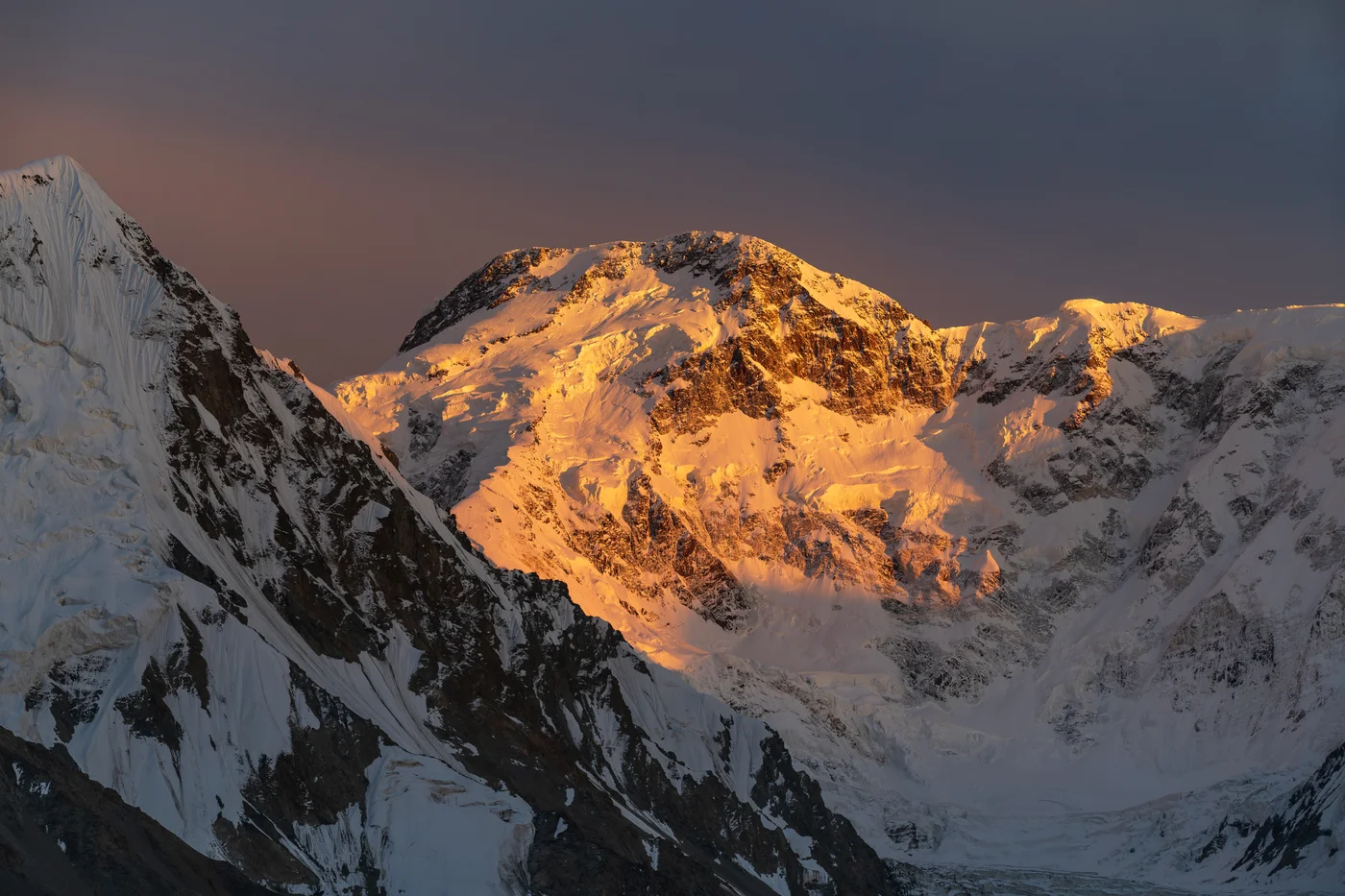


Jengish Chokusu / Peak Pobeda
Jengish Chokusu, historically renowned across the mountaineering world as Peak Pobeda ('Victory Peak'), is the supreme summit of the Tien Shan cordillera at 7,439 metres (24,406 ft) and the northernmost 7,000-metre peak on Earth. Rising along the formidable Kokshaal-Too range on the Kyrgyzstan-China border, Pobeda is notorious for catastrophic Arctic-like blizzards, sub-zero jet-stream gales, and massive hanging seracs that have claimed dozens of lives. The mountain was first conquered on August 30, 1956, by a legendary Soviet expedition led by Vitaly Abalakov via the harrowing North Ridge from the Zvyozdochka Glacier, marking one of the greatest high-altitude triumphs in Russian alpine history.
Documented Sources & Archival Citations
- The Conquest of Peak Pobeda(Fizkultura i Sport, Moscow / Vitaly Abalakov)
Supporting claim: Primary official expedition report and summit narrative of the 1956 North Ridge climb
Accessed/Documented: 1957