Gasherbrum I 1958: The American Conquest of Hidden Peak
On July 5, 1958, Pete Schoening and Andy Kauffman conquered the 8,080-meter summit of Gasherbrum I (Hidden Peak), achieving the only maiden first ascent of an eight-thousander in world history credited to an American team.
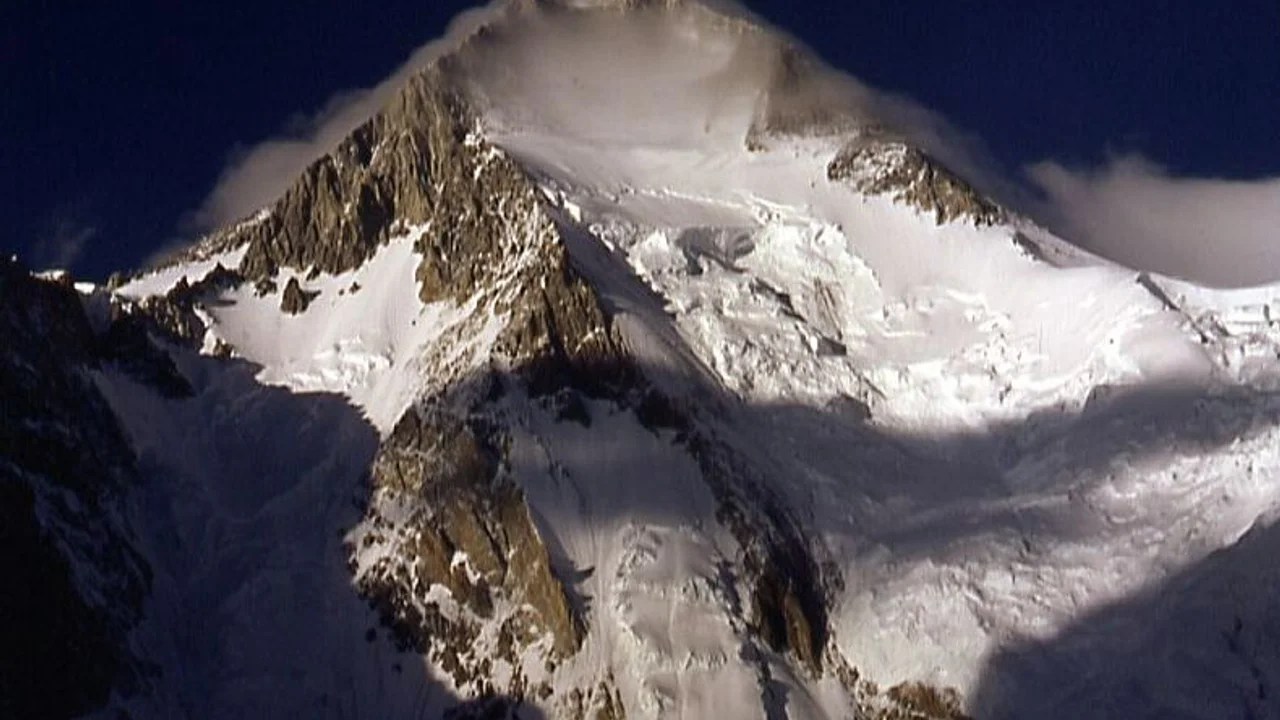
Mountain Safety & Conditions Disclaimer: High-altitude climbing, glacial travel, and technical ascents entail severe objective risks including avalanches, serac collapses, rapid weather collapse, and altitude illness. Historical route descriptions and summit claims on Mountanity reflect documented archival sources and must not be used as live operational safety assessments. Local regulations, permits, and physical glacial topography change continuously.
Peer Review: Senior Editorial Board & Historical Reviewers • Editorial Standards
Hidden deep within the frozen sanctuary of the Karakoram, shielded from ordinary vantage points along the Baltoro Glacier by towering bastion peaks, Gasherbrum I (8,068m / 8,080m, originally designated K5) was christened “Hidden Peak” in 1892 by British explorer William Martin Conway. Standing as the eleventh-highest mountain on Earth, its soaring ice ribs and sheer granite headwalls presented one of the most remote and intimidating mountaineering objectives in the world.
By the summer of 1957, eleven of the world’s fourteen 8,000-meter giants had fallen to European expeditions. The proud tradition of American mountaineering—though possessing legendary figures who had pioneered demanding routes in Alaska, the Canadian Rockies, and the Peruvian Andes—remained without a single maiden first ascent of an eight-thousander. Determined to alter that narrative, a spirited 27-year-old California attorney and climber named Nicholas “Nick” Clinch resolved to organize an all-American expedition to tackle Hidden Peak.
A Shoestring Dream and an Elite Vanguard
Unlike the well-funded state campaigns of European nations, Clinch’s expedition possessed no government subsidies. Nick Clinch personally financed major portions of the venture, scraping together donations from friends, the American Alpine Club, and even the Sports Car Club of America.
What Clinch lacked in budget, he made up for in talent. He recruited a brilliant climbing roster headlined by Peter Kittilsby Schoening—already a living legend for his miraculous 1953 ice-axe belay on K2 that had arrested the simultaneous fall of six teammates at 7,600 meters—and Andrew “Andy” Kauffman II, a veteran Harvard alpinist and diplomat with extensive experience in the high Andes. They were joined by Dick Irvin, Tom Nevison, Gil Roberts, Bob Swift, and Pakistani liaison officer Captain Mohammad Akram.
The Long March and the Roch Ridge
Arriving in Pakistan in May 1958, the expedition recruited over a hundred Balti porters to haul their modest gear up the long trek from Skardu through Askole and across the Baltoro Glacier. Passing Concordia, they turned into the wild upper basin of the South Gasherbrum Glacier, establishing Base Camp at 5,150 meters beneath the sheer west walls of the Gasherbrum massif.
Surveying the mountain, Schoening and Kauffman identified a viable line up the Southwest Ridge, known as the Roch Ridge (named after Swiss climber André Roch, who had explored the approach in 1934). The lower glacier was a treacherous labyrinth of unstable ice towers and concealed chasms, but working steadily, the team established a chain of five camps:
- Camp I at 5,700 meters in the glacial cirque.
- Camp II at 6,400 meters beneath the steep mixed ice ridge.
- Camp III at 6,700 meters atop the ridge crest.
- Camp IV at 7,000 meters below the upper snow fields.
- Camp V at 7,160 meters on a precarious snow ledge in the Death Zone.
The Summit Assault of July 5, 1958
On July 4, Pete Schoening and Andy Kauffman moved into Camp V carrying two lightweight open-circuit oxygen sets. That night, an intense Karakoram gale battered their small two-man tent, threatening to blow it into the thousands of feet of exposure below. By 4:00 AM on July 5, 1958, the winds subsided into a biting, crystal-clear freeze.
Strapping on their crampons and donning their bulky oxygen masks, Schoening and Kauffman set out into the dawn. Ahead lay nearly a thousand vertical meters of steep, sun-crusted snow and shattered limestone outcrops. With Schoening setting a relentless, rhythmic pace and Kauffman managing their oxygen flow rates, they crossed a vast snow plateau and tackled the steep diagonal couloir leading to the summit ridge.
As afternoon approached, the thin air took a heavy toll. Steps became agonizing, and their oxygen cylinders neared depletion. Yet at 3:00 PM on July 5, 1958, after ten hours of continuous climbing, Schoening and Kauffman stepped side-by-side onto the knife-edge crest of the 8,080-meter summit of Gasherbrum I.
An Enduring Milestone in American Alpinism
Standing on the tiny summit platform, Schoening planted the American and Pakistani flags on his ice axe. Looking across the sea of Karakoram peaks, they could gaze directly across at K2, Broad Peak, and the towering wall of Gasherbrum II. They spent nearly an hour on the summit taking photographs and scientific readings before beginning a tense, exhausted descent.
Running out of oxygen during the descent, both men reached Camp V in twilight, their energy thoroughly spent but their bodies intact without serious frostbite. Under Nick Clinch’s selfless coordination, the entire team safely evacuated the mountain, returning to Rawalpindi in triumph.
The 1958 conquest of Gasherbrum I remains a singular chapter in mountaineering history: it was the first and only maiden first ascent of an 8,000-meter peak achieved by American mountaineers, executed with amateur camaraderie, impeccable ethics, and flawless teamwork.
Key Statistics & Topographic Figures
- Category
- Historic Expeditions
Archival Subject
- Reading Time
- 13 min read
Narrative Length
- Key Mountain
- gasherbrum-1
Objective
- Ascent Route
- gasherbrum-1-normal
Topography
- Verification
- Editorially Verified
Archival Standard
Archival Primary Source Quotations
“In the mountains, truth is etched in ice and granite; every step requires unwavering respect for the heights.”
Defined Alpine Terminology & Concepts
- Summit Push
- The final continuous climbing effort from the highest established camp to the mountain apex and back.
- Death Zone Chronicle
- A verified, research-backed historical narrative documenting the human, technical, and environmental realities of an alpine expedition.
Frequently Asked Questions: Gasherbrum I 1958: The American Conquest of Hidden Peak
What is the core chronicle and subject of "Gasherbrum I 1958: The American Conquest of Hidden Peak"?
On July 5, 1958, Pete Schoening and Andy Kauffman conquered the 8,080-meter summit of Gasherbrum I (Hidden Peak), achieving the only maiden first ascent of an eight-thousander in world history credited to an American team.
Which mountain peaks and routes are featured in "Gasherbrum I 1958: The American Conquest of Hidden Peak"?
This narrative documents climbs on gasherbrum-1 along the gasherbrum-1-normal in Pakistan.
Which documented expedition is chronicled in this story?
This historical chronicle captures the events of the 1958-american-gasherbrum-1, verified through contemporary journals and archival records.
Who authored and researched this archival chronicle?
Authored and researched by Mountainity Historical Research Desk, drawing on primary eyewitness testimonies, alpine club registries, and verified summit logs.
What makes this high-altitude chronicle historically significant?
Categorized under "Historic Expeditions", this chronicle preserves critical lessons in alpine leadership, survival, tactical speed, and human endurance in the death zone.
Related Mountains
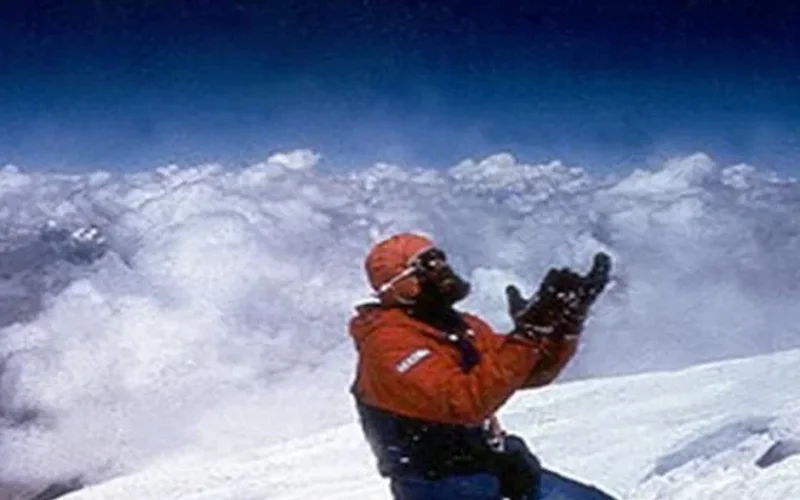


Gasherbrum I
Gasherbrum I, at 8,068 meters (26,470 ft), is the eleventh-highest mountain in the world. Named 'Hidden Peak' by explorer William Martin Conway due to its concealment behind surrounding Karakoram giants, it stands on the border between Pakistan and China. The peak was first climbed in 1958 by an American team led by Nick Clinch, and in 1992 Nazir Sabir summited it with Rajab Shah and Mehrban Shah, marking his fourth Pakistani eight-thousander.
Documented Sources & Archival Citations
- A Walk in the Sky: Nicholas Clinch and the 1958 Ascent of Hidden Peak(The Mountaineers Books)
Supporting claim: Official expedition chronicle detailing the planning, route establishment, and summit day
Accessed/Documented: 1982 - The Himalayan Database: Gasherbrum I 1958 Records(Elizabeth Hawley Archive)
Supporting claim: Official expedition verification and summit registration
Accessed/Documented: 2026 - American Alpine Journal: First Ascent of Gasherbrum I(American Alpine Club)
Supporting claim: Official expedition chronicle by Nicholas Clinch and Pete Schoening
Accessed/Documented: 1959