The Italian Masterpiece: Riccardo Cassin and the Ragni di Lecco on Denali's South Face
In July 1961, fifty-two-year-old Italian titan Riccardo Cassin led the Ragni di Lecco on an audacious 2,500-metre direct assault up Denali's sheer South Face, forging the legendary Cassin Ridge.
Mountain Safety & Conditions Disclaimer: High-altitude climbing, glacial travel, and technical ascents entail severe objective risks including avalanches, serac collapses, rapid weather collapse, and altitude illness. Historical route descriptions and summit claims on Mountanity reflect documented archival sources and must not be used as live operational safety assessments. Local regulations, permits, and physical glacial topography change continuously.
Peer Review: Senior Editorial Board & Historical Reviewers • Editorial Standards
The Great Unclimbed Precipice
By the dawn of the 1960s, Denali was recognized as an Arctic giant, but its towering direct faces remained largely untouched. Rising above the Southeast Fork of the Kahiltna Glacier was an alpine wall that stunned all who looked upon it: the sheer, 8,000-foot South Face, bisected by a soaring, razor-sharp granite and ice ridge pointing directly toward the summit horn like an arrow aimed at heaven.
To conquer this terrifying wall, Bradford Washburn personally contacted the legendary Italian alpinist Riccardo Cassin. At fifty-two years old, Cassin was already a living myth of world mountaineering—the conqueror of the Walker Spur on the Grandes Jorasses, the Northeast Face of Piz Badile, and the leader of the triumphant 1958 Gasherbrum IV expedition.
Cassin accepted the challenge immediately. Gathering five elite young disciples from the Ragni della Grignetta in Lecco—Luigi Airoldi, Gigi Alippi, Giancarlo Canali, Romano Perego, and Annibale Zucchi—Cassin flew to Alaska in June 1961, determined to apply the relentless, bold ethics of the Italian Alps to the wildest big wall on the North American continent.
The Valley of Death and the Japanese Couloir
Bush pilot Don Sheldon flew the Italian team into the Northeast Fork of the Kahiltna Glacier. Surrounded by plunging granite precipices that rained down avalanches of rock and hanging seracs daily, the climbers aptly christened their base camp La Valle della Morte—the Valley of Death.
On July 6, 1961, Cassin initiated the attack. Crossing the chaotic bergschrund at the base of the wall, the team confronted their first major obstacle: the Japanese Couloir, a terrifying, 1,000-foot chute of 60-degree blue ice raked by frequent rockfall.
Climbing in heavy leather boots with vintage ten-point crampons, Cassin and his men hacked thousands of steps up the couloir, fixing hemp and manila ropes to haul heavy canvas haul-bags up into the vertical void.
At the top of the couloir, they emerged onto the base of the First Rock Band. The terrain was uncompromising: near-vertical slabs of hard Alaskan granite plastered with paper-thin runnels of water ice. Cassin took the lead on the crux pitches, hammering chrome-moly pitons into hairline cracks and pulling over overhanging blocks with the raw physical strength of a blacksmith.
The Knife Edge and Sub-Zero Bivouacs
Above the first rock band, the line transformed into a breathless knife-edge snow arête. Walking a razor crest of aerated rime snow with sheer thousands of feet plunging into the mist on either side, the Italians moved in pure alpine commitment.
Unlike modern climbers who utilize lightweight down gear and portable stoves, Cassin’s team carried heavy, bulky equipment. As days dragged into weeks on the wall, severe Arctic storms swept over Denali, dropping ambient temperatures below minus thirty degrees Fahrenheit.
The climbers had no tents suitable for the sheer rock walls. Instead, they hacked narrow shelves into solid blue ice, sitting side by side in frozen bivouac sacks with their feet dangling over the abyss. Ice accumulated inside their jackets, and frostbite began gnawing at their fingers and toes.
When Giancarlo Canali developed severe frostbite and food supplies began running out, Cassin made the bold decision that defined his climbing philosophy: there would be no retreat. The only way down was over the summit.
Breakthrough on the Second Rock Band
On July 17, pushing through dense fog and driving snow squalls, Cassin unlocked the formidable Second Rock Band at 17,000 feet. Navigating a steep, crumbly couloir flanked by vertical granite bastions, the Italian leader pulled himself onto the upper snowfields of the south face.
Above lay two thousand vertical feet of unrelenting mixed snow, ice, and loose rock. The team’s stoves failed, and for two days the men could not melt snow for water, chewing on frozen ice crystals while their tongues swelled with dehydration.
Yet their discipline held. Alternating leads and shielding their injured companions from the wind, the six climbers steadily ground their way up the final triangular snow face.
Triumph on the Kahiltna Horn
At 7:00 PM on July 19, 1961, the cloud layer suddenly broke, revealing a blazing northern sun. Pushing up the final snowy knife-edge, Riccardo Cassin stepped onto the crest near the Kahiltna Horn and traversed to the 20,310-foot summit of Denali.
Behind him, all five of his companions stood atop North America’s crown. Every single member of the expedition had made the top—an unprecedented achievement on an extreme Grade VI big wall.
Tearful and exhausted, the frostbitten climbers embraced before beginning the long, precarious descent down the West Buttress. At the 14,000-foot basin, American climbers provided hot soup, and bush pilot Don Sheldon flew the injured men to Anchorage hospitals, where doctors saved their limbs.
The climb stunned the mountaineering world. In Washington, President John F. Kennedy sent a personal telegram to Riccardo Cassin, hailing the climb as an unparalleled testament to human courage, teamwork, and alpine brilliance. The Cassin Ridge remains to this day the definitive alpine masterpiece of the Alaska Range.
Key Statistics & Topographic Figures
- Category
- Extreme Alpine Big Walls
Archival Subject
- Reading Time
- 16 min read
Narrative Length
- Key Mountain
- denali
Objective
- Ascent Route
- denali-cassin-ridge
Topography
- Verification
- Editorially Verified
Archival Standard
Archival Primary Source Quotations
“In the mountains, truth is etched in ice and granite; every step requires unwavering respect for the heights.”
Defined Alpine Terminology & Concepts
- Summit Push
- The final continuous climbing effort from the highest established camp to the mountain apex and back.
- Death Zone Chronicle
- A verified, research-backed historical narrative documenting the human, technical, and environmental realities of an alpine expedition.
Frequently Asked Questions: The Italian Masterpiece: Riccardo Cassin and the Ragni di Lecco on Denali's South Face
What is the core chronicle and subject of "The Italian Masterpiece: Riccardo Cassin and the Ragni di Lecco on Denali's South Face"?
In July 1961, fifty-two-year-old Italian titan Riccardo Cassin led the Ragni di Lecco on an audacious 2,500-metre direct assault up Denali's sheer South Face, forging the legendary Cassin Ridge.
Which mountain peaks and routes are featured in "The Italian Masterpiece: Riccardo Cassin and the Ragni di Lecco on Denali's South Face"?
This narrative documents climbs on denali along the denali-cassin-ridge in United States.
Which documented expedition is chronicled in this story?
This historical chronicle captures the events of the 1961-cassin-denali-south-face, verified through contemporary journals and archival records.
Who authored and researched this archival chronicle?
Authored and researched by Mountainity Historical Research Desk, drawing on primary eyewitness testimonies, alpine club registries, and verified summit logs.
What makes this high-altitude chronicle historically significant?
Categorized under "Extreme Alpine Big Walls", this chronicle preserves critical lessons in alpine leadership, survival, tactical speed, and human endurance in the death zone.
Related Mountains
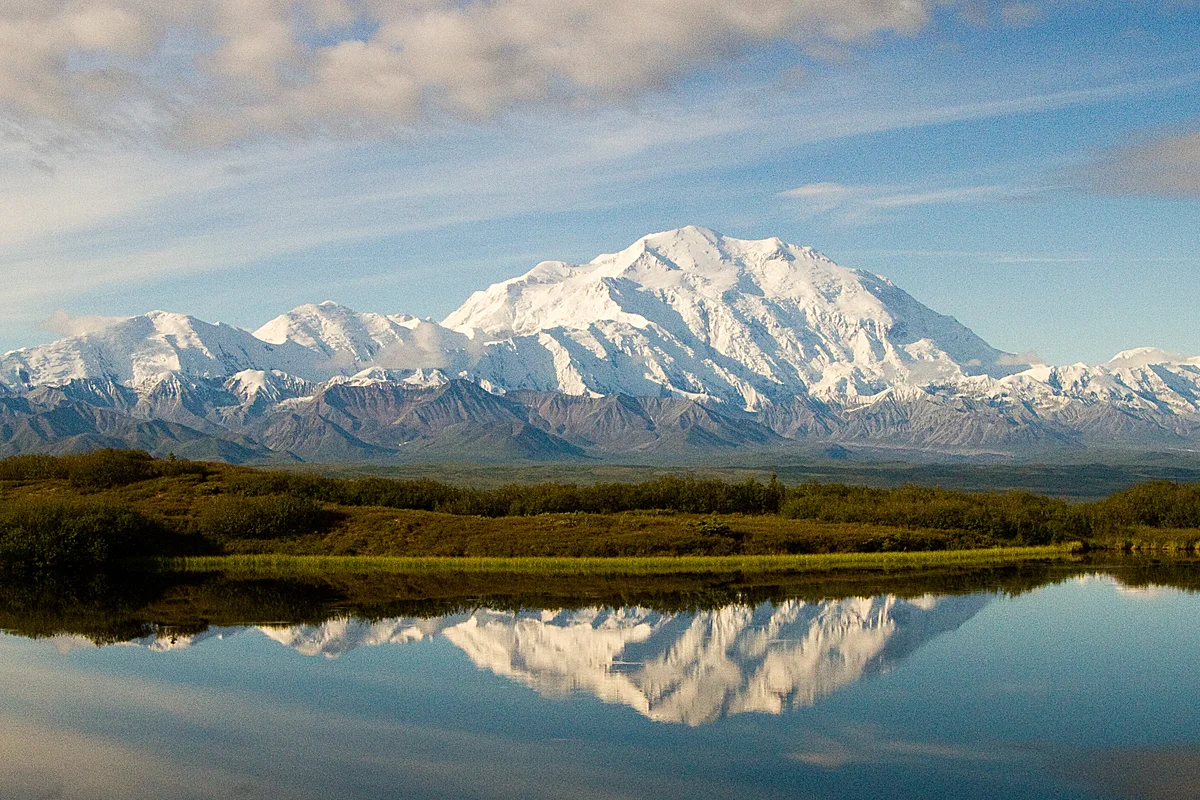

Denali
Denali is the highest mountain peak in North America, soaring to an elevation of 6,190 metres in south-central Alaska. Ranked third among the world's most topographically prominent summits, it possesses greater vertical base-to-peak relief than Mount Everest, rising over 5,500 vertical metres above the surrounding glacial plains amidst severe Arctic storms and extreme sub-zero temperatures.
Documented Sources & Archival Citations
- American Alpine Journal: Cassin Ridge First Ascent (1962)(Riccardo Cassin / American Alpine Club)
Supporting claim: Official expedition narrative written by Riccardo Cassin detailing the 1961 ascent
Accessed/Documented: 2026 - 50 Years of Alpinism(Riccardo Cassin / Diadem Books)
Supporting claim: Comprehensive memoirs chronicling the Ragni di Lecco's Denali expedition
Accessed/Documented: 2026