1975 Gasherbrum I: Messner & Habeler Alpine Revolution
In August 1975, Reinhold Messner and Peter Habeler overturned eight decades of siege tactics by ascending Gasherbrum I in a lightning three-day alpine-style push.
Mountain Safety & Conditions Disclaimer: High-altitude climbing, glacial travel, and technical ascents entail severe objective risks including avalanches, serac collapses, rapid weather collapse, and altitude illness. Historical route descriptions and summit claims on Mountainity reflect documented archival sources and must not be used as live operational safety assessments. Local regulations, permits, and physical glacial topography change continuously.
Peer Review: Senior Editorial Board & Historical Reviewers • Editorial Standards
The Tyranny of the Siege Machine
By the mid-1970s, Himalayan expeditions had grown into massive, ponderous military operations. Heavyweight national teams routinely employed dozens of climbers, hundreds of high-altitude porters, miles of fixed rope, and tons of equipment to establish elaborate chains of camps up 8,000-metre peaks. While effective, this siege style effectively insulated climbers from true commitment to the mountain wall.
South Tyrolean visionary Reinhold Messner and Austrian mountain guide Peter Habeler harbored a radically different conviction: that the pure, lightweight alpine style practiced in the Western Alps—carrying everything on one’s back, fixing no ropes, employing no high-altitude porters, and shunning supplemental oxygen—could be transplanted directly onto an 8,000-metre giant.
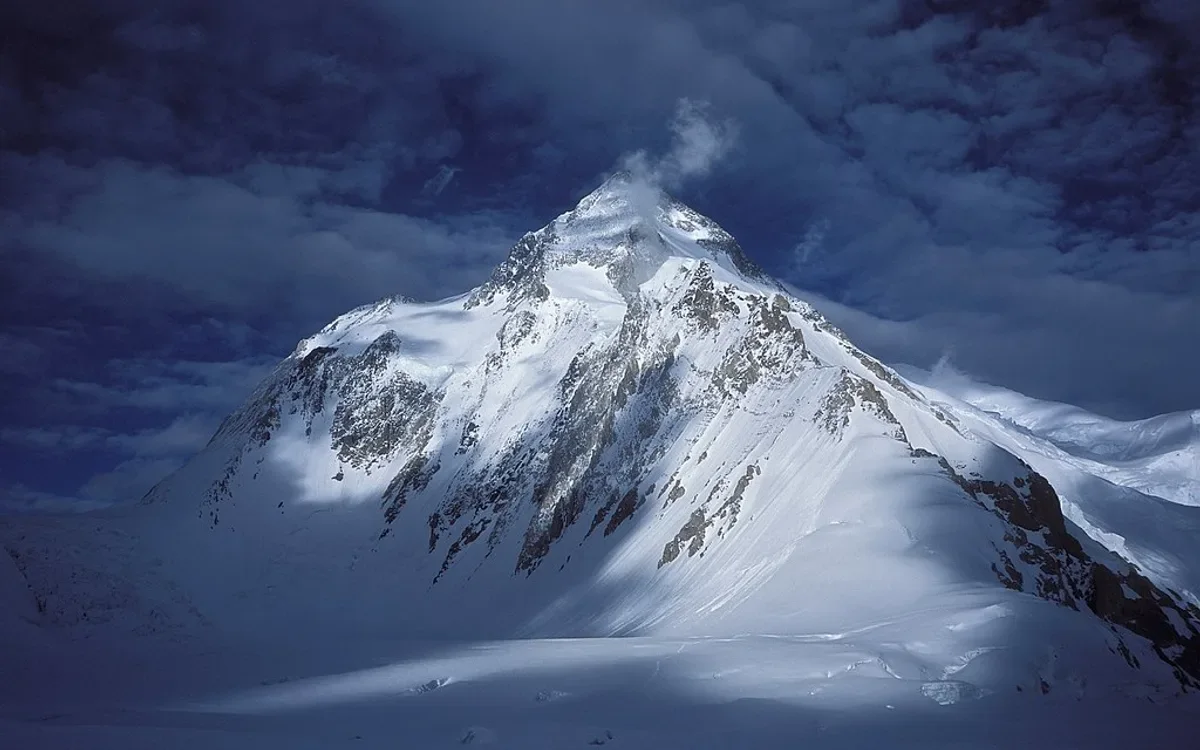
Their objective was Gasherbrum I (8,080m), also known as Hidden Peak, nestled deep in the Karakoram at the head of the Baltoro Glacier.
A Two-Man Army: The Philosophy of Lightness
Messner and Habeler arrived at the base of the Gasherbrum Glacier in July 1975 with zero porters beyond base camp. Their total high-altitude gear weighed a mere fraction of what a standard siege expedition consumed for a single high camp:
- A single lightweight two-man storm tent.
- Two ultralight down sleeping bags and two foam mats.
- One small gas stove, fuel cartridges, and high-calorie freeze-dried rations.
- One 50-meter rope, a handful of ice screws, snow pickets, and carabiners.
- Zero oxygen cylinders, regulators, or masks.
The philosophy was uncompromising: speed was their armor. By moving fast, they would spend minimal time exposed to objective hazards such as avalanches and collapsing seracs, while avoiding the debilitating physiological deterioration of prolonged high-altitude exposure.
The Three-Day Dash: Ascending the Northwest Face
On August 8, 1975, Messner and Habeler departed their advanced base on the South Gasherbrum Glacier (5,100m) and struck out directly up the unclimbed Northwest Face:
- Bivouac 1 (5,900m): Reached on the evening of August 8 after climbing steep ice ramps and crevassed couloirs.
- Bivouac 2 (7,100m): Pitched on August 9 on an exposed snow terrace below the upper rock band following 10 hours of continuous front-pointing.
- Summit Push (August 10): Leaving their small tent standing at 7,100m, they climbed with minimal packs directly through the couloir piercing the upper headwall.
The mental pressure was immense. With no fixed ropes behind them, retreat in a storm would require downclimbing thousands of feet of 50-degree ice and mixed terrain without an established safety net.
At 4:00 PM on August 10, 1975, Reinhold Messner and Peter Habeler crested the narrow, knife-edge corniced summit ridge of Gasherbrum I. They had not only claimed the first ascent of the mountain’s Northwest Face, but had completed the entire ascent from base to summit and back in just three days without bottled oxygen.
The Shockwave Through Global Mountaineering
When news of the two-man ascent reached Europe and the United States, it was initially met with disbelief. Veterans insisted that climbing an 8,000-metre peak without fixed ropes or high-altitude camps was suicidal recklessness that could never be replicated.
Yet within years, Messner and Habeler’s feat was universally acknowledged as the catalyst for modern Himalayan alpinism:
- It demonstrated that human physiology could withstand the acute exertion of climbing in the death zone unassisted by bottled gas, provided ascent speed was maximized.
- It inspired the great alpine-style masterpieces of the 1980s led by Wojciech Kurtyka, Jerzy Kukuczka, Erhard Loretan, and Jean Troillet.
- It provided the empirical foundation for Messner and Habeler’s subsequent 1978 ascent of Mount Everest without supplemental oxygen.
Key Statistics & Topographic Figures
- Category
- Historic Expeditions
Archival Subject
- Reading Time
- 12 min read
Narrative Length
- Key Mountain
- gasherbrum-i
Objective
- Ascent Route
- gasherbrum-1-northwest-face
Topography
- Verification
- Editorially Verified
Archival Standard
Defined Alpine Terminology & Concepts
- Summit Push
- The final continuous climbing effort from the highest established camp to the mountain apex and back.
- Death Zone Chronicle
- A verified, research-backed historical narrative documenting the human, technical, and environmental realities of an alpine expedition.
Frequently Asked Questions: 1975 Gasherbrum I: Messner & Habeler Alpine Revolution
What is the core chronicle and subject of "1975 Gasherbrum I: Messner & Habeler Alpine Revolution"?
In August 1975, Reinhold Messner and Peter Habeler overturned eight decades of siege tactics by ascending Gasherbrum I in a lightning three-day alpine-style push.
Which mountain peaks and routes are featured in "1975 Gasherbrum I: Messner & Habeler Alpine Revolution"?
This narrative documents climbs on gasherbrum-i along the gasherbrum-1-northwest-face in Pakistan.
Which documented expedition is chronicled in this story?
This historical chronicle captures the events of the 1975-messner-habeler-gasherbrum-1-alpine-style, verified through contemporary journals and archival records.
Who authored and researched this archival chronicle?
Authored and researched by Mountainity Historical Research Desk, drawing on primary eyewitness testimonies, alpine club registries, and verified summit logs.
What makes this high-altitude chronicle historically significant?
Categorized under "Historic Expeditions", this chronicle preserves critical lessons in alpine leadership, survival, tactical speed, and human endurance in the death zone.
Related Mountains


Gasherbrum I
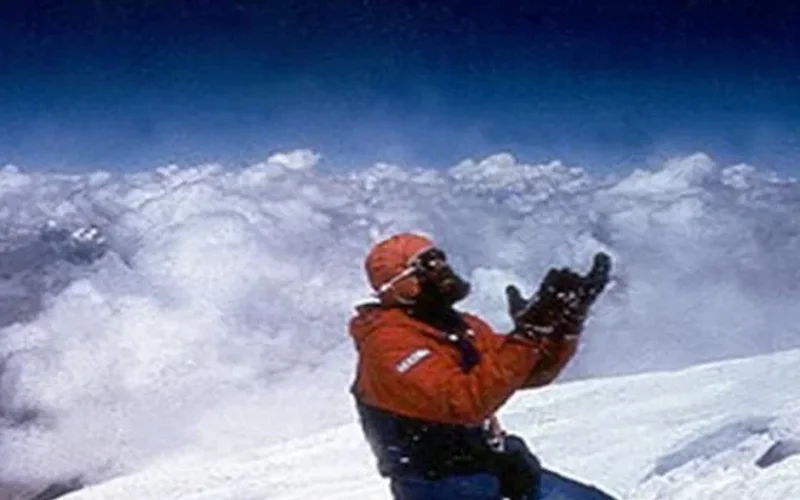
Gasherbrum I, at 8,080 meters (26,510 ft), is the eleventh-highest mountain on Earth, also known as Hidden Peak or K5. Named by William Martin Conway in 1892 due to its extreme seclusion behind the Gasherbrum ridge, it stands on the border between Pakistan and China. First summited in 1958 by an American expedition led by Nicholas Clinch, it was also the scene of Reinhold Messner and Peter Habeler's historic 1975 alpine-style ascent without supplemental oxygen.
Ascent Route & Topography (1)
View All Routes →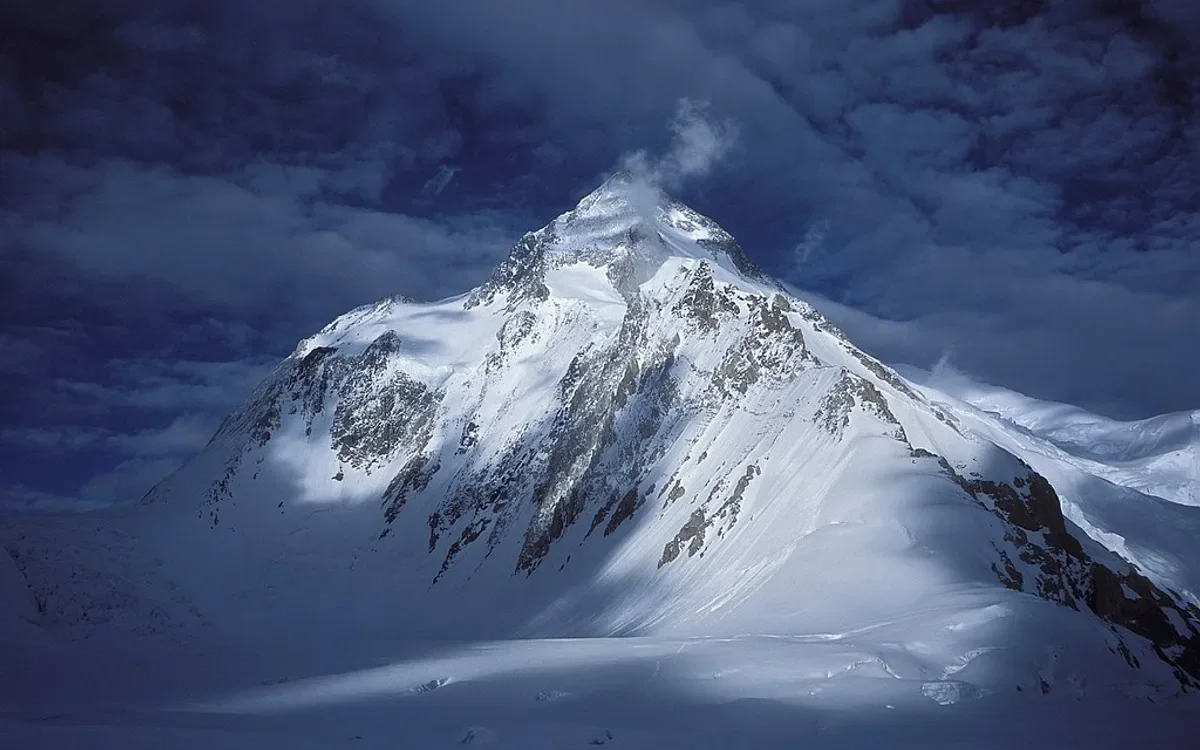
Gasherbrum I Northwest Face (Messner-Habeler Route)
The Northwest Face of Gasherbrum I (Hidden Peak) is a classic 55-degree snow, ice, and mixed wall rising above the South Gasherbrum Glacier in the Karakoram. In August 1975, Reinhold Messner and...
Featured Mountaineers & Pioneers (2)
Browse All Mountaineers →
Peter Habeler
Peter Habeler was born on July 22, 1942, in Mayrhofen in the Zillertal valley of Tyrol, Austria. Growing up surrounded by the towering glaciated peaks of the Zillertal Alps, Habeler began climbing at age six. By his...
Reinhold Messner
Reinhold Messner was born on September 17, 1944, in Bressanone (Brixen), South Tyrol, Italy, and grew up in the rugged Villnöß valley beneath the towering limestone spires of the Geisler Peaks (Odle). Guided by his...
Documented Expeditions (1)
View All Expeditions →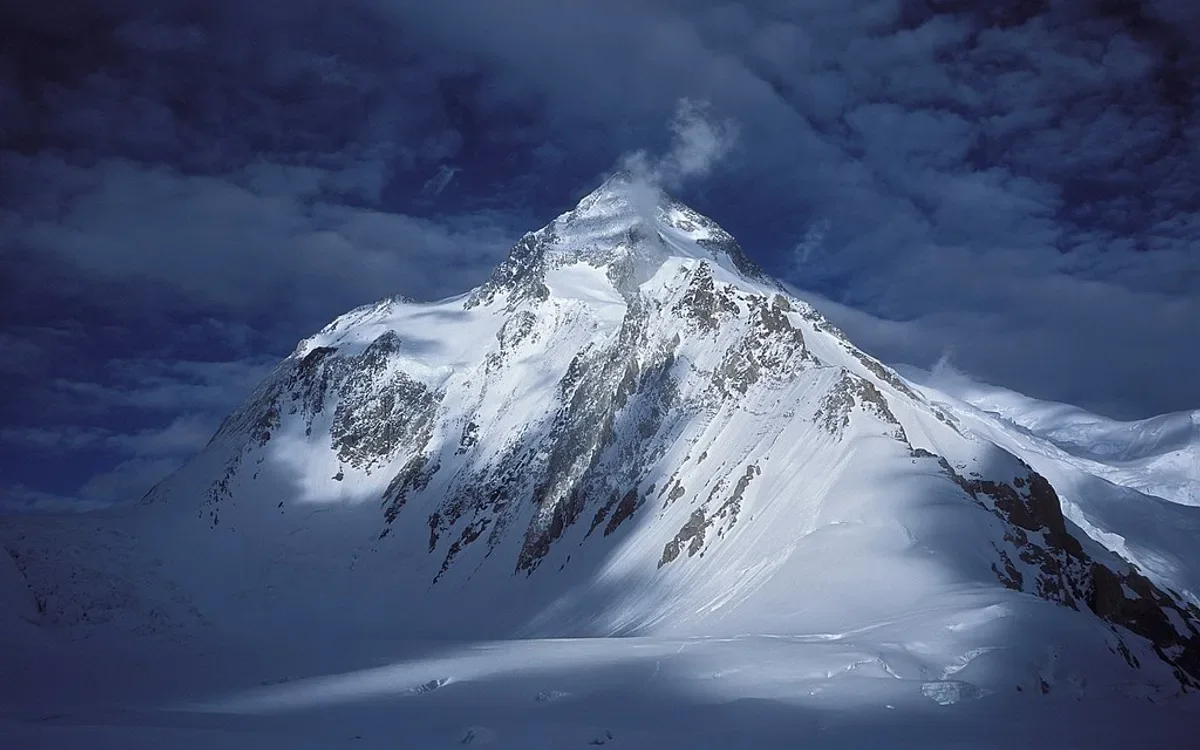
1975 Messner-Habeler Gasherbrum I Expedition
Reinhold Messner and Peter Habeler made global mountaineering history by climbing the Northwest Face of Gasherbrum I (8,080m) in pure alpine style—without supplemental oxygen, fixed ropes, high-altitude porters, or camps.
Documented Sources & Archival Citations
- Primary Expedition ReportThe Challenge: Two Men and an 8000-Metre Peak(Reinhold Messner / Kaye & Ward)
- Alpine JournalAmerican Alpine Journal 1976: Gasherbrum I Alpine Style(American Alpine Club)
Share Exploration
Global Mountain Intelligence
✓ Link copied to clipboard!